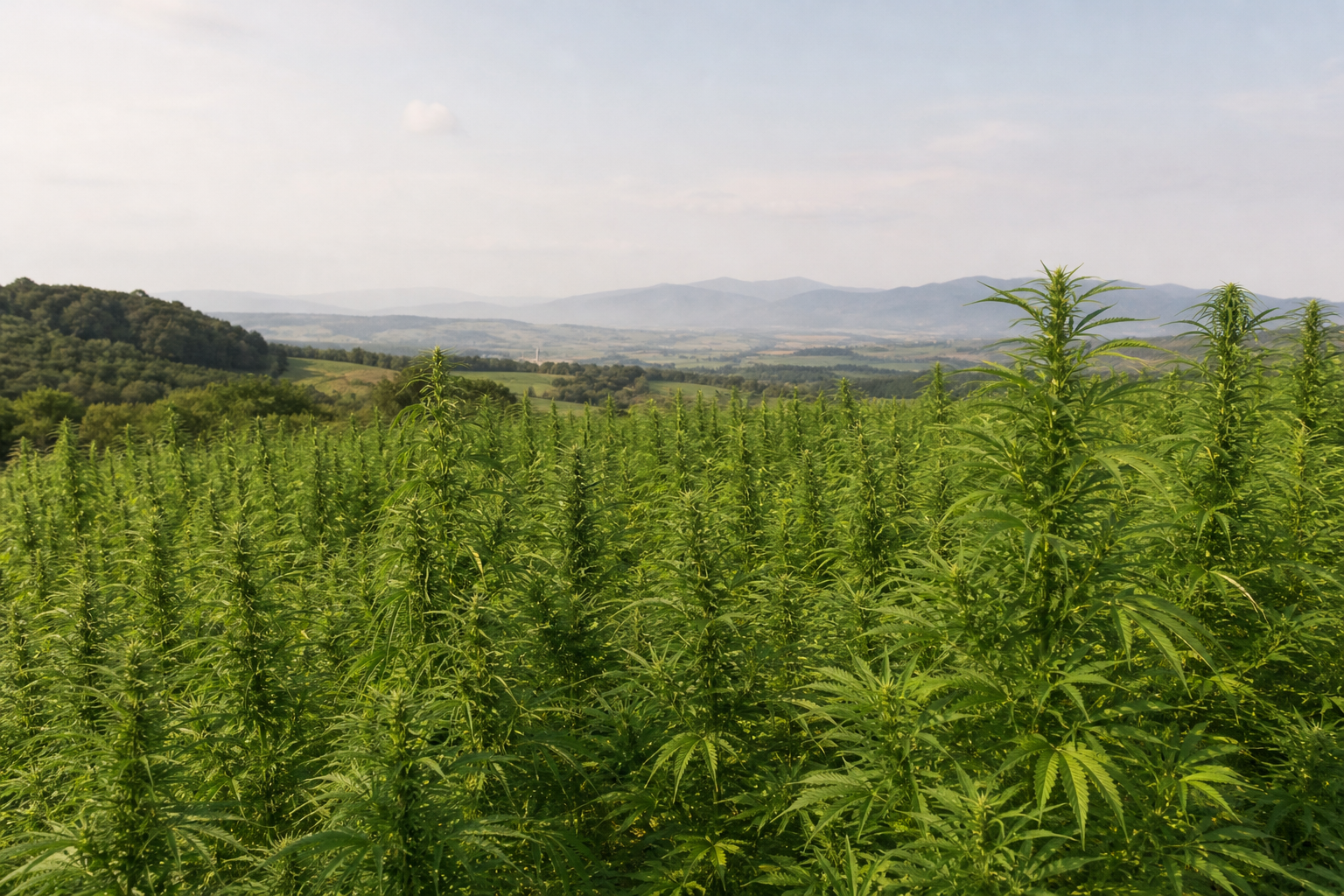
Understanding hemp legality in Moinești, Romania requires separating industrial hemp from cannabis products intended for intoxication. Moinești is governed by Romanian national law, not by a separate city-level cannabis regime. As a result, the key questions are whether a plant or product is legally classified as industrial hemp, whether cultivation has been authorized, how much THC it contains, and whether it is being possessed, sold, transported or used.
This guide explains the practical position for residents, farmers, visitors and consumers. It is general information rather than legal advice. Romanian rules and administrative procedures can change, so anyone planning commercial cultivation, importing products or relying on a laboratory THC result should confirm the current requirements with the relevant Romanian authorities.
What hemp means under Romanian law
In everyday language, “hemp” may refer to several different things: approved fibre varieties, hemp seed, seed oil, CBD extracts, hemp flowers or high-THC cannabis. Legally, those categories should not be treated as interchangeable.
Industrial hemp is generally associated with approved varieties grown for fibre, seed or other permitted agricultural uses and containing only a very low level of THC. THC is the principal intoxicating cannabinoid and the substance that creates much of the legal risk. Cannabis cultivated or possessed for recreational use is a different matter, even if someone describes it as hemp.
The appearance of a plant is not enough to establish legality. A plant can look like a conventional hemp crop while still creating problems if it is an unauthorized variety, grown without the required approval or found to exceed the applicable THC threshold. Conversely, a packaged seed or food product may be treated differently from a flower or resin product.
Hemp laws in Moinești: national rules apply
There is no special Moinești exemption that makes controlled cannabis legal. The same Romanian criminal and administrative framework applies in Moinești as elsewhere in the country. Local authorities may deal with land use, public order or local business matters, but they do not replace national rules on controlled substances or agricultural authorization.
For the current legal framework, consult the official Romanian legislation portal and look for the latest versions of the laws and regulations concerning controlled drugs, agricultural production, seeds and food products. Farmers should also confirm the current application procedure with the Romanian Ministry of Agriculture and Rural Development through its official ministry website.
Why the exact product matters
- Hemp seed and seed oil: These are commonly associated with food and nutritional uses, but products must still comply with applicable food, labeling and safety rules.
- Industrial hemp crops: Cultivation may require approved seed, documentation, notification or authorization and compliance with agricultural controls.
- Hemp flowers and resin: These deserve particular caution because they can contain cannabinoids and may be assessed differently from seed-based products.
- CBD extracts and oils: The presence of CBD does not automatically make every product lawful. Ingredients, THC content, intended use, labeling and the route by which the product entered Romania can all matter.
- High-THC cannabis: This is not made lawful merely by being sold under a “hemp” label or by being described as a natural product.
Can you grow industrial hemp in Moinești?
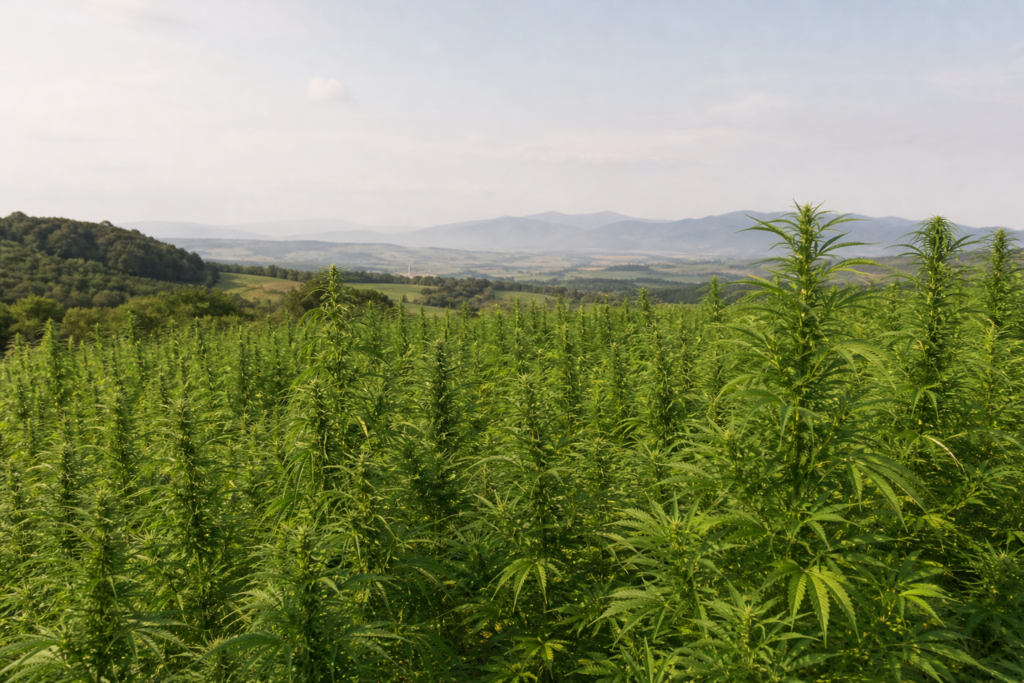
Potentially, but planting a crop is not the same as growing a few plants privately without formalities. Commercial or agricultural cultivation should be approached as a regulated activity. The grower may need to use an eligible variety and retain proof of the seed’s origin and certification. Additional applications, declarations, inspections or documentation may apply depending on the crop and current Romanian procedure.
A person considering a hemp field near Moinești should obtain written guidance before sowing. Important questions include which authority receives the application, what THC threshold and testing method apply, what records must be retained, and how the crop must be handled if testing shows a non-compliant result. Relying on an online seed listing or a supplier’s informal assurance is not a safe substitute for official documentation.
Practical steps for a prospective grower
- Identify the precise intended use: fibre, grain, seed, food ingredient or another permitted purpose.
- Check whether the proposed variety is approved for the relevant Romanian or European agricultural regime.
- Obtain the required seed certificates, invoices and traceability records.
- Ask the competent agricultural authority about current registration, authorization and inspection requirements.
- Keep the field records, laboratory results and correspondence available during the crop cycle.
- Do not sell, process or advertise material for a different purpose unless that activity is separately lawful.
These steps are especially important in a small community, where an unusual crop may attract attention from neighbors or authorities. Visibility does not prove wrongdoing, but clear paperwork can help explain that a crop is part of a regulated agricultural activity.
CBD legality in Moinești
CBD products are often marketed as hemp products, but “CBD” is not a universal legal guarantee. A product’s legality can depend on its THC concentration, formulation, labeling, intended use and whether it is classified as food, cosmetic, supplement or another regulated product. Products made from seeds are not automatically equivalent to products made from flowers or extracts.
Consumers in Moinești should examine the packaging carefully. Useful information may include the manufacturer, batch number, ingredients, laboratory testing, THC declaration, recommended use and Romanian importer or distributor. A vague label, missing batch information or promise of a strong psychoactive effect is a warning sign.
Even when a seller claims that an oil is THC-free, a consumer should not assume that the statement settles the legal position. Contamination, inaccurate labeling and differences between product categories can create practical risks. Anyone taking prescription medicines should also ask a doctor or pharmacist about possible interactions rather than treating CBD as automatically harmless.
For a broader discussion of product distinctions and consumer considerations, see this related CBD guide for Râmnicu Sărat. The location differs, but the product-classification issues are relevant to Romanian consumers generally.
Is possession of hemp flower legal?
Possession of a product labeled “hemp flower” can be legally risky. Flowers may contain THC, and their form can make them more likely to be treated as cannabis material than as an ordinary seed-based food. A label alone does not determine how police, prosecutors, a laboratory or a court will assess the substance.
Do not assume that a low advertised THC percentage makes possession risk-free. The relevant legal threshold, sampling method, laboratory analysis and product category all matter. A product bought legally in another country may also create problems when brought into Romania if its composition or classification does not comply with Romanian rules.
Romanian law also distinguishes between possession, supply, cultivation and trafficking, with consequences depending on the facts. This is why a person questioned about a cannabis-like product should avoid guessing about its legal status and should obtain advice from a Romanian lawyer. The fact that material was purchased from a shop or website does not necessarily protect the buyer.
Hemp, weed and cannabis terminology in Moinești
People searching for weed in Moinești or cannabis in Moinești may be looking for information about recreational cannabis, CBD products or agricultural hemp. Those searches can lead to very different legal questions. Industrial hemp is not a blanket term that legalizes recreational cannabis, and a cannabis plant is not automatically lawful because it has been described as hemp.
Similarly, cannabis laws in Moinești are not separate from Romanian national drug law. There is no local recreational market or municipal license that overrides national restrictions. Residents and visitors should be particularly cautious about informal sellers who claim that small quantities, private consumption or a “legal hemp” label eliminates legal exposure.
For context on another Romanian locality, this guide to cannabis laws in Fălticeni illustrates the same broader principle: city names do not create separate national drug rules. The facts and current law still need to be checked for the specific product or conduct.
Traveling with hemp products through Moinești
Moving a hemp or CBD product between cities, across county boundaries or over an international border can introduce additional issues. Packaging, invoices, laboratory records and proof of composition may be useful, but they do not guarantee that the product will be accepted by police, customs or another country’s authorities.
International travel is especially sensitive. A product permitted in the country of purchase may contain a level of THC that is restricted in Romania or the destination country. Flowers, cartridges, resins, extracts and edible products can be assessed differently, and airport or border officials may rely on testing rather than on a retail label.
Before traveling, check the rules of every country on the route and avoid carrying cannabis-like products when the legal position is uncertain. General travel guidance is available in this article on cannabis travel rules in Buftea, but cross-border questions should be confirmed with customs or a qualified lawyer.
Medical use does not remove all legal requirements
People sometimes use “medical hemp” to describe CBD oil, cannabis extracts or prescribed products. These are not necessarily the same thing. A health claim on a label does not create a prescription, and a product purchased online is not automatically an approved medicine.
Patients should discuss treatment with a licensed Romanian doctor and pharmacist, particularly if a product contains THC or is intended to replace prescribed therapy. They should keep any prescription, medical documentation and original packaging when handling a legitimately prescribed product. Driving after using an intoxicating substance can create separate legal and safety consequences, regardless of why it was taken.
What to do if authorities question a hemp product
Stay calm, avoid making unsupported claims about the product and provide identification when legally required. Do not destroy, transfer or conceal the material. Ask what the issue concerns and request legal assistance if questioning becomes formal or the substance is seized.
Keep purchase records and packaging, but do not assume that these documents prove legality. A Romanian lawyer can assess the product category, testing evidence and circumstances. If the matter involves a crop, preserve seed certificates, agricultural records, field documentation and official correspondence.
Conclusion
Hemp legality in Moinești, Romania depends on the distinction between regulated industrial hemp and controlled cannabis products. Approved cultivation may be possible when the grower follows the applicable agricultural procedure, uses compliant seed and maintains traceability. Hemp seed products may be treated differently from flowers, extracts and high-THC material, while CBD products require careful attention to composition, labeling and intended use.
The safest approach is to verify the current Romanian rules before planting, buying, selling, carrying or importing any hemp-related product. Local assumptions, foreign packaging and the word “hemp” on a label are not substitutes for official authorization or reliable legal advice.