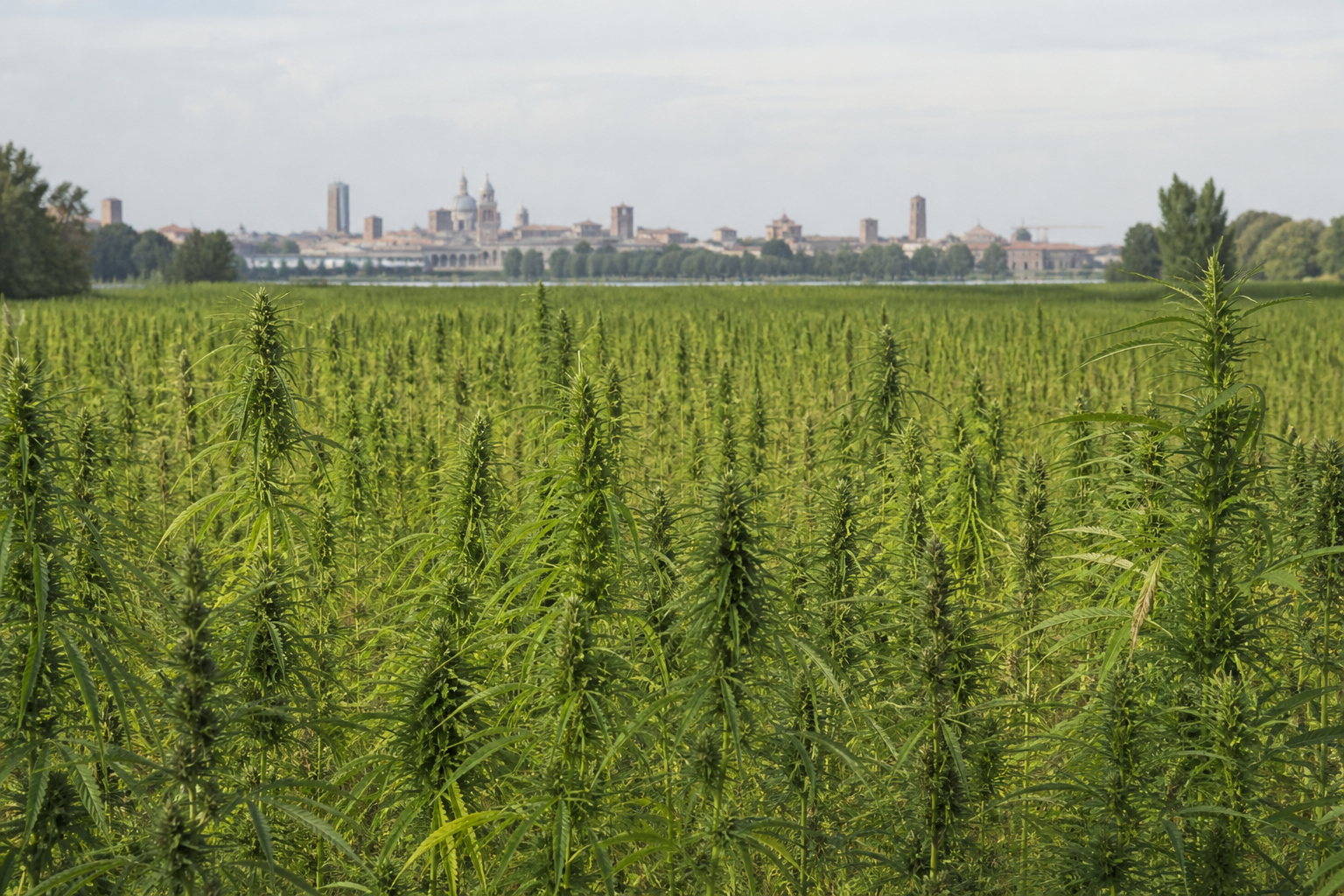
Understanding hemp legality in Mantua requires separating industrial hemp from cannabis products intended for intoxication. Mantua follows Italian national law: the municipality does not create a separate licensing system for hemp, and a product that is lawful in one Italian city is not automatically lawful in another if its composition, intended use or marketing breaches national rules.
The practical distinction is between certified low-THC hemp, food and cosmetic products, hemp flowers and extracts, and cannabis supplied for medical treatment. The rules are not interchangeable. This guide explains the main issues for residents, farmers, retailers and visitors, but it is general information rather than legal advice. Product rules can change, so businesses should obtain current advice before importing, selling or cultivating.
What hemp means under Italian law
In everyday language, “hemp” can describe several different products. Legally, the relevant facts usually include the plant variety, THC content, part of the plant, preparation, intended use and how the item is marketed. Hemp seed, fibre and certain agricultural uses are not treated in the same way as a cannabis flower or a concentrated extract.
Italy permits the cultivation of approved industrial hemp varieties under the national framework created by Law 242/2016, provided the activity meets the applicable agricultural and product requirements. The law was designed to support uses such as fibre, seed, food, cosmetics, biomass and research. It does not create a general permission to grow any cannabis plant or to sell psychoactive cannabis.
Farmers in the Mantua area should use certified seed from an authorised variety and keep the documentation that proves the origin of the crop. They should also check current agricultural, traceability, environmental and local business requirements. A crop described as “hemp” is not protected from enforcement merely because the seller or grower uses that label.
Hemp laws in Mantua: the main categories
Industrial hemp cultivation
Industrial cultivation is the clearest lawful category, but it is conditional. The crop must come from an approved low-THC variety and be grown for a permitted purpose. Seed records, invoices, field information and laboratory documentation can be important if authorities inspect the operation.
THC thresholds should not be treated as a simple retail guarantee. Italian agricultural rules have historically used a low-THC framework, including a tolerance relevant to farmers when the crop exceeds the reference level within specified limits. That does not mean a grower may deliberately cultivate high-THC cannabis, and it does not automatically make every harvested part lawful to sell. A cultivator should confirm the current threshold and enforcement guidance before planting.
Hemp seed, oil and food
Hemp seeds and products made from them, such as seed oil and flour, are generally addressed as food products rather than intoxicating cannabis. They still need to comply with food-safety, labelling, contaminant and novel-food requirements. Food cannot be promoted with unsupported medical claims, and the presence of a hemp ingredient does not permit a seller to imply that the product treats a disease.
For a Mantua shop or online retailer, lawful sourcing matters. Keep supplier documents, ingredient specifications and batch information. Packaging should identify the product accurately and avoid language that suggests a psychoactive effect or an unauthorised therapeutic benefit.
CBD products and cosmetics
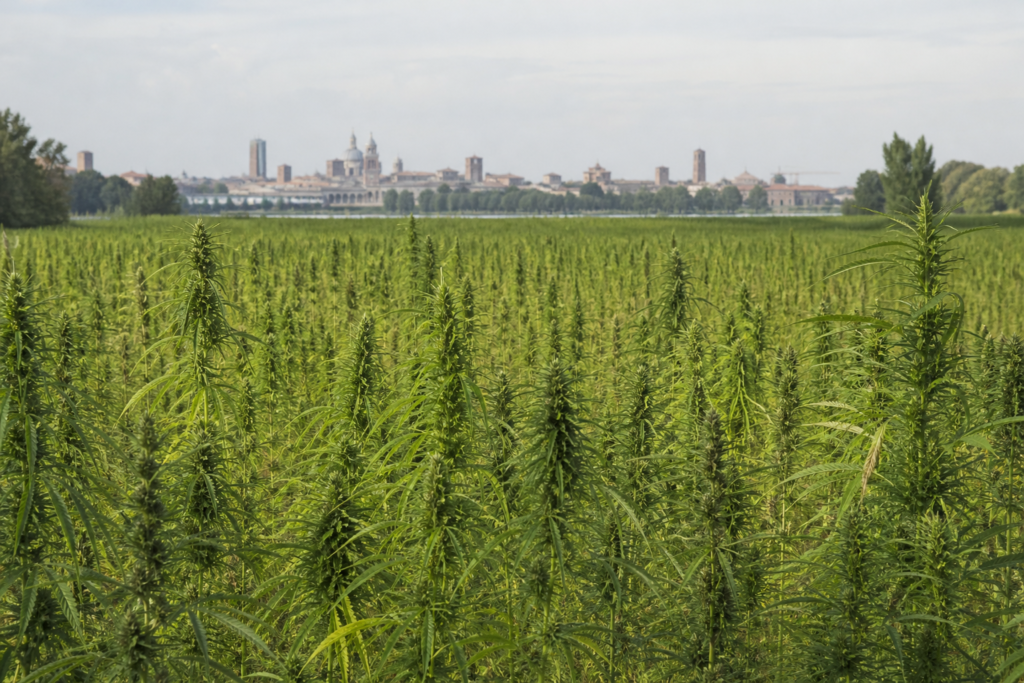
CBD legality in Italy depends heavily on the product category. A cosmetic, food, supplement, vape liquid, oil or extract may be regulated under different rules. Cosmetics must meet cosmetic-safety and notification requirements; foods and supplements must comply with food law; and products containing controlled substances can raise separate criminal or administrative issues.
CBD should not be presented as a medicine unless it has the required authorisation. A retailer in Mantua should verify the product formula, THC result, intended use, labelling and advertising claims rather than relying on the words “natural,” “legal” or “THC-free” on a supplier’s website.
Why hemp flowers are a higher-risk category
Hemp flowers, sometimes marketed as “cannabis light,” have generated particular legal uncertainty in Italy. They contain the plant’s naturally occurring cannabinoids and may be sold with low THC, but their legal treatment is not identical to that of seed, fibre or food products.
Recent national measures have tightened the treatment of hemp inflorescences and products derived from them. Depending on the product and the applicable provision, growing, processing, selling, possessing or transporting flowers may expose a person or business to significant risk. Court decisions, implementing practice and changes to legislation can also affect how the rules are applied.
For that reason, a low laboratory result alone is not a complete defence for a flower business. Anyone considering a flower shop, online sales or commercial storage in Mantua should obtain a current Italian legal opinion and check the text in force before operating. Do not assume that a product sold elsewhere in Italy is safe to stock locally.
Cannabis in Mantua: possession, public use and transport
The rules applying to cannabis in Mantua depend on whether the substance is lawful industrial material, a prescribed medicine or an illicit preparation. Possession of cannabis for personal use can still lead to administrative consequences, while conduct suggesting supply, distribution or trafficking can be treated much more seriously under Italy’s controlled-substances framework.
Public consumption creates additional practical risks. Smoking or using a cannabis product in a street, park, station, event venue or other public setting can lead to intervention even where the person disputes the substance’s legal status. Public-order, nuisance and smoking restrictions may apply independently of drug law. Driving after using cannabis is also a serious safety and legal issue; a person should never drive while impaired or treat a prescription as permission to drive without checking the applicable rules.
Transport across borders is especially risky. A CBD or hemp product bought legally in Italy may not be lawful in another country, and foreign products may not satisfy Italian requirements. Keep products in their original packaging and do not carry flower, extracts or medicines across a border without checking both countries’ rules.
For a broader discussion of possession issues elsewhere in Italy, see this guide to cannabis possession laws in Manfredonia. The article is not a substitute for Mantua-specific advice, but the underlying national framework is relevant.
Medical cannabis in Mantua
Medical cannabis is a separate, regulated pathway. Patients do not obtain it by purchasing ordinary hemp products from a CBD shop. Access generally requires a physician’s assessment, a prescription or other authorised medical route, and dispensing through an authorised pharmacy under the applicable Italian procedures.
Medical cannabis may be considered when a doctor believes it is clinically appropriate, often after standard treatments have not provided adequate benefit or have caused unacceptable problems. The prescriber decides whether treatment is suitable, which preparation is appropriate and how it should be used. Patients should follow the prescribed dose and discuss side effects, interactions, pregnancy, mental-health history and driving with their healthcare professional.
The Italian Ministry of Health information on medical cannabis is a useful starting point for official background. Patients should also ask their doctor or pharmacist about availability, reimbursement, preparation, repeat prescriptions and documentation for travel.
It is important not to confuse medical cannabis with “medical hemp” sold online. A commercial CBD oil is not automatically a prescribed medicine, and a medical prescription does not legalise recreational possession, resale or sharing with another person.
How businesses in Mantua can reduce legal risk
Businesses dealing with hemp should build compliance around the exact product rather than the broad word “hemp.” Before launching a product, assess its ingredients, cannabinoid profile, plant part, intended use and supply chain.
- Confirm that seed and plant material come from an approved source and retain certificates, invoices and batch records.
- Obtain reliable laboratory testing for THC and other relevant contaminants, using a method suitable for the product.
- Check whether the item is a food, cosmetic, agricultural product, vape product, medicine or controlled preparation.
- Use Italian-compliant labels and avoid therapeutic, disease-treatment or intoxication claims unless specifically authorised.
- Review current national rules before selling flowers, extracts, concentrates or products containing CBD.
- Train staff not to make informal promises about legality, health effects or driving after consumption.
- Separate hemp inventory from prescription medicines and maintain clear storage and sales records.
A business should also confirm ordinary obligations such as registration, tax, consumer protection, workplace safety, waste disposal and municipal premises rules. These requirements do not replace national drug and product law; they operate alongside it.
Where to verify the current position
Italian hemp law can change through legislation, court decisions and administrative practice. The authoritative starting point for checking statutory text is Normattiva’s consolidated legislation database, including the national controlled-substances framework. Readers should check the version currently in force rather than relying on an old blog post or a product seller’s summary.
For a local question, contact a qualified Italian lawyer, the relevant health authority, a pharmacist or the appropriate agricultural office. Ask about the precise product and activity: cultivating seed, selling food, stocking flowers, importing extracts and dispensing prescribed cannabis are different legal questions.
Key takeaways for hemp in Mantua
- Industrial hemp is not the same as recreational cannabis.
- Approved varieties, certified seed and a permitted purpose are central to lawful cultivation.
- Hemp seed products, CBD items, flowers and medical cannabis follow different rules.
- Low THC alone does not guarantee that a flower or extract may be sold.
- Public use, driving, possession and cross-border transport carry additional risks.
- Medical cannabis must be handled through the authorised healthcare and pharmacy system.
- Businesses should verify current national law before launching or importing products.
Conclusion
Hemp legality in Mantua is best understood as a product-by-product question under Italian national law. Certified industrial hemp and hemp-seed products can have lawful uses, but CBD extracts, flowers, commercial claims and medical cannabis require closer scrutiny. The safest approach is to document the supply chain, test the product, use accurate labels and obtain current professional advice before cultivation, sale, possession or transport. For anyone researching cannabis laws in Mantua, the key lesson is simple: never rely on the word “hemp” alone to determine legality.