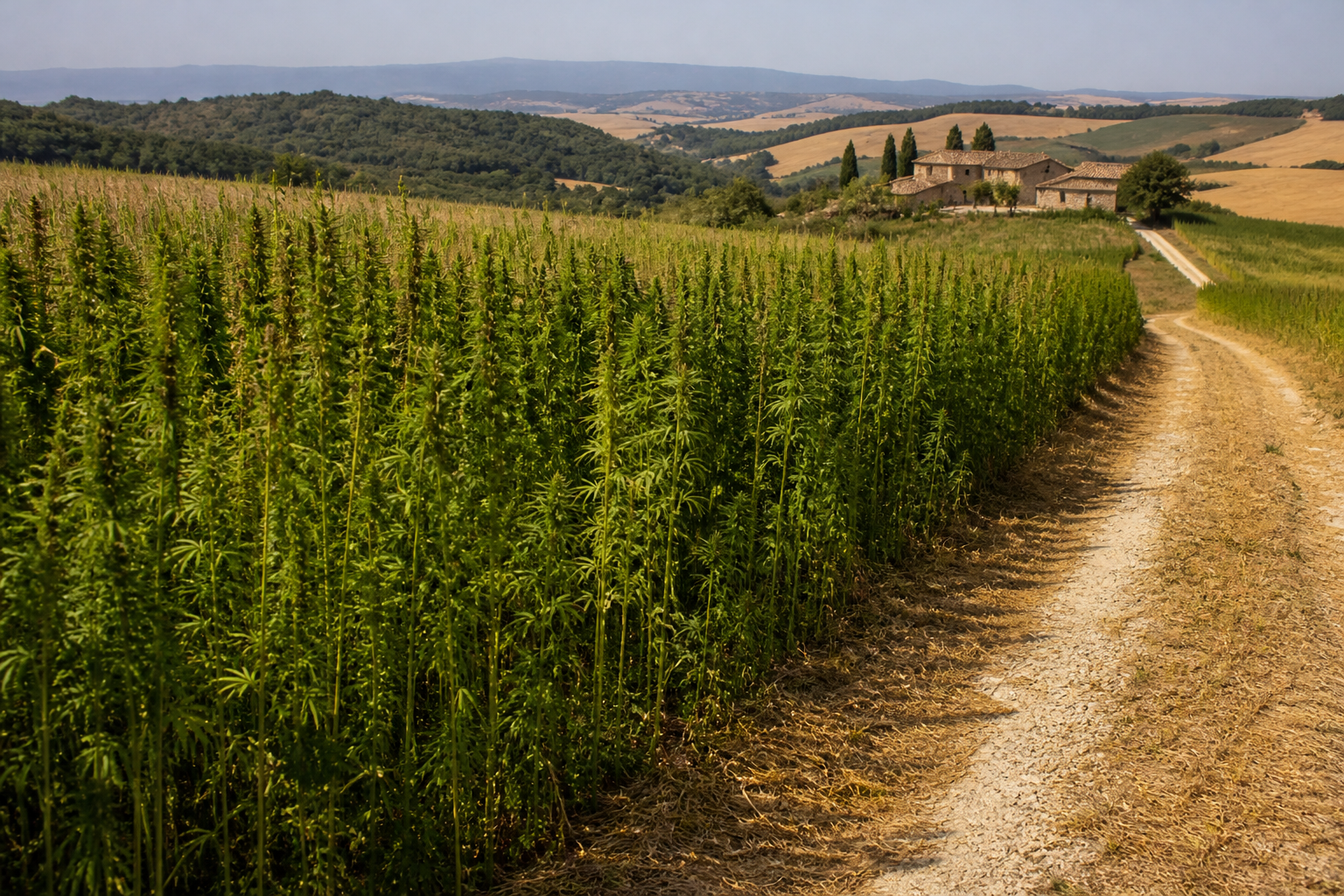
The hemp industry in Siena, Italy is best understood as an emerging agricultural and manufacturing opportunity rather than a large, established local sector. Siena is internationally associated with heritage, tourism, wine, olive oil and high-value rural landscapes. Those same characteristics can create a useful setting for carefully managed hemp projects, provided that growers and businesses work within Italian and European rules.
Industrial hemp is not the same as recreational cannabis. It generally refers to approved low-THC varieties grown for fibre, seed, grain, food ingredients, cosmetics, building materials and other non-intoxicating applications. In Siena, the most realistic conversation is therefore about crop diversification, processing, traceability and rural enterprise—not dispensaries or unrestricted cannabis commerce.
This guide explains what the local hemp sector could involve, how the regulatory framework affects growers, where opportunities may exist in the Sienese economy, and what businesses should check before investing.
What the hemp sector in Siena looks like today
Public information about a large-scale hemp supply chain based specifically in Siena is limited. That distinction matters: interest in hemp across Italy does not automatically prove that extensive cultivation, processing or manufacturing is taking place in the Province of Siena.
Instead, the local market is more likely to develop through small farms, specialist agricultural enterprises, research partnerships, artisan producers and companies that source raw materials from several parts of Italy. Some businesses may sell hemp-related goods in Siena without growing or processing the crop locally.
A useful way to assess the hemp sector in Siena is to separate four activities:
- Cultivation: growing approved hemp varieties under the applicable agricultural rules.
- Primary processing: drying, cleaning, decortication, pressing or preparing seed and fibre.
- Manufacturing: turning hemp inputs into foods, textiles, cosmetics, construction materials or other goods.
- Retail and services: selling compliant products, advising growers, providing logistics or supporting product testing.
A company may participate in one of these stages without being involved in the others. This is why local economic claims should be checked against company records, farm declarations, product labels and verifiable supply-chain information.
Why Siena could interest hemp growers and businesses
Siena and its surrounding countryside have several characteristics that may support selected hemp projects. The area has an established agricultural identity, a strong reputation for landscape-based products and access to consumers interested in provenance and sustainable production. Hemp can also fit into discussions about crop rotation and the use of agricultural land, although its suitability depends on soil, water, machinery, climate and the intended end product.
Agricultural diversification
For some farms, hemp may be considered alongside other crops rather than as a replacement for established products. Fibre and grain varieties can serve different markets, and harvest timing, equipment and contracts will vary accordingly. A farm should establish a buyer and processing route before planting, because a crop with no reliable outlet can create storage and logistics problems.
Brand value and traceability
Siena’s reputation can help businesses communicate a strong regional identity. However, a Tuscan location alone does not prove that a product was cultivated, processed or manufactured in Siena. Responsible labels should state the actual origin of the crop and identify where processing occurred. Clear traceability is particularly important for foods, cosmetics and products associated with health claims.
Rural tourism and education
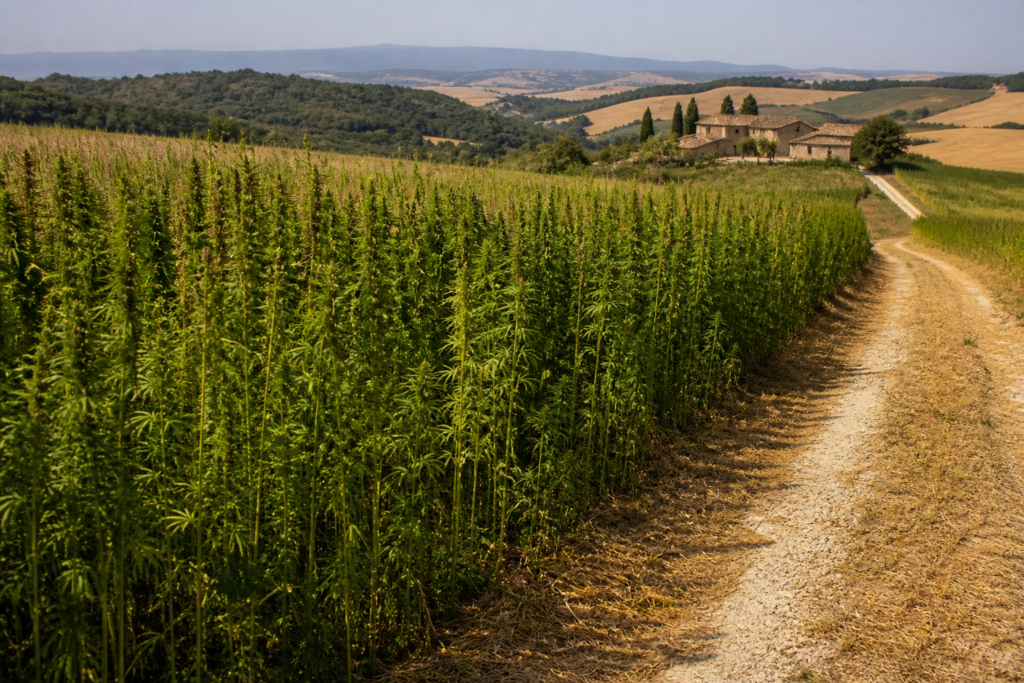
Hemp may also support farm visits, workshops and educational activities about fibre crops, sustainable materials and agricultural history. These projects should explain the difference between industrial hemp and high-THC cannabis, avoid unverified wellness claims and follow the rules applicable to food demonstrations, retail and public events.
Hemp production in Siena: from field to finished product
Hemp production in Siena would require more than sowing seed. The commercial plan should cover the complete chain from variety selection to final sale.
- Define the product: Decide whether the business will target seed, flour, oil, fibre, hurd, textiles, paper, construction materials or another application.
- Select suitable seed: Use legally appropriate varieties and retain documentation showing origin, certification and batch details.
- Assess the land: Review soil conditions, water availability, crop rotation, access for machinery and any environmental or planning constraints.
- Plan testing and records: Keep cultivation, harvest and laboratory records so that the crop can be traced if questions arise.
- Secure processing: Confirm where the harvest will be dried, cleaned, stored, pressed, decorticated or otherwise transformed.
- Check the finished product: Food, cosmetics, textiles and construction products can each involve different safety, labelling and conformity requirements.
The economics are strongly dependent on scale and infrastructure. Fibre production may require specialised harvesting and processing equipment, while seed products require cleaning, pressing and food-quality controls. A small farm may therefore find contract growing, cooperative purchasing or partnership with an established processor more practical than building a complete facility.
Businesses researching comparable product questions can also review this guide to hemp products in Acerra. The local conditions differ, but the supply-chain distinction between cultivation, processing and retail is relevant to any Italian market.
Industrial hemp in Tuscany and the regulatory framework
Industrial hemp in Tuscany operates within national and European rules rather than a separate Siena-only cannabis market. The exact requirements can depend on the seed variety, plant part, intended use, product category and current administrative interpretation.
Growers should consult the Italian Ministry of Agriculture, Food Sovereignty and Forestry for current agricultural guidance and should obtain professional advice before planting or commercialising a product. European agricultural rules and eligibility conditions can also change, so operators should consult the applicable EU regulation on support for strategic plans under the Common Agricultural Policy.
Important compliance questions
- Is the seed variety included in the relevant approved catalogue or documentation?
- What records must be retained for seed purchase, sowing, cultivation and harvest?
- Are local agricultural, environmental, water-use or planning permissions required?
- Does the proposed product fall under food, cosmetic, textile, building or another product regime?
- Are THC, cannabinoid, contaminant, pesticide and microbiological tests required?
- Do labels make only permitted and supportable claims?
- Does the intended sale channel have additional obligations for packaging, advertising or consumer information?
The legal treatment of hemp flowers, extracts and cannabinoid products can be particularly complex and subject to changing interpretations. A product described as CBD, natural or derived from hemp is not automatically lawful in every form. Anyone considering retail or extraction should check current Italian rules with a qualified lawyer, competent authority and appropriately accredited testing laboratory.
Hemp laws in Siena: what residents and visitors should know
The phrase hemp laws in Siena can refer to several different issues. Cultivating an approved industrial variety for an authorised purpose is not the same as possessing or selling high-THC cannabis. Likewise, buying a hemp-seed food product is not equivalent to buying an intoxicating preparation.
Consumers should examine the product category, label, ingredients, batch information and seller’s compliance documentation. They should be cautious about products that promise medical effects, conceal cannabinoid content or use vague claims such as “legal cannabis” without explaining what is actually being sold.
Farmers should avoid relying on online summaries or informal advice. Before planting, they should confirm the current rules, document the seed source and discuss testing and notification requirements with the appropriate agricultural offices. Before selling a finished product, they should verify the obligations that apply to its specific use.
For broader context, readers may compare Siena’s questions with this overview of hemp legality in Castellammare di Stabia. The article is not a substitute for local legal advice, but it illustrates why legality depends on the product and activity rather than on the word “hemp” alone.
Potential business models for Siena
A viable local enterprise does not have to become a large plantation. Several smaller models could connect hemp with Siena’s existing strengths:
- Contract cultivation: Farms grow for a processor under an agreed variety, quality specification and purchase contract.
- Seed-based foods: Businesses develop clearly labelled ingredients or packaged foods subject to applicable food controls.
- Fibre and material supply: Producers supply raw or semi-processed materials to textile, paper or construction companies.
- Local design: Artisans use verified hemp textiles or composites in products that emphasise durability and provenance.
- Farm education: Agricultural businesses provide evidence-based workshops about crop rotation, materials and rural innovation.
- Testing and logistics: Specialist firms support sampling, storage, transport and documentation for growers and manufacturers.
Each model has a different risk profile. Food businesses need strong hygiene and labelling systems; construction suppliers need performance and conformity documentation; fibre projects need dependable processing capacity. A clear, narrow business proposition is usually more realistic than trying to serve every hemp market at once.
How to evaluate a hemp business in Siena
Whether you are a farmer, investor, buyer or resident, ask practical questions before treating a company as part of the local industry.
- Where was the crop grown?
- Who processed the material, and where?
- Can the seller provide a batch number, technical sheet or laboratory documentation?
- Are claims about health, sustainability or Italian origin supported by evidence?
- Does the business distinguish industrial hemp from intoxicating cannabis?
- Are licences, registrations, insurance and professional qualifications appropriate to the activity?
- Is there a clear route for complaints, recalls or product testing?
These questions protect consumers while also rewarding serious operators. They can help prevent the local market from being associated with exaggerated claims, unclear sourcing or confusion about Italian law.
Challenges facing the hemp industry in Siena, Italy
The main challenge is not simply whether hemp can grow in Tuscany. It is whether a dependable commercial chain exists around the crop. Farmers need buyers, processors need volume, and manufacturers need consistent material. Transport from rural areas to specialised facilities can influence profitability, especially for bulky fibre and hurd.
Other challenges include changing regulation, limited local processing capacity, competition from established crops and the risk of marketing products before compliance systems are ready. Water management and biodiversity considerations should also be evaluated rather than assuming that hemp is automatically sustainable in every location or production method.
Research partnerships with agricultural institutions, transparent pilot projects and shared processing facilities could help address some of these barriers. Any public or private project should publish its methods and distinguish measured results from promotional language.
Conclusion
The hemp industry in Siena, Italy is a developing possibility rooted in agriculture, materials, food and rural enterprise—not evidence of a large local recreational cannabis economy. Siena may offer advantages in branding, farming knowledge and connections to sustainable tourism, but successful projects will depend on verified varieties, reliable processing, careful testing and accurate legal advice.
For growers and entrepreneurs, the strongest starting point is a focused business plan that identifies the product, buyer, processor and compliance pathway before planting. For consumers, the safest approach is to check origin, labelling and product documentation. With realistic expectations and transparent supply chains, hemp could become a useful niche within Siena’s wider rural economy.