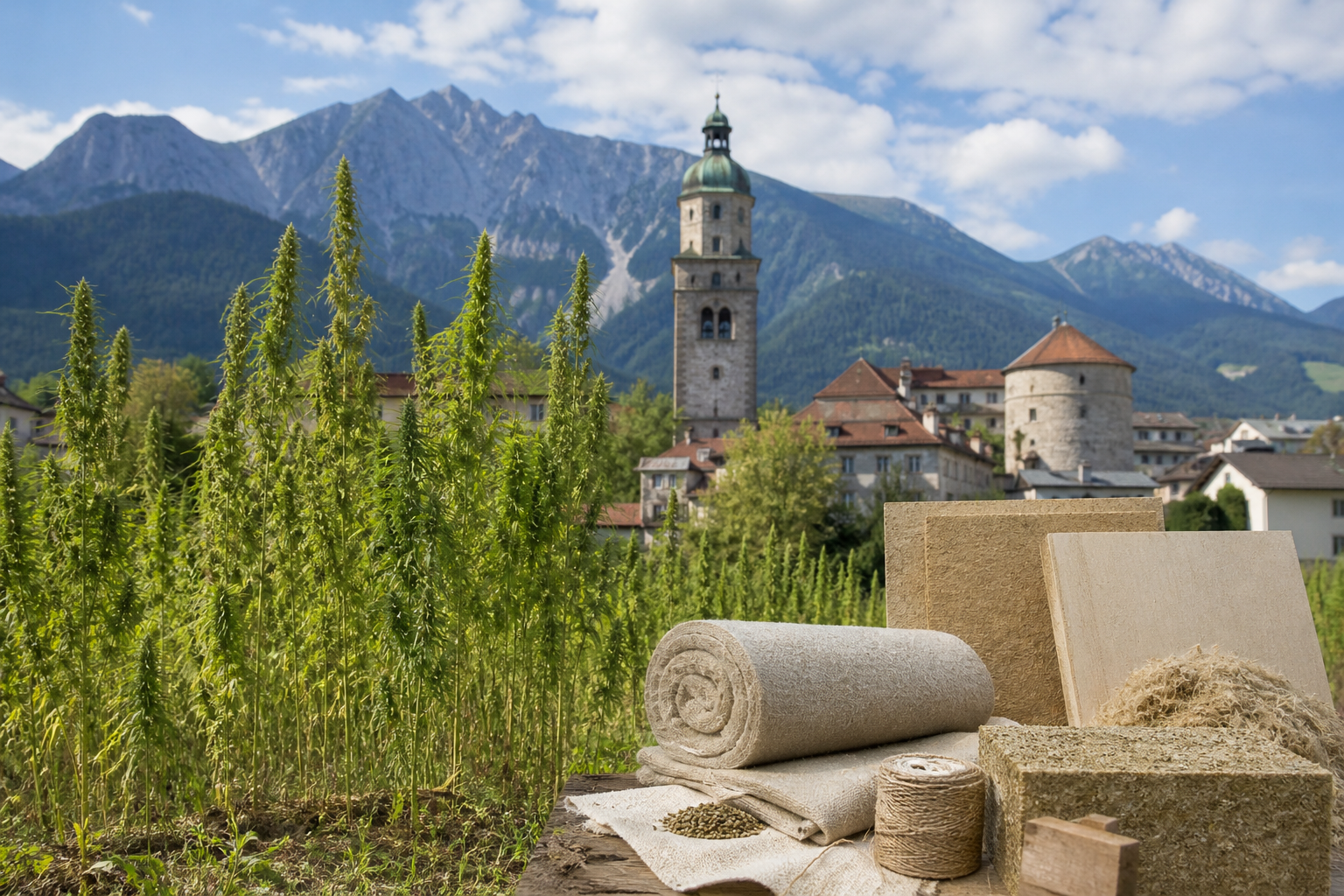
The hemp industry in Hall in Tirol is best understood as part of a wider Austrian and Tyrolean network rather than as a single concentrated industrial sector. Hemp can refer to agricultural fibre crops, seeds and food ingredients, construction materials, cosmetics, textiles, cannabidiol (CBD) products and research. Each category has different commercial and legal requirements.
Hall in Tirol is a historic town near Innsbruck with strong connections to regional trade, services, manufacturing and tourism. Those characteristics create a practical setting for hemp-related businesses: products may be developed, distributed or sold locally even when cultivation and primary processing take place elsewhere. This guide explains what the sector includes, what opportunities may exist, and how consumers and businesses can approach hemp responsibly.
What the hemp industry in Hall in Tirol includes
Hemp is a versatile crop, but the word does not describe one uniform market. The industrial hemp sector generally uses low-THC varieties for materials, food or other non-intoxicating applications. In contrast, products containing controlled cannabis compounds can fall under more restrictive rules.
Primary agricultural production
Hemp farming near Hall in Tirol would need to be assessed in the context of Tyrol’s land availability, climate, soil conditions, water management and access to processing facilities. The region’s alpine geography may limit the scale of field production compared with larger agricultural areas elsewhere in Austria. That does not rule out local cultivation, but it makes supply-chain planning especially important.
A grower would need to select an appropriate variety, obtain reliable seed, follow applicable agricultural requirements and maintain records. Harvesting also has to match the intended product. Fibre hemp, seed hemp and varieties grown for other lawful purposes are not interchangeable from a processing or compliance perspective.
Processing, distribution and retail
Much of the economic activity associated with hemp may happen after harvesting. A Hall-based company could work in product design, wholesale distribution, packaging, logistics, retail or professional services without owning farmland. Local businesses may also connect Tyrolean producers with customers in Innsbruck, the wider region and online markets.
Potential product categories include hempseed oil, shelled seeds, protein ingredients, fibre materials, paper, textiles, insulation, animal bedding and selected cosmetics. A product’s lawful sale depends on its ingredients, claims, intended use and route to market. Labels such as “natural” or “hemp-based” do not replace regulatory checks.
Industrial hemp in Hall in Tirol: practical applications
Industrial hemp in Hall in Tirol could support several types of value creation, although the commercial case depends on dependable suppliers and suitable processing partners.
- Food: Hemp seeds and hempseed oil can be used in cooking and food manufacturing, subject to food-safety and marketing rules.
- Fibre: Hemp fibre can be used in textiles, composites, paper and other material applications.
- Construction: Hemp-based insulation and hemp-lime materials may interest sustainable building projects, but products must meet technical and building requirements.
- Personal care: Hempseed oil and other permitted ingredients appear in some cosmetics. Cosmetic products must not make unauthorised medicinal claims.
- Animal products: Hemp-derived ingredients may be marketed for animals only when the formulation and claims comply with relevant feed or veterinary rules.
- Research and design: Universities, laboratories, architects and product developers can explore hemp materials without being agricultural producers.
These applications have different logistics. Seeds and oil require food-grade handling, fibre requires suitable separation and processing, while construction products need testing and documentation. A business should define the end product before choosing a cultivation or sourcing model.
Hemp products in Hall in Tirol and consumer expectations
People searching for hemp products in Hall in Tirol may encounter food, cosmetics, clothing, wellness goods and CBD-labelled products. These categories should not be treated as equivalent. Hempseed products generally contain naturally occurring trace cannabinoids but are not marketed in the same way as concentrated CBD products. CBD items can raise additional questions involving food law, cosmetics rules, product testing and health claims.
Consumers should check the full label rather than relying on packaging imagery. Useful details include the responsible business operator, ingredients, batch information, recommended use, warnings and any laboratory documentation offered by the seller. A product that is sold in a shop is not automatically suitable for every person or lawful for every intended use.
For broader context, readers can compare this topic with the guide to hemp products in Amstetten and the overview of CBD products in Leoben. Local availability can change, so these comparisons should not be treated as current directories of Hall retailers.
Regulation and compliance in Austria
Austrian hemp regulation is not determined by the word “hemp” alone. Authorities may consider the plant variety, THC content, plant part, extraction method, product composition, intended use, advertising and whether the item is food, cosmetics, feed, medicine or another regulated product.
Businesses should obtain specialist advice before cultivation, importing raw material, extracting cannabinoids or making health-related statements. Food businesses may need to examine novel-food status and permitted ingredients. Cosmetics must follow cosmetic-product obligations, while medicinal claims can trigger pharmaceutical requirements. Products containing controlled substances may be subject to narcotics legislation.
The Austrian Agency for Health and Food Safety is a useful starting point for official food and product-safety information. For public-health and legal-policy context, consult the Austrian Federal Ministry of Social Affairs, Health, Care and Consumer Protection. Official guidance should take priority over social-media claims, supplier brochures or informal interpretations.
Why THC and product claims matter
THC is one of the most important compliance considerations because it is associated with cannabis’s intoxicating effects and can affect the legal classification of a product. Testing should be carried out by a competent laboratory using methods appropriate to the material being tested. A supplier’s statement that an item is “legal” is not a substitute for documented compliance.
Claims also matter. Saying that a hemp product supports general wellbeing is different from claiming that it treats pain, anxiety, insomnia or another medical condition. Businesses should avoid promising therapeutic outcomes unless they have the authorisation and evidence required for that type of claim.
Business opportunities and limitations in Hall
The most realistic opportunities may be in specialised, traceable and service-led parts of the value chain. Hall’s proximity to Innsbruck can support access to customers, professional networks, transport links and research or design expertise. At the same time, local businesses face the cost of compliance, testing, insurance, storage and customer education.
Possible business models include:
- Regional distribution of certified hemp foods and materials.
- Design of hemp-based clothing, interiors or packaging.
- Construction consulting focused on natural insulation and material performance.
- Traceability, testing or regulatory support for smaller producers.
- Educational workshops that clearly distinguish industrial hemp from intoxicating cannabis.
- Specialist retail based on transparent sourcing rather than broad medical promises.
A credible business plan should identify the source of raw materials, processing location, testing schedule, intended customers, applicable permits and product-liability arrangements. It should also account for what happens when a batch fails testing or when regulations change.
Environmental considerations
Hemp is often promoted as a sustainable crop, but environmental performance depends on how it is grown, processed and transported. A product made from hemp is not automatically low-impact. Irrigation, fertiliser use, machinery, retting, fibre processing, packaging and freight all influence its footprint.
Local sourcing can reduce some transport distance, but Hall in Tirol businesses may still need raw materials or processing services from other parts of Austria or Europe. Transparent companies should explain what they mean by sustainable: lower packaging, recycled inputs, renewable energy, certified cultivation, durable design or another measurable feature.
For construction and textile applications, durability and end-of-life options are particularly important. A hemp material that lasts longer or replaces a more resource-intensive material may offer a stronger sustainability case than a short-lived novelty product.
How residents and visitors can make informed choices
When buying hemp or CBD goods in Hall in Tirol, shoppers can use a straightforward checklist:
- Identify whether the product is food, cosmetic, textile, construction material, supplement or another category.
- Read the ingredients and intended-use information carefully.
- Check whether the seller provides a responsible business name, contact details and batch information.
- Be cautious about products making strong medical or intoxicating-effect claims.
- Ask how the product was tested and whether the documentation matches the specific batch.
- Do not drive or operate machinery after using any product that may contain intoxicating substances.
- Seek advice from a qualified health professional if taking medicines, pregnant, breastfeeding or managing a health condition.
Visitors should also remember that rules can differ between countries. Carrying hemp or CBD products across borders may create issues even when an item was purchased legally in Austria. Packaging, THC content and destination-country rules all matter.
The future of the local hemp sector
The future of hemp in Hall in Tirol is likely to depend less on mass cultivation and more on trusted regional networks. Businesses that combine accurate labelling, reliable testing, attractive design and realistic sustainability claims may be better positioned than companies relying on hype.
Collaboration could connect farmers, processors, retailers, architects, food specialists and researchers across Tyrol. Public education is equally important. Clear information can prevent the common mistake of treating industrial hemp, CBD products and high-THC cannabis as one market with one set of rules.
Readers interested in the wider regional policy landscape can also explore the cannabis industry context in Hohenems and cannabis education in Kufstein. These related perspectives reinforce the importance of separating commercial opportunity from legal and health assumptions.
Conclusion
The hemp industry in Hall in Tirol includes far more than cultivation. It spans agricultural supply, processing, food, fibres, construction, cosmetics, retail, design and compliance services. Hall’s location and regional connections may support specialised businesses, but success depends on careful sourcing, accurate testing and respect for Austrian and European rules.
For consumers, the safest approach is to identify the product category, read the label, question unsupported claims and consult official guidance when legal or health issues arise. For entrepreneurs, the strongest foundation is a documented supply chain and a clear understanding of the rules applying to the exact product—not simply an assumption that every hemp-labelled item is treated the same way.