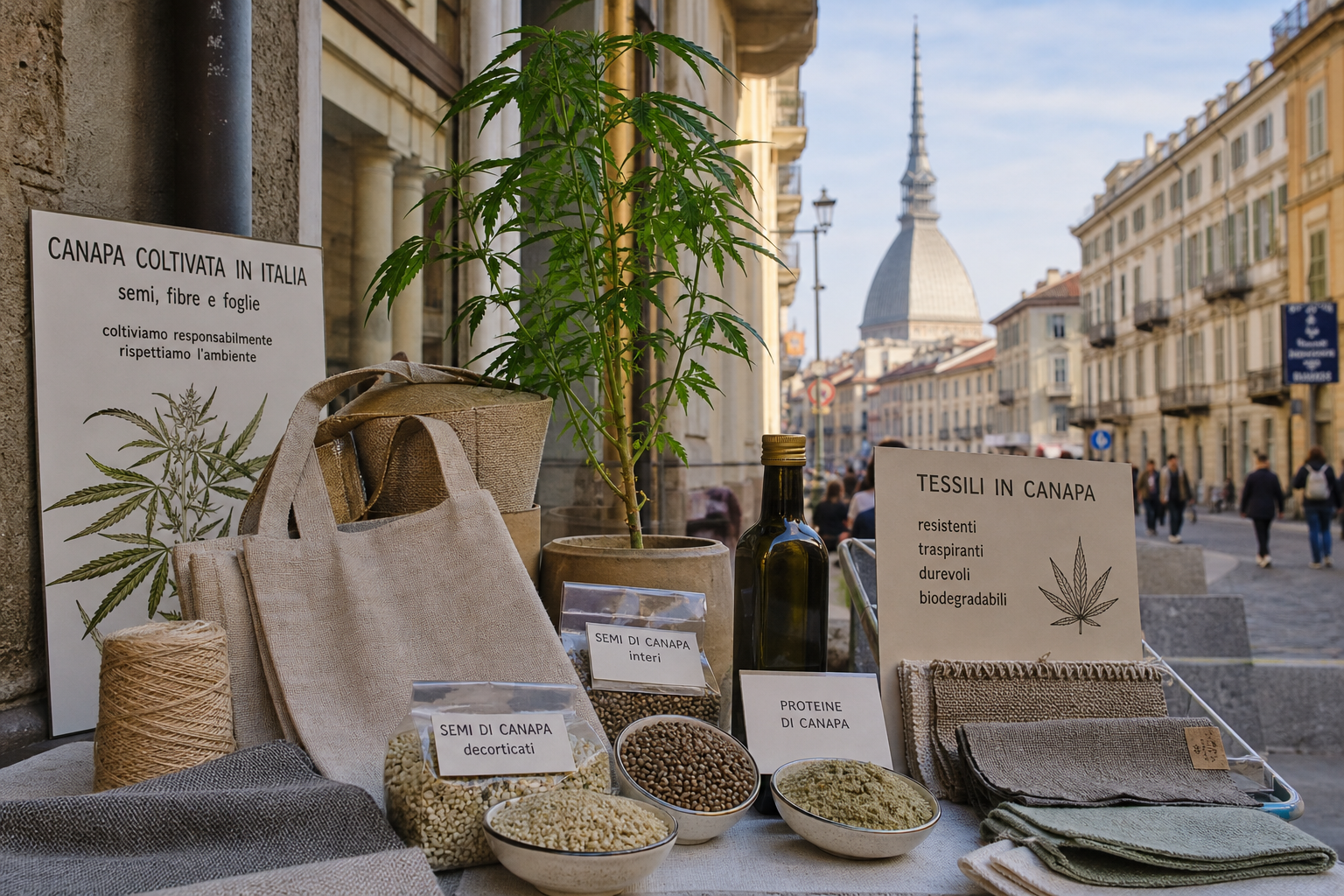
Hemp in Turin, Italy, sits at the intersection of agriculture, food, wellness, textiles and Italy’s complex cannabis rules. The word “hemp” can describe low-THC industrial cannabis, hemp seed foods, fibre, cosmetics or products associated with CBD. Those categories are not automatically treated alike under Italian law.
For residents and visitors, the safest approach is to identify the product first, check its ingredients and labelling, and avoid assuming that something sold in a shop is lawful to possess, consume or carry across a border. Turin has no separate city-level hemp regime: national Italian rules apply, alongside European product and food requirements. This guide explains the practical distinctions without treating hemp as a substitute for medical care or legal advice.
What hemp means in Turin
Hemp is generally cultivated cannabis with a low concentration of intoxicating THC and varieties selected for materials, seeds or other non-intoxicating uses. It is different from marijuana in everyday commercial language, although both come from the Cannabis sativa plant. The distinction depends on the plant variety, the plant part, the intended use and the applicable THC rules.
In Turin, the term may appear on several kinds of products:
- Hemp seed foods: shelled seeds, oil and flour are used as foods and contain useful nutrients, but they are not intoxicating.
- Fibre and hurd: hemp can be processed into textiles, paper, insulation, building materials and other industrial goods.
- Cosmetics: hemp seed oil may be used as an ingredient in skincare and body products. A cosmetic claim is not the same as a medical claim.
- CBD products: these require particular care because their legal status can depend on the formulation, intended use and current national interpretation.
- Hemp flowers and extracts: these are more legally sensitive than seeds or fibre and should not be treated as ordinary souvenirs.
Searching for weed in Turin can therefore produce misleading results. A product described as hemp may be non-intoxicating, while another cannabis-derived product may raise separate possession, food, medicine or controlled-substance questions.
Hemp in Turin, Italy: the legal framework
Italy’s industrial hemp framework is associated with Law 242/2016, which supports the cultivation of permitted hemp varieties for specified purposes. The law does not create a general permission to grow, sell or consume every cannabis product. It also does not mean that a low-THC label overrides rules applying to medicines, foods, extracts or intoxicating substances.
You can read the official text of Italy’s Law 242/2016 on Normattiva. Because rules and enforcement priorities can change, especially around flowers, extracts and CBD-containing products, consumers should check current official guidance before making a commercial or travel decision.
At a practical level, the following principles matter:
- Low THC is not the only test. The product’s plant part, presentation, intended use and supply chain may also matter.
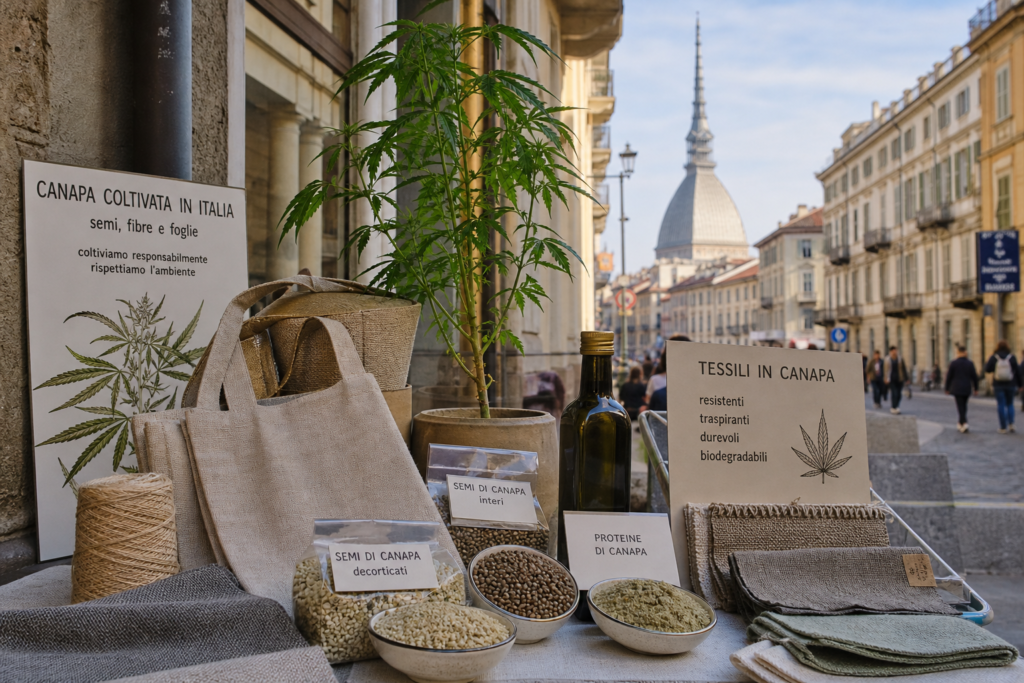
- Seeds and fibre are not equivalent to flowers. A lawful hemp textile or bag does not establish that hemp flowers or a concentrated extract are lawful.
- Food rules are separate. Hemp seed foods are different from CBD foods or supplements. Novel-food and food-safety requirements may apply to products containing extracts.
- Medical products follow medical rules. A prescription medicine cannot be replaced by an unregulated shop product simply because both mention cannabis.
- Local retailers cannot grant legal status. A point of sale, market stall or online listing is not proof that a product is compliant.
Recent changes and court or administrative interpretations can affect hemp flowers and derivatives. Before buying or transporting a product, consult current information from the Italian Ministry of Agriculture, Food Sovereignty and Forestry and other competent authorities. When the legal consequences could be serious, obtain advice from an Italian lawyer rather than relying on advertising.
Industrial hemp in Turin and Piedmont
Turin’s connection with hemp is primarily practical rather than recreational. The city’s design, manufacturing, construction, food and research communities can all intersect with plant-based materials. Hemp fibre may be considered for textiles, composite materials, insulation or paper, while hurd can be used in certain building applications. These products are normally assessed according to their material, manufacturing and safety standards rather than as intoxicating cannabis.
For growers in Piedmont, compliance begins before planting. Farmers need to use appropriate certified seed, retain documentation and follow agricultural, environmental and land-use requirements. Cultivation intended for commercial supply may also involve contracts, traceability, testing and sector-specific rules. A home grower should not assume that a packet labelled “hemp” permits cultivation without checking the current requirements.
Why traceability matters
A responsible supplier should be able to explain the plant variety, product category, batch information and intended use. For ingestible goods, packaging should identify the operator responsible for placing the product on the market and provide legally required food information. For cosmetics, look for a complete ingredient list and the responsible person in the European market.
Laboratory results can help, but a laboratory report is not a universal permit. Check that the report identifies the tested batch, method, date and relevant cannabinoids. A screenshot showing only a claimed CBD percentage is weak evidence, particularly if the seller gives no company details or traceability information.
Buying hemp products in Turin
Hemp products in Turin may be available through health-food retailers, specialist shops, pharmacies, markets, farm outlets and online sellers. The right place to buy depends on the category. Hemp seed oil for culinary use should be sold as a properly labelled food; a topical product should be presented as a cosmetic; and a medicine should come through the regulated medical system.
Before purchasing, use this checklist:
- Read the exact product name and intended use rather than relying on the word “hemp.”
- Check the ingredient list, net quantity, producer or importer, lot number and expiry or minimum durability date.
- Ask whether the product contains flowers, resin, extract or isolated cannabinoids.
- Look for a batch-specific certificate of analysis when cannabinoid content is relevant.
- Be cautious of promises to treat anxiety, pain, insomnia or other conditions. Such claims may indicate that a product is being marketed as a medicine without appropriate authorization.
- Keep the receipt and original packaging, especially if you are travelling.
Consumers comparing CBD in Turin with hemp seed products should remember that these are not interchangeable. Hemp seed oil naturally differs from a cannabinoid extract, and a cosmetic intended for external use is not automatically suitable for ingestion. If a product causes dizziness, drowsiness, palpitations or another unexpected reaction, stop using it and seek medical advice.
Hemp, CBD and medical cannabis: do not confuse the categories
People sometimes use “hemp,” “CBD” and “medical cannabis” as if they were synonyms. They are not. Hemp may refer to an agricultural crop or a finished material. CBD is one cannabinoid and can appear in different formulations. Medical cannabis is supplied within a clinical and pharmacy framework for specific therapeutic needs.
Anyone considering cannabis for a health condition should speak with a qualified clinician. This is particularly important for people who are pregnant, under eighteen, managing liver disease, or taking medicines that may interact with cannabinoids. Non-prescription products can vary in composition and may not provide the dose or quality expected from a prescribed preparation.
For broader context on Italian cannabis rules, see our guides to marijuana in Milan and cannabis in Rome. The national framework is shared, but the articles may help visitors understand why retail availability does not necessarily equal legal permission.
Travel advice for visitors to Turin
Do not carry hemp flowers, CBD oils, extracts or edible products into Italy merely because they were purchased legally elsewhere. Import rules can be stricter than retail rules, and a product’s certificate from another country does not guarantee acceptance at an Italian border. The same caution applies when leaving Italy with a product bought in Turin.
Hemp seed foods and ordinary fibre goods are generally easier to understand, but they should still remain in their original packaging when practical. Avoid loose plant material, unlabelled oils and products making strong therapeutic claims. Never place a questionable product in checked luggage and assume that airport screening will distinguish it from controlled cannabis.
Visitors should also avoid consuming intoxicating products in public spaces or driving after using any substance that could impair attention. If you are unsure whether an item is a food, cosmetic, medicine or controlled product, leave it behind and ask an official authority or qualified professional.
How to assess claims about hemp in Turin
Marketing language can make hemp appear simpler than it is. Words such as “natural,” “legal,” “full spectrum” and “wellness” do not establish safety or authorization. A reliable assessment asks four questions: what is in the product, how is it intended to be used, who placed it on the market, and which rules apply to that category?
Be especially careful with social-media sellers, informal markets and products sold without Italian or legally required European labelling. A low price, attractive packaging or a claimed percentage of CBD is not a substitute for traceability. If a seller refuses to identify the manufacturer or batch, choose a different product.
Conclusion
Hemp in Turin, Italy, covers legitimate agricultural and commercial uses, from seed foods and fibre to cosmetics and building materials. However, the category becomes more complicated when products contain flowers, extracts or concentrated cannabinoids. Italian law distinguishes between these uses, and the rules can change.
For safer decisions, identify the product category, read the label, preserve traceability, avoid unsupported medical claims and check current official guidance before buying or travelling. Turin does not have a special cannabis exception, so national Italian law remains the starting point for residents, businesses and visitors alike.