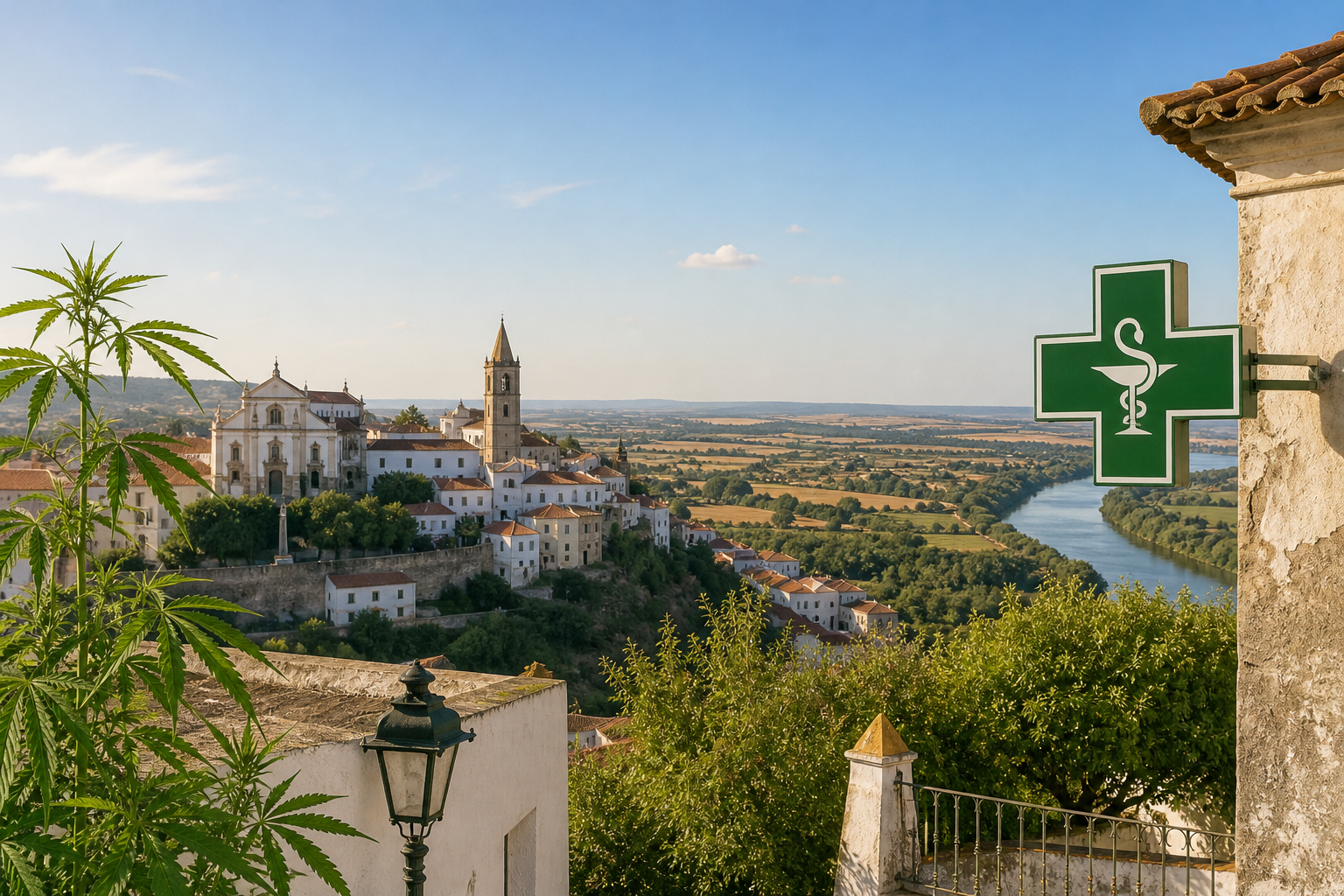
Understanding Cannabis trends in Santarém requires more than looking for a shop or assuming that Portugal has legalised recreational cannabis. Santarém sits in the Ribatejo region, with a mix of urban neighbourhoods, agricultural communities, students, commuters and visitors. Those different settings shape how people encounter cannabis, hemp products, medical treatment and public information.
This guide explains the main developments without treating rumours or online listings as proof of a legal market. It covers the difference between decriminalisation and legalisation, the practical meaning of medical access, the growing visibility of CBD and hemp, and sensible ways to approach cannabis-related information in the city and wider district.
Cannabis trends in Santarém: the legal starting point
Portugal is widely known for its 2001 approach to the decriminalisation of personal possession and use of drugs. Decriminalisation does not mean that recreational cannabis is legally sold, commercially supplied or freely consumed in public. In general terms, possession for personal use can be handled through an administrative and health-oriented process rather than the same criminal route used for trafficking. The exact circumstances matter, including the substance, amount, suspected purpose and behaviour involved.
Supply, trafficking, cultivation outside authorised frameworks and other forms of commercial dealing remain serious legal matters. Visitors should therefore avoid interpreting Portugal’s reputation for a health-led drug policy as permission to buy cannabis from informal sellers or carry it across borders.
For current national information, the Portuguese government’s SICAD information portal is a more reliable starting point than social media posts, anonymous forums or outdated travel articles. Rules and enforcement practices can change, and a local article should not replace advice from a qualified lawyer when a specific legal issue is involved.
What this means in everyday life
In Santarém, the practical distinction is important. A person may hear that possession for personal use is decriminalised and incorrectly conclude that public smoking, home cultivation, selling, importing or driving after consumption is permitted. Those are separate questions. Public nuisance, impaired driving, possession connected with supply and conduct affecting other people can create additional legal or safety consequences.
- Decriminalisation is not the same as a regulated recreational retail market.
- Medical cannabis follows a controlled prescription and dispensing framework.
- Products labelled CBD or hemp are not automatically risk-free or legal in every form.
- Taking cannabis across the Portuguese border can create serious problems, even when a product was obtained lawfully elsewhere.
How cannabis in Santarém fits Portugal’s medical framework
Medical cannabis is one of the clearest areas of formal development in Portugal. Authorised products may be prescribed for particular medical situations when a clinician considers them appropriate, and they are dispensed through regulated channels. This is different from buying a recreational product in a dispensary-style shop.
People searching for medical cannabis in Santarém should begin with a doctor or another appropriate healthcare professional. A clinician can assess symptoms, existing treatments, possible interactions and whether an authorised cannabis-based medicine is suitable. Patients should also ask how a prescription is fulfilled, what documentation is needed and whether follow-up is part of the treatment plan.
The national medicines authority, INFARMED’s official website, provides authoritative information about medicines, regulation and pharmaceutical oversight. It is the appropriate reference for checking whether a product or medicine belongs to a recognised legal category rather than relying on packaging claims or a seller’s description.
Why medical claims need caution
Cannabis-related marketing often uses broad language about pain, anxiety, sleep or inflammation. Evidence varies substantially by condition, product and dose. A product sold as a supplement, cosmetic or hemp item should not be presented as a substitute for diagnosis or prescribed treatment.
Medical use can also involve side effects such as drowsiness, dizziness, changes in concentration or interactions with other medicines. These risks matter for people who drive, operate machinery, care for children or manage long-term health conditions. Self-medication may delay proper care, particularly when a symptom has an unexplained or worsening cause.
CBD, hemp and the changing retail conversation
One visible part of cannabis culture in Santarém is the broader interest in CBD and hemp-derived products. These may appear in specialist retail settings, wellness conversations, online stores or markets focused on natural goods. Their presence can make the overall cannabis sector look more open than it legally is, but product categories remain important.
CBD products can differ in formulation, intended use, labelling and regulatory status. A shopper should not assume that a product has been independently tested simply because it has a professional package or uses the word “natural”. Nor should CBD be confused with intoxicating cannabis products containing meaningful levels of THC.
A practical checklist for shoppers
- Read the ingredient list, intended use and warnings rather than relying on the front label.
- Look for clear information about the responsible business, batch details and testing where relevant.
- Be cautious of products making guaranteed medical or intoxicating claims.
- Ask a pharmacist or healthcare professional about possible interactions with existing medicines.
- Do not drive or perform safety-sensitive tasks if a product causes drowsiness or impaired concentration.
- Keep oils, gummies and other products away from children and pets.
Rules may also differ between food, cosmetics, supplements, medicines and technical hemp goods. If a seller cannot clearly explain what category a product belongs to, that uncertainty is a reason to pause rather than purchase.
Local culture, privacy and public health
Discussions about cannabis in Santarém are likely to reflect the city’s varied social landscape. A university-age adult, a patient exploring treatment, a long-term resident and a visitor may have entirely different concerns. A useful local conversation avoids both alarmism and promotion: it recognises potential harms while acknowledging that some people are seeking information about regulated medical options or lower-risk choices.
Privacy is particularly relevant in smaller communities. People may hesitate to ask about substance use because they fear judgement or exposure. Responsible information should avoid identifying individuals, encouraging public consumption or treating personal stories as medical evidence. Support should focus on confidential healthcare, accurate legal information and practical risk reduction.
For anyone worried about dependence, escalating use, withdrawal or the effect of cannabis on work, relationships or mental health, speaking with a healthcare professional is more useful than trying to manage the problem through anonymous online advice. Urgent symptoms such as severe confusion, chest pain, loss of consciousness or a serious mental-health crisis require immediate medical attention.
Visitors and the idea of cannabis tourism in Santarém
Santarém’s heritage, food culture, agricultural surroundings and position between Lisbon and central Portugal may attract visitors interested in local experiences. That does not make the city a destination with a legal recreational cannabis tourism industry. Searches for weed in Santarém may produce informal offers, social-media contacts or delivery claims, but visibility online is not evidence of authorisation or consumer protection.
Visitors should not buy cannabis from street sellers, carry it through airports or borders, consume in accommodation without permission, or assume that a private setting removes every legal and safety concern. Driving after using cannabis is also an obvious risk, especially for visitors unfamiliar with Portuguese roads or travelling between towns.
A responsible visitor can enjoy Santarém without making cannabis the centre of the trip. If the subject arises, the safest approach is to check official Portuguese information, respect accommodation rules, avoid unknown products and seek professional advice for genuine medical needs.
Comparing Santarém with wider Portuguese trends
Local searches can be misleading when they treat national developments as evidence of a city-specific market. Portugal’s legislation is mainly national, while access to healthcare, retail availability and public attitudes can vary by place. Santarém should therefore be understood through the national framework and its own community context rather than through comparisons with countries that have licensed recreational sales.
Readers interested in how similar questions are explained elsewhere in Portugal can compare this guide with articles on cannabis policy in Aveiro and cannabis information in Viseu. Such comparisons are useful for understanding recurring themes—law, health, access and responsible awareness—but they should not be taken as proof that a particular product or service is available in Santarém.
Trends worth watching
- Better public education: Clearer explanations of decriminalisation can reduce the gap between public perception and the law.
- More careful medical conversations: Patients increasingly need evidence-based guidance rather than broad wellness promises.
- Product scrutiny: Consumers are likely to pay more attention to labels, testing, ingredients and responsible sellers.
- Health-led support: Awareness of problematic use should encourage confidential care instead of stigma.
- Digital verification: Residents and visitors need ways to distinguish official information from unlicensed advertising and outdated content.
How residents can make informed decisions
A sensible approach begins by defining the question. Is the issue legal possession, medical treatment, CBD shopping, public behaviour, driving or concern about someone’s use? Each question calls for a different source. A healthcare professional is suitable for treatment; official authorities are suitable for rules; emergency services are appropriate for urgent danger.
It is also wise to check the date of any article or social post. Cannabis terminology changes quickly, and businesses may use words such as “dispensary”, “clinic” or “wellness” in ways that do not describe an authorised medical or retail service. Do not send identification, payment or personal health information to an unknown seller simply because a listing appears local.
For families and educators, neutral language works best. Explain that cannabis can affect attention, memory, coordination and judgement, with potentially greater concerns for adolescents and people vulnerable to mental-health problems. At the same time, avoid exaggerated claims that make trustworthy guidance harder to believe.
Conclusion
The most important cannabis trend in Santarém is not the appearance of a recreational dispensary market. It is the gradual need for more precise conversations about decriminalisation, medical cannabis, CBD and public health. Portugal’s framework can be misunderstood when legal, medical and commercial categories are blended together.
Residents and visitors can make better decisions by checking official sources, questioning unsupported product claims, protecting privacy and seeking healthcare advice when treatment or dependence is involved. Whether the search concerns cannabis laws in Santarém, medical access or responsible awareness, accuracy is more valuable than an informal promise of easy availability.