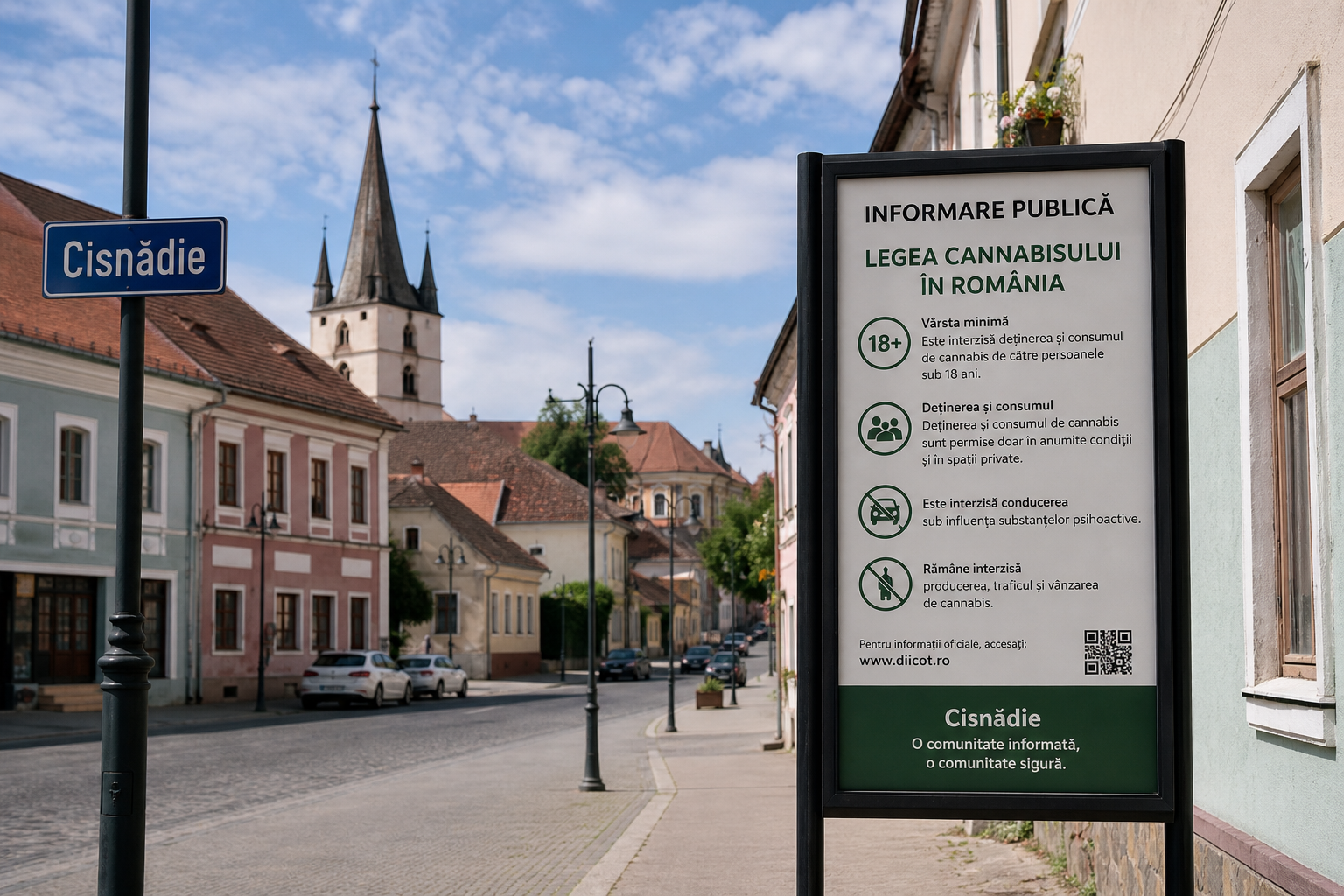
People searching for Cannabis social clubs in Cisnădie may be trying to understand whether private cannabis associations, member-only spaces or informal gatherings are permitted in this Transylvanian town. The short answer is that Romania does not have a clear legal framework equivalent to the regulated cannabis social clubs found in some other European jurisdictions. A club label, private venue or membership arrangement does not automatically make cannabis possession, cultivation, distribution or consumption lawful.
This guide explains the practical legal position, the risks of informal offers and the safer ways to assess cannabis-related information in Cisnădie. Laws can change and individual cases depend on the substance, quantity, conduct and evidence involved, so anyone facing an investigation should obtain advice from a qualified Romanian lawyer.
Are cannabis social clubs legal in Cisnădie?
There is no established Romanian licensing system that authorizes cannabis social clubs to grow cannabis collectively, distribute it to members or provide a place for recreational consumption. Cisnădie is governed by Romanian national law, not by a separate city-level cannabis regime. Local authorities cannot create a legal exception for recreational cannabis through a club registration, informal permit or private agreement.
In practical terms, a group that collects money, stores cannabis, shares cannabis among members or organizes regular distribution could attract scrutiny even if it describes itself as a community association. The legal assessment would depend on what the organization actually does, rather than the name used in advertising or membership documents.
Readers comparing the subject with other Romanian cities may also find it useful to review this explanation of cannabis decriminalization in Sighișoara. The same national-law principle applies: a city’s cultural identity or local setting does not by itself change the rules on controlled substances.
Cannabis laws in Cisnădie and Romania
Romania regulates controlled drugs through national legislation. Cannabis and cannabis resin are treated as controlled substances, and the legal consequences can be serious when conduct involves unauthorized possession, cultivation, sale, transport, supply or importation. The exact outcome depends on the facts and the applicable legal provisions at the time.
Possession and personal use
Possession is not made lawful simply because a person claims the cannabis came from a social club or was intended for personal use. Personal-use cases and supply-related cases may be treated differently, but that distinction should not be mistaken for a general permission to possess cannabis. Quantity, packaging, communications, money transfers and other evidence may all affect how authorities interpret the situation.
For the official source of Romanian legislation, consult the Romanian legislation portal. Because legal texts and interpretations can change, relying on social-media summaries or club advertisements is risky.
Cultivation and collective growing
Growing cannabis for a club, even in a private home or shared garden, can create additional legal exposure. Collective cultivation may be viewed differently from an isolated personal-use allegation, particularly if plants, equipment, payments or a distribution structure are involved. There is no general “members-only” exemption that makes cooperative cultivation safe.
Sale, sharing and delivery
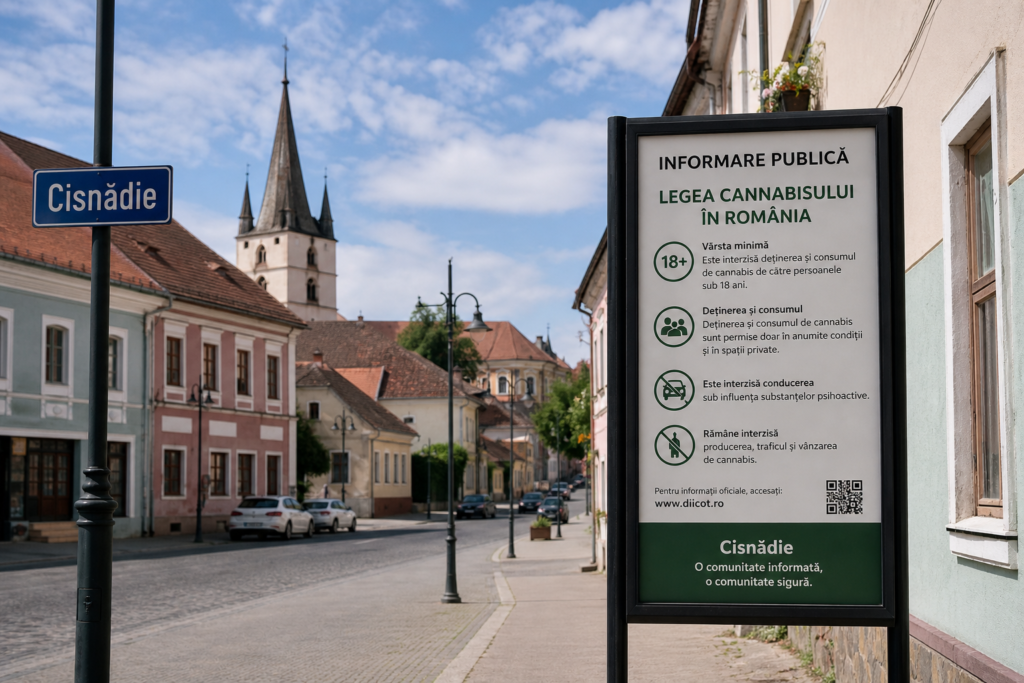
Commercial language such as “membership,” “donation,” “subscription” or “delivery fee” does not necessarily change the substance of a transaction. Giving cannabis to another person can also create legal problems, even when no conventional retail price is advertised. Visitors should be especially cautious about online accounts promising discreet delivery, private access or guaranteed legal protection.
What “weed in Cisnădie” listings may really mean
Searches for weed in Cisnădie can produce a mixture of unrelated results. Some may refer to cannabis, some to hemp products, and others to businesses or social pages using ambiguous language. An online listing is not proof that an organization is licensed to handle cannabis or that its products have been tested.
Warning signs include requests for cryptocurrency or advance transfers, unclear business identities, invitations to unverified private addresses, claims that police cannot enter a club and promises that membership removes legal risk. A polished website or Romanian-language terms and conditions do not establish regulatory approval.
Do not attempt to verify an alleged club by ordering a product, carrying cannabis across town or inviting strangers to a private residence. Preserve relevant messages if you believe a scam or coercive situation is involved, and contact the appropriate authorities rather than confronting the sender.
Medical cannabis in Cisnădie: avoid confusing treatment with recreational access
People searching for medical cannabis in Cisnădie may be looking for relief from pain, sleep problems or another health condition. That does not mean that recreational cannabis obtained through a club is a lawful medical treatment. Medical decisions should be made with a doctor, and products should come through legitimate medical or pharmacy channels where permitted.
Patients should distinguish between cannabis, cannabis-derived medicines, hemp and CBD products. These categories can have different compositions and legal requirements. A product marketed as CBD may still be mislabeled, contain more THC than expected or lack reliable testing. The National Agency for Medicines and Medical Devices of Romania is an appropriate starting point for official medicines information; its website is available at ANMDMR.
Questions to ask a healthcare professional
- What diagnosis or symptom is being treated?
- Are there approved or legally available treatments with better evidence?
- Could a cannabis-related product interact with current medicines?
- Could treatment affect driving, concentration or workplace safety?
- What documentation is needed when traveling with prescribed medicine?
A doctor or pharmacist can also help identify whether a product is a medicine, a food supplement, a cosmetic or an unregulated item. Do not stop prescribed treatment or replace it with cannabis based on an online recommendation.
Health and personal safety at informal cannabis gatherings
Even apart from legal concerns, informal clubs can present health and safeguarding risks. Products may differ substantially in potency, contain contaminants or be misrepresented. Shared smoking or vaping equipment can also create hygiene concerns, while crowded or unfamiliar venues may increase the risk of theft, harassment or unwanted contact.
Anyone who chooses to use an intoxicating substance should avoid driving, cycling in traffic or operating machinery. Combining cannabis with alcohol, sedatives or other drugs can increase impairment and may make it harder to recognize a medical emergency. Extra caution is appropriate for people under 18, pregnant people and those with a personal or family history of psychosis or serious mental-health difficulties.
Recognizing an emergency
Severe confusion, loss of consciousness, chest pain, seizures, extreme agitation or difficulty breathing requires urgent medical attention. Tell emergency responders what may have been taken if it is safe to do so. Protecting someone’s health is more important than trying to conceal the substance.
Travel and privacy considerations in Cisnădie
Cisnădie is near Sibiu and is connected to surrounding communities by local and regional roads. That makes it important to remember that carrying cannabis from another town, across a county boundary or through transport hubs can create additional legal and practical risks. Do not assume that cannabis obtained elsewhere is acceptable to bring into Cisnădie.
Visitors should not carry cannabis onto public transport, into accommodation or across national borders. Border and travel rules can be stricter than domestic rules, and a product that appears legal in one country may be prohibited in Romania. A prescription or foreign club membership should not be assumed to provide automatic protection.
Privacy is another consideration. Informal operators may collect identity documents, photographs, payment details or contact lists without explaining how that information is stored. Avoid sending identity documents to an unverified account. If a business claims to be legitimate, ask for its registered identity, privacy information and a clear explanation of the service before sharing personal data; these details still do not prove that cannabis activities are lawful.
Safer ways to research cannabis in Cisnădie
Reliable research starts with the legal category involved. Ask whether the subject is recreational cannabis, a prescribed medicine, industrial hemp or a CBD product. Then check an official legal or health source rather than relying on a club’s promotional claims.
- Confirm the date and jurisdiction of any legal information.
- Look for the actual Romanian legal text or an official health-agency explanation.
- Check whether a product has a named manufacturer, ingredients and suitable testing information.
- Speak with a Romanian lawyer about a specific legal concern.
- Speak with a doctor or pharmacist about health, medicines and possible interactions.
For broader comparison, readers can also consult this practical guide to cannabis laws in Fălticeni and this overview of cannabis possession regulations in Onești. These articles should be used as orientation, not as a substitute for current legal advice.
What could change in the future?
European cannabis policy continues to develop, but discussion of reform is not the same as a current legal authorization. If Romania introduces a regulated club model, the rules would likely need to define licensing, cultivation, age limits, testing, advertising, membership, taxation, public consumption and enforcement. Until an official Romanian framework says otherwise, readers should not assume that foreign club models apply in Cisnădie.
Monitor official Romanian legal and health institutions for changes. Be skeptical of claims that a new proposal, court decision or European development has already legalized local cannabis clubs.
Conclusion
At present, Cannabis social clubs in Cisnădie should be approached as an unregulated and legally uncertain concept, not as an established lawful service. Romanian national law remains central, and membership, private premises or donation language does not automatically protect possession, cultivation, sharing or distribution.
The safest approach is to avoid unverified clubs and online sellers, seek official legal information, consult a qualified lawyer for a specific case and discuss medical concerns with a licensed healthcare professional. Whether the search concerns cannabis in Cisnădie, CBD or a possible medical treatment, careful verification is more reliable than promotional claims.