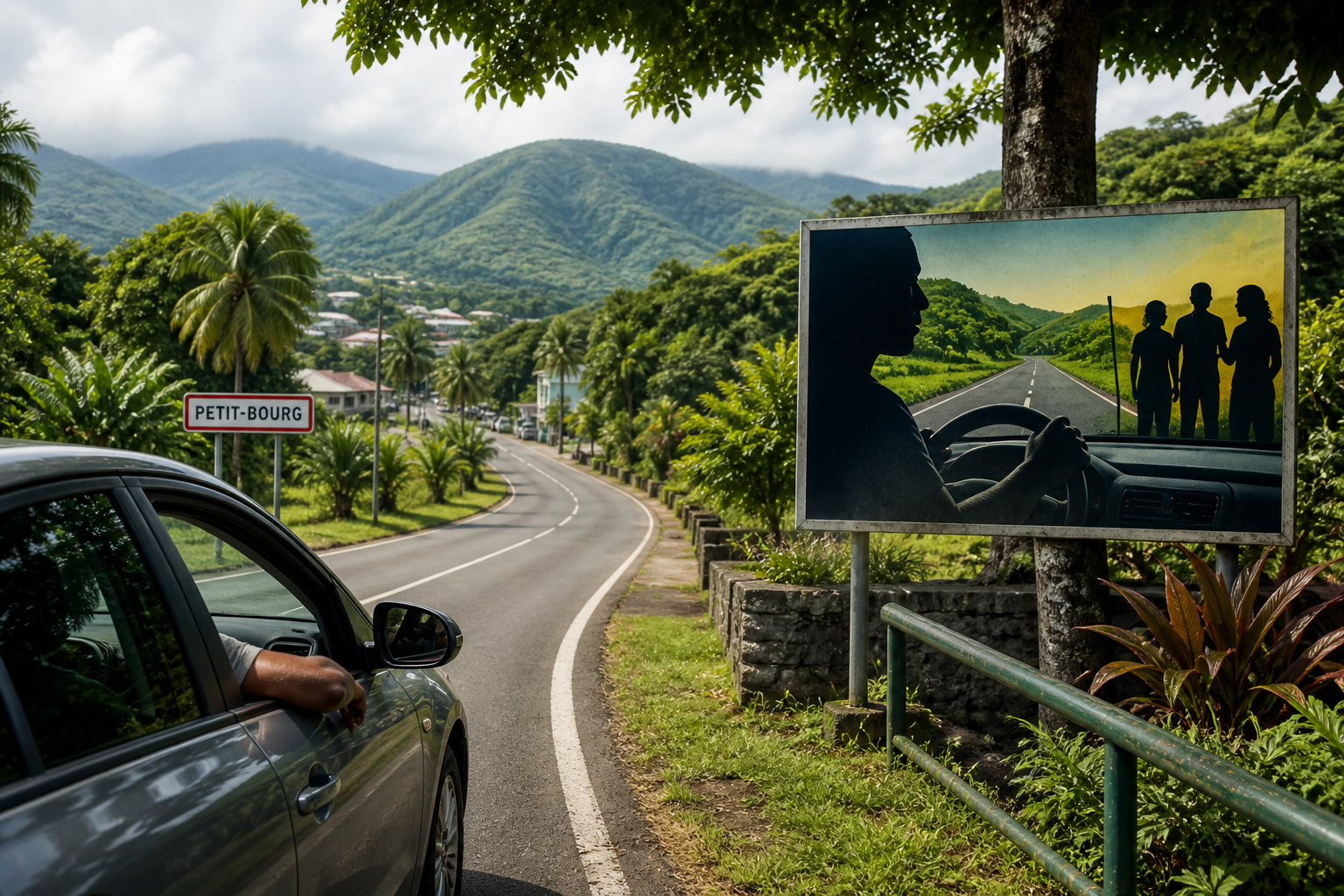
Understanding Cannabis risks in Petit-Bourg means looking beyond questions about access or personal choice. Petit-Bourg, in Guadeloupe, is surrounded by a tropical environment that encourages outdoor activities, driving and tourism, but French national drug laws apply there just as they do elsewhere in France. Cannabis use can create health, legal, road-safety and travel problems, particularly when people misunderstand the difference between cannabis, CBD and regulated medical treatment.
This guide explains the main risks in practical terms. It is not a substitute for medical or legal advice, and laws and enforcement procedures can change. For additional local context, see this guide to marijuana risks in Les Abymes, another Guadeloupe location.
Cannabis risks in Petit-Bourg: the legal position
Petit-Bourg follows French national law. Recreational cannabis containing THC is illegal to possess, buy, sell, transport, grow or use. A relaxed social setting, a private holiday rental or the fact that cannabis may be encountered in other places does not make possession or consumption lawful.
French authorities may respond to simple use or possession through a fixed penalty procedure in some circumstances, while more serious cases can lead to criminal proceedings. The outcome can depend on the quantity, the circumstances, prior history and whether authorities suspect supply or other offences. Visitors should not assume that a small amount is automatically risk-free.
For a current overview of public rules and administrative procedures, consult the official Service-Public.fr information portal. It is also wise to check current guidance before travelling because enforcement practices and legal provisions can be updated.
Why location does not create an exception
Petit-Bourg is a commune in Guadeloupe, an overseas department and region of France. Local geography and distance from mainland France do not create a separate recreational cannabis market or a local legalization system. French rules also apply when cannabis is carried between communes, taken to an airport or moved on or off the island.
Transporting cannabis across borders is especially risky. Taking it on a flight, sending it by post or carrying it between Guadeloupe and another territory can create additional customs or trafficking concerns. Never rely on informal advice that cannabis is permitted because it is commonly discussed or sold in a particular area.
Health effects and immediate safety concerns
Cannabis can affect attention, reaction time, coordination, memory and judgment. The effects vary with THC strength, dose, route of administration, personal tolerance, sleep, other substances and underlying health conditions. A product that feels mild to one person may cause severe discomfort for another.
Short-term effects
Some people experience relaxation or euphoria, but unwanted effects can include anxiety, panic, dizziness, confusion, nausea, rapid heartbeat and impaired balance. Strong products and edible cannabis are particularly difficult to judge because the amount consumed may not be obvious and the effects can take longer to appear.
In Petit-Bourg’s warm, humid climate, intoxication can also make ordinary safety decisions harder. Hiking, swimming, boating, cycling and driving require concentration and physical coordination. Cannabis does not become safer because it is used outdoors or in a scenic setting.
Longer-term concerns
Frequent or heavy use can contribute to dependence and may interfere with motivation, learning, work, relationships or daily responsibilities. People who begin using cannabis at a younger age may face greater developmental and mental-health concerns. Regular users who stop may experience irritability, sleep problems, reduced appetite, restlessness or cravings.
Cannabis may also worsen symptoms for some people with anxiety, depression or psychotic disorders. Anyone with a personal or family history of psychosis, bipolar disorder or serious mental-health difficulties should discuss cannabis with a qualified health professional before using it. Mixing cannabis with alcohol, sedatives or other drugs increases unpredictability and impairment.
Driving, roads and outdoor activities
Driving after using cannabis is a major risk in Guadeloupe as elsewhere in France. French roadside enforcement can test drivers for drugs, and a positive result for cannabis can create serious legal consequences even when the driver does not feel noticeably intoxicated. Combining cannabis with alcohol makes the danger greater.
The safest approach is simple: do not drive, rent a scooter, cycle on traffic-heavy roads or operate a boat after using cannabis. Do not assume that sleeping for a few hours guarantees a negative test or full recovery. THC can remain detectable after the noticeable effects have faded, and individual clearance varies.
- Arrange a sober driver before any gathering where cannabis may be present.
- Use a taxi or another lawful transport option instead of riding or driving while impaired.
- Keep cannabis away from vehicle cabins, children and other passengers.
- Do not combine cannabis with alcohol, prescription sedatives or recreational drugs.
- Postpone swimming, climbing, hiking in difficult terrain and other activities requiring rapid judgment.
For visitors, a drug-driving incident can mean police procedures, court problems, insurance complications, a driving ban or disruption to onward travel. A holiday is not a reason to underestimate these consequences.
Edibles, concentrates and product uncertainty
Products sold informally may have unknown THC content, contaminants or misleading labels. Edibles can take much longer to produce effects than inhaled cannabis, encouraging a person to consume more before the first dose has fully taken effect. This can lead to intense anxiety, vomiting, confusion or a medical emergency.
Concentrates and high-potency products can deliver much more THC than inexperienced users expect. Smoking also exposes the lungs to irritants, while combining cannabis with tobacco adds another set of health concerns. There is no reliable way to verify the strength or purity of an unregulated product by appearance alone.
If someone becomes unresponsive, has trouble breathing, experiences a seizure, develops severe chest pain or cannot be kept safe, call emergency services. Stay with the person, provide honest information about what may have been taken and do not encourage them to consume more substances. In less urgent situations, seek advice from a healthcare professional or a recognized French drug-information service such as Drogues Info Service.
CBD and cannabis in Petit-Bourg
CBD is not the same as intoxicating THC, but CBD products are not automatically risk-free or suitable for every situation. Some products may contain trace amounts of THC or may be inaccurately labelled. That matters for anyone who could face a roadside drug test, works in a safety-sensitive role or is subject to sporting rules.
CBD can also interact with medicines and may cause unwanted effects. Ask a pharmacist or doctor before using it if you take regular medication, have liver problems, are pregnant or are caring for a child. Do not assume that a product labelled “CBD” can be taken across borders without checking the destination country’s rules.
Searches for weed in Petit-Bourg may return informal sellers or social-media offers, but buying from an unverified source adds legal, financial and health risks. Packaging, claimed strain names and online reviews cannot establish that a product is lawful, accurately dosed or safe.
Medical cannabis in Petit-Bourg
Medical cannabis in Petit-Bourg should not be confused with recreational use or self-medication. Access to cannabis-based treatment in France is controlled and depends on the applicable national medical framework, approved products and healthcare supervision. A prescription from another country may not automatically authorize possession or use in France.
Do not stop prescribed treatment or replace it with cannabis without speaking to the prescribing clinician. Patients travelling with controlled medicines should carry appropriate documentation, retain medicines in original packaging and confirm the rules with official authorities before departure. Bringing flower, oils or edible products from abroad can create problems even when the product was legally obtained at home.
Practical advice for residents and visitors
Risk reduction starts with avoiding illegal possession and avoiding intoxicated activities. If cannabis is present in a group, keep children and non-users away from smoke and products, do not share with anyone who has not freely agreed, and never pressure a visitor to try it. Extra caution is needed around pregnancy, breastfeeding, mental-health conditions and medicines that cause drowsiness.
- Check current French rules through official sources rather than relying on travellers, sellers or social media.
- Never carry cannabis through an airport, port, border checkpoint or into another country.
- Plan transport before consuming any intoxicating substance.
- Keep all cannabis and CBD products labelled and secured away from children and pets.
- Seek medical advice for repeated use, withdrawal symptoms, panic, paranoia or difficulty cutting down.
People who need urgent help should contact emergency services. For a non-emergency concern about drug use, a doctor, pharmacist or public health service can offer confidential guidance. If the issue involves a visitor, it may also be sensible to contact travel insurance or a consulate after any police or hospital incident.
How Petit-Bourg fits into wider Guadeloupe travel planning
Visitors often move between Petit-Bourg, Basse-Terre, Pointe-à-Pitre, Les Abymes and Baie-Mahault. The same French legal framework follows them across the island. Reading broader guidance on cannabis travel rules in Baie-Mahault can help clarify why transport, accommodation and airport decisions matter as much as what happens at the point of purchase.
Local scenery and tourism do not remove ordinary safety obligations. Whether staying in a guesthouse, visiting a beach, travelling through the National Park area or attending a private gathering, keep decisions focused on sobriety, lawful conduct and the safety of everyone nearby.
Conclusion
The main cannabis risks in Petit-Bourg are avoidable: illegal possession or supply, impaired driving, uncertain product strength, adverse health effects and complications for visitors carrying cannabis across borders. Recreational cannabis remains prohibited under French law, while CBD and medical products have their own conditions and limitations.
Stay informed through official French sources, avoid unregulated products, never drive after use and seek professional help when cannabis is affecting health or daily life. These steps reduce the chance that a short-term decision will become a legal, medical or travel crisis.