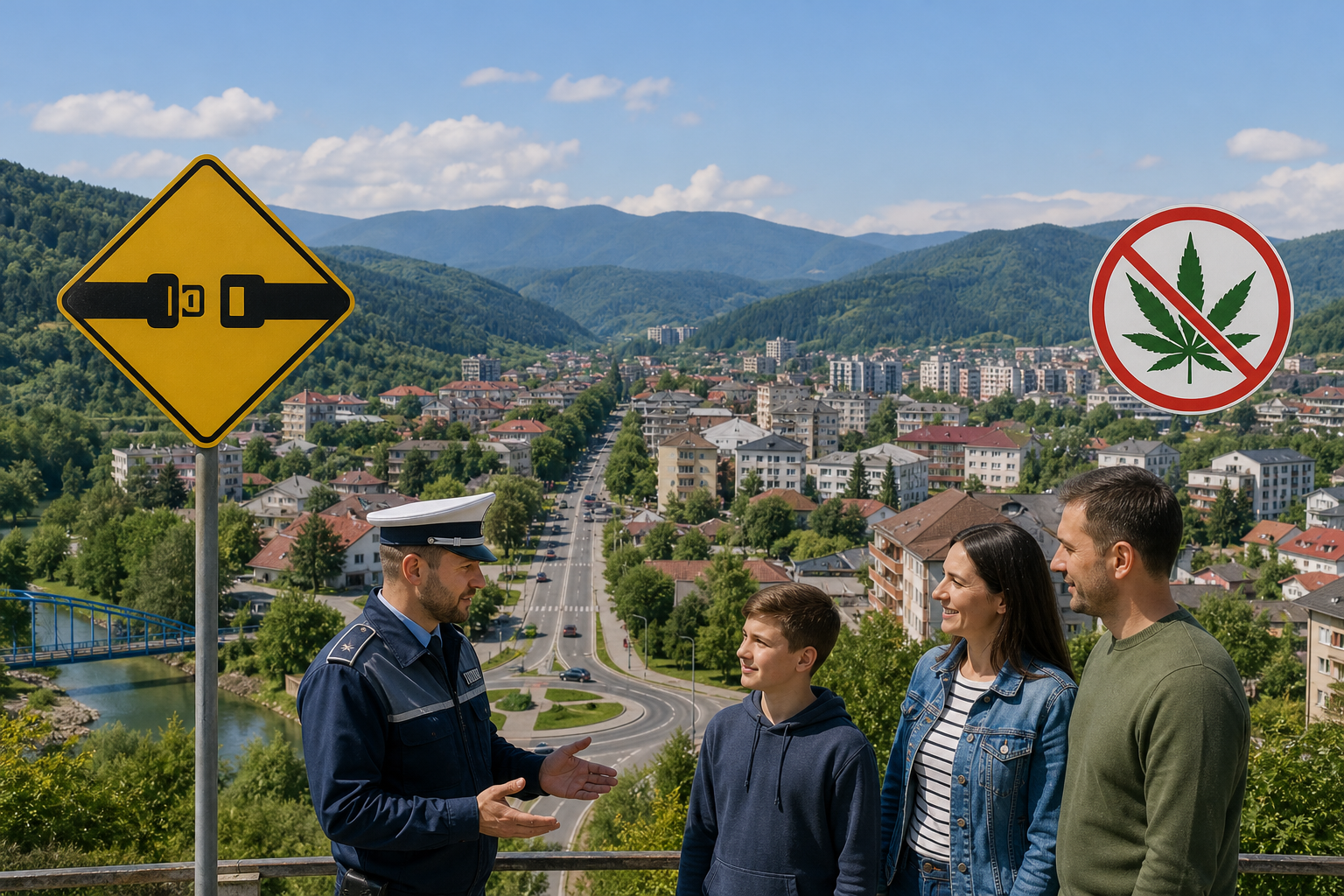
Understanding cannabis risks in Comănești requires more than knowing whether a product is sold or shared locally. The possible consequences involve health, judgment, driving, interactions with medicines, accidental exposure, and Romanian criminal law. The same risks apply in Comănești as elsewhere, while local factors such as travelling through the area, being unfamiliar with the legal system, or relying on an unverified product can make a situation more difficult.
This guide provides general safety information for residents and visitors. It does not encourage illegal drug use, diagnose health conditions, or replace advice from a doctor, pharmacist, lawyer, or emergency professional. If someone is unconscious, having a seizure, struggling to breathe, severely confused, or at immediate risk, call 112 in Romania.
What cannabis can do to the body and mind
Cannabis products can contain tetrahydrocannabinol, usually called THC, the main intoxicating compound. Effects vary according to potency, dose, route of administration, personal tolerance, age, health, and whether alcohol or other substances are involved. A product that feels manageable to one person can cause a serious reaction in another.
Short-term effects may include relaxation, altered time perception, drowsiness, impaired attention, slower reaction time, reduced coordination, and problems with short-term memory. Some people instead experience anxiety, panic, suspiciousness, agitation, or disorientation. Edibles can be especially unpredictable because effects may be delayed, leading someone to consume more before the first dose has fully taken effect.
Regular or heavy use can increase the likelihood of dependence and may interfere with work, study, relationships, sleep, or daily responsibilities. Frequent use is also associated with a greater risk of mental-health problems in vulnerable people. Anyone with a personal or family history of psychosis, bipolar disorder, severe anxiety, or substance-use problems should discuss cannabis exposure with a qualified healthcare professional.
The World Health Organization provides broader evidence-based information about cannabis effects and related public-health concerns in its cannabis fact sheet.
Health risks that matter in Comănești
Mental and emotional effects
A stressful environment, unfamiliar accommodation, conflict, or isolation can intensify an unpleasant experience. Panic may feel like a medical emergency even when it is temporary, and intoxication can make it harder to judge what is happening. Calm surroundings, a trusted sober person, and avoiding additional substances may reduce immediate danger, but severe or unusual symptoms require medical help.
Cannabis may be particularly concerning for adolescents and young adults because the brain continues developing into early adulthood. Frequent use during this period can affect learning, attention, motivation, and emotional functioning. Parents, teachers, and caregivers should focus on safety and open communication rather than relying only on punishment or assumptions.
Heart, breathing, and physical risks
Cannabis can cause a faster heartbeat and dizziness. People with cardiovascular conditions, a history of fainting, or medicines that affect blood pressure should seek professional advice before using any cannabis product. Smoking also exposes the lungs to irritants and toxins. Avoiding smoke around children, older adults, and people with respiratory disease is especially important.
Unknown products create an additional hazard. Informal cannabis may have uncertain potency, contamination, or additives, and appearance alone cannot establish what it contains. Synthetic cannabinoids are not simply stronger forms of ordinary cannabis; they can produce more severe and unpredictable reactions. Never assume that a product described as “natural,” “legal,” or “CBD” is automatically risk-free.
Edibles and accidental ingestion
Edibles can take longer to produce noticeable effects than inhaled products. That delay can encourage repeated dosing and lead to intense intoxication later. Keep any substance away from children and pets, preferably in its original packaging and a locked location. If a child or another person may have swallowed cannabis, contact emergency services or a healthcare professional promptly and explain what is known about the product and timing.
Cannabis laws in Comănești and Romania
Cannabis laws in Comănești are Romanian national laws, not a separate city-level system. Cannabis containing controlled substances is not treated as an ordinary recreational product. Possession, acquisition, distribution, cultivation, transport, and other activities may lead to criminal investigation or prosecution, with the consequences depending on the conduct, substance, quantity, purpose, and evidence.
Do not interpret the absence of a cannabis shop, a social club, or a visible police presence as permission. Sharing with friends, carrying a small amount, growing a plant, or bringing cannabis across a border can all create legal problems. A person’s belief that cannabis is tolerated elsewhere does not change the rules in Romania.
The official Romanian legislation portal is the appropriate place to consult current legal texts. Because legal wording and enforcement procedures can change, anyone facing a search, seizure, questioning, arrest, or court matter should obtain advice from a Romanian-qualified lawyer rather than relying on an online summary.
Visitors should also avoid assuming that medical cannabis rules in another country automatically apply in Romania. A prescription, patient card, or product purchased abroad may not provide permission to possess or import a controlled substance. Travellers should check current requirements with competent Romanian authorities and a qualified legal professional before crossing the border.
Driving, cycling, and workplace safety
One of the most important marijuana risks in Comănești concerns impaired decision-making. Cannabis can reduce concentration, coordination, and reaction speed even when a person feels capable of driving. Combining cannabis with alcohol, sedatives, opioids, or other intoxicants increases the danger.
Do not drive a car, motorcycle, scooter, or agricultural vehicle after using cannabis. The safest option is to arrange a sober driver, use an available taxi or rideshare service, remain where you are, or delay travel until you are unimpaired. Cycling and walking near traffic also require caution because altered perception and delayed reactions can cause injury.
Romanian drug-driving rules can create serious consequences separate from the health risk itself. A person should not attempt to estimate legal safety from how sober they feel. Workplace impairment can also endanger colleagues, especially around machinery, construction equipment, heights, electricity, or roads.
For related national context, compare this practical guide to marijuana risks in Codlea, while remembering that the same Romanian legal framework applies in Comănești.
How to respond to a bad reaction
If someone becomes distressed after using cannabis, stay calm and reduce stimulation. Move them away from traffic, balconies, water, machinery, and crowds. Keep a sober adult with them, speak slowly, and avoid arguing about what they are experiencing. Do not give alcohol, additional drugs, or unverified remedies.
Call 112 immediately if the person has trouble breathing, chest pain, a seizure, extreme agitation, severe confusion, repeated vomiting, loss of consciousness, signs of injury, or possible poisoning involving another substance. Tell responders what may have been taken, approximately how much, and when. Accurate information helps clinicians choose safer treatment and is more useful than concealing the facts.
If symptoms are uncomfortable but not life-threatening, contact a doctor, pharmacist, or emergency medical service for guidance. Do not leave the person alone if they are very drowsy, frightened, or unable to make safe decisions. After the episode, persistent anxiety, hallucinations, depression, memory problems, or unusual behaviour deserves medical assessment.
When cannabis use may be becoming a problem
Risk is not measured only by how often someone uses cannabis. Warning signs include using more than intended, unsuccessful attempts to cut down, cravings, spending more time obtaining or recovering from use, neglecting responsibilities, continuing despite conflict, or driving while impaired. Needing cannabis to sleep, relax, eat, or feel normal can also signal a developing pattern of dependence.
Support should be practical and non-judgmental. A family doctor, psychiatrist, psychologist, addiction service, or emergency department can help assess physical and mental health. Keep a record of symptoms, medicines, alcohol use, and the timing of cannabis exposure so a clinician has a clearer picture.
People supporting a friend or relative should set boundaries around driving, violence, money, and unsafe behaviour. They can offer help finding care without taking responsibility for every decision. If there is an immediate threat of self-harm, harm to others, or severe confusion, call 112.
Practical safety guidance for residents and visitors
- Do not buy, carry, share, grow, or transport cannabis in the belief that a small amount is automatically legal.
- Never drive or operate machinery after using cannabis, and do not combine it with alcohol or sedating medicines.
- Keep all cannabis products away from children, pets, and anyone who could mistake them for food.
- Be cautious about unknown potency, synthetic cannabinoids, concentrates, and products with unclear ingredients.
- Do not rely on social media claims about legal status, medical exemptions, or “safe” quantities.
- If stopped or questioned by authorities, remain calm and request qualified legal advice before making decisions about a complex legal matter.
- Seek healthcare support for recurring panic, psychotic symptoms, dependence, or problems linked to cannabis use.
For broader comparison, the guide to cannabis laws in Fălticeni illustrates why local geography does not create a separate Romanian cannabis regime. The key questions remain what substance is involved, what activity occurred, and how current law applies.
Conclusion
The main cannabis risks in Comănești are health effects, impaired judgment, unsafe driving, accidental ingestion, dependence, unpredictable products, and serious legal exposure. Cannabis is not risk-free because it is familiar or because another country treats it differently. Anyone in Comănești who is worried about symptoms, dependence, a young person’s use, or a legal incident should seek appropriate professional help promptly. A calm response, accurate information, and avoidance of driving or mixing substances can prevent a difficult situation from becoming more dangerous.