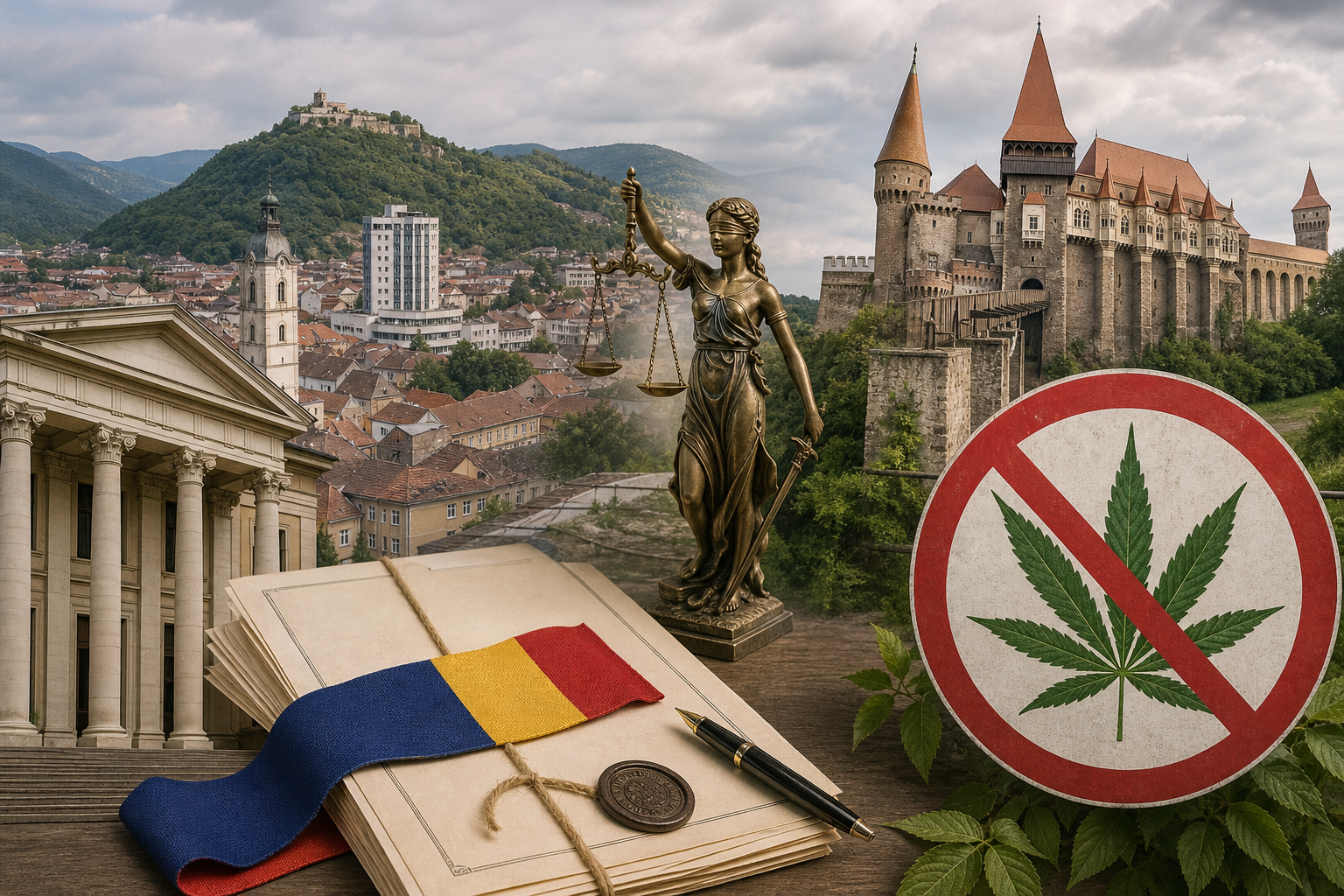
Cannabis restrictions in Hunedoara, Romania are determined mainly by national law, not by separate county or municipal rules. Whether a person is in Deva, Hunedoara city, Petroșani, Brad, or another locality, the same Romanian rules on possession, consumption, cultivation, supply, driving and medical products generally apply.
This guide explains the legal framework in practical terms. It is not a substitute for advice from a Romanian lawyer, especially where police questioning, a search, a driving investigation or a criminal case is involved. Rules and administrative practice can change, and the legal classification of a product may depend on its ingredients, form and intended use.
How cannabis laws in Hunedoara are set
Romania regulates controlled drugs through national legislation. The principal framework includes Law no. 143/2000 on preventing and combating illicit drug trafficking and consumption, together with Law no. 339/2005 on the legal regime of plants, substances and preparations containing narcotic and psychotropic substances.
These laws apply throughout Hunedoara County. Local police, prosecutors and courts enforce national rules, but they do not create a separate recreational cannabis market for the county. The official Romanian legislation portal is the appropriate place to consult current statutory texts and amendments. Because legal wording and schedules matter, readers should check the current version rather than rely on an old summary found online.
In everyday language, people may search for weed in Hunedoara or ask about cannabis in Hunedoara. Those phrases describe a local question, but the answer is still governed by Romanian national law. A product’s label, a seller’s description or a claim that something is “legal” does not by itself determine its status.
Possession and personal use
Possessing cannabis for personal use can create criminal-law exposure in Romania. The fact that an amount is intended only for personal consumption does not automatically make possession lawful. Personal-use cases are treated differently from supply or trafficking allegations, but that distinction should not be confused with permission to possess cannabis.
The outcome of a case may depend on factors such as the substance identified, the quantity, the circumstances of possession, prior conduct and the evidence collected. Police may seize suspected material for testing, and the final legal classification normally depends on the applicable legislation and investigative findings.
What happens after a suspected discovery?
A person may encounter a search, seizure, identification procedure or questioning. Visitors and residents should remain calm, avoid making assumptions about the substance, and ask for a lawyer before giving detailed statements about a suspected offence. Consenting to a search, signing a document or making an informal explanation can have legal consequences, so a person who is detained or formally investigated should request legal assistance promptly.
- Do not buy, carry, store or share cannabis in the belief that a small amount is automatically tolerated.
- Do not attempt to hide, destroy or transfer suspected substances.
- Ask what legal status you have in the procedure and request an interpreter if you do not understand Romanian well.
- Contact a qualified Romanian criminal lawyer as soon as possible.
Buying, supplying and sharing cannabis
Commercial sale is not the only conduct that can raise a serious legal issue. Supplying, distributing, transporting or facilitating access to cannabis can be treated more seriously than simple possession. Sharing cannabis with another person may also be viewed as supplying a controlled substance, even when no money changes hands.
Online listings, informal sellers and social-media messages do not provide legal protection. A seller’s promise that a product is “safe,” “imported” or “not detected” is not a reliable legal assessment. Importing or sending cannabis through the post can create additional risks involving transport, customs and cross-border conduct.
These concerns are relevant in every part of the county, including urban areas and tourist routes around the Retezat Mountains, the Jiu Valley and historic sites. The location does not turn recreational cannabis into a permitted activity.
Cannabis and driving in Hunedoara
Driving after using cannabis presents both safety and legal risks. Romanian criminal law addresses driving a vehicle under the influence of psychoactive substances, and investigations can involve roadside procedures, biological samples and expert assessment. The legal significance of a result is fact-specific; a person should not assume that feeling normal, waiting a few hours or using a “detox” product removes the risk.
Anyone who may have consumed cannabis should not drive in Deva, Hunedoara, Petroșani or elsewhere in the county. Use a sober driver, licensed taxi or public transport instead. If police stop a driver and request testing or sampling, refusing, obstructing or mishandling the procedure may create separate legal problems. A lawyer can explain the rights and obligations that apply in the particular situation.
Medical cannabis in Hunedoara
Medical cannabis in Hunedoara should not be understood as a broad authorization to obtain or grow ordinary cannabis. Romania has a controlled framework for substances and preparations with medical or pharmaceutical uses, but access depends on the specific active substance, product authorization, prescription rules and medical supervision.
Patients should speak with a Romanian doctor and pharmacist about an approved treatment rather than relying on a foreign website, informal advice or a cannabis product brought from another country. The National Agency for Medicines and Medical Devices of Romania provides regulatory information through its official medicines agency website.
A medical condition, a previous prescription abroad or possession of a cannabis product in another country does not automatically provide a defence under Romanian law. Travellers carrying medicines should verify documentation, composition, quantities and entry requirements before crossing the border. A product containing cannabinoids may be regulated differently depending on its exact formulation, but uncertainty is a reason to seek confirmation, not to assume legality.
CBD, hemp and low-THC products
CBD products are often marketed as an easier legal alternative to cannabis, but the label alone is not decisive. CBD, hemp extracts, flowers, oils, food supplements, cosmetics and medicines may fall under different rules. The presence of THC, the concentration and the product’s intended use can all matter.
Consumers should be particularly cautious with hemp flowers, vaping liquids, edibles and imported oils. A product described as “full spectrum” may contain trace cannabinoids, while a laboratory result from another country may not answer every question under Romanian law. Food and medicine rules can also apply separately from controlled-substance rules.
Before purchasing or carrying a CBD product in Hunedoara, check its ingredients, certificate of analysis, Romanian market status and applicable product category. If the product is intended to treat a medical condition, professional medical advice is more reliable than advertising claims. Do not drive after using a cannabinoid product when its effects or THC content are uncertain.
Local context: Hunedoara County and Deva
Hunedoara is a county rather than a single legal jurisdiction for cannabis matters. Deva is the county seat, while municipalities such as Hunedoara and Petroșani have their own police facilities and courts within the national system. This can affect where a report is made or which authority handles a case, but not the basic legality of recreational possession.
For broader local context, our article on marijuana trends in Deva and the surrounding legal environment discusses how national rules intersect with life in the county seat. It should be read alongside current legislation rather than treated as legal advice.
Residents may hear informal claims that enforcement is relaxed in a particular neighbourhood or that tourists are treated differently. Such claims are unreliable. Enforcement priorities can vary, but an individual cannot safely base a legal decision on rumours, previous experiences or what appears to happen elsewhere.
What visitors and residents should do
The safest approach is to treat recreational cannabis as prohibited and to avoid carrying any product whose legal status is uncertain. Visitors should also remember that rules in a country where cannabis is permitted may not travel with them into Romania.
- Do not purchase or accept cannabis from informal sellers.
- Keep prescription medicines in original packaging and carry supporting documentation when travelling.
- Check the ingredients and legal category of CBD or hemp products before bringing them into Romania.
- Never drive after consuming cannabis or a product that may contain THC.
- If contacted by police, remain respectful, avoid speculation and request a lawyer and interpreter where appropriate.
- Seek urgent medical help if someone experiences severe anxiety, confusion, chest pain, loss of consciousness or another serious reaction. Call 112 in an emergency.
Key takeaways on cannabis restrictions in Hunedoara, Romania
The central point is simple: cannabis restrictions in Hunedoara, Romania come from national Romanian law. Recreational possession, use, cultivation, supply and sale can carry serious consequences, and sharing or transporting cannabis may increase exposure. Driving after cannabis use creates a separate safety and legal concern.
Medical products and CBD goods require careful verification because their status depends on composition, authorization and intended use. Anyone facing a search, seizure, drug test or criminal investigation should obtain current advice from a Romanian lawyer instead of relying on online anecdotes. Checking official legislation and medicines information before travelling or purchasing a product is the most reliable way to reduce avoidable risk.