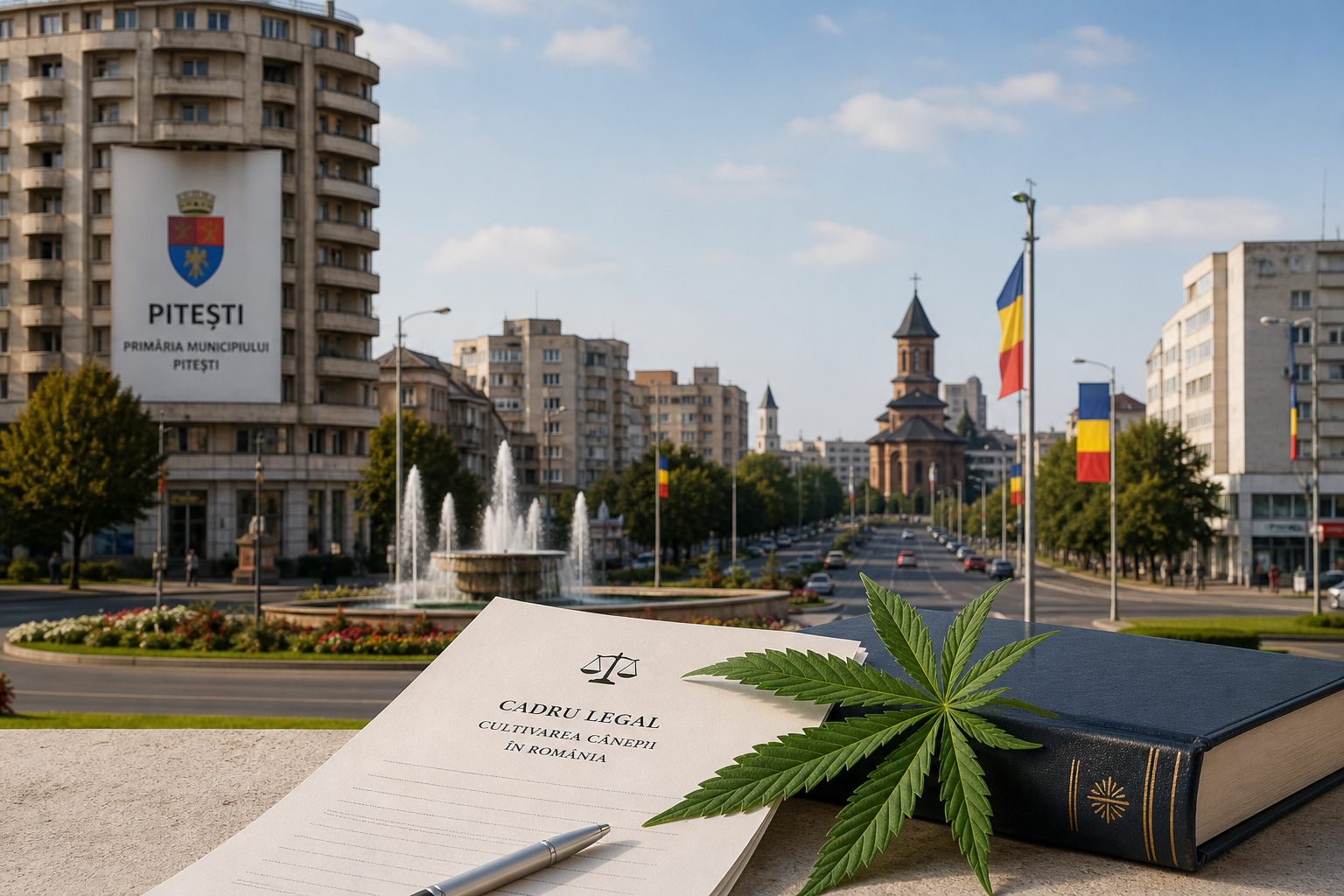
Understanding Cannabis regulations in Pitești matters whether you live in the city, are visiting Argeș County, or are considering a cannabis-derived product for health reasons. Romanian drug rules apply in Pitești in the same way they apply elsewhere in the country: local authorities do not operate a separate municipal cannabis market, and recreational possession, supply and cultivation can create serious legal consequences.
This guide explains the national framework in practical terms, including what the rules mean for cannabis in Pitești, how CBD differs from intoxicating cannabis, why medical access is limited, and what residents and visitors should do to reduce legal and health risks. It is general information, not legal or medical advice. Laws and enforcement practices can change, so check official sources or speak with a qualified Romanian professional before acting.
Cannabis laws in Pitești are based on Romanian national law
Pitești has no independent cannabis code. Possession, cultivation, production, sale, distribution and trafficking are governed primarily by Romanian national legislation, including the country’s controlled-substances framework. The legal classification of a substance, its quantity, the person’s conduct and the surrounding evidence can all affect how authorities treat a case.
For the official text of Romanian legislation, consult the Romanian legislation portal. Because legal wording and enforcement guidance may develop over time, relying on social-media summaries or informal advice is risky.
Recreational cannabis is not a legal retail product
Adults should not assume that cannabis can be legally bought, possessed or used in a private setting simply because some other European countries have changed their rules. Romania does not provide a general recreational cannabis retail system. A person found with cannabis may face investigation even when the amount appears small and there is no evidence of commercial intent.
Possession for personal use and conduct associated with supply are not interchangeable. Selling, offering, transporting for distribution, storing for another person, or arranging transactions can expose someone to more serious allegations than simple possession. The exact consequences depend on the facts and applicable law, so a person questioned by police should request legal assistance rather than guess at the correct response.
Use and possession can still create practical problems
Public consumption can attract police attention, especially around transport facilities, nightlife areas, parks, events and other public places. Even when no one is harmed, cannabis smoke, odor, packaging or messages arranging a purchase may become part of an investigation. A private location is not a guarantee that possession is lawful.
Visitors researching weed in Pitești should also remember that buying from an unregulated source adds uncertainty about both legality and product contents. There is no reliable consumer-protection standard for illicit cannabis, and a product sold as cannabis may contain a different substance or a much stronger concentration than expected.
What the rules mean for cannabis in Pitești
In everyday conversation, people may use “cannabis” to describe dried flower, resin, oils, edibles, vapes or medicines. Romanian authorities may assess these products differently depending on their ingredients, intended use, documentation and applicable controlled-substance rules. The label alone does not decide whether a product is lawful.
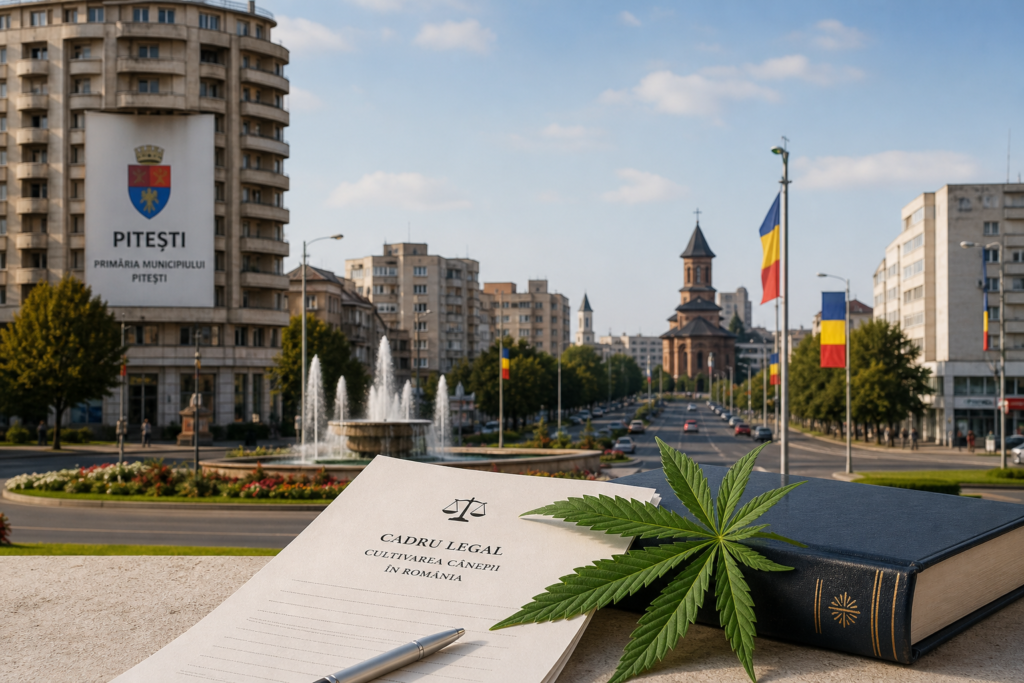
That distinction is important for residents searching for cannabis in Pitești. A product marketed online as legal, natural or hemp-based may still be problematic if it contains controlled cannabinoids, lacks required documentation, or is imported and transported without meeting Romanian rules.
CBD and hemp are not automatically risk-free
CBD products require careful attention to composition and compliance. Hemp-derived goods, cosmetics, food supplements, extracts and oils can be subject to different product rules, but “CBD” does not automatically mean that every formulation is legal to possess, sell or bring across a border. THC content, the product category, labeling, laboratory evidence and Romanian or European requirements may all matter.
Before purchasing CBD in Pitești, check the ingredient list, batch information, responsible business details and any available certificate of analysis. Avoid products with vague labels, unsupported medical promises or unclear origins. A certificate from a seller is not a substitute for legal advice, but missing or contradictory documentation is a warning sign.
Do not confuse industrial hemp with permission to grow cannabis for personal use. Agricultural rules for approved hemp varieties do not create a general right to cultivate plants containing controlled levels of cannabinoids in a garden, balcony or apartment.
Medical cannabis in Romania: limited and product-specific access
Medical cannabis in Romania should not be understood as a broad prescription market for cannabis flower or home-prepared products. Access depends on the specific medicine, its active ingredients, authorization status, medical indication and the prescribing and dispensing rules that apply at the time.
Patients should speak with a licensed doctor and pharmacist rather than self-treating with an illicit product. The National Agency for Medicines and Medical Devices of Romania is an appropriate starting point for information about medicines, authorization and safety communications.
Prescriptions, documentation and travel
A prescription or medical document from another country does not automatically authorize possession in Romania. Before arriving in Pitești with a cannabinoid medicine, confirm whether the exact product may be brought into Romania, what quantity is permitted, whether advance authorization is needed and which documents must accompany it.
Keep the medicine in its original packaging and carry supporting medical documentation that identifies the patient, product, dosage and prescriber. Contact the relevant Romanian authority, embassy or consulate before travel if the medicine contains a controlled substance. Do not rely solely on a photograph of a prescription or on a general statement that the product is “medical.”
Driving, work and public safety
Driving after using cannabis is a serious risk. Intoxication can affect attention, reaction time, judgment and coordination, while drug-testing and legal procedures may create consequences separate from the person’s subjective feeling of sobriety. The safest choice is not to drive after using cannabis or an unknown cannabinoid product.
Do not operate a car, scooter, motorcycle, machinery or industrial equipment if you may be impaired. Public transport or a sober driver is a safer alternative. This is particularly relevant for travel around Pitești, where a legal problem can become more complicated if it involves a road collision, workplace incident or allegation of impaired driving.
Employers may also have workplace policies and safety obligations that affect drug testing or fitness for duty. Anyone taking a prescribed cannabinoid medicine should discuss potential impairment and documentation with a doctor and, where appropriate, the employer’s occupational-health service.
Buying, carrying and crossing borders
Romanian cannabis rules apply to purchases made through social media, messaging applications, informal contacts and physical locations. A transaction arranged digitally can still be evidence of an alleged supply offence. Sending cannabis by post or courier, carrying it for another person, or storing it in luggage can create additional risks.
- Do not buy or sell recreational cannabis in Pitești.
- Do not accept a package, suitcase or vehicle compartment containing an unknown substance.
- Do not carry cannabis or cannabinoid products across the Romanian border without confirming their legal status.
- Do not assume that a product legal in another country is legal in Romania.
- Keep legitimate medicines in original packaging with appropriate documentation.
Border controls can involve searches and questions about possession, importation and intended distribution. Even a short trip to or from Romania does not remove the need to check the rules in every country on the route. For broader regional context, see this guide to cannabis in Bucharest and Romania, while remembering that an online article cannot replace current official advice.
Health and product-safety considerations
Illicit cannabis has no dependable quality control. Products may be contaminated, mislabeled or more potent than expected. Edibles can take longer to produce effects, increasing the risk of consuming too much. Combining cannabis with alcohol, sedatives or other drugs can increase impairment and other harms.
People with a history of psychosis, severe anxiety, cardiovascular problems, pregnancy, or medication interactions should obtain medical advice before using cannabinoid products. Children and teenagers should not use cannabis outside a specialist medical context. If someone experiences chest pain, severe confusion, loss of consciousness, breathing problems or an acute mental-health crisis, call emergency services and provide accurate information about what may have been taken.
What to do if police question you
Stay calm, avoid confrontation and do not make up an explanation about a substance or its origin. Ask why you are being questioned and request a lawyer if you are suspected of an offence. If you do not understand Romanian legal terminology, ask for an interpreter. Do not sign documents you cannot understand, and do not assume that a casual conversation has no legal significance.
Legal advice is especially important where a case involves alleged supply, cultivation, importation, driving, a search, multiple substances or a foreign national. A lawyer can explain procedural rights and the significance of the evidence in the specific case.
A practical checklist for residents and visitors
- Treat recreational cannabis as illegal in Pitești unless a qualified Romanian lawyer confirms a specific exception.
- Separate CBD, hemp and medicines from intoxicating cannabis, but verify the exact ingredients and product category.
- Check current Romanian requirements before purchasing, importing or transporting any cannabinoid product.
- Never drive or work in a safety-sensitive role while impaired or uncertain about a product’s effects.
- Keep prescribed products in original packaging and carry reliable medical documentation.
- Seek professional legal help promptly if police, customs or prosecutors become involved.
Conclusion
The practical message about Cannabis regulations in Pitești is straightforward: Pitești follows Romania’s national controlled-substance framework, and there is no general legal market for recreational cannabis. Possession, supply, cultivation and cross-border transport can carry serious risks. CBD and hemp products require product-specific scrutiny, while medical access depends on authorized medicines and current Romanian procedures.
Residents and visitors can reduce uncertainty by checking official sources, avoiding illicit purchases, documenting legitimate medicines and seeking qualified advice before travel or treatment. When the facts are unclear, caution is safer than relying on assumptions about cannabis laws in Pitești.