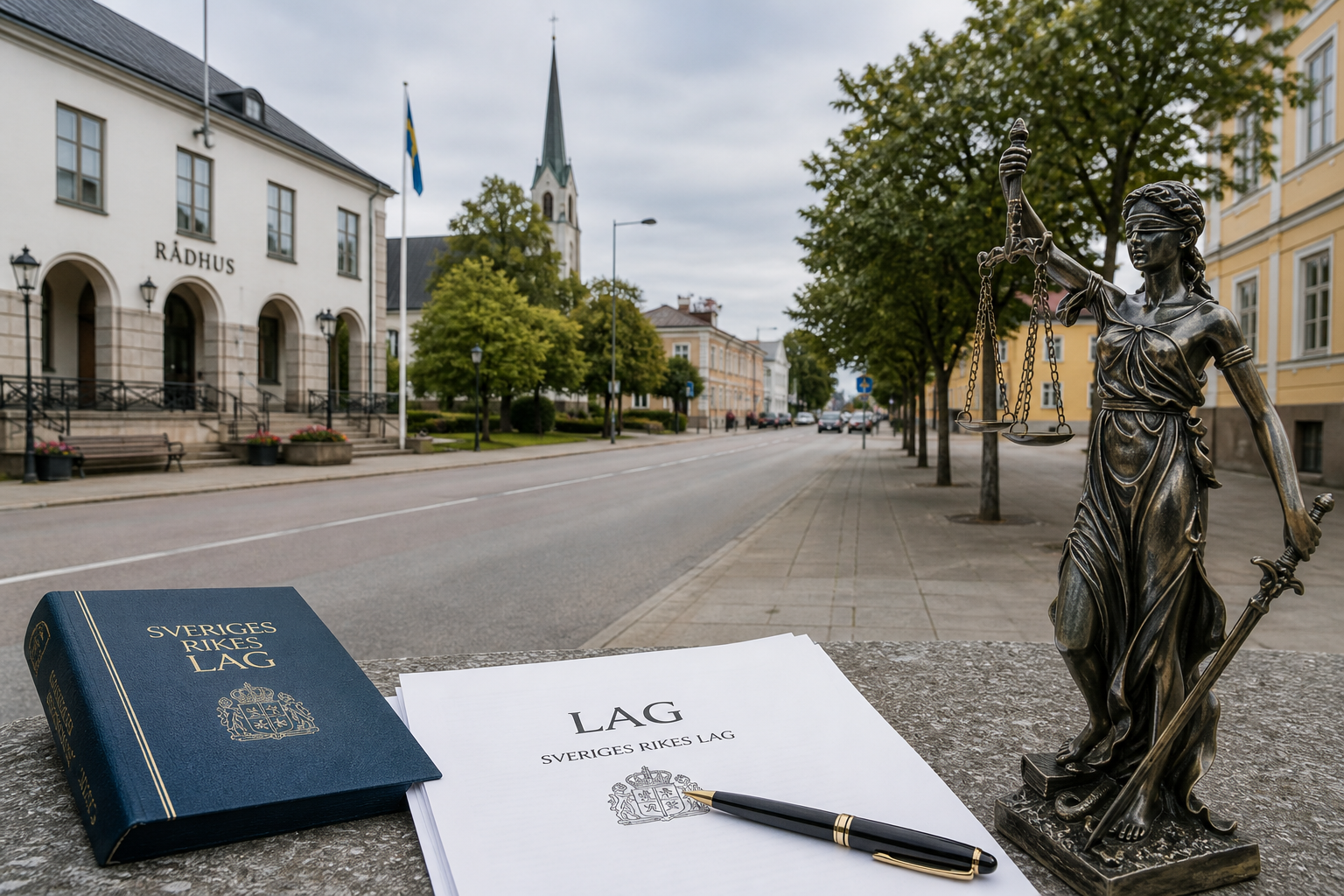
Understanding cannabis possession limits in Kristinehamn starts with an important point: Swedish law does not provide a generally lawful personal-possession allowance. Kristinehamn follows the national Swedish framework, so possessing cannabis can be a criminal offence even when the amount is small and the substance is intended only for personal use.
That means there is no simple number of grams that is automatically permitted in Kristinehamn. The quantity may affect how authorities assess the conduct and the likely seriousness of the case, but it does not create a safe legal threshold. This guide explains the general rules, what quantity can and cannot mean, how police and prosecutors may respond, and why visitors should be particularly careful.
What are the cannabis possession limits in Kristinehamn?
There is no general personal-use possession limit under Swedish law. Cannabis is classified as a narcotic substance, and unauthorised possession is prohibited. The rule applies in Kristinehamn just as it does in Karlstad, Örebro, Stockholm and other Swedish municipalities.
The key legal question is therefore not whether a person is below a locally published limit. It is whether the person possessed a controlled narcotic without lawful authorisation. A small amount may be treated differently from a large amount when authorities assess the offence, but a small amount is not automatically legal.
The Swedish Narcotic Drugs Act on the Swedish Parliament website is the central legal source for the offence and its penalty structure. Legislation and court practice can change, so anyone facing an investigation should obtain advice from a qualified Swedish lawyer rather than relying only on a general online summary.
Why the amount still matters
Although no amount is legally exempt for ordinary personal possession, quantity can be relevant to classification and sentencing. Authorities may consider the amount together with factors such as the type of substance, the circumstances of possession, evidence of personal use or distribution, and any previous offences.
It is therefore misleading to describe a particular quantity as a permitted limit. A more accurate description is that lower quantities may sometimes be associated with an assessment of a less serious narcotics offence, while larger quantities or evidence of supply can lead to more serious allegations.
Cannabis laws in Kristinehamn: what conduct can be unlawful?
The rules cover more than carrying cannabis in a pocket or bag. Depending on the facts, unlawful conduct can include acquiring, storing, transporting, selling, transferring or otherwise handling cannabis. Using cannabis is also criminalised under Swedish law, so possession and consumption should not be treated as separate risks with one being harmless.
Smoking or consuming cannabis in a private home does not create a general exception. A private setting may affect how the facts come to police attention, but it does not turn unauthorised cannabis into a lawful substance. Public consumption can also create additional practical problems, including complaints, police intervention and concerns about disorder or impairment.
For broader context on how possession rules are discussed elsewhere in Sweden, see this guide to marijuana possession laws in Märsta. The local setting differs, but the underlying national legal framework is the important factor.
How Swedish penalties may work
Swedish narcotics offences are graded according to seriousness. A case involving a limited amount and no apparent distribution may be assessed as a petty narcotics offence, while more serious circumstances can result in a more serious charge. The possible outcome depends on the legal classification and the evidence, not simply on the town where the incident occurred.
For a petty narcotics offence, the law allows fines or imprisonment for up to six months. More serious narcotics offences carry substantially higher maximum penalties. Those maximums do not predict the result of an individual case, but they show why possession should not be treated as a minor regulatory matter.
In practice, the consequences can extend beyond the sentence itself. A person may face seizure of the substance, questioning, a criminal investigation, court proceedings, a criminal record and possible effects on employment, housing, immigration or travel. The consequences are especially important for people who are not Swedish citizens or who need to cross a national border.
Fines and day-fine considerations
Where a fine is imposed, Swedish courts may use a day-fine system. The total amount can reflect both the seriousness of the offence and the person’s financial circumstances. This means that two people involved in broadly similar conduct may not necessarily receive identical fine totals.
A fine is not a sign that possession was legal. It is a criminal-law consequence of an offence that has been assessed as sufficiently limited in seriousness for a non-custodial penalty to be appropriate.
What can happen during a police investigation?
Police may investigate suspected narcotics offences, secure suspected substances and collect evidence. This can include questioning, searches where legal requirements are met, seizure of items and laboratory analysis. A suspected substance is not necessarily treated as cannabis until it has been identified through appropriate evidence.
If you are stopped or contacted by police, remain calm and do not obstruct the investigation. You should understand what you are being asked about and may wish to request legal advice before giving a detailed statement. Do not sign documents you do not understand. If you are detained or formally suspected, ask about your procedural rights and contact a Swedish criminal defence lawyer.
The Swedish Police official website provides general information about policing and contact routes. It is not a substitute for individual legal advice, particularly where a person has been arrested, searched or formally suspected of an offence.
Weed in Kristinehamn: does local practice change the law?
Searching online for “weed in Kristinehamn” may produce informal discussions, but local availability or social attitudes do not alter the legal position. Kristinehamn municipality cannot create a recreational cannabis market or authorise ordinary possession. National narcotics legislation remains decisive.
Local circumstances can affect enforcement visibility. For example, an incident may come to attention through a traffic stop, a public disturbance, a report from another person or an unrelated investigation. That does not mean possession is legal in places where enforcement is less visible, nor does it mean that every allegation will produce the same outcome.
Visitors should also avoid assuming that rules from another country apply in Kristinehamn. Sweden is not a jurisdiction where recreational cannabis possession is generally permitted, and bringing cannabis into Sweden can create separate customs and import-related risks.
Medical cannabis in Kristinehamn
Medical use is not a blanket defence to unauthorised possession. Some cannabis-based medicines may be prescribed or supplied through the Swedish healthcare and medicines system, but that is different from possessing cannabis purchased from an unregulated source.
A patient should use only medicine that has been lawfully prescribed or supplied and should keep relevant pharmacy packaging and prescription documentation when travelling. A product described as medicinal, herbal, CBD or hemp is not automatically lawful. The ingredients, THC content, product classification and method of import can all matter.
Patients who are unsure about a medicine should ask a prescriber or pharmacist before bringing it to Kristinehamn or travelling across a border. Do not assume that a foreign prescription automatically authorises possession in Sweden.
Travel, driving and public safety risks
Carrying cannabis while travelling to or from Kristinehamn can create additional risks. Border controls, transport rules and possession laws may apply at the same time. Cannabis should never be carried across a national border without confirming the requirements with the relevant Swedish authorities and, where applicable, the authorities of the destination country.
Driving after using cannabis is also dangerous and can lead to a separate investigation. Swedish drug-driving rules are strict, and impairment is not the only issue that may matter. Anyone who has used cannabis should not drive, cycle in dangerous conditions or operate machinery.
Keep cannabis away from children and do not combine it with alcohol or other intoxicating substances. If someone becomes severely confused, unusually drowsy, panicked, suffers chest pain, has trouble breathing or cannot be woken, call emergency services. In Sweden, dial 112 for an emergency.
Common misconceptions about possession
- “A small amount is legal.” There is no general personal-use allowance that makes cannabis possession lawful.
- “Private possession is not enforceable.” A private location does not remove the prohibition.
- “CBD products are always safe to carry.” Product composition and classification matter, and labels may not settle the legal question.
- “A prescription from another country is enough.” Foreign medicines may be subject to Swedish rules on prescriptions, importation and controlled substances.
- “A fine means there is no criminal consequence.” A fine can still follow a criminal offence and may have wider practical effects.
What should someone do if accused of possession?
- Stay calm and do not physically resist police or attempt to destroy evidence.
- Ask whether you are being treated as a witness, detained person or suspect.
- Request an interpreter if you do not understand Swedish well enough to follow the procedure.
- Ask for legal advice before making a detailed statement if you are suspected of an offence.
- Keep records of prescribed medicines, travel documents and relevant communications.
- Do not post details about the incident publicly or contact other people involved to coordinate accounts.
These steps are general information, not a substitute for representation. The most useful advice will depend on the substance, amount, location, evidence, nationality and procedural stage.
Conclusion
The central answer on cannabis possession limits in Kristinehamn is that Sweden does not provide a generally lawful personal-possession threshold. A small amount may influence how a case is classified, but it does not create permission to possess cannabis. Possession, use, supply and unauthorised transport can all carry criminal consequences.
Whether you live in Kristinehamn or are visiting, the safest approach is to avoid unregulated cannabis and to check official Swedish guidance before travelling with any cannabis-based medicine. If police have already become involved, seek advice from a qualified Swedish lawyer promptly.