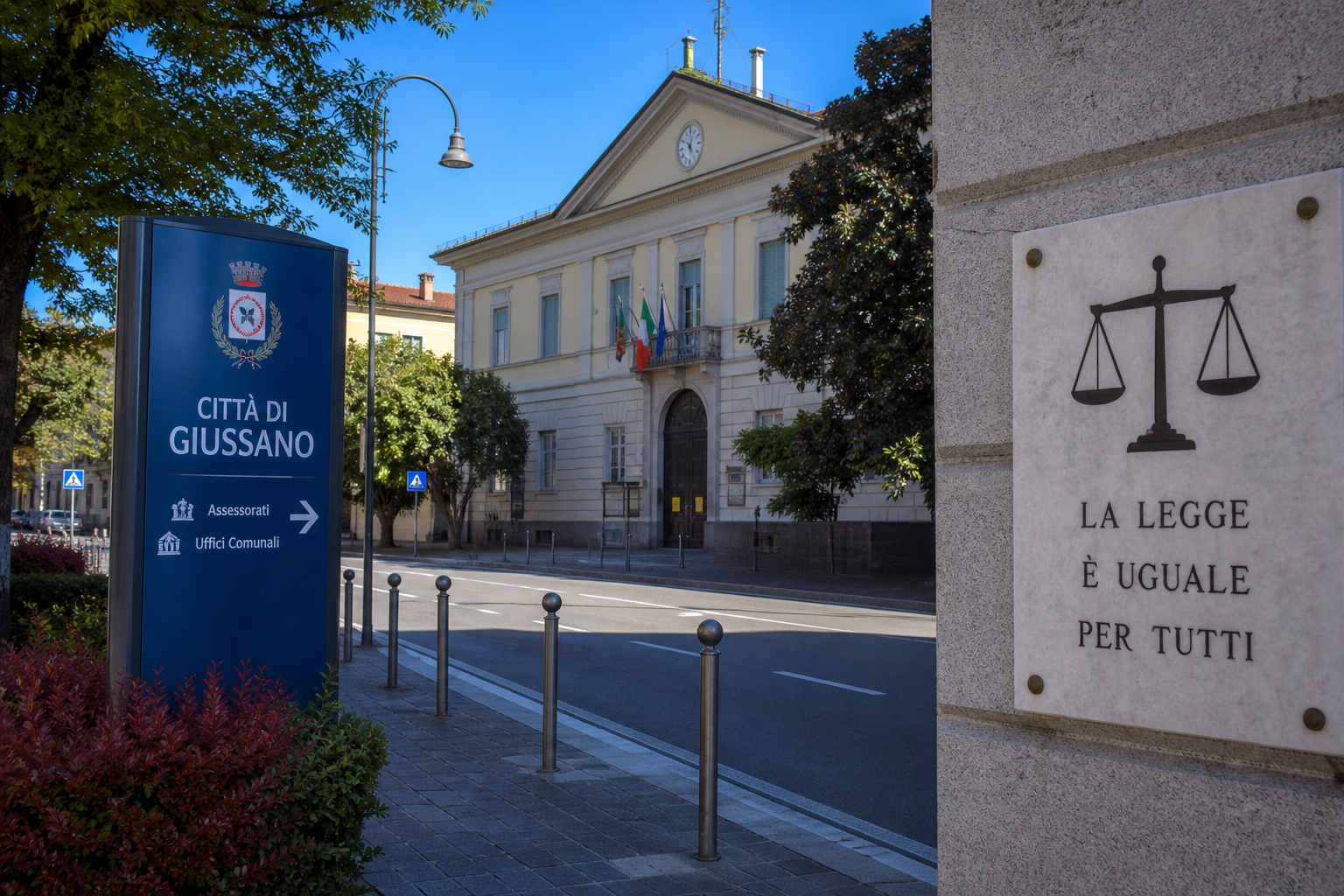
Understanding Cannabis penalties in Giussano requires looking first at Italian national law. Giussano does not have a separate municipal cannabis code that replaces the rules applying throughout Italy. Instead, possession, supply, cultivation, driving and medical use are governed mainly by national legislation, with local police and public authorities enforcing those rules in the Monza and Brianza area.
The legal result depends on several facts: the quantity involved, whether authorities consider the substance intended for personal use, where it was found, whether there is evidence of sale, and whether the person was driving or creating a public-safety risk. This guide explains the main distinctions without treating every case as identical. Anyone facing a search, seizure, report or summons should obtain advice from an Italian lawyer.
How cannabis law applies in Giussano
Italian law generally separates conduct involving personal consumption from conduct involving distribution or other forms of unlawful trafficking. That distinction is important, but it does not mean that personal possession is risk-free or formally legal.
For residents and visitors researching cannabis in Giussano, the practical starting point is the national framework contained in Italy’s consolidated law on narcotic drugs. The official Normattiva legislation database provides the authoritative text of Italian legislation and should be checked for current wording and amendments.
In broad terms, possession for personal use may lead to administrative consequences, while possession connected with sale, transfer, distribution or unlawful supply can become a criminal matter. Police and prosecutors assess the complete circumstances rather than relying only on what a person says the substance was for.
Personal possession and administrative sanctions
When authorities classify possession as being exclusively for personal use, the matter is generally handled under the administrative provisions of Article 75 of Italy’s Presidential Decree No. 309/1990. The substance may be seized, and the person may be reported to the Prefetto, the local government representative responsible for the administrative procedure.
Possible consequences can include suspension or restriction of certain documents or permissions, depending on the circumstances and the person’s situation. These may involve a driving licence, passport or other documents identified by the law. The outcome is not automatically the same in every case, and a first incident may be treated differently from repeated conduct or a case involving additional concerns.
What the authorities may consider
- The quantity and packaging of the cannabis.
- Whether the substance is divided into portions or accompanied by items suggesting distribution.
- Messages, cash, scales or other evidence that may point beyond personal use.
- The location and circumstances of the police intervention.
- Any previous administrative or criminal history.
- Whether the person cooperates with the procedure and attends required appointments.
A person who receives an official notice should not ignore it. Administrative proceedings can involve deadlines, interviews and the opportunity to provide explanations. A lawyer can review the report, explain the available response and identify whether a challenge or supporting documentation is appropriate.
When possession can become a criminal offence
The central criminal-law risk arises when authorities allege that cannabis was intended for sale, transfer, distribution or trafficking. Article 73 of the same national framework addresses unlawful production, sale, distribution and related conduct. Criminal exposure can exist even when the quantity is not large if the surrounding evidence suggests supply to other people.
There is no reliable local rule that makes a particular amount automatically safe in Giussano. Quantity can be relevant, but it is only one part of the assessment. Packaging, repeated transactions, communications and money may influence how investigators interpret the situation.
Criminal proceedings are substantially more serious than an administrative report. They can involve searches, formal investigation, seizure of devices or property, questioning and court proceedings. Anyone accused of supplying cannabis should seek legal representation before making substantive statements, while following lawful instructions from the authorities.
Public consumption, possession and behaviour
Italian law does not create a simple permission to consume cannabis in public spaces. Using cannabis in a street, park, station, venue or other public area can attract attention and may lead to intervention, especially if the conduct affects other people, involves minors or creates disorder. Separate rules may also apply to smoking restrictions, trespass, nuisance, public order and the policies of private premises.
For people searching for weed in Giussano, the safest legal assumption is that public consumption can create additional problems even when the underlying possession is treated as personal use. Avoiding public use does not legalise possession, but it reduces the chance of complaints, conflicts or allegations involving public safety.
Do not consume cannabis around schools, youth facilities, playgrounds, healthcare settings or crowded transport areas. Never involve minors, and do not give cannabis to another person. Passing cannabis to someone else may be interpreted as unlawful transfer rather than private possession.
Driving after cannabis use
Driving after using cannabis creates a separate and potentially severe legal risk. Italian road-traffic rules restrict driving under the influence of drugs, and enforcement may involve roadside checks, medical testing and licence consequences. A person may also face liability if impaired driving causes a collision or endangers others.
There is no dependable way to calculate a universally safe waiting period from the amount consumed, the product’s potency or a person’s subjective feeling. Cannabis can affect reaction time, attention, coordination and judgement. Combining it with alcohol or sedating medicines increases concern.
Do not drive, cycle in dangerous traffic or operate machinery after consuming cannabis. A prescribed product does not provide a general exemption from road-safety rules. Patients should ask their prescribing doctor or pharmacist how treatment may affect driving and should follow the instructions associated with the medicine.
Medical cannabis in Giussano
Medical cannabis in Giussano is not the same as recreational possession. Certain cannabis-based medicines may be prescribed within Italy’s healthcare system for specific clinical situations and under the applicable medical rules. Access normally involves a qualified healthcare professional, an appropriate prescription and dispensing through an authorised pharmacy.
A patient should keep the medicine in its original packaging and carry the prescription or relevant treatment documentation when travelling. The product must be the one prescribed; replacing it with an unregulated flower, oil or edible bought from another source can create legal and health risks.
Medical treatment also does not automatically permit sharing, resale, home processing or use in a way that breaches road, workplace or public-safety rules. Patients should discuss side effects, interactions and driving with their healthcare professional. The Italian Ministry of Health publishes national health information and should be consulted for current official guidance.
CBD, hemp products and low-THC claims
CBD products should not be treated as automatically interchangeable with lawful cannabis medicine. Product classification, THC content, intended use, labelling and applicable European and Italian rules can all matter. A product marketed as “legal,” “light” or “CBD” may still raise questions if it contains prohibited levels of controlled substances or is sold for an impermissible purpose.
Consumers should check the label, manufacturer information and certificate of analysis where available. Avoid loose products with no traceable supplier, unclear ingredients or exaggerated medical claims. Food supplements, cosmetics, technical hemp and medicines may be regulated differently, so a product’s category matters as much as its branding.
These issues are particularly relevant to anyone comparing cannabis laws in Giussano with information found online from other countries. Foreign websites often describe rules that do not apply in Italy, while local sellers may use informal language that does not explain the legal classification of a product.
Cultivation and home growing
Growing cannabis at home is legally sensitive. Italian case law has recognised a narrow possibility for cultivation of a very small number of plants in circumstances that do not threaten the public or the drug market, but this principle is fact-specific and should not be understood as a general licence to grow cannabis.
Plant number, scale, equipment, yield, cultivation method, visibility and intended use may all matter. A grow operation that appears organised, produces substantial quantities or is connected to supply can expose a person to criminal investigation. Outdoor plants may also create disputes involving neighbours, odour, visibility or access to private property.
Because judicial interpretations and legislation can change, anyone considering cultivation should obtain current advice from an Italian criminal lawyer rather than relying on a social-media summary.
What to do after a police stop or seizure
- Remain calm and do not obstruct a lawful police action.
- Ask what document, report or notice is being issued and read it carefully before signing where possible.
- Do not guess about quantities, ownership or intended use. Ask for legal advice before giving detailed explanations when the situation may be criminal.
- Keep copies of seizure records, summonses, test results and any communications from the Prefetto or court.
- Contact a qualified Italian lawyer promptly, especially if a vehicle, phone, home or workplace was searched.
- Attend formal appointments and observe every deadline unless a lawyer confirms that a different step is lawful.
Local context can be useful, but neighbouring municipalities do not create a different national standard. For comparison, readers may also review this guide to marijuana restrictions in Meda, while remembering that the facts of each case remain decisive.
Common misunderstandings about cannabis penalties
- “Personal use is legal.” Personal-use possession may avoid a criminal charge in some circumstances, but administrative sanctions and seizure can still apply.
- “A small amount can never lead to prosecution.” Quantity is not the only factor; evidence of supply can change the legal assessment.
- “Medical cannabis can be shared.” A prescription is personal and does not authorise giving the medicine to another person.
- “CBD products are always exempt.” Classification, THC content, labelling and intended use may affect legality.
- “If I feel normal, I can drive.” Subjective sobriety is not a reliable legal or safety test after cannabis use.
Conclusion
The main lesson about Cannabis penalties in Giussano is that the municipality follows Italy’s national framework, not a special local cannabis regime. Personal-use possession may lead to administrative proceedings, while suspected supply, unlawful distribution, unsafe driving or other aggravating conduct can create criminal and licensing consequences.
People should avoid public consumption, never drive after using cannabis, treat medical products as prescription medicines and verify CBD or hemp products carefully. Since enforcement and case law depend on the evidence and may change, official sources and timely advice from a qualified Italian lawyer are more dependable than informal claims about what is “allowed” in Giussano.