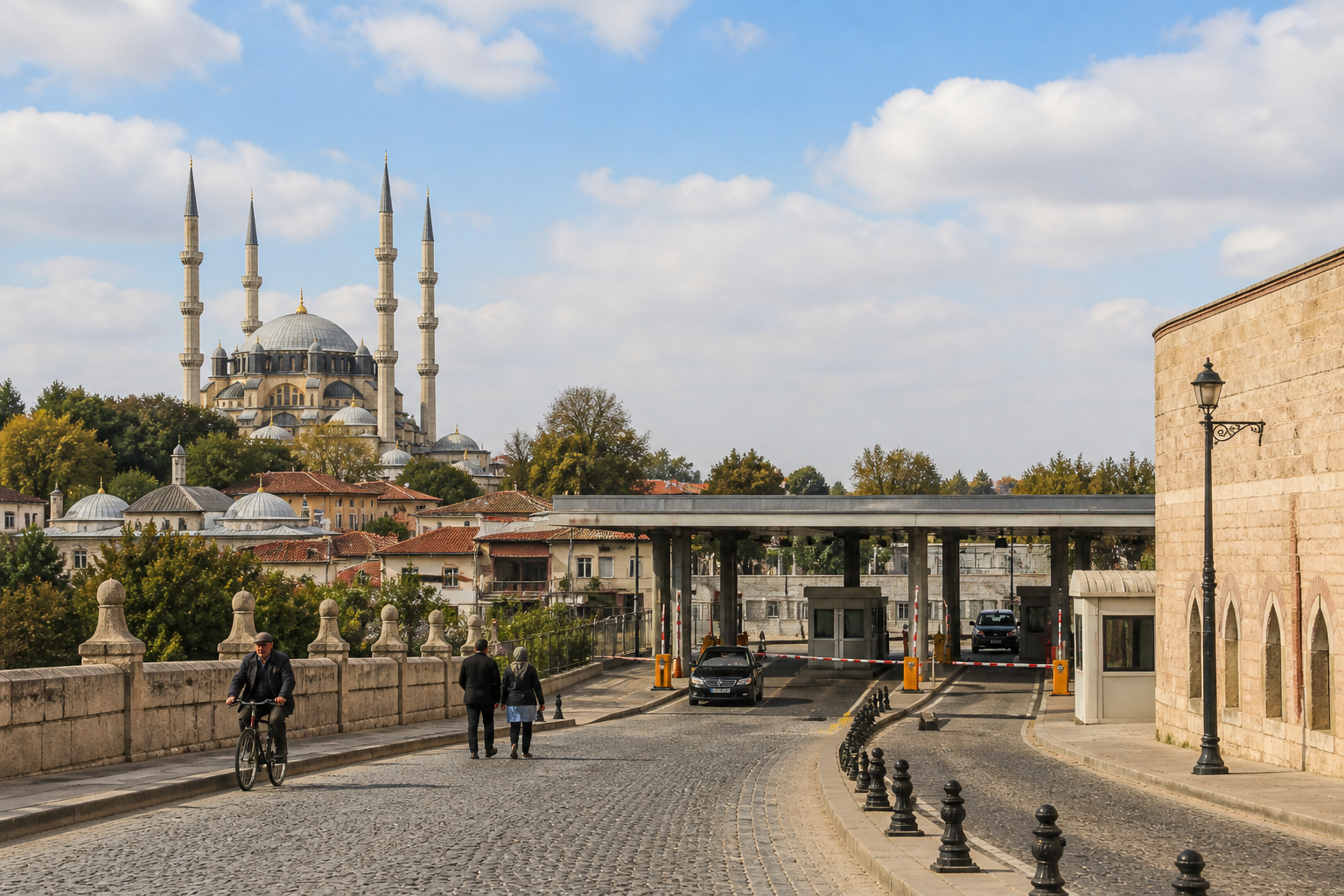
Understanding cannabis laws and penalties in Edirne requires looking primarily at Turkish national law. Edirne does not have a separate municipal cannabis code that makes possession, purchase or use lawful. The same criminal rules generally apply throughout Turkey, while Edirne’s location near the Greek and Bulgarian borders can create additional customs and travel risks.
For residents, visitors and people passing through the province, the safest assumption is that recreational cannabis is illegal. Possession for personal use, consumption, supplying another person, cultivation without authorization and trafficking can lead to different legal consequences. This guide explains the main distinctions without treating general information as a substitute for advice from a Turkish criminal-law lawyer.
Cannabis laws in Edirne: the national framework
Turkish drug offences are mainly governed by the Turkish Penal Code, known as the Türk Ceza Kanunu, together with controlled-substances legislation. The current text and amendments should be checked through the official Turkish legislation database, because legal wording, procedures and enforcement policies can change.
There is no general recreational cannabis market in Edirne. A shop, website or individual offering cannabis does not gain legal protection merely because a product is described as natural, herbal or locally sourced. Labels such as hemp, CBD or medical product also do not automatically establish that an item is lawful to possess or import.
Why Edirne’s location matters
Edirne is a major transit area for people travelling between Turkey and Europe. That makes airports, roads, railway stations, border gates and customs areas particularly sensitive locations for controlled-substance enforcement. Moving cannabis across an international border can be treated far more seriously than simple personal possession, even when the quantity is small or the person claims that it was intended only for personal use.
Travellers should not assume that a product legally purchased in another country can be carried into Turkey. Foreign prescriptions, cannabis cards and overseas medical authorizations may not provide permission to import cannabis into Turkey. Customs officers and prosecutors assess the facts under Turkish law.
Possession and personal use
Under Article 191 of the Turkish Penal Code, purchasing, accepting, possessing or using drugs for personal use can expose a person to imprisonment of two to five years. The legal response is not always an immediate prison sentence. In eligible cases, prosecutors may apply a postponement of the public prosecution together with treatment and probation measures, subject to the statutory requirements.
This does not make personal possession legal. A person may still be detained, investigated, tested, referred for assessment or required to comply with supervision. Failure to follow treatment or probation obligations can lead to prosecution. A later incident can also affect how authorities handle the case.
Factors that can affect a possession case
The classification of an incident depends on its evidence and circumstances rather than on a simple street explanation. Investigators may consider the substance, quantity, packaging, communications, money transfers, statements, location and whether there are signs of distribution. The fact that a person says the cannabis was for personal use is relevant, but it is not necessarily decisive.
- Substance identification: Authorities may send suspected material for forensic examination rather than relying only on appearance.
- Quantity and packaging: Multiple packages, scales or distribution-related materials may raise questions beyond personal use.
- Statements and messages: Chats, calls and witness accounts can become part of the investigation.
- Location: Border areas, transport hubs and places associated with distribution may receive close scrutiny.
- Prior history: Previous offences or earlier supervision can affect procedure and risk.
Because the distinction between personal use and supply is fact-specific, anyone questioned should avoid guessing, signing documents they do not understand or discussing the case publicly. Requesting a lawyer and, when necessary, a qualified interpreter is a sensible procedural step.
Supply, sale and trafficking penalties
Supply offences are treated much more seriously than personal-use cases. Article 188 of the Turkish Penal Code addresses manufacturing, importing, exporting, selling, offering, giving, transporting, storing and purchasing drugs for purposes connected with supply. The precise charge and penalty depend on the conduct, the substance, the evidence and any statutory aggravating circumstances.
In broad terms, commercial supply offences can result in lengthy prison sentences and substantial legal consequences. Manufacturing, importing or exporting may carry especially severe penalties. A person who transports cannabis through Edirne toward a border crossing should not assume that a small amount will be viewed only as possession. The alleged purpose and route can be central to the charge.
Personal use versus distribution
Turkish law does not offer a universally safe quantity that guarantees a personal-use classification. Courts and prosecutors may examine the entire factual picture. Indicators that can create distribution concerns include separate bags, customer lists, large cash amounts, weighing equipment, repeated communications with potential buyers or evidence of coordinated transport.
Conversely, the absence of those indicators does not guarantee that authorities will accept a personal-use explanation. This is one reason why informal online advice about a supposed “legal amount” of weed in Edirne can be misleading.
Public use, driving and other practical risks
Using cannabis in a park, street, hotel, vehicle, festival area or other public place does not create a legal exception. Public visibility can increase the likelihood of police intervention and can create additional public-order or identification issues. Smoking near other people can also expose a person to complaints and questioning, even apart from the underlying drug offence.
Driving after using cannabis presents separate safety and legal concerns. Impairment can endanger passengers, pedestrians and other road users, and a traffic stop can lead to testing or further investigation. Do not drive, cycle or operate machinery after using a psychoactive substance. A taxi or sober driver is safer than attempting to judge your own fitness to travel.
Visitors should also understand that police, prosecutors and courts are not required to follow the assumptions common in countries where recreational cannabis has been legalized. What may be tolerated or regulated elsewhere can remain a criminal matter in Turkey.
Medical cannabis in Edirne
Medical cannabis in Edirne is not equivalent to a broad recreational authorization. Turkey has tightly controlled rules for medicines, prescriptions, active ingredients and importation. A patient should not bring cannabis flower, oils, edibles or vape products into Turkey based solely on a foreign prescription or a medical-cannabis card.
Some cannabinoid-containing medicines may be available only through regulated medical channels and under specific professional and pharmaceutical controls. Availability, prescribing rules and import requirements can change. For current health-related information, consult the Turkish Ministry of Health and ask a Turkish-licensed physician or pharmacist about the specific product.
Questions patients should ask before travelling
- Is the exact product authorized for use or import in Turkey?
- Does the prescription meet Turkish requirements, or is a Turkish medical assessment required?
- Are the product’s THC and cannabinoid contents relevant under Turkish controlled-substance rules?
- What documents, approvals or customs declarations are required?
- Could the product be confiscated even if it is lawful in the country of departure?
Do not rely on social-media sellers or informal claims that a product is “legal because it is CBD.” Product composition, THC content, labeling and authorization status matter. When the answer is uncertain, obtain written guidance from the relevant Turkish authority before travelling.
Border and travel precautions in Edirne
Border travel creates a distinct risk profile. Customs authorities may search luggage, vehicles and parcels. A traveller who is carrying cannabis, cannabis resin, infused food, vape cartridges or unlabeled oils may face seizure, questioning and criminal investigation. Concealing an item or giving inconsistent explanations can make the situation more difficult.
Do not mail or courier cannabis into Turkey, and do not agree to carry a package for another person. “I did not know what was inside” may not resolve the issue if authorities believe the person knowingly transported the package or ignored obvious warning signs.
People crossing from Edirne into Greece or Bulgaria should separately check the rules of the destination country. Turkish law may apply before departure, and destination-country law may apply after arrival. A product that is permitted under one legal system may still create consequences in another.
For a broader travel perspective, compare the practical issues discussed in our guide to cannabis travel restrictions in İskenderun. The locations differ, but the core lesson is similar: transporting cannabis is riskier than simply reading about local possession rules.
What to do after police contact or a search
If police stop or search you, remain calm and avoid obstructing officers. Ask what is happening and request a lawyer. If you do not understand Turkish well enough to follow a statement, request an interpreter before signing. Do not sign a document that you cannot read or understand.
- Ask for legal assistance as soon as possible.
- Keep identity and travel documents available, but do not volunteer speculative explanations.
- Tell your lawyer about prescriptions, medication, travel routes and any search or seizure.
- Do not delete messages, hide evidence or contact possible witnesses to coordinate stories.
- Contact your embassy or consulate if you are a foreign national and need consular information.
Consular staff generally cannot cancel Turkish proceedings or provide a defence, but they may explain available consular support. A local lawyer is the appropriate person to assess the charge, detention status, evidence and possible court strategy.
How to reduce legal and personal risk
The clearest way to avoid cannabis penalties in Edirne is not to possess, use, buy, sell, grow or transport cannabis without confirmed Turkish authorization. Avoid carrying cannabis across borders, accepting packages for others and relying on online claims about small quantities or CBD exceptions.
People seeking help with substance use should contact a licensed healthcare professional rather than an unregulated seller. Those facing an investigation should obtain individualized legal advice promptly. General articles can explain the framework, but they cannot determine how Turkish authorities will classify a particular substance or incident.
Conclusion
Cannabis laws and penalties in Edirne are shaped mainly by Turkey’s national criminal and controlled-substance rules, not by a local recreational market. Personal-use possession and consumption can lead to criminal proceedings and possible treatment or probation measures, while supply, production and cross-border transport can carry much more severe consequences. Medical use is tightly regulated and does not automatically permit imported cannabis products.
For anyone looking into cannabis in Edirne, the practical message is straightforward: do not assume that foreign legalization, a medical card, a CBD label or a small quantity creates protection under Turkish law. Check official sources, avoid border transport and seek advice from a Turkish-qualified lawyer or healthcare professional when a real legal or medical question arises.