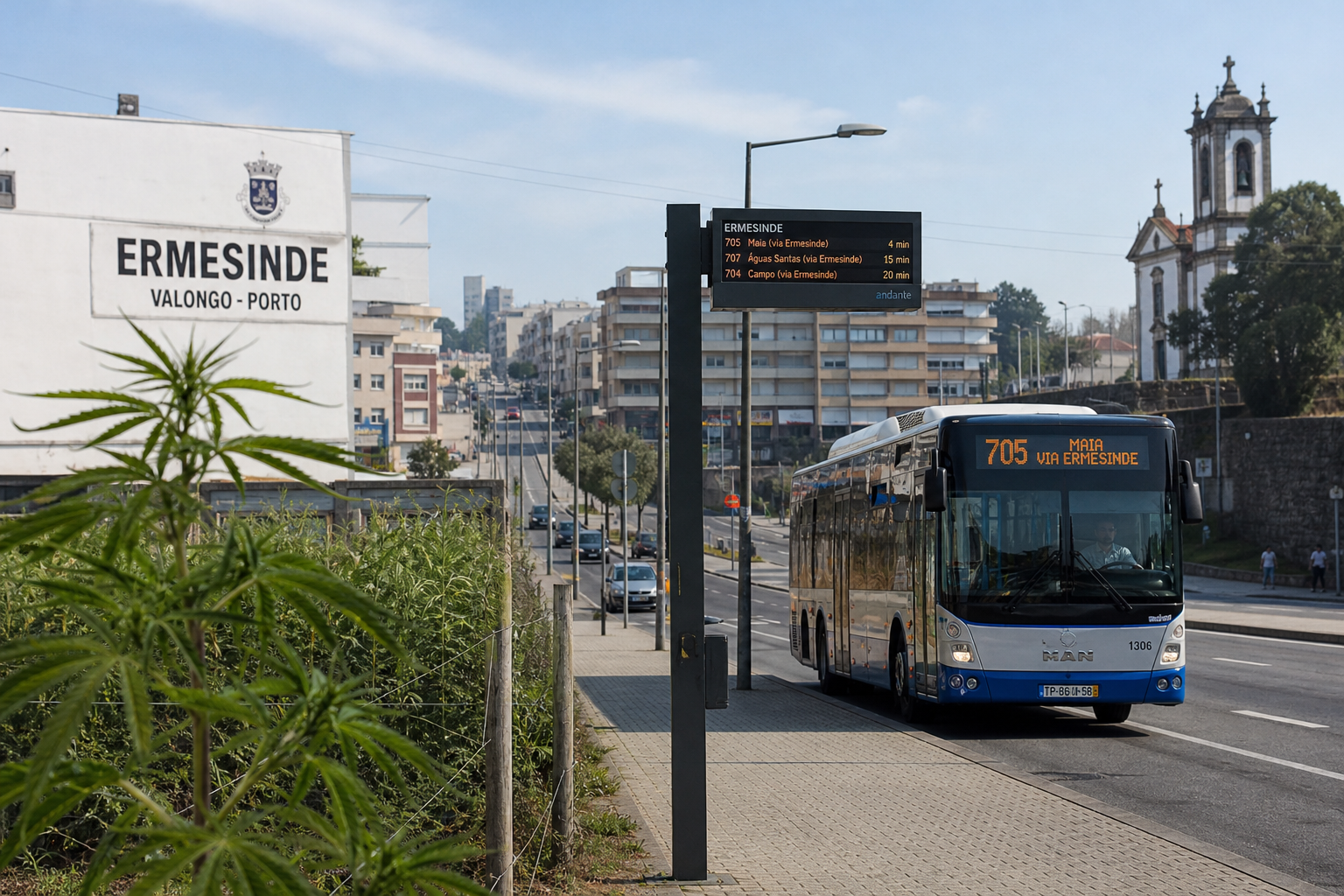
The cannabis industry in Ermesinde is best understood as part of Portugal’s wider regulated cannabis economy rather than as a separate local market. Ermesinde is a city in the municipality of Valongo, within the Porto metropolitan area, so residents and businesses are influenced by national legislation, regional supply chains and the commercial activity of nearby urban centres.
Portugal is often described as having legalised cannabis, but that shorthand is misleading. Personal use and possession are treated through a decriminalisation framework, while commercial production, retail sales and medical use remain subject to specific rules. This distinction matters for anyone researching weed in Ermesinde, considering a cannabis-related business or trying to understand what products can legally be found in the area.
This guide explains the practical position for residents, visitors, entrepreneurs and consumers. It does not assume that Ermesinde has licensed recreational dispensaries or a dedicated cannabis district. Instead, it sets out how national law applies locally and how the city connects to the broader Porto-area economy.
What the cannabis industry in Ermesinde includes
In Ermesinde, the phrase “cannabis industry” can cover several different activities, each with a different legal status. A business selling regulated medical cannabis is not operating under the same rules as a shop selling hemp textiles, a laboratory developing medicines or a company importing CBD products.
- Medical cannabis: Prescription medicines may be supplied through Portugal’s regulated healthcare and pharmacy system when legal requirements are met.
- Industrial hemp: Hemp can support products such as fibre, food ingredients and other non-intoxicating applications, but cultivation and product rules still apply.
- Research and technology: Laboratories, agricultural specialists and service providers may participate in the national cannabis supply chain.
- Retail and consumer education: Businesses may sell lawful hemp-derived goods or provide information, but product composition and marketing claims are important.
- Ancillary services: Accountants, compliance advisers, logistics companies and testing providers can support cannabis-related businesses without selling cannabis themselves.
Because Ermesinde is connected to Porto by road and public transport, a company based locally may serve customers, suppliers or professional partners across the metropolitan area. That regional connection is more significant than any assumption about a standalone local recreational market.
Cannabis laws in Ermesinde and across Portugal
The same national framework applies in Ermesinde as elsewhere in Portugal. Portuguese policy distinguishes between decriminalisation and legal commercial availability. Possessing a limited amount for personal use is generally handled as an administrative and health-related matter rather than as a standard criminal prosecution, but this does not create a right to buy, sell or consume cannabis wherever a person chooses.
Supply, trafficking, unlicensed production and commercial distribution can still lead to serious legal consequences. Public use may also create problems involving nuisance, public order, property rules or exposure to other people. A person should not interpret decriminalisation as permission to cultivate cannabis at home, sell it to friends or operate an informal delivery service.
For current official information, consult the INFARMED official website, particularly when the question concerns medicines, pharmacies, authorisations or regulated products. Public-health and drug-policy information is also available from Portugal’s SICAD official website.
Personal possession and use
Portugal’s approach focuses on referring some personal-use cases to administrative processes and health-oriented support rather than treating every case as a criminal matter. The circumstances still matter, including the quantity involved, evidence of supply, location and conduct. Police may confiscate substances, and administrative proceedings can have consequences.
There is no general rule allowing cannabis consumption in streets, parks, transport stations, workplaces, hotels or other private premises without permission. Visitors should also avoid carrying cannabis across borders. Portugal’s domestic decriminalisation policy does not override customs, transport or the laws of another country.
Medical cannabis access
Medical cannabis in Ermesinde is accessed through the national healthcare framework, not through recreational-style dispensaries. Eligible products require a medical prescription and are dispensed through authorised pharmacies when the relevant conditions are satisfied. A doctor must determine whether a regulated cannabis-based medicine is appropriate for a patient’s condition.
Patients should use only products supplied through legal medical channels. Buying flower, oils or edibles from an unverified seller creates uncertainty about strength, contaminants, origin and legal status. It can also complicate a patient’s treatment, particularly when cannabis interacts with other medicines or causes drowsiness and impaired concentration.
How Ermesinde fits into the Porto-area market
Ermesinde’s proximity to Porto, Maia, Matosinhos and other municipalities gives it a practical connection to a larger network of pharmacies, logistics providers, professional services and research activity. However, proximity does not mean that every cannabis-related business in the region is licensed to sell cannabis, and it does not make products sold in a neighbouring municipality automatically legal.
For broader regional context, readers can compare this topic with our guide to marijuana in Porto and Portugal. Nearby consumer issues may also overlap with the practical guidance in our article about CBD shops in Maia and the overview of cannabis consumption in Matosinhos.
These comparisons are useful because the legal framework remains national, while the customer experience can vary by business type. A pharmacy, a health-food retailer, a hemp supplier and a cannabis consultancy are not interchangeable. Checking the nature of the business is an essential first step.
Business opportunities and compliance considerations
Entrepreneurs interested in the cannabis sector should begin with the product and activity they intend to offer. A company involved in medical medicines, cultivation, processing, research or importation may need specific approvals, technical controls and qualified staff. A business dealing with hemp-based food, cosmetics or textiles may face a different set of product and labelling obligations.
Questions for prospective businesses
- Is the proposed product a medicine, food, cosmetic, supplement, industrial material or another category?
- Does the product contain controlled cannabinoids or make health claims?
- Where will cultivation, manufacturing, storage and distribution take place?
- Which national authority supervises the activity?
- Are testing, traceability, packaging and age-related controls required?
- Does the business need municipal planning, premises, tax, employment or environmental approvals?
Marketing deserves particular care. Words such as “cures,” “treats,” or “guaranteed relief” can create regulatory and consumer-protection problems when used without appropriate authorisation. A responsible business should describe ingredients accurately, avoid promising medical outcomes and keep documentation showing where products came from.
Local commercial planning also matters. A business in Ermesinde must consider premises, neighbours, transport access, waste handling, fire safety, insurance and data protection. Even when the core activity is legal, poor operational controls can create enforcement or reputational risks.
Buying cannabis, CBD and hemp products responsibly
People searching for cannabis in Ermesinde may actually be looking for very different products. CBD goods, industrial hemp items and prescription cannabis medicines should not be treated as equivalent. Their ingredients, intended uses and legal requirements may differ substantially.
Before buying, consumers should examine the label, manufacturer, batch information and stated cannabinoid content. They should be cautious with products that have no clear seller, make dramatic therapeutic promises or are presented as legal simply because they contain the word “hemp.” A product’s name is not proof of compliance.
- Prefer transparent sellers that provide clear product information.
- Do not assume that CBD products are risk-free or suitable for everyone.
- Ask a pharmacist or doctor about possible medicine interactions.
- Do not drive, cycle or operate machinery after using an intoxicating product.
- Keep cannabis products away from children and pets.
- Never transport products across international borders without checking the applicable rules.
Public health and community impact
A balanced discussion of the Ermesinde market should include health, safety and community concerns. Cannabis can affect attention, reaction time, memory and coordination, especially at higher doses or when combined with alcohol. Frequent use may also create dependence or worsen mental-health symptoms for some people. These risks are not eliminated by decriminalisation or by the presence of a professional-looking package.
Responsible communication should avoid both alarmism and promotion. Adults who use cannabis should understand potency, avoid mixing substances and leave time for effects to wear off. Anyone experiencing severe confusion, chest pain, loss of consciousness or other urgent symptoms should seek emergency medical help.
For communities, good regulation can help separate lawful businesses from illicit sellers, improve product information and support early health intervention. At the same time, residents may reasonably expect businesses to control odour, protect young people, manage waste and operate in accordance with local premises rules.
What to expect in the future
The future of the cannabis industry in Ermesinde will probably depend more on national policy, medical research, European product rules and enforcement practice than on a sudden local expansion of recreational retail. Potential growth areas include compliance services, pharmaceutical supply chains, laboratory testing, agricultural technology and non-intoxicating hemp products.
That outlook should be treated as an opportunity for careful research rather than a prediction of guaranteed growth. Investors and entrepreneurs should verify current requirements with the relevant Portuguese authorities and obtain professional legal, tax and regulatory advice before committing funds.
Conclusion
The cannabis sector in Ermesinde is part of a wider Porto-area and Portuguese framework. Personal possession may be decriminalised in defined circumstances, but cannabis is not broadly legal for recreational sale, and commercial activities require attention to licensing, product classification and public-health rules.
For residents, the safest approach is to distinguish medical cannabis, CBD and industrial hemp from illicit recreational supply. For businesses, success depends on transparent sourcing, accurate marketing, strong compliance systems and respect for local communities. Understanding these distinctions provides a more useful picture of cannabis laws in Ermesinde than assuming that decriminalisation means unrestricted access.