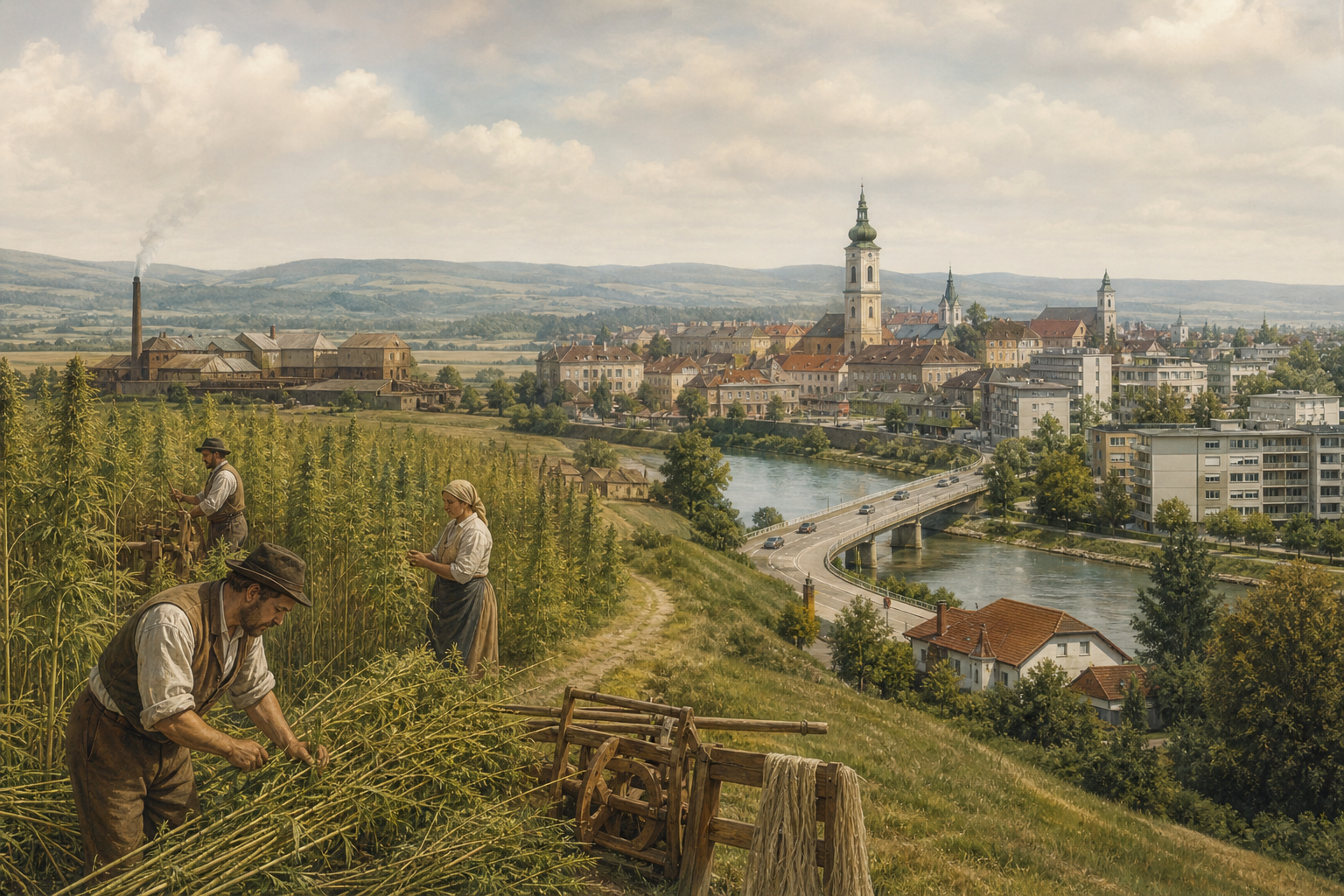
Cannabis history in Stockerau is best understood as part of the wider history of hemp, agriculture, medicine and drug policy in Austria. Stockerau, a town north of Vienna in Lower Austria, does not have a widely documented cannabis history separate from national developments. However, its location in a productive agricultural region, its links to Vienna and its changing population make it a useful place to examine how broader Austrian attitudes have reached local communities.
This is not a story of a single cannabis landmark or a famous local industry. It is a history of gradual change: hemp as a practical crop, cannabis as a controlled substance, and modern discussions about health, harm reduction and personal responsibility. Understanding that distinction helps separate documented history from assumptions about weed in Stockerau today.
Hemp before modern cannabis policy
For centuries, hemp was valued across Europe for durable fibre. Its uses included rope, sailcloth, clothing, sacks, paper and other everyday materials. Hemp and psychoactive cannabis belong to the same plant family, but historical hemp cultivation generally focused on varieties grown for fibre and seed rather than intoxicating effects.
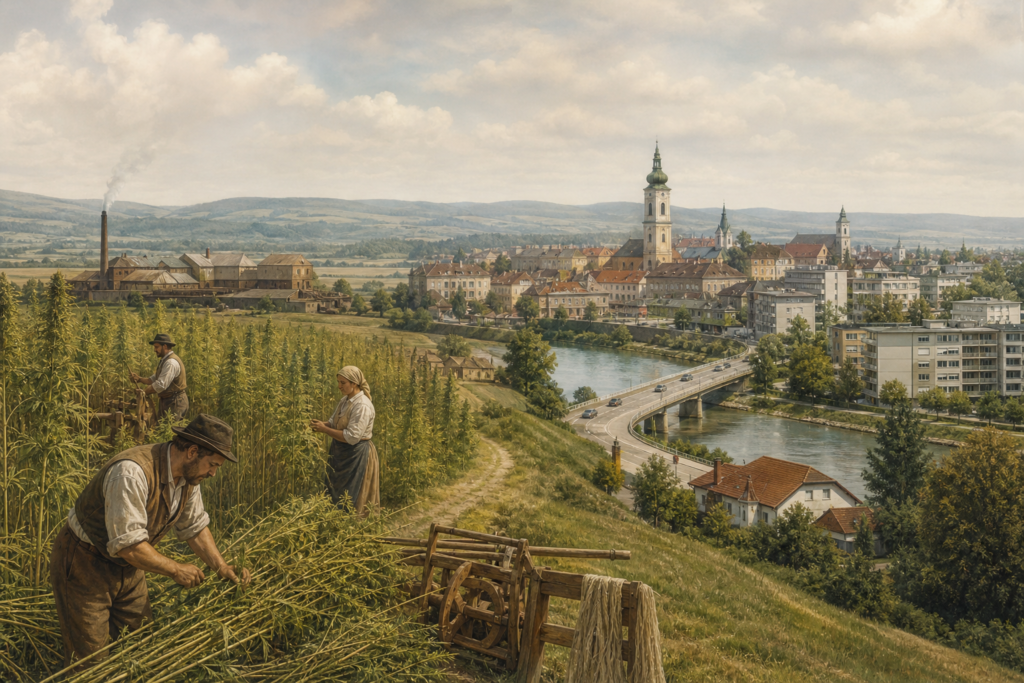
In Austrian rural life, hemp formed part of a broader pattern of small-scale agricultural production. Farmers selected plants suited to local conditions and practical needs. The available historical record does not establish Stockerau as a major hemp-growing centre, so it would be misleading to describe the town as a former cannabis hub. A more accurate conclusion is that residents of the Stockerau area would have encountered hemp through regional farming, trade and household production rather than through a distinctive local cannabis industry.
Why the distinction between hemp and cannabis matters
Modern discussions often use “hemp” and “cannabis” interchangeably, but the terms can refer to very different products and legal categories. Industrial hemp is associated with fibre, seed, food and other low-intoxicating applications. Cannabis cultivated for its flowers is more closely associated with THC, the principal intoxicating compound.
That difference shaped later regulation. A historical reference to hemp in Austria should not automatically be treated as evidence of recreational cannabis use, commercial marijuana production or a local tradition of intoxication. For Stockerau, the strongest historical interpretation is therefore regional and agricultural, not exceptional or underground.
How cannabis entered modern public debate in Austria
The twentieth century brought stronger international concern about psychoactive drugs. Cannabis increasingly became associated with criminal law, public order and health policy rather than ordinary agriculture. Austria’s approach developed within this European and international environment, with restrictions applying to cultivation, possession, supply and other activities involving controlled cannabis products.
These changes affected Stockerau indirectly but significantly. National law determines the legal framework in Lower Austria, while local authorities deal with practical matters such as public safety, municipal spaces and health services. In other words, cannabis laws in Stockerau are not created by the town alone. They reflect Austrian legislation and its interpretation by competent authorities.
The legal history is also more complex than a simple move from prohibition to acceptance. Some cannabis-related activities remain prohibited, while other products, medical uses or low-THC hemp categories may be treated differently. Rules can depend on the plant material, THC content, intended use, production method and whether a product is being possessed, sold or prescribed.
Cannabis history in Stockerau and the postwar period
After the Second World War, Stockerau expanded as a residential, commercial and transport-linked town. Its proximity to Vienna made it part of a wider commuter and regional service network. Those connections matter when discussing cannabis history because cultural trends rarely stop at municipal borders.
During the later twentieth century, attitudes toward cannabis changed in many European societies. Young people encountered cannabis through music, international travel, film and changing youth cultures. At the same time, police and health institutions continued to present cannabis primarily through the lens of legal risk and possible harm. The result was a mixed public image: cannabis became more visible, but visibility did not mean legal acceptance.
There is no reliable basis for claiming that Stockerau experienced a unique cannabis movement during this period. It is more defensible to say that local attitudes likely reflected the same tensions found elsewhere in Austria: concern about unregulated substances, curiosity about cannabis culture, and growing interest in whether punishment was the most effective response to personal use.
Local visibility without a separate local history
Small and medium-sized towns are often discussed as if they have completely different drug cultures from nearby cities. In practice, residents, students, workers and visitors move between Stockerau, Vienna and other towns in the region. Information, products, social attitudes and health concerns travel along the same routes.
That does not make Stockerau identical to Vienna. Local access to counselling, pharmacies, medical professionals and community services can differ. Public visibility may also be lower in a town where informal activity is less openly discussed. Still, the available evidence supports a connected regional history rather than a dramatic, self-contained Stockerau narrative.
Medical cannabis in Stockerau
Medical cannabis in Stockerau should be discussed separately from non-medical use. Patients do not gain legal access simply because a product is described as natural, herbal or therapeutic. Medical treatment must follow Austrian rules and the advice of an appropriately qualified healthcare professional.
For a person in Stockerau, the practical route is usually to discuss symptoms and treatment options with a doctor. Depending on the condition, a clinician may recommend approved medicines, other therapies or specialist assessment. A pharmacy may also provide information about lawful prescription medicines and product handling. Online claims about cannabis treating a wide range of conditions should not replace a medical evaluation.
The history of medical cannabis is also a history of evidence. Modern research examines cannabinoids for particular symptoms and conditions, but results vary by product and diagnosis. Potential side effects can include impairment, dizziness, anxiety, interactions with other medicines and problems related to dependence or problematic use. A responsible historical account therefore avoids presenting cannabis as either a universal cure or a uniquely dangerous substance.
What “cannabis in Stockerau” means today
The phrase cannabis in Stockerau can refer to several different subjects: local attitudes, medical treatment, industrial hemp, CBD products, law enforcement, or personal use. These categories should not be collapsed into one market or culture.
- Industrial hemp: fibre, seed and other low-intoxicating applications may fall under rules different from those governing drug-type cannabis.
- CBD products: legality and sale can depend on composition, claims, presentation and applicable product regulations.
- Medical treatment: access depends on healthcare guidance and Austrian medical and pharmaceutical rules.
- Recreational cannabis: possession, cultivation, supply and consumption may create different legal issues, especially where public order or driving is involved.
Readers comparing local topics may also find useful context in this guide to cannabis use in Krems an der Donau and the overview of marijuana information in Klosterneuburg. These nearby Lower Austrian perspectives help show how national rules are discussed in different communities without implying that every town has the same local history.
Law, public health and responsible interpretation
Anyone researching cannabis laws in Stockerau should start with current Austrian legislation rather than old forum posts or social-media summaries. The wording of laws and administrative guidance can change, and legal consequences may depend on details that a short online article cannot assess.
The official Austrian Legal Information System is the appropriate place to check consolidated legislation and official legal materials. For health information and national policy context, the Austrian Federal Ministry of Social Affairs, Health, Care and Consumer Protection is a more reliable starting point than commercial cannabis websites.
Practical safety also belongs in the historical picture. Cannabis can impair attention, reaction time and judgement. Driving after using an intoxicating product creates serious safety and legal risks. People should also be cautious about unknown potency, unregulated products and combining cannabis with alcohol or sedating medicines. Young people, pregnant individuals and anyone with a history of psychosis or substance-use problems should seek professional advice before considering cannabis.
Questions a careful local history should ask
- Is the source describing hemp, CBD, prescribed medicine or THC-rich cannabis?
- Does the claim concern Austria generally, or is there evidence specifically about Stockerau?
- Is the information current enough to reflect present law?
- Does the source distinguish historical use from modern commercial branding?
- Are health claims supported by a qualified medical or public-health authority?
The future of cannabis history in Stockerau
Future histories of Stockerau may contain more local evidence as public records, health research and community discussions become easier to access. Researchers might examine newspaper archives, municipal debates, agricultural records, pharmacy practice and interviews with residents. Such work could reveal how people in the town understood hemp, cannabis and drug policy at different times.
Until stronger local documentation appears, the most responsible account remains cautious. Stockerau was not clearly a famous cannabis centre, but its residents participated in the same wider Austrian changes that transformed hemp from an everyday agricultural material into a subject of regulation, controversy and medical research.
Conclusion
Cannabis history in Stockerau is a story of regional connection rather than a single local landmark. Traditional hemp belongs to Austria’s agricultural past, while modern cannabis belongs to debates about criminal law, public health, medicine and changing social attitudes. Stockerau’s proximity to Vienna and its place in Lower Austria help explain how these national developments became locally relevant.
The clearest way to understand the subject is to keep categories separate: historical hemp is not automatically recreational cannabis, CBD is not identical to THC-rich flower, and medical treatment is not the same as personal use. For current questions about cannabis in Stockerau, readers should rely on up-to-date Austrian legal sources, qualified health professionals and careful attention to product and use-specific rules.