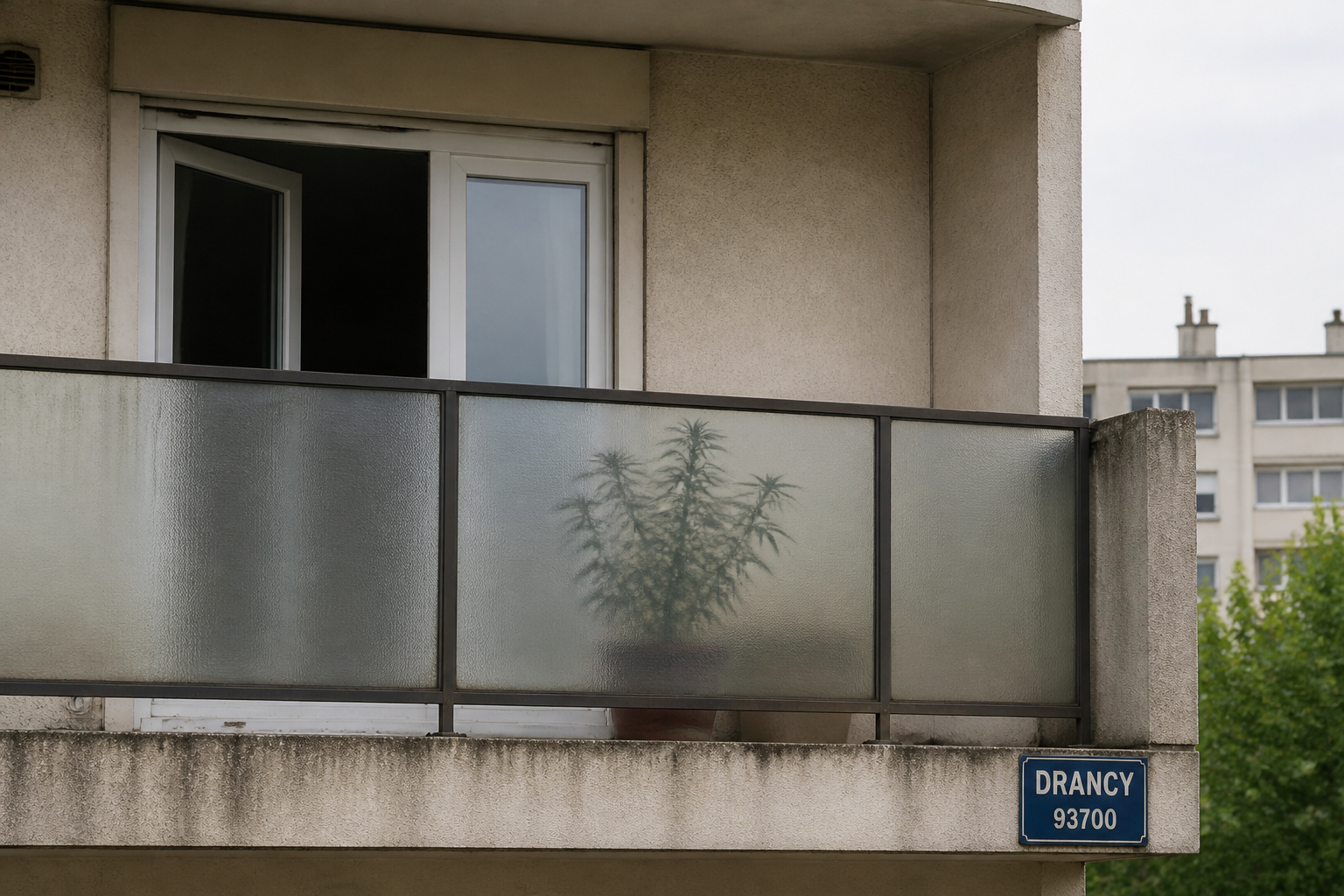
Understanding Cannabis cultivation laws in Drancy, France requires starting with an important point: Drancy does not have a separate municipal cannabis code that permits home growing. The rules that apply in this Seine-Saint-Denis commune are principally national French rules. Growing cannabis plants for personal use can expose a person to criminal investigation, seizure of the plants and prosecution, even where the cultivation takes place inside a private home.
This guide explains the legal position in practical terms. It distinguishes cannabis grown for intoxicating use from regulated industrial hemp, outlines the risks connected with a balcony, garden or indoor grow, and explains why medical or CBD-related arguments do not automatically create a right to cultivate. It is general information, not individual legal advice.
What cannabis cultivation laws in Drancy, France prohibit
French law treats the cultivation and production of cannabis as an illicit drug offence. The fact that a grower intends to use the harvest personally does not turn the activity into a lawful private hobby. A small number of plants may be viewed differently from an organised commercial operation when authorities and courts assess the facts, but “personal use” is not a general cultivation exemption.
That means growing cannabis in Drancy can be legally risky in several common settings:
- An indoor tent in an apartment, garage or basement.
- Plants on a private balcony, terrace or enclosed garden.
- Seedlings or mature plants kept for a future personal harvest.
- Plants grown for another person, even without payment.
- A larger operation involving lighting, ventilation, electrical equipment or multiple growing rooms.
The legal assessment can become more serious when there are signs of resale, distribution, regular production or involvement by several people. Equipment, messages, packaging, cash, weighing scales and the quantity of plants may all be relevant to how the case is investigated.
Cannabis in Drancy: does private property make cultivation legal?
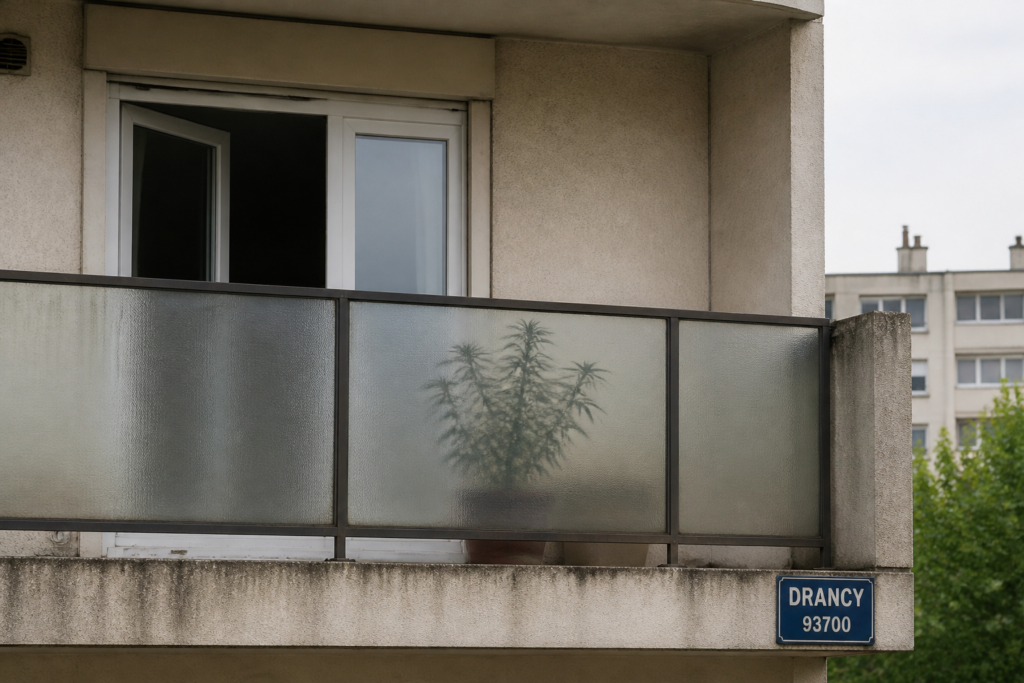
No. A flat, house, balcony or garden is not a legal exception. Private ownership or tenancy controls who may enter the property, but it does not remove national drug laws. If police discover plants during an investigation or receive information about a grow, the location being private does not prevent seizure or further proceedings.
Visibility can create additional practical problems. Strong odours, visible plants, unusual electrical consumption, water damage, mould or repeated deliveries can lead to complaints or concern from neighbours, a landlord or building management. In a shared residential building, cultivation equipment may also raise fire, humidity and electrical-safety issues.
For tenants, a grow can create consequences under the lease or building rules in addition to criminal exposure. Property damage, unauthorised alterations, nuisance and safety breaches may lead to disputes with a landlord or co-owners’ association. These are separate from the question of whether prosecutors pursue a drug offence.
How penalties may differ from a simple use fine
France has a fixed fine system for some straightforward drug-use situations, but that should not be confused with a licence to grow cannabis. A cultivation allegation concerns production, not merely possession or consumption. The eventual response depends on the evidence, the scale of the activity, the person’s role, prior history and whether there are aggravating circumstances.
Possible consequences can include:
- Removal and destruction of plants or growing materials.
- Police questioning, searches and seizure of devices or other evidence.
- Referral to prosecutors and a formal investigation.
- Criminal charges connected with production, possession, supply or trafficking.
- Financial penalties, a criminal record or imprisonment in serious cases.
- Housing, employment, immigration or family consequences in some circumstances.
The most severe statutory penalties associated with illicit production and trafficking are aimed at serious drug operations. They should not be presented as an automatic outcome for every small domestic grow. At the same time, people should not assume that a few plants guarantee a minor administrative response. The facts and legal classification matter.
The French public administration’s overview of cannabis-related offences and penalties is a useful starting point for the difference between use, possession and more serious conduct. Anyone contacted by police or prosecutors should obtain advice from a qualified lawyer before making important decisions about a case.
Weed in Drancy and the difference between cannabis and legal hemp
Industrial hemp is not the same legal category as a typical high-THC cannabis crop. French rules allow certain hemp activities under specific conditions, including the use of authorised varieties and compliance with THC limits and agricultural requirements. These rules are designed for regulated hemp production, not as a general permission for residents to grow any cannabis seed at home.
In practical terms, a person should not rely on a seed packet, a “CBD” label or a claim that a plant is low in THC. The relevant rules can concern the variety, the source of the seed, the permitted plant material, cultivation conditions and the activity’s commercial or agricultural purpose. Testing and enforcement questions can also arise where the plant’s actual characteristics are disputed.
CBD products sold in France are subject to their own regulatory requirements. A lawful CBD product does not automatically prove that a home-grown plant is lawful, and buying a compliant product is legally different from producing cannabis plants. The French government’s official information on cannabis and CBD can help readers check the general public-health and legal framework.
Can a resident grow hemp for personal use?
Residents should be cautious about assuming that industrial-hemp rules cover a private balcony or garden. The lawful cultivation framework is principally directed at approved agricultural production and controlled supply chains. A plant grown from an ordinary cannabis seed, a seed of uncertain origin or a seed marketed for intoxicating effects is not made lawful simply because the owner describes it as hemp.
Where a person is considering an agricultural or commercial hemp project in or around Drancy, the appropriate step is to confirm the current requirements with the relevant French authorities and obtain professional legal or agricultural advice before planting. The rules may depend on the operator’s status, variety, documentation and intended use.
Medical cannabis does not create a home-growing exception
Some people search for medical cannabis in Drancy because they believe a health condition could justify cultivation. French medical-cannabis access has been regulated through specific medical and pharmaceutical arrangements, not through a broad right for patients to grow their own supply. A prescription, participation in a treatment pathway or use of a cannabis-based medicine does not by itself authorise home cultivation.
Patients should follow the instructions of their doctor and pharmacist and use products obtained through the applicable legal channel. Growing plants at home may create a separate offence even when the person has a genuine medical need. It can also introduce uncertainty about potency, contaminants, drug interactions and driving-related impairment.
How local context in Drancy affects practical risk
Drancy forms part of the densely populated Paris metropolitan area. That does not change the underlying law, but it can make certain practical issues more visible than they might be on a large rural property. Apartments, shared entrances, connected utility systems and close neighbours mean that odour, noise, moisture and electrical modifications may affect other residents.
Local authorities do not issue a household licence that overrides national drug law. A resident who sees cannabis advertised or hears claims about permissive rules in nearby towns should not treat those claims as reliable. For comparison, our guide to cannabis access laws in nearby Aulnay-sous-Bois explains why local proximity does not create a different personal-growing entitlement. A separate overview of the marijuana market in Aubervilliers provides additional regional context, but neither article replaces official legal advice.
What to do if police discover plants
Stay calm and avoid making assumptions about the likely outcome. Do not destroy plants, hide equipment, contact other people to coordinate accounts or post details online. Those actions can complicate an investigation or create additional evidential issues.
- Ask what procedure is taking place and whether you are being questioned as a witness, suspect or person in custody.
- Request a lawyer, particularly before a detailed interview or statement.
- Read documents carefully and request an interpreter if you do not understand French sufficiently.
- Do not sign a statement that is inaccurate or unclear; ask for corrections before signing.
- Keep records of prescriptions or lawful product purchases if they are relevant, but do not assume they excuse cultivation.
If the plants belong to another person, avoid guessing or accepting responsibility for facts you do not know. A lawyer can explain the available procedural rights and whether the alleged conduct concerns use, possession, production or supply.
Common misconceptions about cannabis cultivation in France
- “One plant is legal.” There is no simple one-plant exemption for recreational cannabis cultivation.
- “Indoor growing is invisible to the law.” A private indoor location does not remove the offence.
- “CBD seeds are always safe to grow.” Product labels and seed marketing do not replace compliance with French cultivation rules.
- “A medical prescription permits home production.” Medical treatment and personal cultivation are separate legal questions.
- “A neighbour’s practice proves it is allowed.” Lack of enforcement in one situation is not legal authorisation.
Practical conclusion for residents
For anyone researching cannabis laws in Drancy, the safest summary is straightforward: recreational home cultivation is not generally lawful, and the risks extend beyond the plants themselves. Private property, personal use, CBD branding or medical need does not automatically provide an exception. Regulated industrial hemp is a distinct activity requiring compliance with specific national conditions.
Before planting, importing seeds, setting up equipment or relying on an online claim, check current French sources and seek advice from a qualified professional. If authorities have already become involved, prompt advice from a French criminal lawyer is more reliable than trying to predict the result from the number of plants alone.