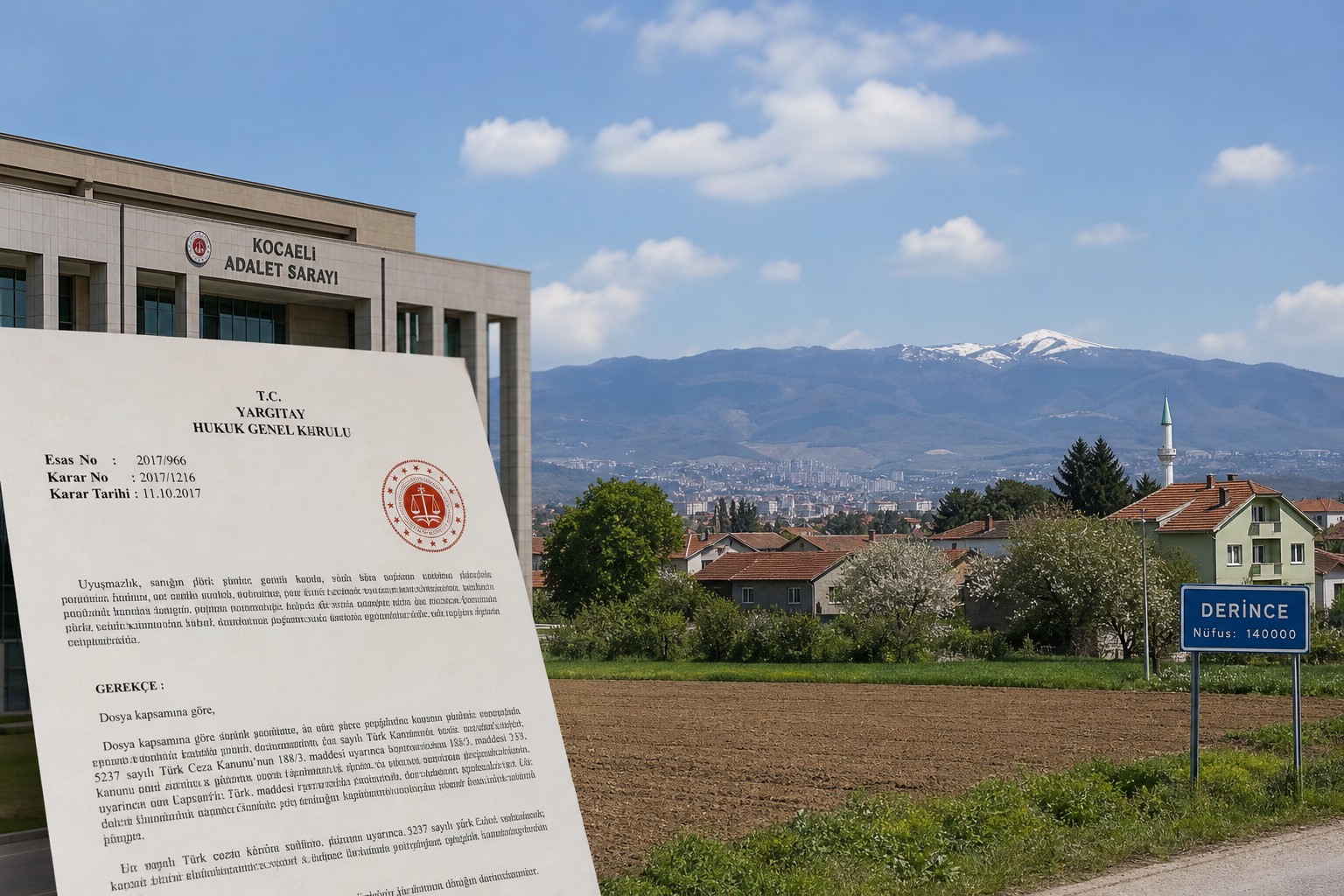
Understanding cannabis cultivation laws in Derince requires looking at Turkish national law rather than local municipal policy. Derince is in Kocaeli Province, but the main rules on cannabis, controlled substances, cultivation, possession and supply are established by national legislation and enforced by Turkish authorities. A private balcony, garden, greenhouse or rural plot does not create an exception.
For residents, property owners and visitors, the safest assumption is that growing cannabis without a specific legal authorization is prohibited. This article explains the general legal position, the limited distinction involving industrial hemp, possible consequences, medical considerations and sensible steps to take when a legal question arises. It is general information, not a substitute for advice from a Turkish criminal lawyer.
What cannabis cultivation laws in Derince generally prohibit
Turkish drug law treats unauthorized cannabis cultivation seriously. Planting, maintaining or harvesting cannabis for personal use or for distribution can expose a person to criminal investigation. The fact that plants are immature, kept out of public view or intended only for personal consumption does not automatically make the activity lawful.
Authorities may assess the complete circumstances, including the number and condition of plants, seeds, harvested material, cultivation equipment, communications, financial evidence and any indication of supply. A small home growing operation should therefore not be treated as a legally safe category simply because it is not commercial.
The relevant rules are national and may involve the Turkish Penal Code, the legislation governing narcotic substances and regulations concerning controlled agricultural production. The official Turkish legislation database is the appropriate starting point for checking current statutory texts. Because laws and administrative rules can change, an online summary should not be treated as the final authority.
Personal cultivation is not a general exception
People searching for weed in Derince may encounter claims that a few plants for personal use are tolerated. Informal claims, social media posts and anecdotal reports are not legal protection. Turkish law does not provide a broad home-grow exemption comparable to regimes in some other countries.
Personal-use allegations can still lead to questioning, search procedures, seizure of plants or materials, prosecution and court-ordered measures. The legal outcome depends on the facts and the applicable provisions, so it is dangerous to predict a result solely from plant quantity.
Industrial hemp is different from drug cannabis
Industrial hemp should not be confused with unlicensed cannabis cultivation. Hemp may be permitted only within a regulated agricultural and industrial framework, using approved varieties and complying with authorization, location, registration, inspection and processing requirements. A person cannot normally reclassify unauthorized cannabis plants as hemp after planting them.
Rules for hemp may be updated through regulations and administrative decisions. Anyone considering a commercial hemp project near Derince should obtain written confirmation from the relevant agricultural authorities before acquiring seed, leasing land or beginning production. The planned crop, variety, end use and location may all affect the authorization process.
Questions a prospective hemp grower should resolve
- Is the proposed plant variety accepted for the intended use?
- Does the activity require a permit, registration or prior approval?
- Which provincial or district agricultural office has jurisdiction?
- Are seed purchase, planting, harvesting, transport and processing separately regulated?
- Will inspections, records, testing or secure storage be required?
- Are there zoning, environmental, land-use or commercial licensing requirements?
These questions matter because an agricultural label does not itself legalize a crop. A prospective operator should keep applications, invoices, seed documentation, land records and official correspondence. Verbal assurances from an intermediary or supplier are not a substitute for authorization from the competent authority.
Cannabis laws in Derince: possession, supply and related conduct
The legal risk is not limited to the plants themselves. Cannabis cultivation cases may also involve possession of harvested material, supplying another person, importing seed or plant material, transporting products, storing cannabis or assisting someone else’s operation. Different conduct can trigger different legal provisions and more serious allegations.
Evidence that suggests distribution can be particularly important. Packaging, scales, repeated communications, money transfers, multiple storage locations or transport records may be interpreted in ways that increase the seriousness of an investigation. Even when a person disputes the allegation, careless statements can make the situation more difficult.
For broader context, readers can compare this issue with the discussion of marijuana cultivation laws in Çanakkale. The location changes, but national criminal rules remain more important than local differences. A second useful comparison is the guide to cannabis possession regulations in Menemen, which illustrates why possession and cultivation should be analyzed separately.
Potential consequences of unauthorized growing
Possible consequences depend on the alleged conduct, evidence, prior history and prosecutorial assessment. They may include seizure of plants and equipment, police questioning, a search, detention under applicable procedures, a criminal investigation, prosecution, fines or imprisonment. Courts may also consider whether the conduct involved personal use, supply, organized activity or another aggravating circumstance.
Visitors and foreign nationals face additional practical risks. A drug investigation may affect immigration status, residence arrangements, employment, travel plans and future entry into Turkey. Consular assistance can help a foreign national understand available support, but a consulate cannot replace a Turkish lawyer or stop local proceedings.
Do not assume that destroying plants, moving them, deleting messages or asking another person to take responsibility will resolve the problem. Such actions can create additional legal complications. If authorities make contact, remain calm, avoid obstructing any lawful procedure and request legal representation before providing detailed answers.
What to do if police or investigators contact you
- Ask what procedure is taking place and whether you are being treated as a witness, suspect or another type of participant.
- Request a Turkish criminal defense lawyer, particularly before signing a statement or answering detailed questions.
- Do not sign documents that you do not understand. Ask for an interpreter where necessary.
- Do not conceal, destroy, transfer or tamper with plants, devices, documents or messages.
- Keep copies of relevant property, lease, agricultural or authorization documents and provide them through counsel when appropriate.
- If you are a visitor, contact your embassy or consulate for information about consular support.
Medical cannabis in Derince and prescription questions
Searches for medical cannabis in Derince can create confusion because the existence of cannabis-related medicines or cannabinoid products does not mean that residents may grow cannabis at home. Medical treatment, where available, must follow Turkish healthcare, prescription, pharmacy and product rules. A doctor’s recommendation is not the same as permission to cultivate a plant.
Patients should speak with a licensed Turkish physician and obtain products only through lawful medical channels. Bringing cannabis, extracts, oils or other controlled products from another country may create import, customs or possession problems, even when the product was legally obtained elsewhere.
People should also be cautious with cannabidiol products. Product labels can be inaccurate, formulations may contain controlled cannabinoids, and foreign legality does not guarantee Turkish legality. Before travelling with any cannabis-related medicine, obtain current written guidance from the relevant Turkish authorities and discuss the issue with a qualified lawyer or healthcare professional.
How local context affects enforcement in Derince
Derince is an urban and industrial district within Kocaeli, with residential neighborhoods, transport links, commercial premises and nearby agricultural areas. Those features do not create a special cannabis regime. A cultivation allegation may involve local police, prosecutors, courts and provincial agricultural officials depending on the facts.
Landowners and landlords should not assume they are automatically responsible for every item found on their property, but they may need to explain access, tenancy, storage and control. Tenants should understand that a private lease does not authorize an illegal crop. Property managers who discover suspected cultivation should avoid handling plants or equipment unnecessarily and should obtain legal advice about reporting and preserving evidence.
In practical terms, “cannabis in Derince” is not a separate legal category. The same national restrictions generally apply whether the alleged activity occurs in a flat, detached house, warehouse, field or temporary structure.
Common misconceptions to avoid
- “A few plants are legal.” There is no reliable general home-cultivation exemption to rely on.
- “A private balcony is outside the law.” Privacy and ownership do not cancel national drug legislation.
- “Hemp seed makes any crop lawful.” Legal hemp production requires compliance with the applicable authorization and agricultural rules.
- “Medical need permits home growing.” Treatment and cultivation are separate legal questions.
- “Tourists are treated informally.” Visitors can face criminal and immigration consequences.
- “Online sellers guarantee legality.” A seller’s description cannot replace official authorization or legal advice.
Practical compliance checklist for residents and businesses
Before starting any cannabis-adjacent agricultural, research or commercial project in Derince, identify the exact plant, product and intended activity. A project involving licensed hemp fiber may be treated differently from a project involving cannabinoid extraction, medicinal products, seed sales or recreational cannabis. Each stage can raise separate licensing and regulatory issues.
Use official Turkish sources, ask the relevant provincial authority for written guidance and retain records of every application and response. Do not plant first and seek permission later. If a proposed activity involves controlled substances, imported materials, laboratories, pharmacies or medical claims, obtain specialist legal and regulatory advice before spending money or accepting inventory.
For general public-health and drug-policy information, consult the Turkish Ministry of Agriculture and Forestry for agricultural matters and verify any product or farming requirements with the responsible office. These sources may direct applicants to the correct provincial authority, but they do not replace an individualized legal opinion.
Conclusion
The central point about cannabis cultivation laws in Derince is straightforward: unauthorized growing should be treated as illegal and legally risky, even when the plants are kept at home and intended for personal use. Industrial hemp may exist within a regulated framework, but it requires proper authorization and cannot be used as a label for an unapproved cannabis crop.
Residents, landlords, businesses and visitors should avoid relying on rumors about cannabis laws in Derince. Check current national legislation, obtain written confirmation for any legitimate hemp or agricultural proposal and seek advice from a Turkish lawyer if plants, seeds, products or an investigation are involved. Careful verification before acting is far safer than trying to resolve a criminal or immigration problem afterward.