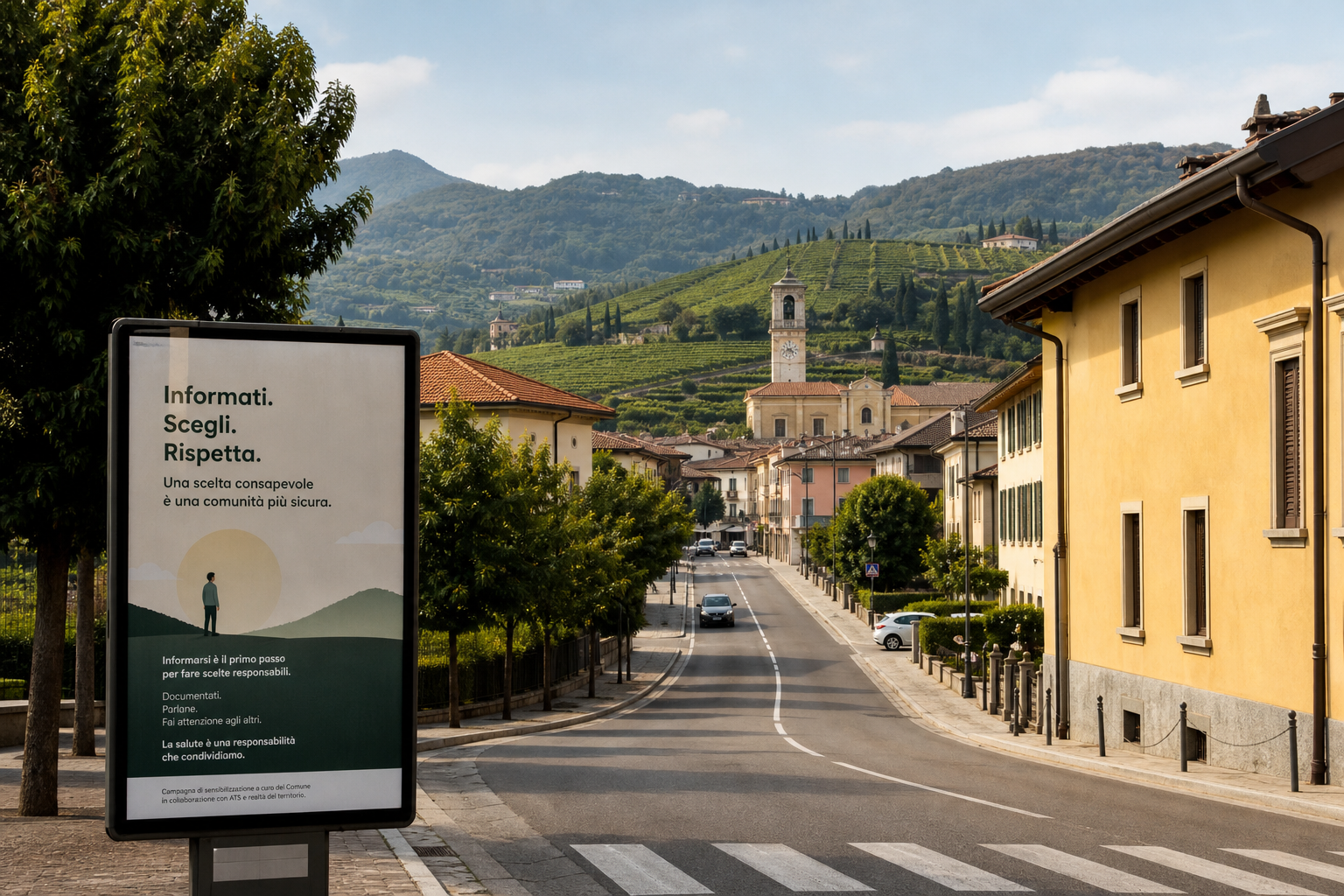
Understanding Cannabis awareness in Rovato means separating Italian law, medical information, CBD rules and everyday safety from rumours or assumptions. Rovato is a town in the province of Brescia, in Lombardy, so cannabis-related questions are generally governed by national Italian legislation rather than by a separate local cannabis code. Local services may help residents access healthcare, advice or reporting channels, but they do not create a legal market for recreational cannabis.
This guide provides a practical overview for residents, visitors and families. It is not legal or medical advice, and rules can change. Anyone dealing with a legal, health or treatment question should check current information through official institutions and speak with a qualified professional.
Why cannabis awareness matters in Rovato
Public discussion of cannabis often combines very different subjects: possession for personal use, commercial supply, prescribed cannabis, industrial hemp, CBD products, driving and workplace safety. Treating these as one issue can lead to poor decisions. A useful approach is to ask what product is involved, why it is being used, how it was obtained and what risks may follow.
For people searching for cannabis in Rovato, the first practical point is that a search result, social-media post or shop description does not prove that a product is lawful, safe or suitable. Product labels can be incomplete, and informal sellers may provide no reliable information about strength, contaminants or origin. Awareness therefore involves both legal knowledge and basic health literacy.
Cannabis laws in Rovato and Italy
Italian cannabis rules distinguish between different forms of conduct. Possession of a controlled substance for personal use may lead to administrative consequences, while cultivation, supply, trafficking and other forms of distribution can involve criminal penalties. The legal outcome depends on facts such as quantity, purpose, conduct and evidence. A local article cannot determine how authorities would assess an individual situation.
There is no general recreational cannabis retail system in Rovato. A person should not assume that a business selling hemp-derived goods is authorised to sell intoxicating cannabis, or that a product advertised as legal can be used anywhere. When the legal status of a product is unclear, the safest response is to avoid buying or using it and seek advice from an official or qualified source.
For a comparison with another town in the same wider region, readers can review this practical guide to cannabis dispensaries in Montichiari. The underlying national framework remains important, even when local shopping or travel questions differ.
Personal use, supply and public conduct
Personal possession is not the same as a legal permission to carry or consume cannabis. Sharing, selling, transporting for another person or storing cannabis in circumstances suggesting distribution can create more serious legal exposure. Public consumption may also cause disputes or lead to action under public-order, nuisance or local rules.
Visitors should be especially cautious. Carrying cannabis across national borders can create serious problems even when the product was obtained legally elsewhere. Cannabis should not be taken onto public transport, through airports or across the Italian border without specialist legal advice confirming that the conduct is permitted.
Medical cannabis in Rovato
Medical cannabis in Rovato is part of Italy’s regulated healthcare system. It is not equivalent to recreational use, and a patient generally needs an appropriate medical assessment and prescription. Availability can depend on the prescribed preparation, pharmacy supply, regional procedures and the clinician’s judgement.
A person who believes cannabis may help with a health condition should begin with a doctor rather than an informal seller. The doctor can assess symptoms, existing treatments, possible interactions and whether an authorised option is appropriate. Patients should not alter a prescription, share medicine or purchase an unverified product as a substitute for treatment.
Official information from the Italian Ministry of Health can help readers check national health and regulatory guidance. The Italian Medicines Agency is another authoritative source for information about medicines, safety and pharmacovigilance.
Questions to ask a healthcare professional
- What symptom or condition is the treatment intended to address?
- What preparation, dose and schedule are being considered?
- Could cannabis interact with current medicines, alcohol or other substances?
- What side effects should prompt a call to the doctor?
- How should the medicine be stored, transported and recorded?
Medical treatment should be documented clearly. Keeping the prescription and pharmacy documentation available may be useful when travelling or explaining lawful possession. However, documentation does not automatically authorise use while driving, working in safety-sensitive roles or crossing an international border.
CBD, hemp and products sold in Rovato
CBD is not the same as THC. CBD is generally not intoxicating in the way THC is, but a CBD-labelled product can still raise questions about ingredients, contamination, labelling and residual THC. Product category and intended use matter. Food supplements, cosmetics, technical hemp goods and medicines may be subject to different requirements.
People looking for weed in Rovato may encounter products described as light cannabis, hemp flower or CBD flower. Those labels do not, by themselves, establish that the product is legal for every purpose. Consumers should check the packaging, responsible operator, ingredients, warnings and intended category. Avoid products with no traceable manufacturer, no batch information or exaggerated health claims.
CBD products may also cause practical problems. Some tests and analytical methods can detect cannabinoids, while product composition may not match marketing claims. Anyone subject to workplace testing, professional rules or a driving-related requirement should obtain specific advice before using a cannabinoid product.
Health effects and risk reduction
Cannabis can affect attention, reaction time, memory, coordination and perception. The likelihood and severity of effects vary according to THC concentration, amount, frequency of use, individual health, age, previous experience and whether alcohol or other drugs are involved. A product that feels manageable to one person can be overwhelming to another.
Risk reduction does not make cannabis risk-free, but several principles are straightforward:
- Do not combine cannabis with alcohol, sedatives or other intoxicating substances.
- Do not drive, cycle in traffic, operate machinery or perform hazardous work while impaired.
- Avoid unknown-strength products and do not assume that a small package contains a small dose.
- Keep cannabis and edible products away from children and pets, preferably in a locked container.
- Do not use cannabis to manage severe anxiety, pain or sleep problems without discussing the issue with a healthcare professional.
- Seek urgent help for severe confusion, chest pain, breathing problems, loss of consciousness or dangerous behaviour.
Young people and vulnerable groups
Adolescents, pregnant or breastfeeding people, and individuals with a personal or family history of psychosis or serious mental-health conditions may face particular concerns. People with heart conditions or those taking medicines that affect the central nervous system should also seek professional advice. Awareness messaging should avoid both exaggeration and false reassurance: cannabis is not harmless simply because it is plant-based, and not every user experiences the same level of risk.
Driving, work and public safety
One of the clearest rules for safer behaviour is not to drive after using cannabis. Impairment can outlast the subjective feeling of being high, and Italian road-safety enforcement may involve testing and legal consequences. Waiting until someone feels normal is not a reliable legal or safety test. Arrange a sober driver, use public transport or postpone the journey.
Workplaces may have additional safety requirements, particularly where a person operates vehicles, works at height or uses machinery. A medical prescription does not automatically remove the duty to work safely. Employees who need confidential guidance should speak with their doctor and follow applicable workplace procedures rather than hiding a potential impairment risk.
Finding reliable information and support
Good cannabis awareness starts with source checking. Give priority to government health agencies, medicines regulators, licensed healthcare professionals and clearly identified pharmacies. Be cautious with anonymous forums, unverified delivery services and pages promising guaranteed medical benefits or completely risk-free cannabis.
Residents can contact their family doctor, local health services or a pharmacist for health questions. Legal questions involving possession, investigation, employment or travel should be directed to a qualified Italian lawyer. If someone is in immediate medical danger, call the appropriate emergency service rather than relying on online advice.
Readers interested in how medical access is discussed in another Lombardy-area location may also consult this guide to medical cannabis for patients in Bassano del Grappa. The article is not a substitute for local clinical advice, but comparing topics can help distinguish medical access from general retail claims.
Practical checklist for residents and visitors
- Identify whether the product contains THC, CBD or another cannabinoid, and check the intended legal category.
- Use official sources to confirm current Italian rules rather than relying on advertising or hearsay.
- Do not buy from an informal seller or carry cannabis across a border.
- Ask a doctor or pharmacist about medical use, interactions and side effects.
- Keep products away from children, pets and anyone who did not choose to use them.
- Never drive or perform hazardous work while impaired.
- Get urgent medical assistance when symptoms are severe or unexpected.
Conclusion
Cannabis awareness in Rovato is ultimately about making informed distinctions. Italian law does not create a general recreational retail market, medical cannabis follows a healthcare pathway, and CBD or hemp labels do not remove the need to check product status and quality. Health risks, driving rules, workplace duties and border controls also matter.
The safest approach is to verify information through authoritative sources, involve a qualified professional when health or legal questions arise, and avoid untraceable products. Whether someone is a resident, a patient or a visitor, careful decisions are more reliable than assumptions based on marketing, local rumours or the name printed on a package.