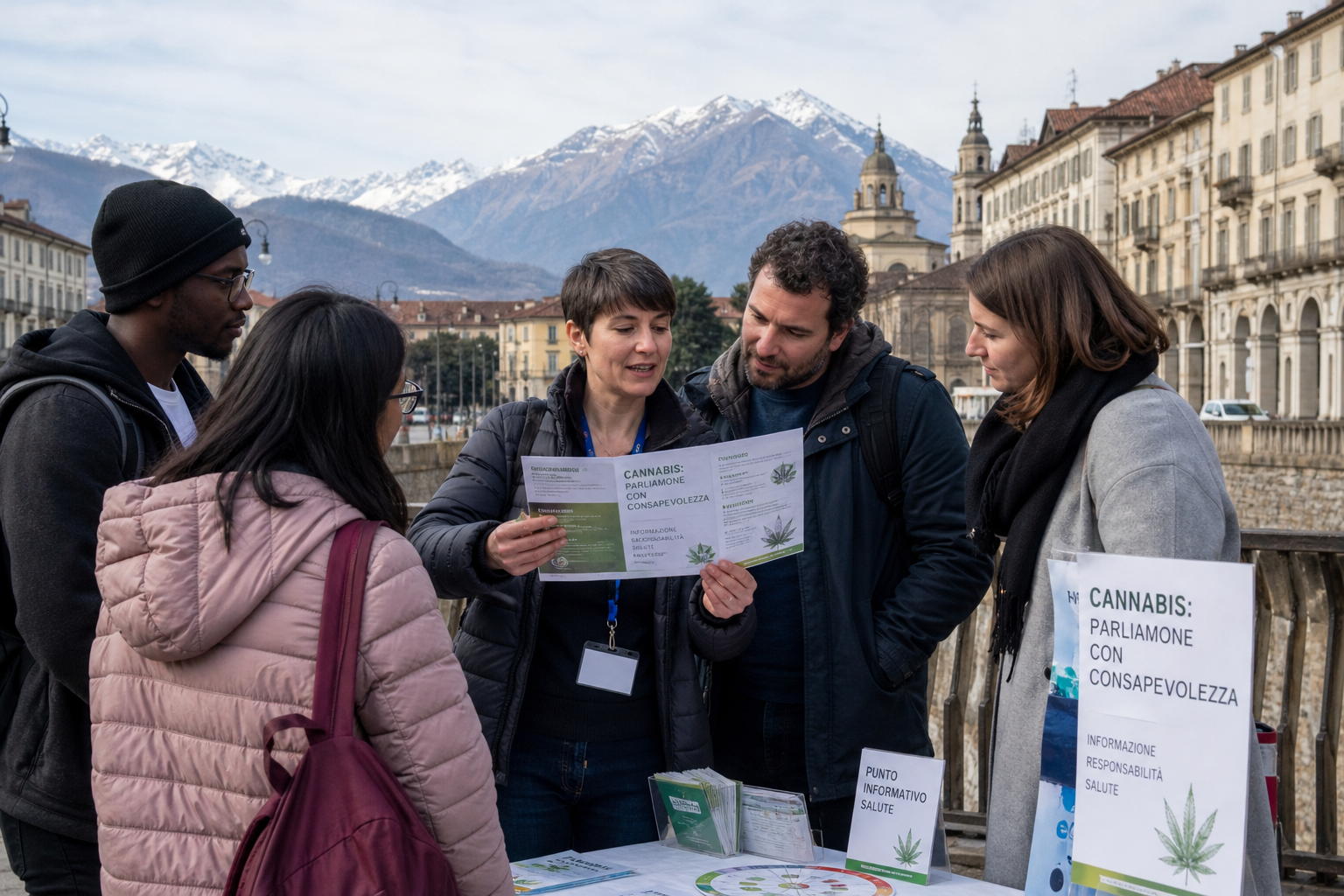
Cannabis awareness in Cuneo means understanding more than where products may be discussed or sold. Residents, students, workers and visitors need reliable information about Italian law, health risks, medical access, CBD products and the practical consequences of carrying or using cannabis. Rules can differ significantly from those in other European countries, while local circumstances in Cuneo—such as travel across the province, nearby international routes and access to health services—make careful decision-making especially important.
This guide offers general educational information about cannabis in Cuneo. It is not legal or medical advice. Italian rules and enforcement practices can change, so anyone facing a specific legal, treatment or safety issue should contact a qualified professional or an appropriate public service.
What cannabis awareness in Cuneo should cover
A useful conversation about cannabis should distinguish between different products and situations. Herbal cannabis, hashish, pharmaceutical preparations, industrial hemp and CBD-labelled goods are not automatically treated the same way. The presence of a familiar label or a low-THC claim does not, by itself, confirm that a product is lawful, safe or suitable for a particular person.
Awareness also means separating possession from supply, personal use from driving, and medical treatment from self-medication. A person may encounter different risks depending on the product’s composition, quantity, source and intended use. Public assumptions based on laws in another country are particularly unreliable in Italy.
- Legal awareness: Know the difference between administrative consequences for personal possession and criminal exposure linked to selling, supplying, importing or cultivating unlawfully.
- Health awareness: Consider potency, mental health, medicines, age, pregnancy and the possibility of dependence.
- Practical awareness: Avoid driving, carrying products across borders or accepting unknown substances from informal sources.
- Medical awareness: Use prescribed cannabis only as directed and discuss side effects or interactions with a clinician or pharmacist.
Cannabis laws in Cuneo and the wider Italian framework
Cuneo follows national Italian law rather than having a separate city-level cannabis regime. Italy generally treats unlawful possession for personal use differently from conduct involving supply or trafficking. Personal possession can lead to administrative measures, while dealing, distribution, production or other supply-related conduct may constitute a criminal offence. The legal outcome can depend on facts such as quantity, circumstances, evidence and the person’s history.
It is therefore misleading to describe cannabis as simply “legal” or “illegal” in Italy. Some cannabis-based medicines can be supplied through regulated medical channels, while recreational products containing prohibited levels of controlled cannabinoids remain subject to restrictions. Industrial hemp and CBD products also require careful checking because product composition, intended use and changing regulatory interpretations matter.
For official public information, consult the Italian Ministry of Health. If a question concerns medicines, authorisation or treatment information, the Italian Medicines Agency is another appropriate starting point. These institutions provide national-level information; they do not replace personalised legal advice.
Possession, sharing and supply
Giving cannabis to another person is not automatically treated as harmless private sharing. Supplying, selling or transporting cannabis for another person can create serious legal risks, even when no money changes hands. Visitors should also avoid assuming that a product purchased lawfully elsewhere can be brought into Italy or moved across an international border.
People looking for broader educational context can also read this overview of cannabis education in Molfetta, which discusses Italian law, health and safer choices from another local perspective.
Health considerations for people in Cuneo
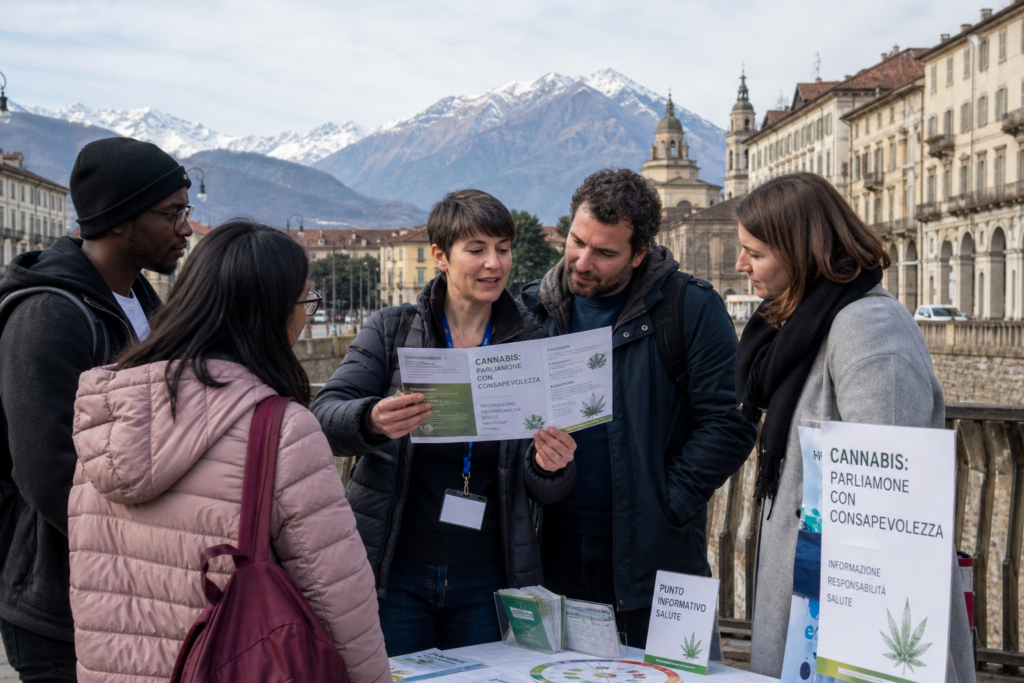
Cannabis affects people differently. Effects may include relaxation or altered perception, but also impaired attention, slower reaction time, anxiety, panic, dizziness, nausea and temporary problems with memory or coordination. Products with higher THC concentrations can produce more intense effects and may be harder to judge, especially for someone with little experience.
Frequent use can develop into problematic use or dependence for some people. Risk may be greater when use begins during adolescence, when products are highly potent, or when cannabis is used to cope with stress, insomnia, low mood or trauma without professional support. A family history of psychosis or certain other mental health conditions is an important reason to seek clinical advice before using cannabis.
Smoking also exposes the lungs to irritants and combustion by-products. Edible products create a separate risk: effects can take longer to appear, which may lead a person to consume more before the first dose has taken effect. Mixing cannabis with alcohol, sedatives or other drugs can increase impairment and unpredictability.
When to seek urgent help
Severe confusion, chest pain, difficulty breathing, collapse, extreme agitation, seizures or thoughts of self-harm require urgent medical attention. Do not leave a distressed person alone, and tell emergency responders what may have been taken if it is safe to do so. Honest information can help clinicians assess the situation more effectively.
For non-urgent concerns, a family doctor, pharmacist, addiction service or local health authority can discuss consumption patterns confidentially. Asking for help early is not an admission of failure; it is a practical way to reduce harm and identify appropriate support.
Medical cannabis in Cuneo: how regulated access works
Medical cannabis in Cuneo is part of Italy’s regulated healthcare system. It is not the same as purchasing recreational cannabis from an informal source. A clinician must assess the patient’s condition, previous treatments, potential benefits and risks. Where treatment is appropriate, the medicine and prescription process must follow the applicable national and regional requirements.
Patients should ask their doctor or pharmacist how a prescription is prepared, whether a specific pharmacy can dispense it, how the product should be stored and what to do if side effects occur. Availability and administrative procedures may vary, so it is sensible to ask the local health service or pharmacy for current information rather than relying on social media or anecdotal advice.
Do not change the dose, combine prescribed cannabis with alcohol or share a prescribed product with another person. Patients should also ask about driving, work involving machinery, pregnancy, breastfeeding and interactions with other medicines. A prescription does not necessarily remove every safety or road-traffic concern.
For additional background, this guide to medical access and safer cannabis use in Fano explains why clinical supervision and clear information matter across Italy.
CBD, hemp and product labelling
CBD products are often marketed as different from THC-rich cannabis, but consumers still need to check what they are buying. Labels may not fully explain cannabinoid content, contaminants, extraction methods or whether the product is intended for food, cosmetics or another use. A product sold in a shop is not automatically appropriate to ingest, and a “natural” description does not guarantee safety.
People taking prescription medicines should ask a healthcare professional about possible interactions before using CBD. Anyone subject to workplace drug testing, professional fitness rules or driving requirements should also recognise that some products may contain trace amounts of THC. Keeping receipts and packaging may help clarify what was purchased, but it does not eliminate legal or health risks.
Safer choices for residents and visitors
The safest choice is not to use cannabis, particularly for minors, pregnant people, people with relevant mental health risks and anyone who must drive or operate equipment. For adults who nevertheless decide to use it, risk can be reduced by avoiding unknown products, not mixing substances, using a lower amount and waiting for effects before considering more. These steps do not make use risk-free or change the law.
- Never drive, cycle in traffic or operate machinery while impaired.
- Do not use cannabis around children or in situations where another person cannot freely avoid exposure.
- Avoid informal products with unknown potency, contaminants or origin.
- Do not share prescribed medicines or accept a prescription product from someone else.
- Keep products clearly labelled and secured away from children and pets.
- Seek help if use becomes difficult to control or begins affecting work, relationships, sleep or finances.
Travel, public spaces and cross-border risks
Visitors searching for weed in Cuneo should be especially cautious about travel assumptions. Taking cannabis across the Italian border, including into or out of nearby countries, can create customs and criminal-law risks. A product obtained through a medical programme in one country may not be recognised automatically in another.
Do not carry cannabis on trains, buses, planes or through border checkpoints unless a qualified authority has confirmed that the specific medicine and documentation are permitted. Travellers with prescribed medicines should check the current requirements of every country on their route and carry only what is authorised, in original packaging and with appropriate documentation.
Public use can also create problems involving nuisance, exposure of other people or police attention. This practical guide to cannabis travel rules in Italy provides a useful reminder that transport and border questions deserve separate attention from personal-use rules.
Building better cannabis awareness in Cuneo
Local awareness improves when information is calm, evidence-based and free from both exaggeration and complacency. Schools and families can discuss brain development, consent, peer pressure and how to seek help without treating every question as misconduct. Workplaces can communicate clear impairment and safety policies, especially in roles involving vehicles, machinery or public responsibility.
Community organisations and health professionals can help by directing people toward reliable services rather than informal online advice. Residents should check current information from public health bodies, ask pharmacists specific questions and avoid treating promotional content as medical evidence. A respectful, non-judgmental approach makes it more likely that someone will disclose risky use before an emergency occurs.
Conclusion
Cannabis awareness in Cuneo depends on understanding Italy’s national legal framework, recognising health risks and knowing the difference between regulated medical treatment and informal products. Cannabis in Cuneo is not governed by a simple “legal versus illegal” choice: product type, purpose, possession, supply, travel and behaviour all matter.
When in doubt, do not drive, cross a border with cannabis or rely on an unverified seller’s claims. Use official public-health information, consult a qualified healthcare professional for medical questions and seek legal advice for a specific case. Informed decisions and early support are the most practical foundations for cannabis safety in Cuneo.