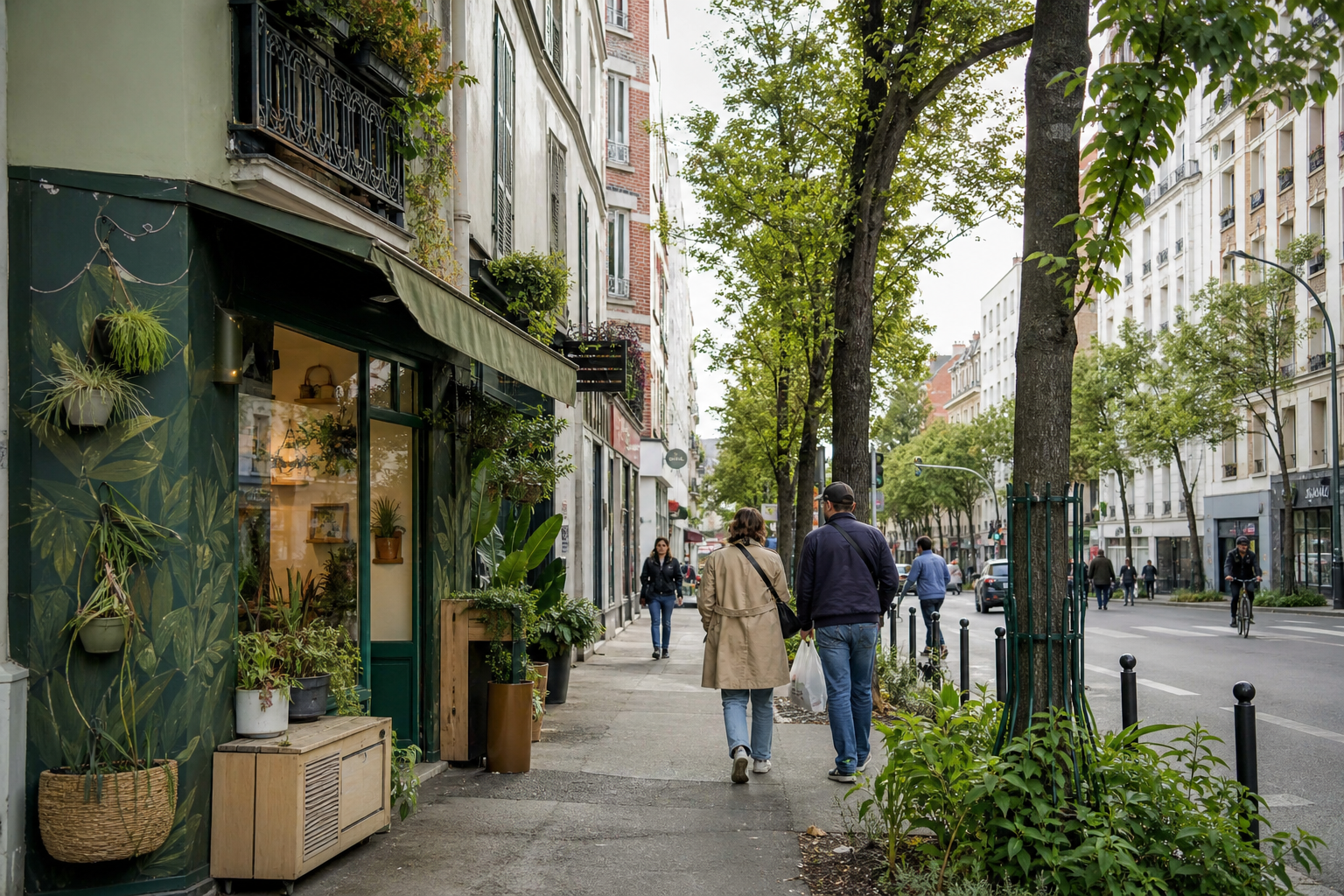
Understanding Cannabis trends in Montreuil requires more than looking at changing consumer interest. Montreuil, an urban commune in Seine-Saint-Denis on the eastern edge of Paris, is shaped by dense transport links, a varied population, independent businesses and close connections with the wider Paris region. These factors can influence how people discuss cannabis, CBD, health and public policy, but they do not change French law.
This guide separates observable national trends from claims that would require local data. It explains the legal position, the difference between THC cannabis and CBD products, the limited medical framework, health considerations and practical questions for residents and visitors. The aim is not to encourage illegal use, but to provide clear, responsible information about cannabis in Montreuil.
Cannabis trends in Montreuil and the wider urban context
Montreuil is part of the broader eastern Paris metropolitan environment rather than an isolated cannabis market. Conversations about cannabis may take place in social, cultural or nightlife settings, while information and purchasing decisions are also influenced by national media, online platforms and trends elsewhere in Île-de-France. That makes it difficult to identify a uniquely Montreuil pattern without reliable municipal or public-health research.
Several themes are nevertheless relevant when considering weed in Montreuil:
- Legal uncertainty: Some people confuse the visibility of cannabis with legal acceptance. In France, recreational cannabis remains prohibited.
- Interest in CBD: Products marketed as CBD have become more visible, but product quality, labeling and legal compliance can vary.
- Health-focused discussion: Public conversations increasingly include dependence, adolescent exposure, driving risks and mental health rather than treating cannabis only as a cultural issue.
- Regional influence: Residents move between Montreuil, Paris and other communes for work, study and leisure, so local consumer conversations overlap with wider metropolitan trends.
These are useful lenses for understanding the subject, not proof of a specific level of consumption in Montreuil. Local prevalence should be assessed through official surveys or public-health studies rather than shop visibility, anecdotes or social media posts.
Cannabis laws in Montreuil: what residents and visitors should know
There is no separate municipal cannabis regime in Montreuil. The same national rules apply as in the rest of France. Possessing, buying, selling, transporting or using THC cannabis can lead to legal consequences. Depending on the circumstances, enforcement may involve a fixed fine, investigation or more serious criminal proceedings.
French authorities may issue a fixed penalty for certain cases of drug use or possession, but a fine is not a legal permission to use cannabis. The amount and procedure can depend on the situation, and cases involving supply, repeat offending, minors, public disorder or larger quantities can be treated more seriously. The official French public service information on drug-related offences provides a useful starting point for checking the current legal framework.
Public use can create additional problems, including complaints, police attention and risks to other people. Smoking in shared spaces, near children or around transport areas can also raise public-order and safeguarding concerns. Visitors should not assume that a relaxed atmosphere in one neighborhood means cannabis is permitted there.
Driving and travel
Driving after using cannabis is particularly risky legally and physically. French road rules prohibit driving after cannabis consumption, and roadside testing can create serious consequences even when a driver does not feel impaired. Combining cannabis with alcohol increases impairment and makes safe decision-making more difficult.
Transporting cannabis across borders is also dangerous. A product obtained legally in another country does not automatically become legal to bring into France. The same caution applies to flights, trains and international travel from the Paris region.
CBD in Montreuil: a separate but regulated category
CBD is not the same as recreational THC cannabis. CBD products are generally marketed for non-intoxicating use, but the label alone does not guarantee that a product is lawful, accurately tested or suitable for everyone. French and European rules can apply differently depending on whether an item is a food, cosmetic, vape product, herbal preparation or another type of consumer good.
For people researching cannabis trends in Montreuil, CBD retail is one of the most visible developments. However, the presence of a CBD shop or an online listing should not be interpreted as approval of all products sold there. Buyers should look for:
- A clear ingredient list and product category.
- Transparent information about the manufacturer or importer.
- Batch or laboratory documentation where available.
- Warnings for pregnancy, medication interactions and driving.
- No claims that CBD can diagnose, prevent or cure a medical condition.
Products with inaccurate THC levels can create legal and health risks. Some extracts, flowers, vapes and edibles may also be poorly labeled or contaminated. Avoid products that promise dramatic effects, conceal their ingredients or encourage use in combination with alcohol or other drugs.
Consumers comparing local options may also benefit from reading broader guidance on CBD and cannabis shops in nearby Saint-Denis. The legal principles remain national, even though retail environments can differ from one commune to another.
Medical cannabis in Montreuil: access remains limited
Medical cannabis in Montreuil is not equivalent to buying cannabis for general wellness. Access to cannabis-based treatment in France has been tightly controlled, with medical decisions made through the healthcare system rather than by retail staff or social-media sellers. Availability and rules have also been subject to national policy changes, so patients should confirm the current position with a doctor, pharmacist or official health authority.
Patients should not replace prescribed treatment with an unregulated THC product or assume that CBD is a substitute for clinically evaluated medicine. Cannabis-based products can cause drowsiness, affect concentration and interact with other medicines. People with a history of psychosis, severe anxiety, cardiovascular concerns or problematic substance use should discuss risks with a qualified clinician before considering cannabinoid products.
A doctor can help distinguish between a potential medical indication, self-medication and a condition that needs a different form of care. Pharmacists can also provide advice about interactions and product instructions. Online testimonials are not a reliable basis for changing treatment.
Health and harm-reduction considerations
Health risks vary according to THC strength, frequency, age of first use, route of administration and the presence of other substances. Frequent or high-potency use can affect memory, attention, motivation and daily functioning. Some people develop dependence or find it difficult to cut down. Adolescents and young adults may face particular concerns because brain development continues into early adulthood.
Lower-risk principles
- Do not drive, cycle in traffic or operate machinery after using cannabis.
- Avoid mixing cannabis with alcohol, sedatives or other drugs.
- Do not use during pregnancy or breastfeeding without direct medical advice.
- Keep all cannabis and cannabinoid products away from children and pets.
- Be cautious with edibles, which can take longer to produce effects and may lead to accidental overconsumption.
- Do not share smoking or vaping equipment, and avoid inhaling combusted materials whenever possible.
- Seek help if use affects work, study, relationships, sleep, mood or finances.
Urgent symptoms such as chest pain, severe confusion, loss of consciousness, breathing problems or extreme agitation require immediate medical assistance. When contacting emergency services, explain what was taken if it is safe to do so; accurate information helps clinicians respond appropriately.
Community conversations and responsible local reporting
Discussion of cannabis in Montreuil should include more than enforcement or commercial interest. Residents may also be concerned about odors, discarded materials, use near schools, vulnerable people, neighborhood safety and access to treatment. A balanced local conversation recognizes those concerns without stereotyping particular streets, communities or groups.
Responsible reporting matters because isolated incidents can create a misleading picture of the city. Claims about a surge in consumption, a new local market or a particular neighborhood trend should be supported by dated evidence from police, public-health agencies, academic research or municipal sources. Shop counts and online comments are not reliable measures of use.
For additional regional context, readers can compare this topic with information about marijuana information and public-health questions in Villeurbanne or the discussion of cannabis policy in Saint-Étienne. These comparisons can help distinguish national rules from local concerns, but they should not be treated as direct evidence about Montreuil.
How to assess cannabis information in Montreuil
Online searches for local products, legal advice or medical treatment can quickly produce inaccurate claims. Before relying on information, check who published it, when it was updated and whether it clearly distinguishes THC, CBD and medical use. Be especially skeptical of promises of guaranteed effects, secret formulas, legal loopholes or delivery services that avoid describing their products.
For official health and drug information, consult French public authorities and qualified healthcare professionals. The French government’s cannabis information resource explains risks and key points in the national context. Legal questions involving a specific incident should be directed to a qualified legal professional rather than inferred from a blog or forum.
Conclusion
Cannabis trends in Montreuil are best understood as part of a changing national and metropolitan conversation, not as evidence that local recreational cannabis is legal. Interest in CBD, medical research, public health and safer-use information may continue to shape discussion, while French restrictions on THC cannabis remain important for residents and visitors.
The most reliable approach is to separate legal facts from marketing, treat health claims cautiously and avoid driving or mixing substances. For anyone concerned about their own use or another person’s wellbeing, a doctor, pharmacist or addiction-support service is a better source of help than an anonymous seller or social-media account.