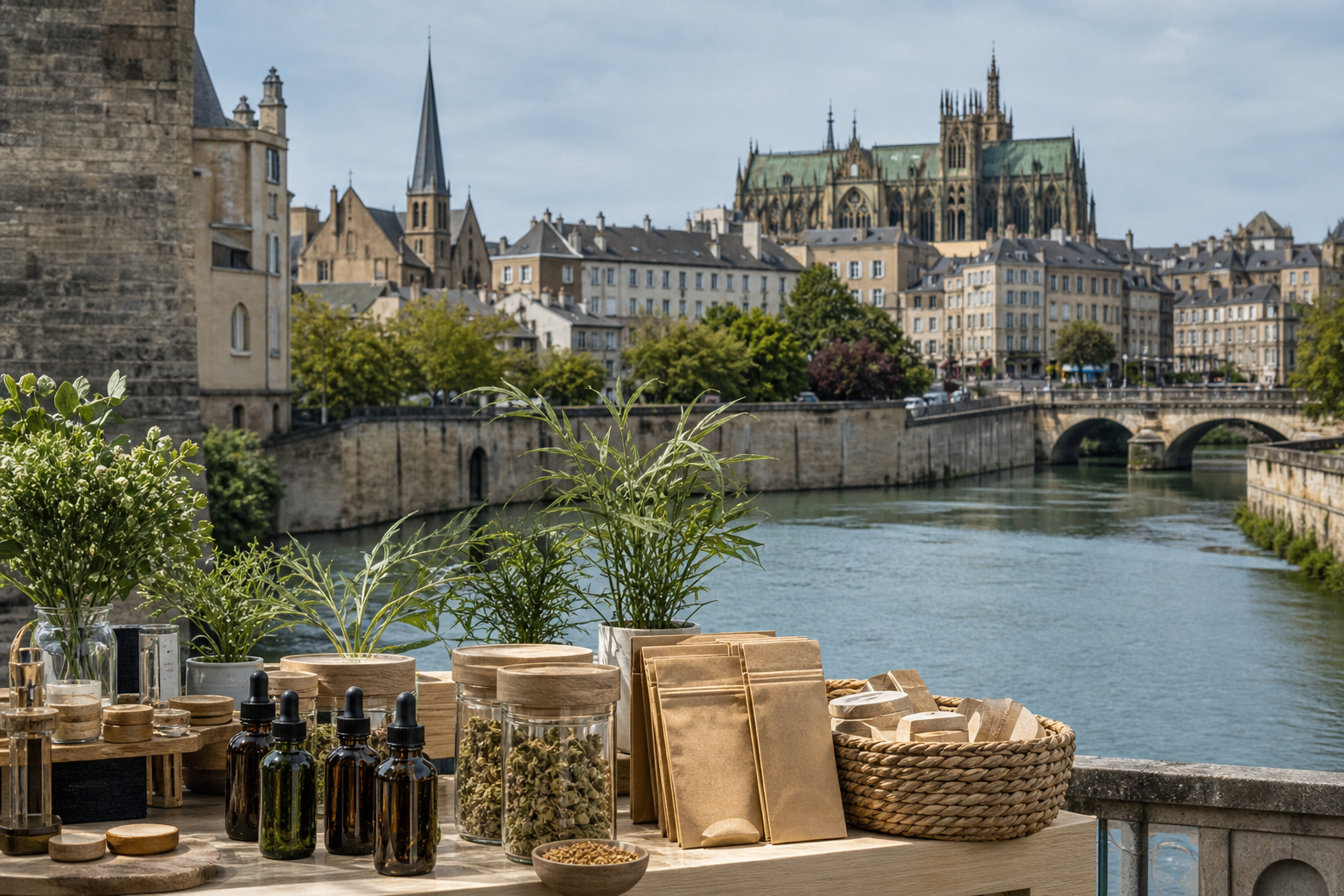
The marijuana industry in Metz is best understood as a developing ecosystem rather than a legal recreational market. Metz, the administrative centre of Moselle in the Grand Est region, has links to wider French and European trade, logistics, agriculture, health and research networks. However, France does not operate licensed shops selling recreational cannabis with high THC content. The legal landscape therefore shapes every local discussion about cannabis in Metz, from CBD retail and hemp production to public health and enforcement.
This guide explains what residents, businesses and visitors should know about weed in Metz, the difference between CBD and marijuana, the risks of unregulated products, and the realistic opportunities available to legitimate businesses. Rules can change, so anyone making a commercial or medical decision should check current French guidance rather than relying on advertising or informal advice.
What the marijuana industry in Metz actually includes
In everyday conversation, “marijuana industry” can suggest cultivation, dispensaries and adult-use sales. That description does not match the current legal framework in Metz or elsewhere in mainland France. The lawful local market is more closely associated with industrial hemp, CBD products, wellness retail, agricultural services, laboratory testing, packaging, education and professional compliance.
A Metz-based business may participate in the broader cannabis economy without selling intoxicating cannabis. For example, it might distribute hemp textiles, develop food ingredients from authorized hemp varieties, sell compliant CBD products, provide testing services or advise retailers on product documentation. These activities still require attention to French and European rules covering consumer protection, food, cosmetics, advertising, employment and taxation.
Why Metz has a distinctive regional context
Metz sits within a cross-border area connected to Luxembourg, Germany and Belgium, while also serving as a regional centre for public administration, education, commerce and transport. Those connections can increase consumer awareness of different cannabis policies in neighbouring countries. They do not, however, create an exemption from French law. A product purchased legally elsewhere may still create legal problems when brought into France, particularly if it contains prohibited levels of THC or is classified as a controlled substance.
The regional setting may also create opportunities for legitimate hemp supply chains and professional services. Those opportunities depend on traceability, lawful sourcing and compliance—not on importing recreational cannabis or treating neighbouring legislation as applicable in Metz.
Cannabis laws in Metz: the national rules that apply locally
There is no separate municipal cannabis code that makes recreational marijuana legal in Metz. French national law applies. The use, possession, purchase, sale, transport and cultivation of cannabis containing prohibited THC levels can lead to criminal or administrative consequences, depending on the conduct and circumstances. Personal use is commonly addressed through a fixed penalty procedure, but a fine does not mean that cannabis is legal or risk-free.
Police and courts may consider factors such as quantity, suspected supply, repeated conduct, cultivation, trafficking indicators, driving and the involvement of minors. Driving after using cannabis is a particularly serious issue because French road law can penalize driving after drug use, regardless of whether the driver believes they are impaired. A positive test can have consequences for a licence, insurance and criminal record.
The safest source for an up-to-date explanation of drug-use penalties is the French government information on drug use and fixed fines. Businesses should also obtain advice from a qualified French lawyer or compliance specialist before launching a cannabis-related activity.
Possession, sharing and cultivation
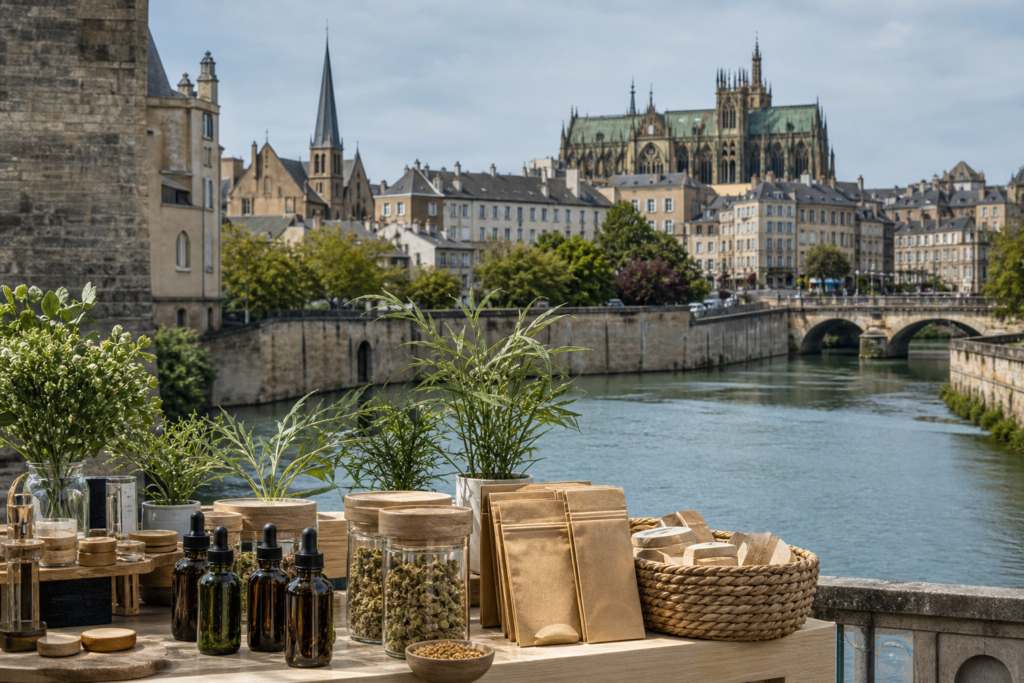
Private cultivation of cannabis plants for personal use is not a simple legal route in France. Growing plants that produce prohibited cannabis can expose a person to prosecution, and sharing or selling cannabis creates additional legal risk. A business cannot avoid these rules by describing high-THC products as “natural,” “collectible” or “for personal use.” Labels and marketing language do not change the legal classification of a product.
Transport across the French border is also not a safe workaround. Metz’s proximity to neighbouring countries may make cross-border travel common, but controlled substances remain subject to French customs and criminal rules. Visitors should not assume that a product bought in Luxembourg, Germany or Belgium can be carried into Metz without consequences.
CBD in Metz: the legal market and its limits
CBD is not the same as THC-rich marijuana. CBD generally does not produce the intoxicating effect associated with THC, but a CBD product can still present legal and health concerns if it is contaminated, inaccurately labelled or marketed in a prohibited way.
French and European rules generally permit certain hemp-derived products when they meet applicable requirements, including limits on THC and restrictions relating to the plant variety, product category and intended use. In France, the commonly cited THC threshold for lawful hemp-derived products is 0.3%, but the threshold alone does not make every product lawful. Food supplements, beverages, cosmetics, vape products and other goods may each be governed by different requirements.
Retailers in Metz should be able to explain what a product is, who manufactured it, where it came from and how its compliance was assessed. A certificate of analysis can be useful, but customers should examine whether it relates to the actual batch, identifies THC and CBD content clearly, and comes from a credible laboratory. A vague “lab tested” claim is not a substitute for traceable documentation.
Practical checks for CBD shoppers
- Look for a complete ingredient list, batch or lot number, manufacturer details and a clear quantity statement.
- Check whether the product is intended for food, cosmetics, inhalation or another use; do not assume that one category’s rules apply to another.
- Be cautious of products promising to treat anxiety, pain, cancer, addiction or other medical conditions.
- Ask a pharmacist or doctor about possible interactions, especially when taking prescription medicines.
- Do not drive after using a product that may contain trace THC, because testing and legal consequences can be separate from the user’s subjective feeling.
People comparing local products may find useful context in this guide to CBD products and French rules in Lyon. The legal principles are national, so the information can help frame questions in Metz, although it should not replace current official advice.
Business opportunities around hemp and cannabis in Metz
Legitimate opportunities exist, but they are more conservative than the term “marijuana industry” may imply. Entrepreneurs should begin with a clearly defined product and a written compliance review rather than assuming that a growing consumer trend is enough.
Potential lawful areas
- Industrial hemp: Authorized hemp varieties can support fibre, seed, food, construction and other non-intoxicating applications, subject to applicable agricultural and product rules.
- CBD retail: Shops may sell qualifying products, but product selection, labelling, claims and supplier records require careful oversight.
- Testing and quality assurance: Laboratories and consultants can support cannabinoid analysis, contaminant screening and traceability.
- Education and professional training: Retail staff, healthcare workers and consumers need clear information about THC, CBD, drug interactions and French law.
- Logistics and packaging: Regional transport and manufacturing businesses may serve compliant hemp supply chains without handling prohibited cannabis.
Any company handling cannabis-derived materials should document its supply chain from producer to customer. Important controls may include supplier due diligence, certificates of analysis, product recalls, age-related policies where relevant, advertising review and staff training. Legal advice is especially important for imports, foods, cosmetics, vapour products and any item making a health claim.
Medical cannabis in Metz: access is not the same as retail
Medical cannabis is often discussed alongside CBD, but the two are not interchangeable. Medical cannabis refers to regulated products used under a healthcare framework for specific clinical situations. CBD sold in a wellness shop is not automatically a medicine, and a shop assistant cannot diagnose a condition or replace a doctor’s advice.
France has been developing its approach to medical cannabis through regulated policy and transitional arrangements. Availability, prescribing conditions and reimbursement can change, so patients in Metz should speak with a doctor or pharmacist and consult current information from French health authorities. The French National Agency for the Safety of Medicines and Health Products is an authoritative starting point for medicine-related regulatory information.
Patients should disclose all cannabis, CBD and supplement use to their healthcare professional. Cannabinoids may interact with medicines, and products of uncertain origin may contain more THC or contaminants than the label suggests. People should never stop prescribed treatment in order to try a shop-bought cannabis product.
Health, safety and responsible public discussion
A useful conversation about cannabis in Metz should include health rather than focusing only on commercial potential. Cannabis can affect attention, reaction time, memory and coordination. Frequent use may contribute to dependence, and risks can be greater for adolescents, people with a personal or family history of psychosis, and individuals combining cannabis with alcohol or other drugs.
Safer choices begin with not using illegal products. If someone does use cannabis, they should avoid driving, cycling in traffic or operating machinery afterward; avoid mixing it with alcohol; avoid unknown concentrates and edibles; and seek medical help for severe anxiety, confusion, chest pain, loss of consciousness or suspected poisoning. Keeping products away from children and pets is also important.
Public debate should distinguish evidence-based harm reduction from promotional claims. A local retailer, social media account or informal seller is not a reliable medical or legal authority. Metz residents who are worried about their own use or someone else’s use should contact a healthcare professional or an appropriate French support service.
What visitors and residents should remember about weed in Metz
Visitors may encounter CBD shops, hemp products or online advertisements and assume that Metz has a recreational cannabis market. It does not. The presence of a retail storefront does not prove that every product is compliant, and the use of cannabis in public can attract police attention even when a person believes the quantity is small.
Do not buy cannabis from street sellers, carry products across borders, accept packages for another person or rely on claims that a product is “legal everywhere.” Do not consume before driving or attending work, and do not photograph or promote illegal transactions. Those simple precautions reduce legal and personal risk.
For a wider comparison of regional policy discussions, our guide to cannabis tourism and local rules in Strasbourg offers another Grand Est perspective. Metz remains governed by the same French national framework, regardless of differences in local retail activity or public attitudes.
Conclusion
The marijuana industry in Metz is not a legal recreational dispensary sector. Its practical centre of gravity is lawful hemp, compliant CBD, testing, education, logistics and health-policy discussion. National French restrictions continue to govern high-THC cannabis, possession, cultivation, supply, driving and cross-border transport.
For consumers, careful product checks and professional medical advice are more valuable than marketing promises. For businesses, a sustainable opportunity depends on traceability, accurate labelling, responsible claims and specialist legal review. Understanding the difference between cannabis laws in Metz, CBD retail and medical treatment is the clearest way to navigate this evolving market responsibly.