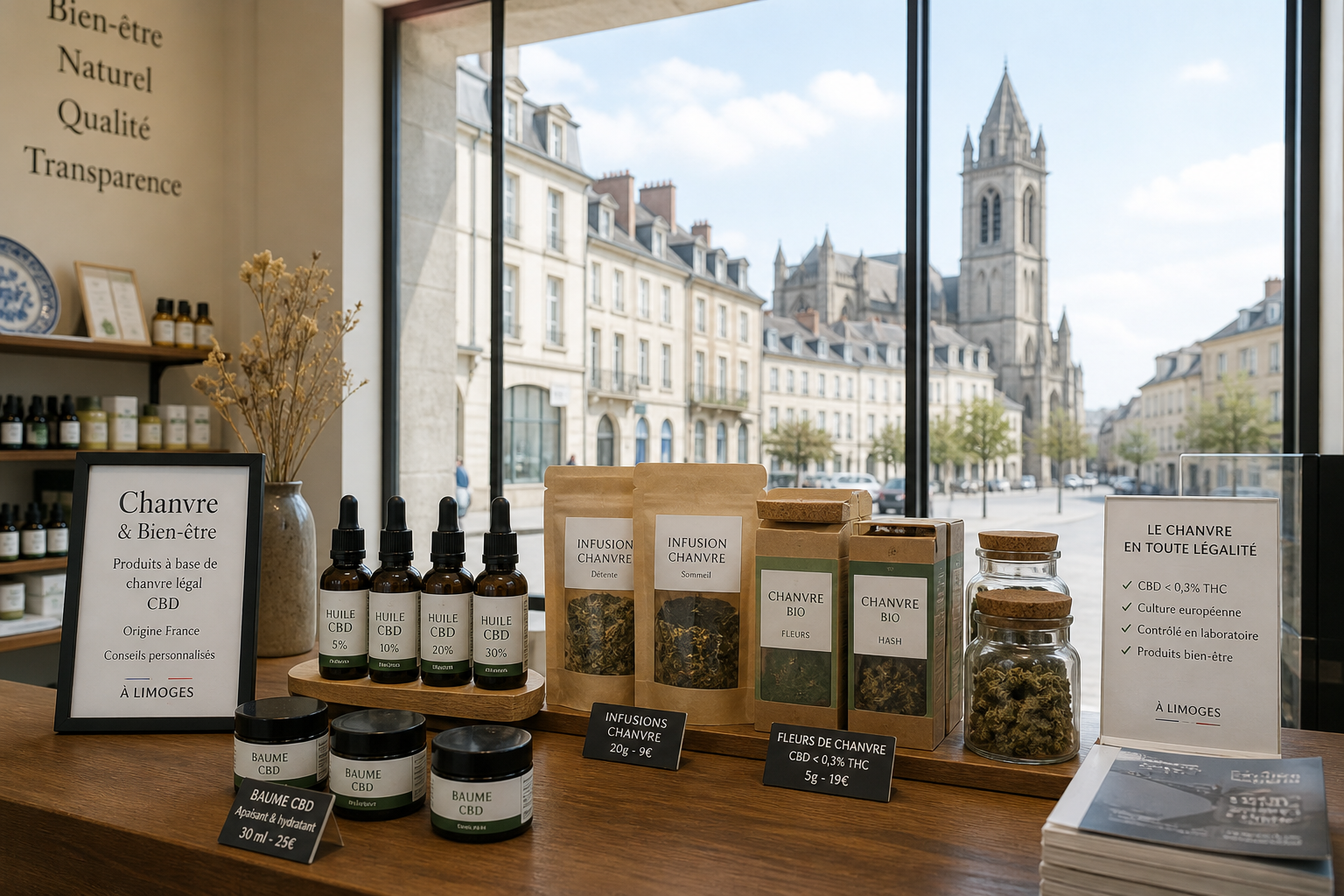
The Cannabis industry in Limoges, France is best understood as a developing network of legal hemp activity, CBD retail, health services, scientific interest and public policy rather than as a conventional recreational marijuana market. Limoges, the main urban centre of Haute-Vienne in Nouvelle-Aquitaine, has a distinctive economic identity shaped by healthcare, ceramics, education, research and small business. Those characteristics influence how cannabis-related activity can develop locally.
For residents, visitors and entrepreneurs, the important distinction is between lawful hemp-derived products and cannabis containing prohibited levels of THC. Searching for weed in Limoges may produce informal offers, but an online listing or shopfront is not proof that a product is legal, safe or appropriately tested. This guide explains the regulatory framework, the role of CBD and hemp, local business opportunities, health considerations and practical questions to ask before buying or investing.
What the cannabis industry means in Limoges
In France, the phrase “cannabis industry” covers several very different activities. The illegal production and sale of recreational cannabis do not form a lawful commercial sector. By contrast, industrial hemp, compliant CBD products, laboratory services, packaging, agricultural supply and professional education can operate within defined rules.
In Limoges, the most realistic local activity is therefore likely to involve businesses that serve the wider legal hemp and wellness market. These may include specialist retailers, general health and lifestyle shops, agricultural suppliers, logistics providers, laboratories, advisers and healthcare professionals who discuss cannabinoid products within appropriate boundaries. The city’s university, hospital and research connections may also support informed discussion about cannabinoids, although research interest should never be confused with approval of a particular product or treatment.
Legal hemp is not the same as recreational cannabis
Hemp varieties may be cultivated and used for fibre, seed, food, cosmetics and other industrial purposes when they meet applicable French and European requirements. CBD products are also subject to conditions concerning their ingredients, presentation and marketing. THC remains the key legal issue: a product that contains prohibited THC levels, or that is presented as an illicit drug, can create serious legal risks.
Consumers should also remember that “natural,” “plant-based” or “full spectrum” does not automatically mean legal or risk-free. Product composition can vary, and some items may contain more THC than expected or include substances not clearly disclosed on the label.
Cannabis laws in Limoges: the national rules that apply
There is no separate municipal cannabis code for Limoges. The same French national framework applies in the city as elsewhere in mainland France. Possessing, buying, selling, transporting or cultivating illicit cannabis can lead to criminal or administrative consequences depending on the circumstances. Public consumption can also create additional problems, including disturbance, exposure of other people and impaired driving.
Because rules and enforcement procedures can change, readers should consult the official French information on drug-related law for current guidance. A retailer, social media account or informal seller is not an authoritative source of legal advice.
Important points for residents and visitors
- Do not assume that CBD packaging guarantees compliance with French law.
- Do not drive, cycle or operate machinery while impaired by cannabis or any psychoactive substance.
- Do not carry cannabis across national borders, even when travelling from a country with different rules.
- Do not grow cannabis at home unless the activity clearly falls within the applicable legal framework for authorised hemp varieties and uses.
- Do not rely on a shop’s claim that a product is “legal everywhere”; legality depends on composition, intended use and applicable regulations.
Readers comparing local rules with other French cities may also find useful context in this guide to cannabis laws in Montpellier. The underlying national framework is more important than differences in local retail availability or enforcement priorities.
CBD shops in Limoges and responsible retail
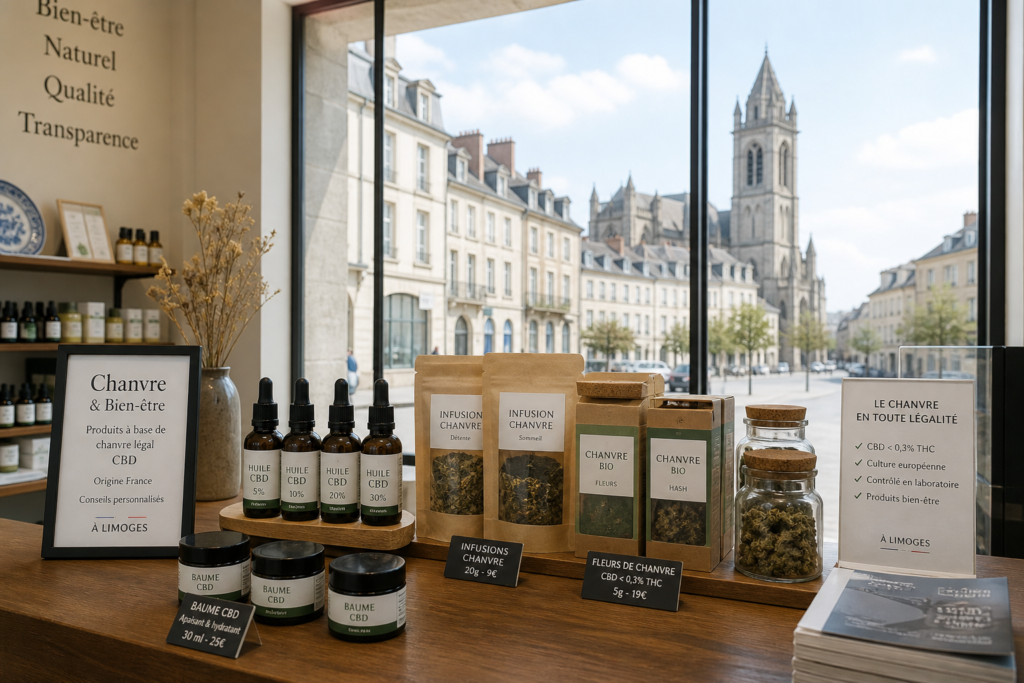
CBD retailers are the most visible part of the legal cannabis-adjacent market in many French cities. A responsible shop should distinguish CBD products from intoxicating cannabis, explain that effects vary and avoid promising to diagnose, prevent or cure medical conditions. Staff should be able to identify the manufacturer, batch information, ingredients and recommended use.
When comparing CBD shops in Limoges, customers should look beyond branding and attractive displays. A professional seller should provide clear product information and answer basic questions without pressure. Products sold as oils, flowers, capsules, cosmetics or edibles may have different routes of administration, quality concerns and interaction risks.
Questions to ask before buying
- Who manufactured the product, and is the business contact information clear?
- Is there a recent certificate of analysis from an identifiable independent laboratory?
- Does the analysis match the exact product, batch and formulation being sold?
- Are ingredients, serving guidance, storage instructions and warnings easy to find?
- Does the seller avoid unsupported claims about anxiety, pain, cancer, sleep or other medical conditions?
- Is the product suitable for the intended user, especially if they are pregnant, under 18 or taking prescription medicines?
Consumers can compare the legal and product-safety approach with the advice in this overview of CBD shops in Le Mans. The same basic buying principles apply in Limoges: transparency, traceability and restrained health claims matter more than promotional language.
Hemp, agriculture and business opportunities
The hemp economy is broader than CBD. Hemp fibre can be used in textiles, insulation, paper and composite materials, while hemp seed is used in food and cosmetic applications. These activities may create opportunities for farmers, processors, designers, construction suppliers and local retailers without involving intoxicating cannabis.
For the Limoges area, a credible hemp business would need to assess land, climate, approved varieties, processing capacity, transport and customer demand. Cultivation alone does not guarantee profitability. The difficult stage is often processing the crop into a consistent material or finished product. Partnerships with regional manufacturers, agricultural organisations, laboratories and universities may be more valuable than opening a standalone retail outlet.
What a compliant business plan should cover
- Product category: Define whether the business will sell food, cosmetics, fibre, seed, CBD products or professional services.
- Regulatory review: Check the rules for ingredients, cultivation, labelling, advertising, taxation and consumer protection.
- Testing and traceability: Establish supplier checks, batch records and procedures for handling complaints or recalls.
- Claims policy: Train staff and marketing teams not to make unauthorised medical or therapeutic promises.
- Customer safety: Provide plain-language warnings about driving, medicines, age restrictions and vulnerable users.
- Local fit: Consider whether the concept serves Limoges residents, surrounding rural communities, visitors or professional buyers.
Medical cannabis in Limoges: access and caution
The phrase medical cannabis in Limoges can refer to clinical research, authorised medicines, patient advocacy or public discussion, but it does not mean that a person can freely purchase cannabis as a treatment from an ordinary CBD shop. Medical access depends on French health policy, approved products, clinical circumstances and the involvement of qualified healthcare professionals.
CBD products sold in retail shops should not be presented as substitutes for prescribed medicines. CBD may interact with medicines, and cannabis-related products can be unsuitable for people with certain health conditions. Anyone considering a cannabinoid product for pain, epilepsy, anxiety, sleep or another condition should discuss it with a doctor or pharmacist, particularly when already receiving treatment.
For health information, patients should use recognised medical sources and official guidance. The French National Agency for Medicines and Health Products Safety provides information about medicines and health-product oversight. A shop assistant cannot replace a clinical assessment, diagnosis or prescription.
Health, safety and public perceptions
Public discussion of cannabis often becomes polarised between claims of harmlessness and exaggerated fears. A more useful approach is to separate the substance, the dose, the route of administration and the person using it. Smoking exposes the lungs to combustion products. Edibles can take longer to affect the user and may encourage accidental overconsumption. Products with uncertain composition create additional risks.
People should take extra care if they are young, pregnant, breastfeeding, managing a mental-health condition, driving regularly or taking medicines that affect the nervous system. Combining cannabis with alcohol or other drugs can increase impairment. If someone experiences severe confusion, chest pain, breathing difficulty, loss of consciousness or a serious psychological reaction, seek urgent medical assistance.
Responsible local businesses can help reduce harm by refusing sales to inappropriate customers, avoiding youth-oriented branding, explaining delayed effects and displaying accurate warnings. These practices also help separate legitimate hemp commerce from the illicit market.
How Limoges could develop a credible cannabis-related sector
A sustainable cannabis-adjacent economy in Limoges would benefit from evidence-based regulation and professional standards rather than aggressive promotion. Local economic development could focus on legal hemp materials, research partnerships, testing, packaging, agricultural innovation and training. These areas offer more durable opportunities than attempting to normalise illegal sales.
Business owners should monitor national developments rather than assuming that policies announced in another country will apply in France. They should also keep records, verify suppliers and obtain specialist legal advice before launching a product. Consumers, meanwhile, can support better standards by asking for documentation and reporting misleading claims to the relevant authorities.
Practical checklist for residents and visitors
- Check the product category and THC information before buying.
- Prefer businesses with transparent ownership, ingredients and batch documentation.
- Avoid products making guaranteed medical claims.
- Never drive after using an intoxicating product.
- Keep cannabinoid products away from children and pets.
- Ask a pharmacist or doctor about possible medicine interactions.
- Do not take cannabis across borders or purchase illicit products from informal sellers.
Conclusion
The cannabis industry in Limoges is not a legal recreational marijuana market. Its legitimate future lies mainly in regulated hemp, carefully presented CBD products, research, testing, professional services and responsible healthcare discussion. Understanding the difference between legal hemp commerce and illicit cannabis is essential for consumers, entrepreneurs and visitors.
Whether researching cannabis in Limoges, considering a CBD purchase or exploring a hemp-based business idea, the safest approach is to verify current French rules, demand clear product information and treat medical claims with caution. Limoges can participate in the wider European hemp economy, but long-term credibility will depend on compliance, transparency and public health rather than hype.