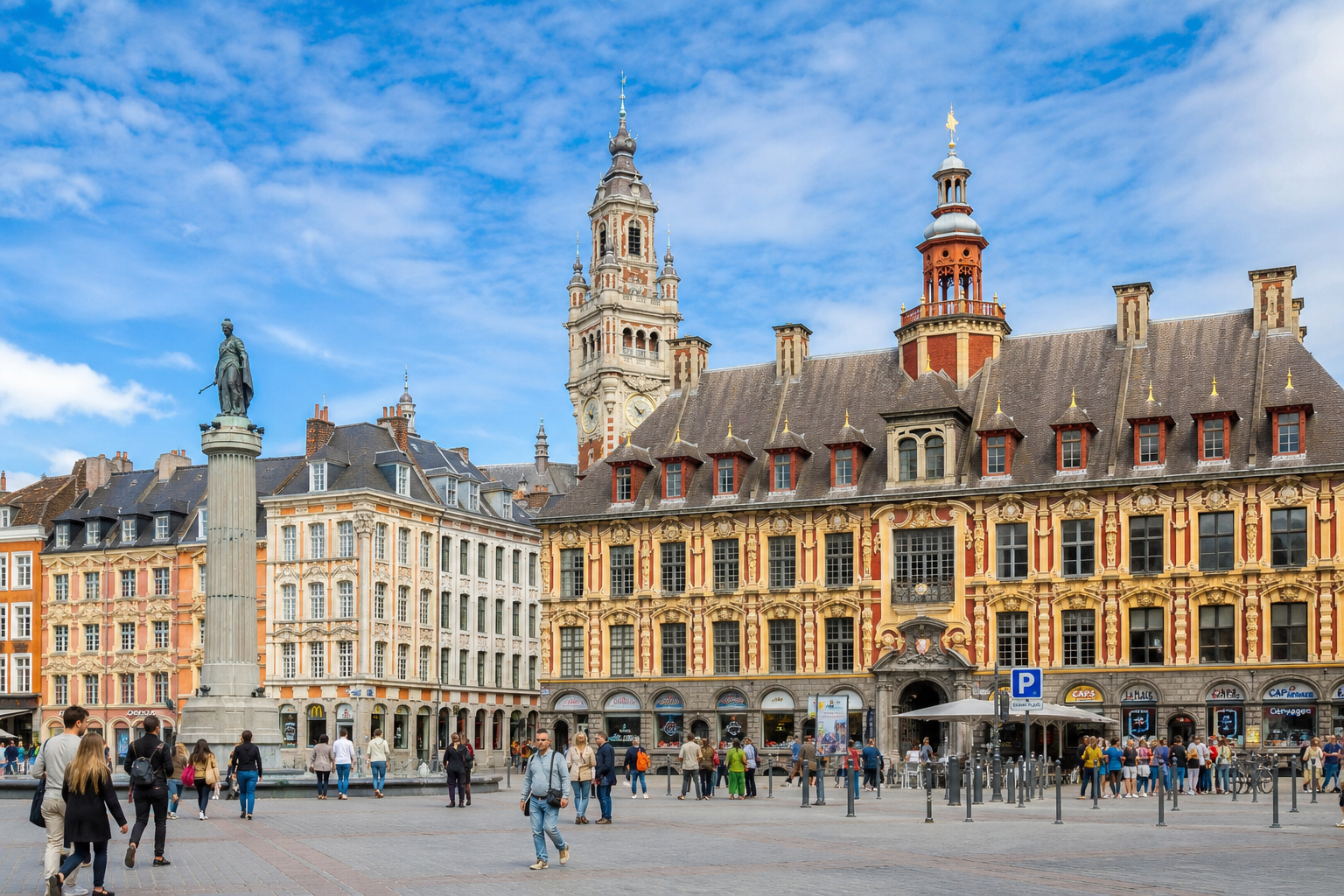
Lille is a lively northern French city known for its historic centre, university population, food markets, museums and easy connections to Belgium and the United Kingdom. If you are searching for a Cannabis guide to Lille, France, the most important point is that Lille follows French national law. Local atmosphere, nightlife or proximity to countries with different policies does not create a local exception.
This guide explains the legal position, the difference between recreational cannabis, CBD and medical cannabis, and the practical issues visitors and residents should consider. It does not provide instructions for buying or using illegal drugs. Laws and enforcement can change, so check current official information before travelling.
What are the cannabis laws in Lille?
Recreational cannabis containing THC is illegal in Lille and throughout metropolitan France. The law applies to possession, purchase, sale, cultivation, transport and use. A small amount is not automatically legal because it is intended for personal use. Police and courts may consider the circumstances, but visitors should not treat quantity as a safe legal limit.
French authorities may respond to personal use or possession with a fixed penalty in some circumstances, while more serious or disputed cases can lead to investigation and prosecution. Selling, supplying, importing, exporting and organized distribution carry substantially greater risks than simple personal possession. Cultivating cannabis at home is also not a lawful recreational option.
For a current overview of French rules and penalties, consult the French government information on drug use and penalties. The official page is more reliable than informal travel forums, social-media posts or advice from strangers.
Public use and private accommodation
Using cannabis in public places is not a responsible or lawful choice. Lille’s streets, parks, squares, train stations, bars, festivals and other shared spaces are not places to consume illegal cannabis. Hotels, hostels, short-term rentals and student residences may also prohibit smoking or drug use under their house rules. A private room does not turn possession or use into a legal activity.
Smoke can affect other guests, children, neighbours and staff, while cannabis use in a balcony or courtyard may still be visible or disruptive. Accommodation providers can impose their own consequences, including removal from the property or loss of a deposit. Always follow the property’s written rules and local law.
Weed in Lille: why visitors should be cautious
People looking for weed in Lille may encounter unsolicited offers around nightlife areas, transport hubs or online. An offer is not evidence that a product is safe, genuine or legal. Illicit cannabis can have unknown strength, contamination or contents, and a seller may be trying to commit fraud or theft. Buying also supports an unregulated market and can expose a traveller to legal problems.
Do not carry cannabis across the Belgian border, through Lille-Europe station, onto Eurostar services, on domestic flights or in checked luggage. Crossing an international border with cannabis creates a separate and potentially more serious issue, even if the product was purchased legally somewhere else. The same caution applies to cannabis-infused foods, oils, concentrates and vaping products.
Travellers should also avoid accepting packages, luggage or gifts from people they do not know well. French and international transport controls do not depend on whether a person claims not to know what a package contains.
Cannabis in Lille and the difference between THC and CBD
The terms cannabis and CBD are often used loosely, but they do not describe identical products. THC is the main intoxicating cannabinoid associated with the high produced by marijuana. CBD is not generally intoxicating in the same way, but a CBD product may still contain trace THC or be inaccurately labelled.
French rules for hemp-derived CBD products are product-specific and can depend on THC content, formulation, labelling and how the product is marketed. A product sold in a French shop is not necessarily suitable for travel across a border, and a product bought abroad may not comply with French requirements. Edibles, flowers, resins, oils and vapes can present different legal and health questions.
Buying CBD in Lille
Visitors considering CBD in Lille should use a reputable, established retailer and examine the packaging carefully. Look for a clear ingredient list, batch information, dosage guidance and a way to contact the manufacturer. Avoid products that make unsupported medical claims or promise an effect that sounds guaranteed.
- Do not assume “CBD” means zero THC.
- Do not drive after taking a product that could contain THC.
- Do not mix CBD or cannabis products with alcohol or sedating medicines without professional advice.
- Do not take CBD across national borders without checking the rules in every country on your route.
- Keep products in their original packaging and follow the label instructions.
CBD can interact with medicines and may not be appropriate for everyone, including some people with liver conditions, those taking anticoagulants and pregnant or breastfeeding people. A pharmacist or doctor can help assess the product and a person’s individual risks.
Medical cannabis in Lille: what patients should know
Searching for medical cannabis in Lille should not be confused with looking for recreational cannabis. Access to cannabis-based medicines in France is tightly regulated and depends on the national medical framework, the patient’s condition, prescribing arrangements and the medicine involved. It is not a general walk-in service in which a visitor can request cannabis from any pharmacy.
A patient who already uses a cannabis-based medicine should bring the original prescription, medical documentation and original packaging when travelling. Before entering France, confirm whether the specific medicine is permitted, whether an authorisation is needed and what documents border authorities may request. Rules can differ for products containing THC, CBD or other controlled substances.
Do not stop prescribed treatment abruptly or replace it with an unregulated product bought in Lille. Ask the prescribing clinician or pharmacist for a travel plan. The French government’s drug information portal is another useful starting point for official information, although a healthcare professional is best placed to answer questions about an individual prescription.
When to seek medical help
Get urgent help if someone has chest pain, difficulty breathing, a seizure, extreme agitation, loss of consciousness or severe confusion. If a person has consumed an edible or an unknown product, tell healthcare staff what was taken, how much may have been used and when. Honesty helps clinicians choose appropriate care.
For less urgent concerns such as anxiety, sleep problems, recurring use or difficulty stopping, speak with a doctor or pharmacist. France also has specialist addiction support services, and asking for help is a health decision rather than a legal admission of wrongdoing.
Health and safety advice for a visit to Lille
Cannabis can impair attention, reaction time, coordination, memory and judgement. Effects may be stronger or last longer when cannabis is combined with alcohol, sedatives or other drugs. Edibles are especially difficult to judge because effects may be delayed, encouraging a person to consume more before the first dose has taken effect.
Never drive, cycle in traffic, operate equipment or supervise children while impaired. French road law treats drug-impaired driving seriously, and a driver may face consequences even if they believe the effects have worn off. The safest choice is not to use cannabis before travelling or taking part in an activity that requires concentration.
Travellers should also consider the setting. An unfamiliar city, language barrier, crowded nightlife venue or late-night journey can make confusion and vulnerability worse. Stay with trusted friends, keep your phone charged, use official transport options and leave any situation that feels unsafe. If someone becomes distressed, move them to a calm place and seek professional assistance rather than leaving them alone.
Responsible travel in Lille
A responsible approach to cannabis in Lille starts with respecting French law and other people’s right to enjoy public spaces without smoke or intoxication. Lille has plenty to do without taking legal or health risks: explore Vieux-Lille, visit the Palais des Beaux-Arts, enjoy local food, attend a permitted cultural event or take a day trip using lawful transport.
Do not rely on comparisons with Amsterdam, Barcelona or nearby Belgian cities. Cannabis rules differ between countries, and even a country that tolerates one form of use may restrict possession, transport or public consumption. The legal position in Lille is determined by France, not by the policies of a neighbouring destination.
If you see cannabis advertised openly, that does not make it authorised. If someone claims that police “do not care,” that is not legal advice. Keep your plans simple: avoid illegal purchases, do not transport controlled products, and seek professional advice for medical questions.
Quick checklist for residents and visitors
- Check current French government guidance before travelling.
- Remember that recreational THC cannabis remains illegal in Lille.
- Do not buy, sell, carry or consume illicit cannabis in public or private accommodation.
- Never take cannabis across the French-Belgian border or onto international transport.
- Treat CBD as a regulated product, not as an automatic legal substitute.
- Carry documentation for any prescribed medicine and verify travel requirements in advance.
- Do not drive or cycle while impaired, and avoid combining cannabis with alcohol or sedatives.
- Seek urgent medical assistance for serious symptoms or an unknown ingestion.
How Lille compares with other French destinations
The basic legal framework is national, so the same principles apply in Lille as in other French cities. For a broader comparison of visitor issues, see this practical guide to cannabis in Paris. Readers interested in how another major northern and eastern destination is discussed can also review the guide to cannabis tourism in Strasbourg. These comparisons should not be read as evidence of different local cannabis laws; they are useful mainly for travel planning and context.
Conclusion
The safest conclusion from this Cannabis guide to Lille, France is straightforward: recreational cannabis is illegal, and Lille is not a legal cannabis tourism destination. Possession, use, supply, cultivation and cross-border transport can create serious problems, while unregulated products carry avoidable health risks.
CBD and medical cannabis involve separate, carefully controlled rules. Check official French guidance, speak with a qualified healthcare professional about medical needs, and never assume that a product legal elsewhere is legal in France. By respecting the law, avoiding illicit markets and planning transport and health decisions carefully, visitors and residents can enjoy Lille with fewer legal and personal risks.