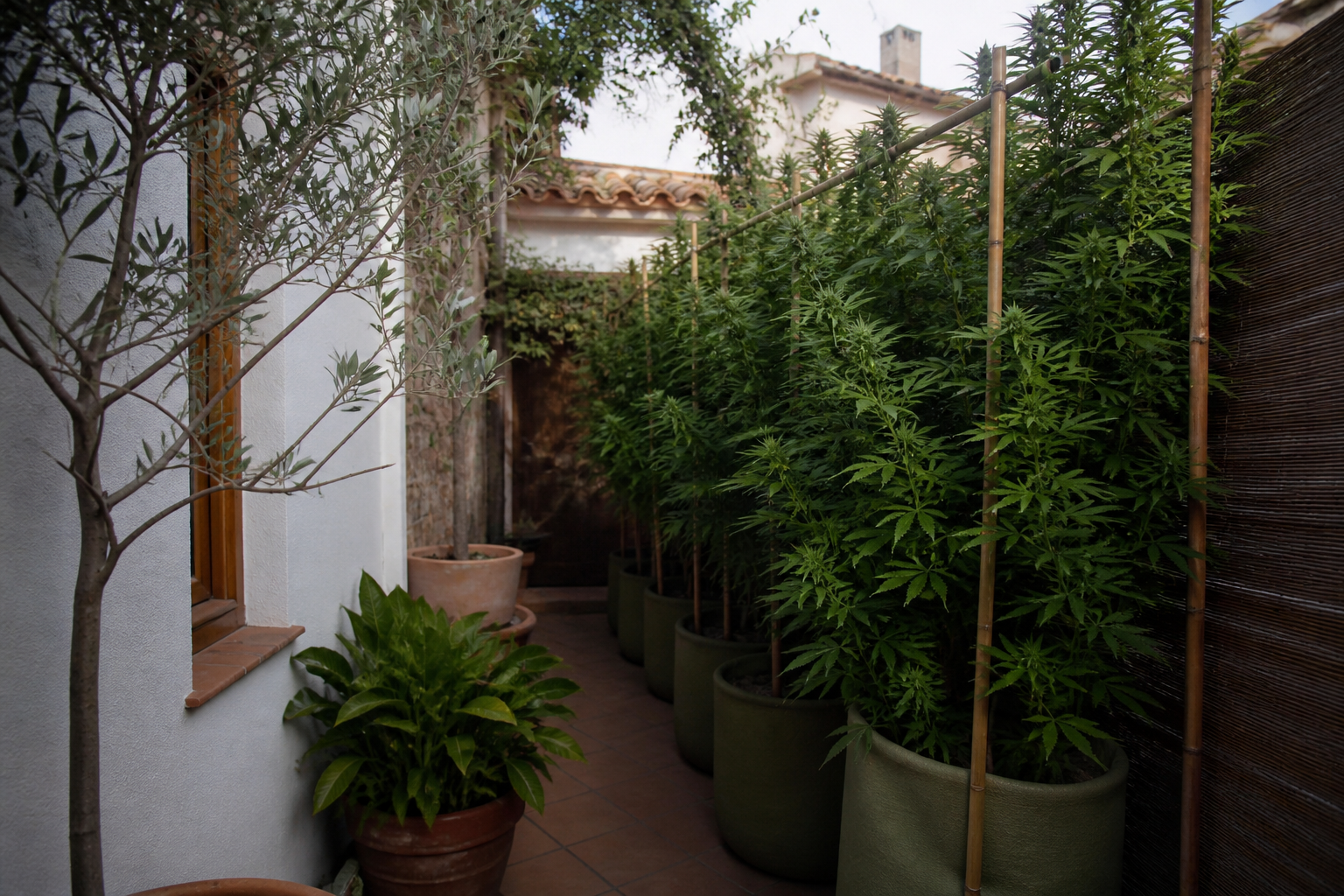
Understanding Marijuana cultivation laws in Viladecans requires separating private conduct from commercial production, public visibility and cannabis possession. Spain does not operate a simple nationwide system in which adults can freely grow any number of plants. Instead, the legal outcome depends on factors such as the intended use, location, visibility, evidence of distribution and whether the conduct creates a public nuisance or safety risk.
Viladecans follows Spanish national law, while local rules and enforcement conditions may affect issues such as noise, odour, building safety and use of shared spaces. This guide explains the general framework, but it is not a substitute for advice from a Spanish lawyer familiar with criminal and administrative law.
How cannabis cultivation is treated in Viladecans
There is no separate municipal cannabis cultivation regime that makes growing marijuana in Viladecans broadly legal. The main rules come from Spanish criminal law and the law on public security. In practical terms, a small private grow intended only for personal consumption may be treated differently from cultivation linked to sale, supply, organised activity or a visible public nuisance.
That distinction does not create a guaranteed right to cultivate. Spanish courts have assessed personal cultivation in context, and the result can depend on the quantity, location, equipment, communications, money, packaging and other evidence. A private arrangement that appears designed to supply other people may be treated much more seriously than a genuinely personal activity.
The official Spanish Criminal Code is the key reference for offences involving drug production, cultivation and trafficking. The wording of the law and later judicial interpretation matter more than informal claims that cannabis is simply “legal” or “illegal” in every situation.
Private cultivation: what people often misunderstand
Spanish law is commonly described as tolerating some private cannabis cultivation, but that description is incomplete. The most important practical factors are privacy, personal use and the absence of evidence of distribution. Even then, the activity may create legal exposure if plants can be seen from public areas or if authorities find indications of trafficking.
Personal use is not the same as commercial legality
Growing cannabis for personal use is not equivalent to operating a licensed agricultural or retail business. Selling plants, flowers, cuttings or harvested cannabis is not covered by a personal-use argument. Supplying friends, accepting payment, advertising products or maintaining a customer list can all create evidence that the cultivation has a distribution purpose.
People researching cannabis cultivation in Viladecans should therefore avoid relying on plant counts alone. Spanish authorities and courts may consider the whole situation rather than applying a universal number of plants that automatically makes cultivation lawful.
Visibility from public places matters
Plants visible from streets, neighbouring public areas or other places accessible to the public can create an administrative problem even where there is no proof of sale. The law on public security addresses the illicit consumption or possession of drugs in public places and the planting or cultivation of drugs in places visible to the public when that conduct is not itself a criminal offence.
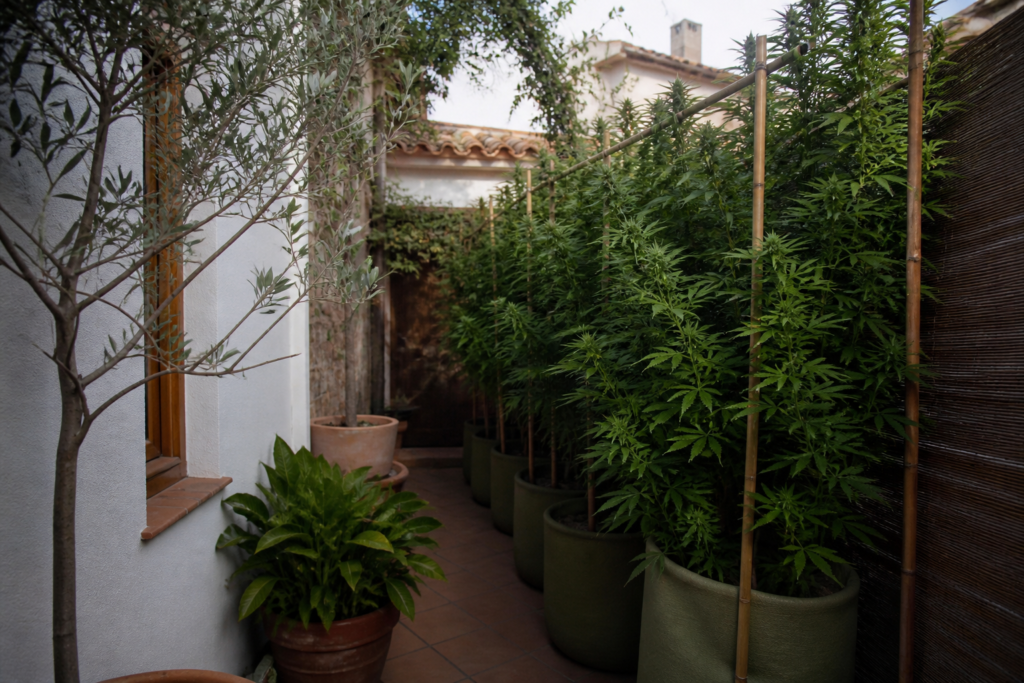
For the wording and administrative framework, consult the official Law on Public Security published in the BOE. A balcony, terrace or garden should not be assumed to be legally private merely because it is attached to a home. Visibility, access and the circumstances of the property can all matter.
Public visibility, neighbours and local complaints
Even when cultivation is not prosecuted as a criminal offence, it can lead to intervention if plants or related activity are visible, create persistent odours or cause conflict with neighbours. Viladecans properties may also be subject to building, community-of-owners and municipal rules that are separate from drug law.
In an apartment or a shared residential complex, community rules may restrict activities that cause nuisance, damage common areas or create risks for other residents. A landlord may also take action under a rental agreement if cultivation causes property damage, unauthorised alterations or serious disturbance.
Complaints about excessive electricity use, humidity, water leaks, fire hazards or strong odours can trigger attention even when neighbours do not know what is being grown. Legal analysis should therefore cover property and safety law, not only cannabis rules.
Criminal and administrative consequences
When cultivation may become a criminal matter
Cultivation can become a criminal issue when authorities consider it intended to promote, facilitate or enable illegal drug consumption by other people. Indicators can include large-scale production, multiple growing rooms, high-capacity equipment, packaging materials, weighing devices, cash records, messages about sales or evidence of coordinated supply.
Criminal consequences depend on the facts, the substance involved, the scale of the conduct and any aggravating circumstances. A conviction can affect liberty, property and future legal proceedings. Anyone facing a search, seizure or police interview should obtain independent legal advice promptly rather than relying on online cannabis forums.
Administrative sanctions and confiscation
Conduct that does not meet the threshold for a criminal offence may still result in administrative proceedings. Publicly visible cultivation, public possession or consumption and related conduct may expose a person to fines and confiscation under public-security rules. The precise result depends on the alleged conduct and the procedure followed.
Administrative and criminal processes are not interchangeable. A person should read any notice carefully, respect the response deadline and ask a qualified lawyer whether allegations, evidence or procedural steps can be challenged.
Does having a cannabis club change the rules?
Cannabis social clubs are often discussed as if they provide a nationwide licence for cultivation and distribution. They do not provide a simple legal shield for private growers. Club models have existed in Spain under a legally uncertain, non-commercial framework, but their operation can be scrutinised under criminal, administrative, tax, employment, premises and public-health rules.
Membership, collective cultivation and internal distribution do not automatically make activity lawful. A club that resembles a commercial retailer, serves the public broadly or operates outside a genuinely private structure may face significant legal risk. The same caution applies to claims that a club can authorise an individual’s home cultivation.
For readers comparing nearby local approaches, our guide to marijuana laws in Castelldefels provides related regional context, but it should not be treated as a substitute for Viladecans-specific legal advice.
Medical cannabis and cultivation
Medical use does not automatically authorise a patient to grow cannabis at home. A person’s diagnosis, prescription, possession and cultivation are separate legal questions. Spain’s medical-cannabis framework has been developing, but treatment access does not necessarily create permission to produce a personal supply or obtain controlled cannabis outside authorised channels.
Patients should use a qualified healthcare professional for treatment decisions and ask a lawyer or the relevant health authority about any question involving home cultivation. Do not assume that a prescription, CBD product or imported medicine permits cultivation, possession of high-THC cannabis or transport across borders.
Industrial hemp is not the same as marijuana cultivation
Industrial hemp may fall under different agricultural and regulatory requirements, particularly where approved low-THC varieties and authorised uses are involved. That distinction does not mean that any cannabis plant can be described as hemp after the fact.
Farmers and businesses considering hemp production near Viladecans should confirm seed, THC, land-use, agricultural and reporting requirements before planting. A commercial project may require permissions and documentation that are entirely different from a private garden. Confusing industrial hemp rules with personal marijuana cultivation can lead to avoidable enforcement problems.
Practical legal checklist for residents and visitors
- Do not assume that a private home automatically makes cultivation lawful.
- Keep any plants completely away from public visibility, while recognising that privacy alone is not a complete legal defence.
- Do not sell, advertise, gift for payment or organise supply to other people.
- Check rental agreements, community-of-owners rules and local nuisance requirements.
- Avoid electrical, ventilation, water and fire-safety changes that could endanger neighbours or damage the property.
- Do not carry cannabis across the Spanish border, even if it was grown privately.
- Keep personal-use questions separate from medical, commercial and industrial-hemp projects.
- If police seize plants or equipment, obtain legal advice before making detailed statements or signing documents.
Visitors should be especially cautious. Rules that may be discussed in relation to private residents do not create a right to grow in a hotel, holiday rental or someone else’s property. Transport through airports, ports and international borders can create additional offences under Spanish and foreign law.
How Viladecans fits into the wider Barcelona area
Viladecans is in the province of Barcelona, but proximity to Barcelona does not create a separate cannabis market or a special cultivation exemption. Enforcement can involve national police, regional authorities or local officers depending on the facts. Nearby municipalities may also apply different housing, nuisance or premises rules.
For a broader comparison focused on travel and possession, see our practical guide to cannabis travel rules in Sant Boi de Llobregat. The underlying national rules remain important, especially where conduct takes place in public or involves transport between municipalities.
Key takeaway on cannabis laws in Viladecans
The safest summary of cannabis laws in Viladecans is that Spain may distinguish private personal cultivation from cultivation intended for supply, but the distinction is fact-sensitive and does not amount to unrestricted legalisation. Public visibility, commercial indicators, neighbour complaints, unsafe installations and movement across borders can all change the legal position.
Anyone considering cultivation should verify current Spanish and Catalan requirements, avoid relying on plant-count myths and seek individual legal advice where the stakes are significant. For most people, the responsible approach is to understand the difference between tolerated private conduct, administrative exposure and criminal activity before taking any action.