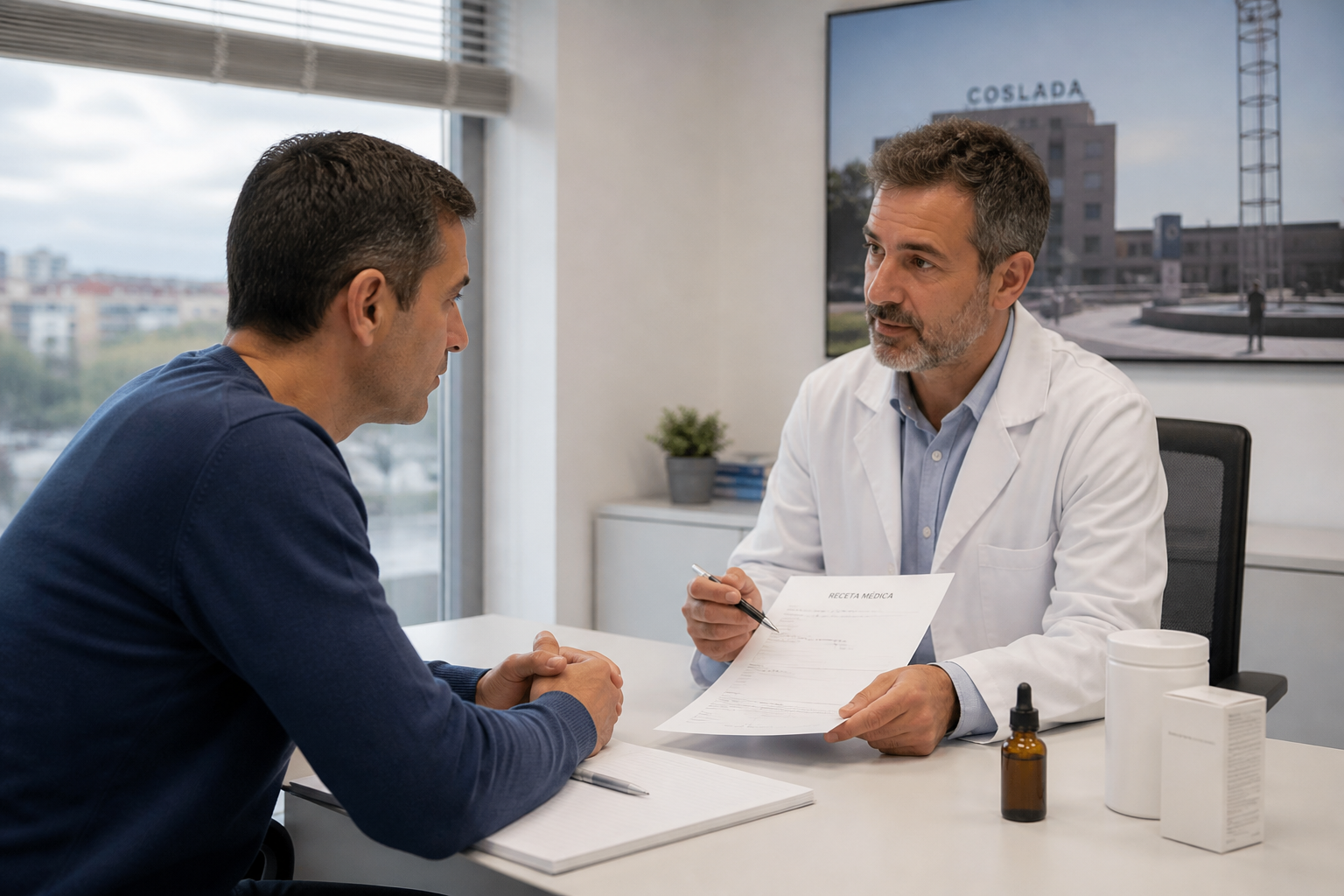
People searching for therapeutic cannabis in Coslada often want to know three things: whether cannabis-based treatment is legally available, how a clinician evaluates it, and how to use any approved treatment safely. Coslada is part of the Community of Madrid, but cannabis rules are established mainly at national level rather than by the municipality. Local pharmacies, clinics and hospitals therefore operate within Spain’s broader healthcare and medicines framework.
This guide separates medical treatment from recreational cannabis, explains what a patient can reasonably expect, and highlights the questions to ask before starting therapy. Regulations and prescribing arrangements can change, so a healthcare professional and official Spanish sources should always take priority over informal websites or social-media advice.
What therapeutic cannabis in Coslada means
“Therapeutic cannabis” is a broad expression. It may refer to a medicine containing cannabinoids, a pharmacy-dispensed preparation, or a consultation about whether a cannabis-based treatment could help a particular condition. It does not automatically mean buying dried cannabis or using recreational products for self-treatment.
Medical decisions depend on the product, its active ingredients, the patient’s diagnosis, previous treatments, other medicines and the evidence available for the proposed use. THC and CBD are not interchangeable: THC can cause intoxication and impair attention, while CBD has a different effect profile and does not make a product risk-free.
For residents, medical cannabis in Coslada should therefore be approached as a clinical question, not as a search for a particular strain or strength. A doctor must decide whether a cannabinoid-based option is appropriate and how it should be monitored.
Spain’s legal and medical framework
Spain has traditionally distinguished between controlled cannabis activity, medicines authorised or handled through the medicines system, and non-medical possession or consumption. The legal position is not the same as a general retail market in which anyone can walk into a shop and buy cannabis for a medical condition.
Rules concerning authorisation, prescribing, dispensing, cultivation, product quality and professional responsibility may develop over time. For current regulatory information, consult the Spanish Agency for Medicines and Medical Devices and the Official State Gazette. These sources are more reliable than claims that a product is “legal” simply because it is sold online or described as therapeutic.
The phrase cannabis laws in Coslada can be misleading because Coslada does not create a separate medical cannabis system. Municipal authorities may deal with public-order or local administrative matters, but the core rules affecting medicines and controlled substances come from Spanish and, where relevant, European law.
Medical treatment is not the same as recreational use
A product used under medical supervision is not automatically lawful in every form, setting or quantity. Recreational cannabis, unregulated extracts and products obtained through informal channels can involve different legal and health risks. A patient should never assume that a medical consultation authorises possession, home preparation, public consumption or driving after using cannabis.
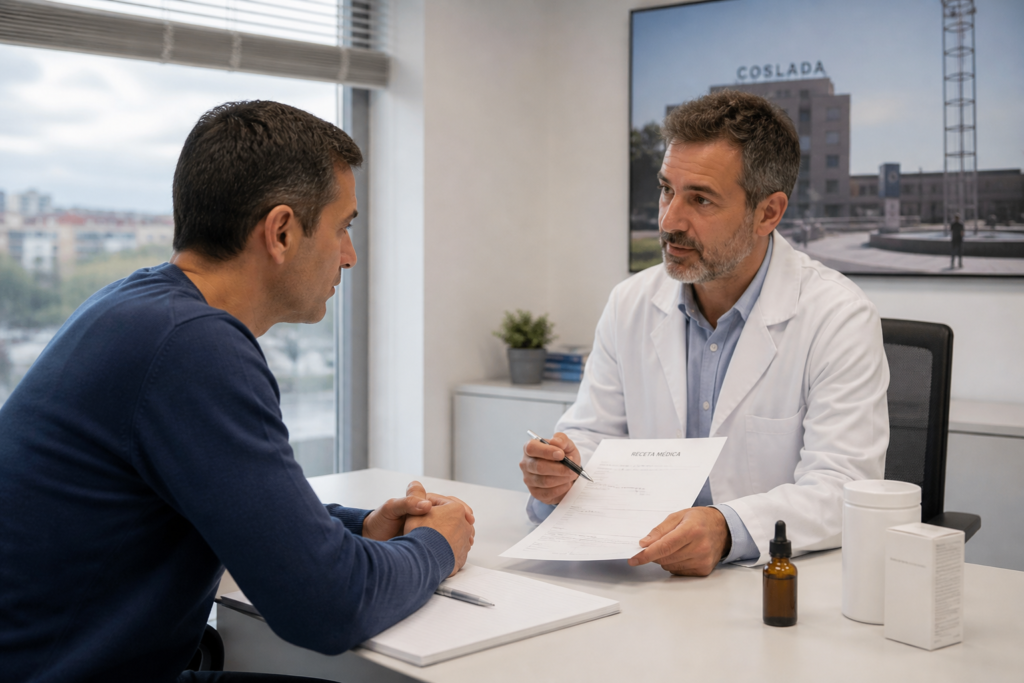
How a patient consultation may work
A sensible first step is to speak with the doctor who manages the relevant condition. Depending on the symptoms, that may be a primary-care physician or a specialist. The consultation should cover the diagnosis, the severity and duration of symptoms, previous treatments, treatment goals and any reasons cannabis-based therapy might be unsuitable.
Patients can prepare by bringing a current medication list, relevant medical reports and a short record of symptoms. Include prescribed medicines, over-the-counter products, supplements, alcohol use and any previous experience with cannabis. Accurate information helps the clinician assess interactions and avoid repeating treatments that have already failed.
- Explain the symptom you want to improve, such as pain, spasticity, nausea or sleep disruption.
- Describe what has already been tried and the results or side effects.
- Ask which product and cannabinoid profile are being considered.
- Clarify the proposed dose, schedule, review date and treatment duration.
- Ask what to do if the medicine causes dizziness, anxiety, sedation or other problems.
A clinician may decide that another treatment is more suitable. That is not a failure of the consultation; it reflects the need to balance possible benefits against evidence, risks and the patient’s overall health.
Conditions, evidence and realistic expectations
Cannabinoid medicines may be considered in specific clinical situations, but the strength of evidence varies by condition and product. Benefits are not guaranteed, and cannabis is not a universal treatment for chronic pain, anxiety, insomnia or cancer. It should not replace urgent assessment, established therapies or specialist care without medical advice.
Ask what improvement would count as success and when treatment should be stopped if that improvement does not occur. A useful plan includes measurable goals, such as fewer spasms, improved function or reduced symptom severity, rather than an open-ended instruction to use cannabis whenever symptoms appear.
Online searches for cannabis in Coslada may return recreational, CBD or informal products alongside medical information. Product labels can be incomplete or inaccurate, particularly when an item has not passed through a regulated medicines channel. A branded product, a prescription medicine and a cannabis flower product are not automatically equivalent.
Safety considerations before and during treatment
Cannabis-based treatment can cause adverse effects. THC-containing products may affect concentration, reaction time, coordination, mood and short-term memory. Some people experience anxiety, paranoia, palpitations, nausea or excessive sleepiness. CBD may also cause side effects and can interact with other medicines, including medicines processed by the liver.
Extra caution is important for people with a history of psychosis or mania, significant cardiovascular disease, pregnancy or breastfeeding, liver problems, substance-use disorder, or a strong sensitivity to sedating medicines. This is not an exhaustive list, so disclose your complete medical history.
- Do not change the dose rapidly unless your prescriber has given clear instructions.
- Avoid combining cannabis with alcohol or other sedatives unless a clinician specifically advises it.
- Do not share a prescribed product with another person.
- Store medicines securely and keep them away from children and pets.
- Seek urgent help for severe confusion, chest pain, fainting, breathing difficulties or a serious allergic reaction.
Driving and work
Do not drive, cycle in traffic or operate machinery when impaired. Even when a product is medically indicated, THC can affect alertness and coordination. Ask the prescriber how long impairment may last and check the applicable Spanish traffic rules. Employers may also have safety policies for roles involving vehicles, heights, machinery or responsibility for other people.
Access, dispensing and product checks
Patients should use the route explained by their healthcare professional. Depending on the treatment and the rules in force, access may involve a hospital service, a specialist, a pharmacy or another authorised channel. The exact route can depend on the product and its regulatory status, so there is no single process that applies to every person in Coslada.
Be cautious with websites promising guaranteed prescriptions, instant diagnoses, unusually strong products or delivery with no medical assessment. Warning signs include unclear company details, no responsible healthcare professional, pressure to pay quickly and claims that a product treats every disease.
Before accepting a product, check its name, active ingredients, strength, batch information, expiry date and storage instructions. If the packaging is unclear or differs from what the prescriber described, contact the pharmacy or clinic before using it.
Travel and everyday use in Coslada
Carrying cannabis-based medicine outside the home can raise practical questions. Keep it in its original labelled packaging and carry any prescription or medical documentation supplied to you. Do not assume that a Spanish prescription is automatically accepted in another country. International travel may involve the destination country’s controlled-drug rules, additional certificates and quantity limits.
Within Coslada, avoid public consumption and do not treat a private medical recommendation as permission to use cannabis in shared or public spaces. If you travel by train, plane or car, check the relevant operator and legal requirements in advance. Cross-border travel is particularly sensitive because CBD and THC products may be treated differently by different jurisdictions.
Questions to ask a Coslada healthcare professional
- What diagnosis or symptom is this treatment intended to address?
- What evidence supports the proposed cannabinoid and formulation?
- What are the most likely side effects and important warning signs?
- Could it interact with my current medicines or alcohol use?
- How will we measure benefit and when will we review the plan?
- Can I drive, work, exercise or travel while using it?
- What is the lawful dispensing and storage process for this product?
Clear answers help distinguish a structured treatment plan from informal advice. If the consultation leaves important legal or medical questions unresolved, seek a second opinion from an appropriately qualified professional rather than relying on a seller’s claims.
How to approach weed in Coslada responsibly
The search term weed in Coslada often refers to recreational cannabis rather than prescribed treatment. These are separate issues. Buying or possessing cannabis outside an authorised medical route can create legal and health risks, and consuming it does not provide the same quality control or clinical follow-up as a regulated treatment plan.
If your goal is symptom relief, explain that goal to a doctor and discuss evidence-based options. If you already use cannabis, be honest about the amount, frequency, route of administration and effects. This information allows the clinician to assess tolerance, dependence, withdrawal risk and possible interactions without judgement.
Related guidance for patients in Spain
People comparing local information may also find it useful to read this practical guide to medicinal marijuana in Manresa and the overview of medical cannabis in Rubí. Local wording differs, but the same basic principles apply: confirm the national framework, use qualified medical advice, check the product route and prioritise safety.
Conclusion
Therapeutic cannabis in Coslada should be treated as a medical and legal matter, not as a simple retail purchase. Start with a qualified clinician, provide a complete health and medication history, establish realistic treatment goals and confirm how the product will be dispensed. Pay particular attention to impairment, interactions, storage, driving and travel.
Because regulations and clinical pathways can change, verify current information with official Spanish medicines and legal sources before acting. A careful, supervised approach is the safest way to determine whether a cannabis-based treatment has a legitimate place in your care.