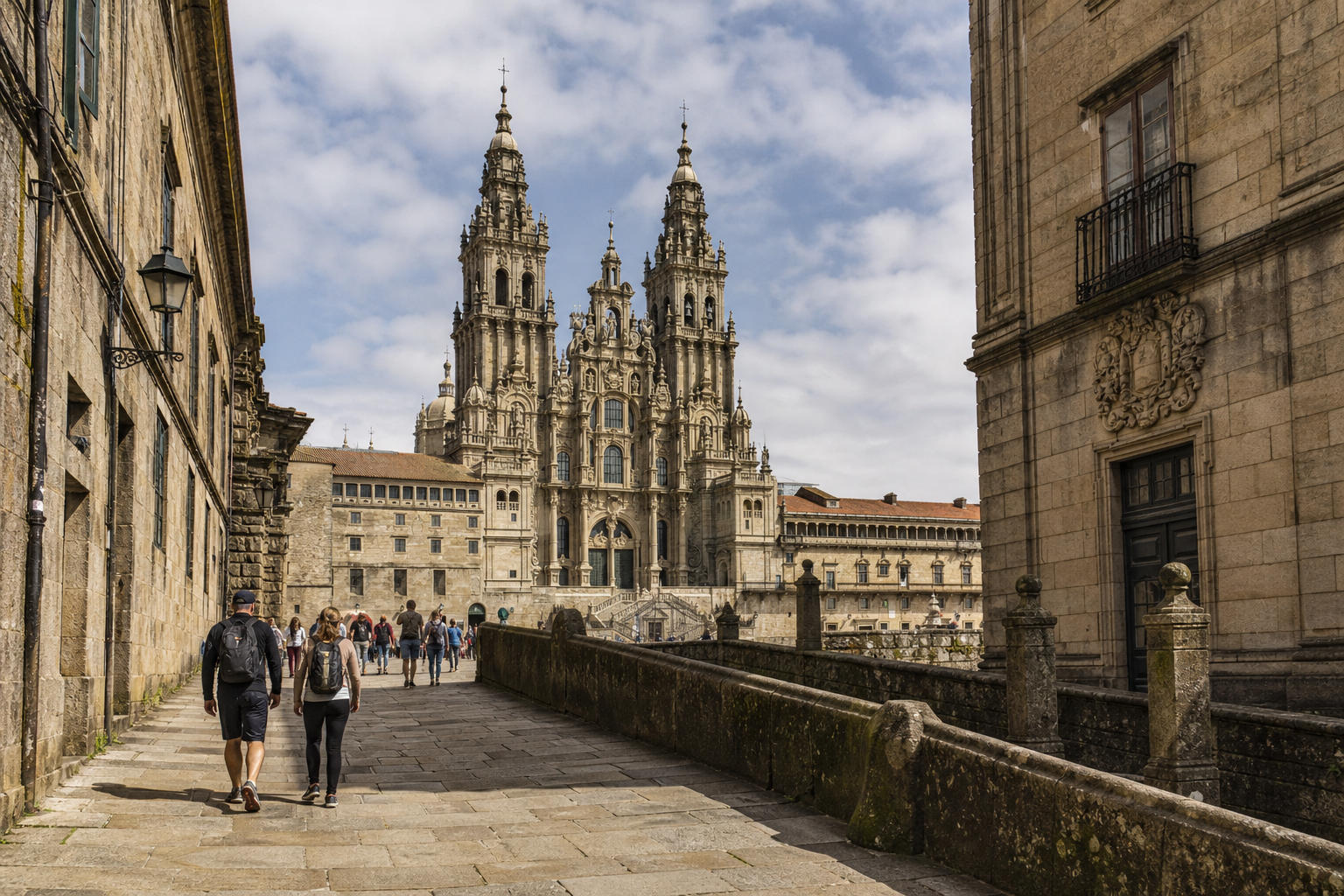
Understanding Cannabis laws 2026 Santiago de Compostela requires separating private conduct from public conduct, personal possession from supply, and medical products from recreational cannabis. Santiago de Compostela follows Spain’s national criminal and administrative rules, while local police apply those rules in streets, parks, nightlife areas, transport facilities and other public places.
This guide explains the practical position for residents and visitors. It is general information, not legal advice, and laws, enforcement practices and medical regulations can change. For a current legal text, consult the Official State Gazette of Spain and check current guidance before travelling or making decisions.
How cannabis in Santiago de Compostela is regulated
Spain does not have a general legal retail market for recreational cannabis. There is no ordinary system of licensed shops where adults can legally buy cannabis for non-medical use in the same way they can buy alcohol. The fact that cannabis may be encountered socially or privately does not create a right to purchase, possess or consume it everywhere.
Spanish law uses both criminal and administrative rules. Trafficking, distribution, production intended for supply, and conduct that facilitates illegal drug distribution can lead to criminal prosecution. By contrast, possession or use in a public place is generally treated as a serious administrative offence when it does not amount to a crime. The distinction depends on the facts, including quantity, packaging, communications, money, cultivation circumstances and evidence of supply.
The same national framework applies in Santiago de Compostela as elsewhere in Spain. Galicia and the municipality may influence policing and local public-space management, but they do not create a separate recreational cannabis market.
Possession and personal use in Santiago de Compostela
Private possession for personal use is not the same legal issue as public possession. Spanish case law and enforcement practice have traditionally treated strictly private consumption differently from conduct visible in public, provided there is no evidence of trafficking or other criminal activity. That does not mean cannabis is fully legal, nor does it guarantee that every private situation is risk-free.
Possessing cannabis in a street, plaza, park, station, airport, public building, nightlife venue or other public area can trigger an administrative sanction. Police may seize the substance and record the incident. A fine can be substantial: serious offences under Spain’s citizen-security framework may carry penalties from 601 to 30,000 euros, subject to the applicable procedure and circumstances.
What can increase legal risk?
- Carrying cannabis openly or using it in a public place.
- Possessing cannabis near schools, youth facilities or other sensitive locations.
- Having multiple bags, scales, large quantities or records suggesting supply.
- Sharing or selling cannabis, including informal arrangements involving payment.
- Ignoring police instructions or creating a disturbance.
- Bringing cannabis across an international border or transporting it through airports.
Do not assume that a small amount is automatically permitted. Quantity can be relevant, but it is not a universal safe limit. The setting, evidence and conduct also matter.
Public consumption, nightlife and events
Smoking or consuming cannabis in public is particularly risky in Santiago de Compostela. Historic streets, restaurant terraces, university areas, parks, festival spaces and busy tourist locations are not private zones simply because people may be present casually. Police can intervene, confiscate the substance and begin an administrative process.
Private accommodation is also not automatically consequence-free. A hotel, hostel, holiday rental or guesthouse may prohibit smoking or drug use under its house rules. Smoke, odour, damage, complaints or unsafe behaviour can lead to eviction, extra charges or contact with authorities. A private room should not be treated as permission to use cannabis in breach of the accommodation contract.
Social clubs require caution as well. A club’s existence or membership process does not provide a blanket exemption from Spanish law. Clubs are not ordinary retail dispensaries, and their legal status can depend on their organisation, activities, location and whether authorities consider conduct to involve supply or distribution. Visitors should not assume that an online listing proves legality.
Buying, selling and sharing cannabis
Buying recreational cannabis from an informal seller is legally and practically risky. The seller may be committing a serious offence, and the product may be contaminated, mislabelled or far stronger than expected. Purchasing in a tourist area also increases the chance of scams, theft or police attention.
Selling, supplying or facilitating distribution can become a criminal matter even when the participants describe it as sharing. Giving cannabis to another person is not automatically lawful, particularly when money, repeated transactions, organised activity or a profit motive is involved. Do not carry cannabis for someone else, accept a package for transport, or allow your accommodation, vehicle or payment account to be used for a cannabis transaction.
For broader context, compare this guide with the practical overview of marijuana laws in Barakaldo. The underlying national rules are similar, but local circumstances and enforcement encounters can differ.
Driving and travelling with cannabis
Driving after using cannabis can create serious legal and safety consequences. Spanish road enforcement may test drivers for drug presence, and driving while affected can lead to penalties beyond any issue involving possession. Impairment can reduce reaction time, attention and judgement even when a person feels capable of driving.
The safest approach is simple: do not drive, cycle in traffic or operate machinery after using cannabis. Arrange a sober driver or use licensed public transport and taxis. Santiago de Compostela has busy pedestrian areas, narrow historic streets and changing traffic conditions, so impairment can endanger both the user and other people.
Do not take cannabis across the Spanish border, including on flights, trains or road trips. International movement can involve customs and drug-trafficking rules even where the amount is intended for personal use. A prescription, club membership or purchase made in Spain should not be assumed to authorise transport into another country.
Medical cannabis in Santiago de Compostela
Medical cannabis in Santiago de Compostela should be understood through Spain’s national healthcare and medicines framework rather than through recreational shops. Access, eligible products, prescribing arrangements and pharmacy supply depend on the current national rules and on professional assessment.
Patients should speak with a qualified doctor or pharmacist about an authorised treatment option. Do not substitute an unlabelled flower, edible, vape cartridge or oil bought informally for prescribed care. Product strength and composition can vary, and cannabis may interact with medicines or worsen certain mental-health, cardiovascular or cognitive symptoms.
Regulatory details can change, especially as Spain develops its medical-cannabis framework. The Spanish Agency of Medicines and Medical Devices is the appropriate official source for medicine-related information. Patients should also ask their healthcare provider how prescriptions, dispensing, travel documentation and follow-up apply to their particular circumstances.
Questions for patients and visitors
- Is the product authorised and supplied through a legitimate medical channel?
- What dose, formulation and schedule has the clinician recommended?
- Could it affect driving, work, study or other safety-sensitive activities?
- How should it be stored, labelled and transported?
- What documents are needed if travelling with prescribed medicine?
CBD products and hemp-derived items
CBD is not a universal legal exemption. The rules depend on the product’s ingredients, intended use, labelling, marketing and THC content. A product marketed as CBD may still be unsuitable for ingestion, may contain more THC than expected, or may fall under food, cosmetic, medicine or other product regulations.
When considering CBD in Santiago de Compostela, inspect the label, manufacturer information and intended use. Avoid products with no batch details, no ingredient list or exaggerated health claims. Do not assume that “hemp,” “natural” or “CBD” means a product can be consumed in public, carried across borders or used while driving.
Visitors can also review the practical discussion of CBD laws and safer buying considerations in Spain. The same general principle applies: product category and compliance matter more than marketing language.
What tourists should know about weed in Santiago de Compostela
Tourists often face extra risks because they may not understand Spanish procedures, local geography or the consequences of an administrative notice. A fine or police interaction can disrupt a trip, and ignoring official correspondence may create further problems.
- Do not buy cannabis from street sellers or accept it from strangers.
- Do not use or display cannabis in public places.
- Keep away from schools, playgrounds, transport hubs and crowded events.
- Never drive after using cannabis.
- Do not carry cannabis over a border or ask another traveller to carry it.
- If police stop you, remain calm, follow lawful instructions and ask for an interpreter if you do not understand the procedure.
- If you receive a formal notice, obtain advice from a qualified Spanish lawyer rather than relying on social-media claims.
For a wider travel perspective, the guide to cannabis tourism and responsible choices in Ourense covers similar issues elsewhere in Galicia. Santiago’s status as a pilgrimage and university destination does not create more permissive cannabis rules.
Health and safer-choice considerations
Legality and safety are separate questions. Cannabis can impair memory, attention, coordination and judgement. Effects may be stronger or longer-lasting with edibles, concentrates or products of unknown potency. Combining cannabis with alcohol or sedating medicines can increase impairment.
People with a history of psychosis, severe anxiety, problematic substance use or certain heart conditions should discuss risks with a healthcare professional. Anyone who experiences chest pain, severe confusion, loss of consciousness, extreme agitation or difficulty breathing should seek urgent medical help. Do not drive the person to care if impairment makes driving unsafe.
How to check the rules before acting
Because enforcement and medical regulations can change, check current official information before travelling or using any cannabis-related product. Confirm whether a product is authorised, whether an activity takes place in public, and whether travel documents are required. Local social-media posts, club advertisements and tourist forums are not reliable substitutes for legal advice.
If an incident occurs, record the date, location and documents you received, but do not post identifying details online. A Spanish lawyer can explain whether the matter is administrative or criminal, the deadline for responding, and any available procedure for challenging a decision.
Conclusion
The key point about cannabis laws in Santiago de Compostela for 2026 is that Spain does not offer a general recreational retail market. Public possession or use can lead to confiscation and a significant administrative fine, while supply, trafficking, unsafe driving and cross-border transport carry more serious risks. Medical cannabis and CBD must be assessed through the applicable medicines and product rules.
For residents and visitors, the lowest-risk approach is to avoid public use, informal purchases, driving after consumption and international transport. When a medical need exists, use qualified healthcare and official regulatory channels. If police or legal proceedings become involved, obtain advice specific to the facts instead of relying on assumptions about personal-use quantities or cannabis clubs.