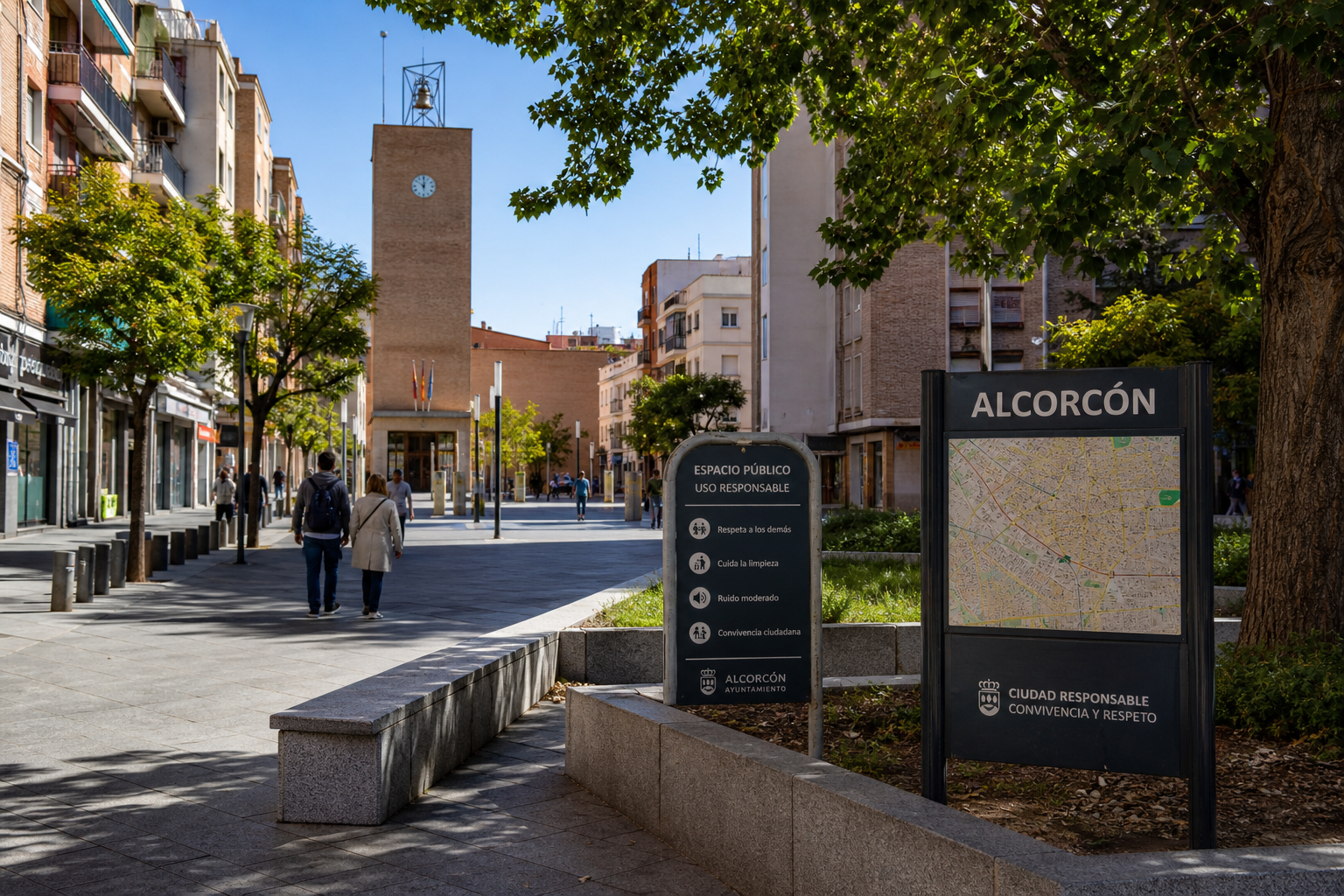
Understanding Cannabis smoking laws in Alcorcón, Spain requires separating private use from activity in public places. Spain does not treat cannabis as fully legal for recreational use, and the rules that matter most to residents and visitors concern where cannabis may be possessed or consumed, how it is obtained, and what happens if someone drives after using it. Alcorcón follows Spain’s national criminal and administrative framework, while local police and municipal rules may affect how public incidents are handled.
This guide explains the practical position without presenting cannabis as risk-free or suggesting ways to evade enforcement. The safest approach is to avoid public consumption, never drive after using cannabis, and check current official information when a legal decision has significant consequences.
Cannabis laws in Alcorcón: the basic legal position
Alcorcón is a municipality in the Community of Madrid, but cannabis rules are primarily established by Spanish national law. The central distinction is between conduct in a private setting and conduct visible or accessible to the public.
Personal consumption and possession are not automatically criminal offences when they remain within a genuinely private context and are not connected with supply or trafficking. That limited position should not be confused with general legalization. Selling, distributing, importing, or facilitating supply can amount to a criminal offence, with penalties depending on the conduct, substance, quantity, and circumstances.
In public places, the position is stricter. The Spanish Official State Gazette text of Organic Law 4/2015 treats illicit consumption or possession of drugs in public places, public establishments, or collective transport as a serious administrative infringement. Public cultivation that is visible from public areas can also create legal problems.
What counts as a public setting?
For practical purposes, people should assume that streets, plazas, parks, station areas, public transport, entrances to public buildings, and other spaces open to the public are risky locations for cannabis possession or smoking. A balcony or terrace may also create problems if use is visible, causes disturbance, or breaches building or local rules. The exact circumstances matter, so no single list can guarantee that a particular location is lawful.
Private ownership of a property does not necessarily make every situation private. A rented apartment, hotel room, or private venue may have its own no-smoking policy, and landlords or operators can prohibit smoking or ask guests to leave. Cannabis smoke can also lead to nuisance, fire-safety, or neighbour disputes even when the conduct is not treated as a criminal matter.
Public smoking and possession in Alcorcón
Smoking cannabis in Alcorcón in a street, park, shopping area, public transport facility, or other publicly accessible place can expose a person to an administrative sanction. The same concern applies to carrying cannabis in public, even if there is no evidence of selling it. Police may seize the substance and record the incident for administrative processing.
Under Organic Law 4/2015, the relevant public drug-use and possession infringement is classified as serious. Serious infringements can carry fines from 601 to 30,000 euros, although the final amount depends on the legal classification and the circumstances. The minimum level should not be understood as an automatic charge in every case; the competent authority applies the statutory rules and may consider factors such as the seriousness of the conduct and aggravating or mitigating circumstances.
Public possession does not become acceptable merely because the amount appears small or because the cannabis is intended for personal use. Personal purpose may help distinguish possession from supply-related conduct, but it does not remove the separate administrative risk of possession in public.
Possible consequences after a police intervention
- The cannabis may be confiscated.
- An officer may identify the person and prepare an administrative report.
- The person may later receive notification of an administrative procedure and payment or response deadlines.
- Additional issues may arise if the conduct involves disorder, threats, minors, driving, or other offences.
Anyone who receives official paperwork should read the notification carefully and consider advice from a qualified Spanish lawyer. Deadlines for objections, evidence, or payment can be important. Informal advice from a friend or an online forum is not a substitute for reviewing the actual notice.
Private cannabis use: what the law does and does not permit
Private consumption is treated differently from public consumption, but it is not a broad recreational licence. A genuinely private residence, used with the permission of the occupier, is generally the setting in which personal use presents fewer public-order issues. That does not protect sale, sharing as a commercial activity, organized distribution, or conduct that affects neighbours or other people.
Visitors should also respect the rules of hotels, hostels, holiday rentals, student housing, and apartment buildings. A property owner may ban smoking of all kinds, and a violation of house rules can lead to eviction, loss of a deposit, or a complaint even if police do not bring a drug charge.
People looking for weed in Alcorcón should be particularly cautious about assuming that a shop, social-media seller, or delivery service is legally authorized to supply recreational cannabis. Spain does not have a general system of licensed recreational cannabis stores. Advertising, buying, or arranging delivery can expose people to legal and personal-safety risks.
Cannabis clubs and access in the Madrid area
Spanish cannabis social clubs operate in a legally complex area. Some rely on private-association principles and claim to restrict membership and consumption to a private setting. However, the existence of a club does not mean that all clubs are authorized, that membership guarantees legality, or that cannabis can be taken into public spaces.
Rules and enforcement can vary according to the club’s structure, premises, advertising, supply arrangements, and local circumstances. A person considering a club should not treat online listings or membership claims as official legal approval. Public consumption after leaving a private venue can still trigger an administrative offence.
For a broader comparison of practical issues in a nearby municipality, see this guide to cannabis markets and responsible access in Móstoles. It should be read as general information rather than evidence that a particular club or supplier is lawful.
Driving, transport and cannabis in Alcorcón
Driving after cannabis use is one of the clearest areas of avoidable risk. Spanish road-safety rules can penalize driving with drugs present in the body, while driving under the influence can lead to more serious consequences when impairment is established. A person may therefore face trouble even if they believe they feel capable of driving.
The safest rule is simple: do not drive, cycle in traffic, or operate machinery after using cannabis. Arrange a sober driver, use public transport, or delay travel until it is safe and lawful. Do not carry cannabis openly through stations or on public transport, because possession in a public or collective-transport setting can create a separate administrative problem.
Alcorcón is connected to Madrid by public transport, but convenient transport does not change the underlying legal rules. For related planning advice, the article on cannabis travel safety in Getafe discusses the wider practical issues of transport, possession, and safer choices in the Madrid region.
Medical cannabis and health considerations
Medical use should not be used as a general explanation for recreational possession. Spain’s medical-cannabis framework is based on national regulation and authorized healthcare pathways, not on an unrestricted right to smoke cannabis wherever a person wishes. Patients should follow the product, prescription, dosage, and administration instructions provided by their healthcare professionals.
The Spanish Agency of Medicines and Medical Devices is the appropriate official institution to consult for current information about medicines, safety, and regulatory developments. A product obtained informally may have uncertain strength, contaminants, or inaccurate labeling, and it may not provide the same legal or clinical safeguards as an authorized medicine.
Regardless of legal status, cannabis can affect attention, reaction time, memory, and judgment. It may worsen anxiety or other mental-health symptoms for some people and can interact with medicines or alcohol. Anyone who experiences severe confusion, chest pain, loss of consciousness, or other urgent symptoms should seek emergency medical help.
Practical guidance for residents and visitors
- Avoid public consumption: Do not smoke or consume cannabis in streets, parks, stations, public transport, or other publicly accessible places.
- Keep private use genuinely private: Obtain the occupier’s permission and follow the property’s smoking rules.
- Do not buy from unknown sellers: Unregulated products can create legal, financial, and health risks.
- Never drive after use: Choose a sober transport option and do not assume that feeling normal removes testing or road-safety risks.
- Do not share or sell: Distribution can move a situation from an administrative issue into potential criminal territory.
- Read official notices: If police seize cannabis or issue paperwork, keep all documents and check the response deadline.
- Seek professional advice when necessary: A lawyer or qualified healthcare professional can address the specific facts of a case.
How Alcorcón’s rules fit with nearby municipalities
The national framework applies across Spain, including Alcorcón, Móstoles, Leganés, and Getafe. Differences may arise from enforcement priorities, local public-space rules, property policies, and the circumstances of an incident rather than from a separate municipal legalization system.
Readers comparing local information may also find the guide to cannabis health and legal support in Leganés useful for understanding why health, transport, and administrative issues should be considered together. None of these local guides replaces current legal advice or an official decision.
Conclusion
The practical message of cannabis in Alcorcón is cautious rather than permissive. Private personal use may be treated differently from public conduct, but cannabis is not generally legal for unrestricted recreational sale or public smoking. Possession or consumption in a public place can lead to seizure and an administrative fine, while selling, distributing, or driving under the influence can create more serious consequences.
If you choose to use cannabis, keep the setting private, respect property rules, avoid public transport possession and public smoking, and never drive after use. Because regulations and enforcement can change, consult official Spanish sources or a qualified professional for a current answer to a specific situation.