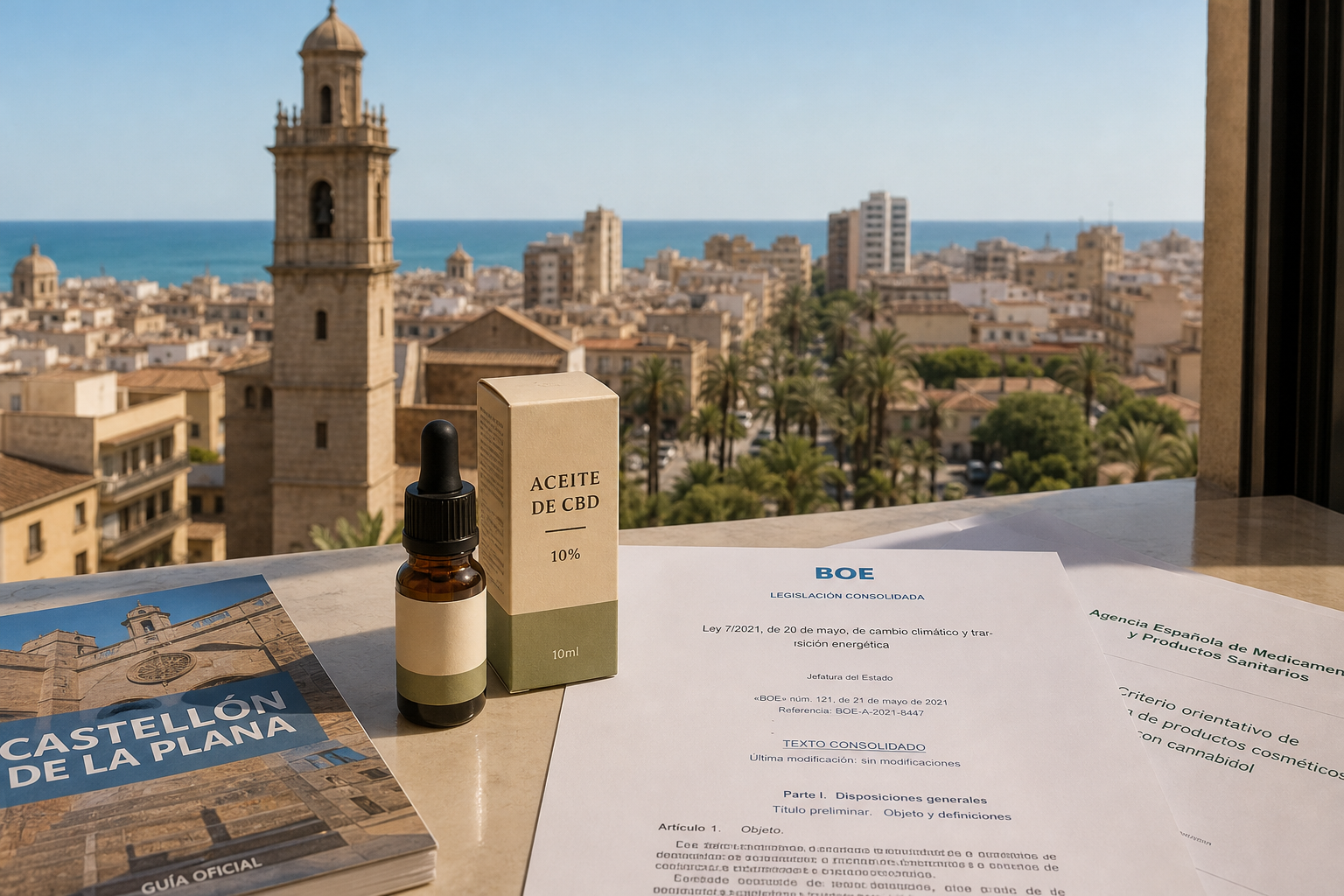
Understanding Cannabis availability in Castellón de la Plana requires separating legal status from what may appear to be available locally. Spain does not operate a regulated recreational cannabis retail system like a licensed dispensary market. In Castellón de la Plana, as elsewhere in Spain, cannabis products may be discussed in private settings, sold as CBD products, or associated with private social clubs, but these categories do not all have the same legal basis.
This guide explains the practical position for residents and visitors without directing anyone to buy illegal drugs. It covers weed in Castellón de la Plana, CBD, medical access, private consumption, public-order risks and sensible ways to avoid legal or health problems. Spanish rules can be fact-specific and may change, so current official information should always take priority over informal advice.
Cannabis availability in Castellón de la Plana: the basic legal picture
There is no ordinary, state-licensed shop network for adult-use cannabis in Castellón de la Plana. A business displaying cannabis-themed branding is not automatically authorised to sell intoxicating cannabis, and a product described as “natural” or “legal” is not necessarily suitable for consumption.
Spanish law generally distinguishes between private conduct and public conduct. Personal possession or use in a genuinely private setting is treated differently from possession or use in public. That distinction does not create a general right to purchase, carry or consume cannabis wherever a person chooses. Public possession or use can lead to an administrative sanction, even where there is no allegation of trafficking.
For the wording of the national public-security rules, consult the official text of Spain’s Organic Law 4/2015. It is more reliable than social-media summaries or claims made by sellers and club promoters.
What “available” does and does not mean
Searches for cannabis in Castellón de la Plana may return private clubs, CBD retailers, delivery advertisements or online listings. These results should not be treated as proof that a product is legal, tested or available for public sale. The legal character of an activity depends on factors such as the substance, its THC content, the location, advertising, possession, supply arrangements and whether the activity is genuinely private.
- Recreational cannabis: there is no standard legal retail route for adults to buy THC cannabis in the city.
- Private consumption: private use is not the same as unrestricted legality, particularly when possession, supply or public exposure is involved.
- CBD products: some products are sold lawfully for permitted uses, but labels and intended use matter.
- Medical treatment: access should follow a clinician-led and authorised route rather than an informal purchase.
Weed in Castellón de la Plana: private clubs and public risks
Private cannabis social clubs exist in parts of Spain within a legally uncertain and closely scrutinised environment. Their existence does not mean that every club is lawful, that membership guarantees protection, or that visitors can openly consume or transport cannabis without risk. Club models may differ considerably in their governance, admission procedures and interpretation of Spanish law.
Anyone considering a private association should avoid assuming that a membership card overrides national or local rules. A club cannot make public possession lawful, authorise driving after consumption, or guarantee protection from police action. Visitors should also be cautious with services that promise instant access, delivery to hotels or “100% legal” THC products without clear documentation.
Public places, accommodation and transport
Using or carrying cannabis in streets, parks, beaches, transport hubs and other public areas can create legal and practical problems. Castellón de la Plana includes busy urban areas, coastal destinations and transport connections where public visibility matters. A private apartment or hotel room is not automatically a safe or permitted place either: accommodation rules, smoke alarms, neighbours, balconies and rental contracts may all apply.
Driving after using cannabis is especially risky. Spanish traffic rules can impose serious consequences for drug presence or impairment, and a person should not drive, cycle or operate machinery after consuming an intoxicating product. Public transport operators and accommodation providers may also prohibit possession, smoking or vaping on their premises.
For broader travel context, the practical guidance in this Spain cannabis travel guide explains why transport, public consumption and personal responsibility should be considered together.
CBD products in Castellón: what shoppers should check
CBD is not the same as THC. CBD products are generally marketed for non-intoxicating purposes, but their legal treatment depends on the product category, composition, labelling and intended use. A CBD flower, oil, cosmetic or food product may be subject to different rules, and a product sold online is not automatically compliant with Spanish or European requirements.
Questions to ask before buying CBD
- Is the product clearly labelled with its ingredients, batch information and responsible operator?
- Does the seller explain the intended use rather than making unsupported medical claims?
- Is there independent laboratory information about cannabinoids and contaminants?
- Could the product contain enough THC to create legal, employment or driving concerns?
- Does the packaging comply with the rules for its particular category, such as cosmetics or food?
Do not assume that “CBD” means risk-free. Products can interact with medicines, and poor-quality or inaccurately labelled items may contain unexpected compounds. People who take prescription medication, are pregnant, have liver disease or are managing a mental-health condition should speak with a qualified healthcare professional before using cannabinoid products.
For comparison, the guide to CBD shops and product checks in Alicante covers similar purchasing questions in the Valencian Community, although local stock and business practices will differ.
Medical cannabis in Castellón de la Plana
Medical cannabis should be approached as a healthcare issue, not as a shortcut to recreational availability. A person who believes cannabinoid treatment may help should begin with a doctor or specialist who can assess symptoms, existing medicines, contraindications and evidence-based alternatives.
Spain’s medical-cannabis framework has been developing, and the precise route depends on the authorised medicine, diagnosis, prescriber and dispensing arrangements. Not every cannabis-derived product sold commercially is an approved medicine, and a product purchased through an informal source cannot be assumed to have consistent strength or clinical quality.
The Spanish Agency of Medicines and Medical Devices is the appropriate authority for current information about authorised medicines, safety communications and regulatory developments. Patients should also ask their healthcare team how prescriptions, monitoring, travel and interactions with other medicines are handled.
Why informal medical access can be dangerous
Online sellers and private contacts may advertise cannabis as a treatment for pain, anxiety, insomnia or other conditions. Such claims can be misleading. Unregulated products may vary widely in THC and CBD concentration, contain contaminants or conflict with prescribed medicines. Self-treating can also delay diagnosis of an underlying condition.
Keep a record of any cannabinoid product discussed with a clinician, including its name, ingredients, strength and source. Do not stop prescribed treatment or change a dose solely because a seller makes a health claim.
Practical safety advice for residents and visitors
People searching for cannabis laws in Castellón de la Plana should focus on behaviour rather than trying to identify a supposedly safe place to consume. The lowest-risk approach is to avoid illegal possession and use, especially in public, and to obtain health advice from regulated professionals.
- Do not buy THC cannabis from street sellers, anonymous social-media accounts or unverified delivery services.
- Do not carry cannabis across the Spanish border, even if it was obtained legally somewhere else.
- Never drive, cycle or swim after using an intoxicating product.
- Keep all products away from children and pets, preferably in their original packaging.
- Do not mix cannabis with alcohol, sedatives or other intoxicating substances.
- Seek urgent medical help for severe confusion, chest pain, breathing problems, loss of consciousness or a serious adverse reaction.
- If approached by law enforcement, remain calm and follow lawful instructions; do not rely on online claims about automatic immunity.
How to verify information about cannabis in Castellón
Local listings can quickly become outdated, and search results often mix legal CBD businesses with THC-related advertisements. Before relying on any claim, check whether the information comes from a government authority, a recognised healthcare organisation or a business making a clearly defined product claim. Be wary of pages promising guaranteed legality, discreet delivery or medical cures.
For legal questions involving a specific incident, a Spanish lawyer can explain the relevant facts and procedure. For health questions, a pharmacist or doctor is a better source than a club, influencer or product retailer. This is particularly important for medical cannabis in Castellón de la Plana, where treatment decisions should be based on clinical assessment and authorised medicines.
Conclusion
Cannabis availability in Castellón de la Plana is limited and legally complex. There is no conventional recreational dispensary market, public possession and consumption can bring administrative consequences, and private clubs do not provide a blanket exemption from Spanish law. CBD products require careful attention to labelling, intended use and quality, while medical treatment should be discussed through regulated healthcare channels.
For residents and visitors, the safest approach is to avoid street purchases and public use, never drive after consumption, protect children and pets, and verify current rules through official sources. Treating “available” as synonymous with “legal” is the mistake most likely to create unnecessary legal, financial or health problems.