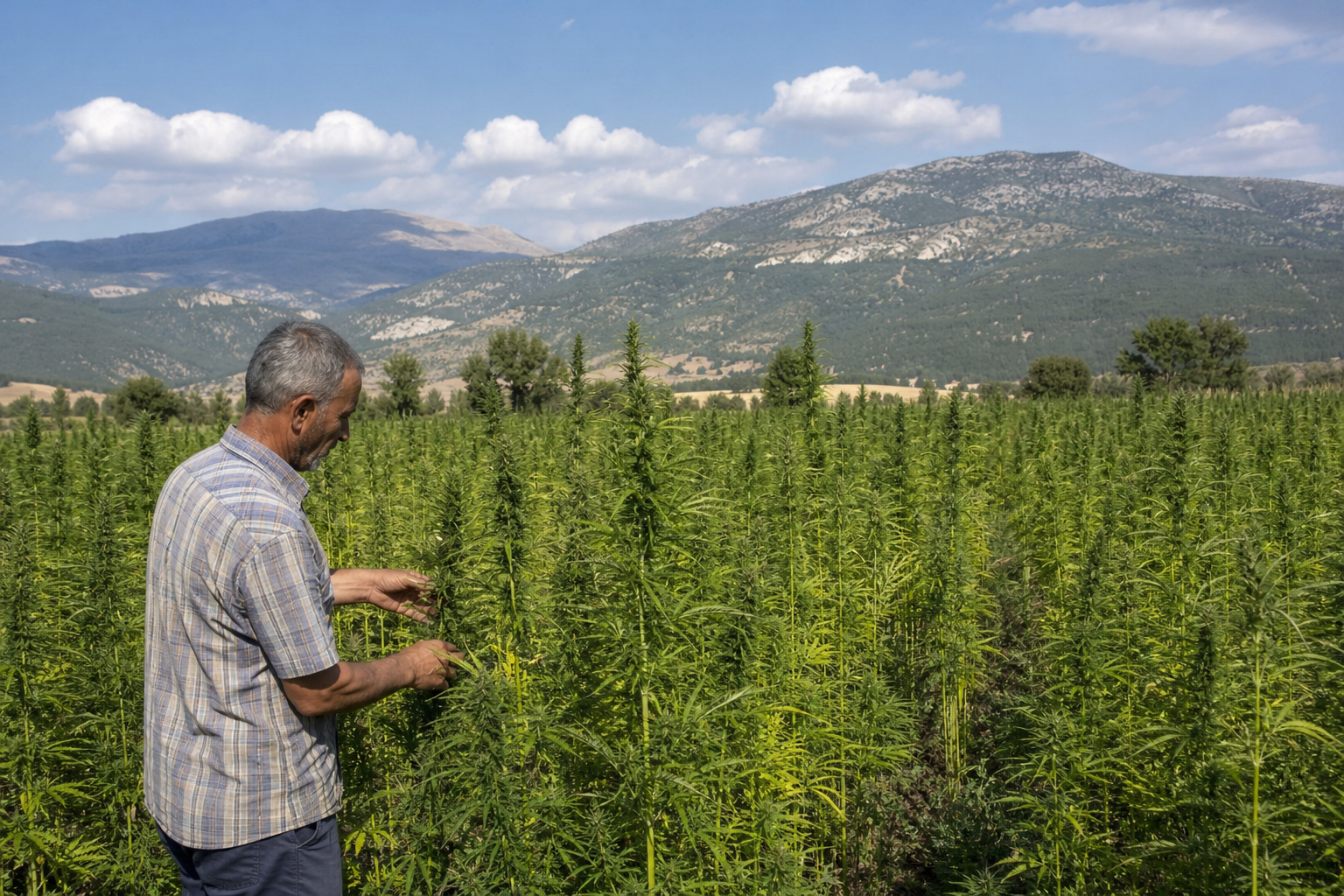
The hemp industry in Isparta sits at the intersection of regulated agriculture, regional manufacturing and growing interest in plant-based materials. Isparta is widely associated with rose production, orchards, forestry and highland agriculture, but its broader agricultural economy also provides useful conditions for examining whether industrial hemp could become a carefully managed diversification crop.
Hemp is not the same as an unrestricted recreational cannabis market. In Turkey, cultivation, processing and trade involving cannabis-related plants and products are subject to controls, permits and product-specific rules. Any local opportunity therefore depends on compliance, agronomic suitability, reliable buyers and transparent testing rather than simply planting a crop and selling it.
This guide explains what hemp could mean for Isparta, where realistic opportunities may exist, what legal and commercial barriers matter, and how farmers and businesses can evaluate the sector responsibly.
Why Isparta Is Relevant to Hemp Agriculture
Isparta’s agricultural identity offers several reasons to consider hemp as part of a wider discussion about crop diversification. The province includes varied elevations, rural production areas and established experience with agricultural organization. Those characteristics do not guarantee successful hemp cultivation, but they create a foundation for research, pilot projects and supply-chain planning.
Hemp is generally discussed as a multipurpose crop. Depending on the approved variety and processing route, its stalks may provide fiber and hurd, while seeds can be used for food or oil products where regulations allow. The plant’s value is therefore connected to what happens after harvest. Without collection, drying, storage and processing capacity, cultivation alone may produce limited economic benefit.
For Isparta, the most credible approach would be to assess hemp alongside existing agricultural activities rather than present it as a replacement for established crops. A local feasibility study would need to examine soil, irrigation, altitude, planting dates, permitted varieties, labor requirements and access to processors.
Climate, land and farm planning
Hemp performance depends on genetics, planting density, water availability, fertility and harvest timing. Conditions can vary considerably between districts, so province-wide assumptions would be unreliable. Farmers would need local trials conducted under approved conditions before making commercial decisions.
Water planning is especially important. A crop may be described as resilient, but resilience does not mean it requires no water or management. The right comparison is not simply hemp versus another crop; it is hemp under a specific Isparta production system compared with realistic alternatives for the same land.
Hemp Industry in Isparta and Turkey’s Legal Framework
The legal status of hemp in Turkey depends on the plant material, intended use, THC content, cultivation location, permits and downstream product. Industrial hemp should not be treated as automatically legal merely because it is marketed as low-THC or non-intoxicating. Cultivation and processing must follow current Turkish requirements and the instructions of the relevant authorities.
Anyone considering hemp cultivation in Isparta should verify the rules before purchasing seed, signing a land agreement or advertising products. Requirements may involve approved varieties, applications, inspections, records, field controls and restrictions on where cultivation can take place. Rules can also change, making current official guidance more important than older online summaries.
The Turkish Ministry of Agriculture and Forestry is an appropriate starting point for checking agricultural regulations and official announcements. Farmers should also consult the relevant provincial and district agricultural authorities for application procedures and local compliance expectations.
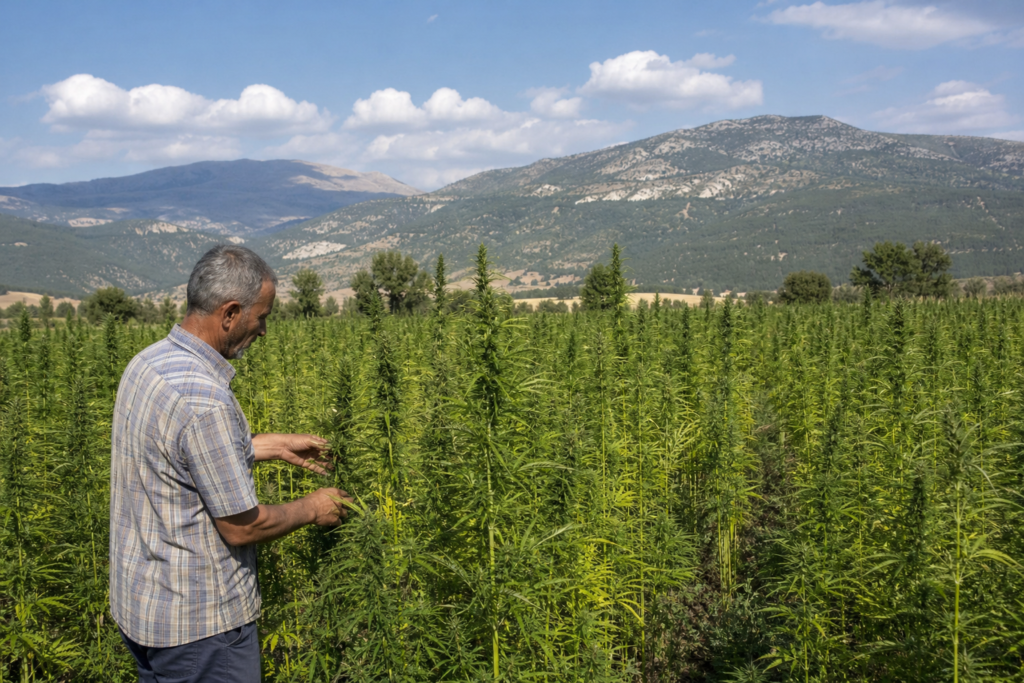
These controls protect the distinction between licensed industrial activity and unauthorized cannabis production. They also matter for banks, insurers, logistics providers, manufacturers and retailers, all of which need confidence that a raw material was produced and handled lawfully.
Why compliance must continue after harvest
Legal risk does not end when a crop is collected. Storage, transport, testing, extraction, packaging and sales can create separate obligations. A business selling seed food, fiber material, cosmetics or other hemp-related goods must confirm that its product category is permitted and that labeling and safety requirements are met.
Businesses should keep clear records covering seed origin, field location, harvest quantities, test results, invoices and buyers. Traceability helps demonstrate lawful sourcing and makes it easier to identify problems if a shipment fails quality or regulatory checks.
Potential Business Segments in Isparta
The phrase hemp products in Isparta can refer to several very different markets. Each one has distinct technical, legal and commercial requirements.
- Fiber and textiles: Hemp fiber can be used in yarns, fabrics, composites and other material applications. Success would depend on fiber quality, processing equipment and dependable industrial buyers.
- Hurd and construction materials: The woody core, commonly called hurd or shiv, may be considered for animal bedding, insulation and certain building products. Local production would require appropriate grading, drying and contamination controls.
- Seed and food products: Hemp seeds and seed-derived products require careful attention to food safety, permitted ingredients, labeling and testing. Food businesses should never assume that a general hemp label resolves regulatory questions.
- Cosmetic and personal-care inputs: Hemp-derived ingredients may attract interest from manufacturers, but formulation, claims, ingredient status and product registration must be evaluated separately.
- Research and agronomy services: Universities, laboratories, cooperatives and agricultural consultants could support variety trials, soil assessment, harvesting studies and quality testing.
The strongest opportunity may not be a single large hemp factory. It could be a connected chain involving licensed growers, agricultural advisers, testing services, processors and manufacturers. This model would spread risk and allow the market to develop around verified demand.
Processing Is the Key Commercial Challenge
Hemp farming is only the first stage of an industrial system. Fiber hemp often needs timely harvesting, retting or alternative separation methods, baling and transport. Seed production requires clean harvesting and storage conditions. These operations cannot be improvised easily after planting.
A processor evaluating hemp processing in Isparta would need to estimate the volume available within an economical transport radius. Small, scattered harvests can make machinery expensive to operate. Cooperation among farmers may improve supply consistency, but cooperatives need clear contracts, quality standards and payment rules.
What a practical supply chain would require
- Confirm legal eligibility and approved planting conditions before cultivation.
- Select varieties suited to the intended end use, subject to applicable approval rules.
- Agree on purchase specifications with a processor before planting.
- Plan harvesting, drying, storage and transport in advance.
- Test material through qualified laboratories where required.
- Use contracts that define quality, rejected loads, delivery dates and payment.
Processing equipment should be selected after the intended product is known. A facility designed for textile fiber is not automatically suitable for food-grade seed handling or construction material. Product specifications should drive investment, not the other way around.
Economic Benefits and Limits for Rural Communities
A regulated hemp sector could create work in farming, transport, quality control, equipment maintenance, processing and product development. It might also encourage collaboration between rural producers and manufacturers seeking renewable or locally sourced materials.
However, projected benefits should be based on contracts and verified market demand. Hemp is not a guaranteed high-income crop, and farmers face familiar risks: price changes, crop failure, unsuitable varieties, inadequate machinery and delayed payments. Promotional claims about universal profitability should be treated cautiously.
Local economic planning should also consider who captures value. Selling unprocessed stalks generally creates fewer opportunities than producing graded fiber, finished materials or branded goods. At the same time, more processing requires more capital, technical expertise and regulatory oversight.
Lessons from discussions of hemp and regulated cannabis activity in Afyonkarahisar can be useful for comparing regional questions, although each province still requires its own agronomic and legal assessment.
Environmental Considerations
Hemp is often presented as a sustainable crop, but environmental performance depends on the complete production system. Benefits may include the use of plant fiber in place of some petroleum-intensive materials and the possibility of fitting the crop into a rotation. Yet those benefits should be measured rather than assumed.
Important questions include irrigation demand, fertilizer use, pesticide management, soil effects, transport distance and what happens to processing residues. A crop grown with excessive water or transported long distances to a distant processor may offer fewer environmental advantages than promotional language suggests.
Isparta businesses could improve decision-making by recording input use, yields, energy consumption and waste. Such information would support more credible sustainability claims and help buyers compare hemp materials with alternatives on a lifecycle basis.
Health, Safety and Responsible Communication
Hemp products are not all interchangeable. Fiber, seed food, cosmetics and cannabinoid-containing products raise different safety and compliance issues. Consumers should be able to identify the product category, manufacturer, ingredients, batch information and any relevant testing.
Businesses should avoid presenting industrial hemp as a cure or implying that every hemp-derived product is intoxicating or completely risk-free. Product claims should match the evidence and the rules governing the relevant category. Contamination, inaccurate labeling and unverified cannabinoid content can create health and legal problems.
For broader public-health context, the World Health Organization provides trusted information on health risks, medicines and evidence assessment. Its material should complement, not replace, Turkish legal and product-specific guidance.
How Isparta Could Build a Responsible Hemp Sector
A measured development plan would begin with research rather than mass planting. Agricultural institutions could coordinate limited trials, while businesses identify buyers and processors before farmers take on production risk.
- Map suitable production areas and exclude locations that do not meet current rules.
- Test approved varieties under local conditions and record yield and quality data.
- Develop training on planting, harvest, storage, traceability and compliance.
- Connect growers with processors through transparent contracts.
- Establish reliable testing and documentation procedures.
- Support products with genuine market demand instead of speculative retail claims.
- Review environmental performance using measured farm and processing data.
Local authorities and industry groups should also communicate clearly about what is and is not permitted. Confusion between industrial hemp and unauthorized cannabis can damage public trust and discourage legitimate investment.
What Farmers and Entrepreneurs Should Check First
Before entering the market, a prospective operator should answer several basic questions:
- Is the proposed location eligible under current cultivation rules?
- Which authority handles the application and inspection process?
- Is the seed source approved and documented?
- Who will buy the harvest, and what quality standard applies?
- Where will the crop be dried, stored and tested?
- Which licenses or registrations apply to the finished product?
- Can the business remain viable if yields or prices are lower than expected?
These checks are more valuable than relying on broad claims about a booming market. They convert interest in industrial hemp in Turkey into a practical due-diligence process suited to Isparta’s actual conditions.
Conclusion
The hemp industry in Isparta has potential as a regulated agricultural and manufacturing opportunity, but its future depends on disciplined planning. Suitable land, approved genetics and farmer interest are only starting points. The sector also needs processors, testing, transparent contracts, legal compliance and buyers who can support products beyond raw plant material.
Isparta should therefore approach hemp through controlled trials, reliable data and realistic market analysis. If cultivation and processing develop together, hemp could complement the province’s diverse agricultural economy. If production expands without permits, infrastructure or demand, it could expose farmers and businesses to unnecessary financial and legal risk.