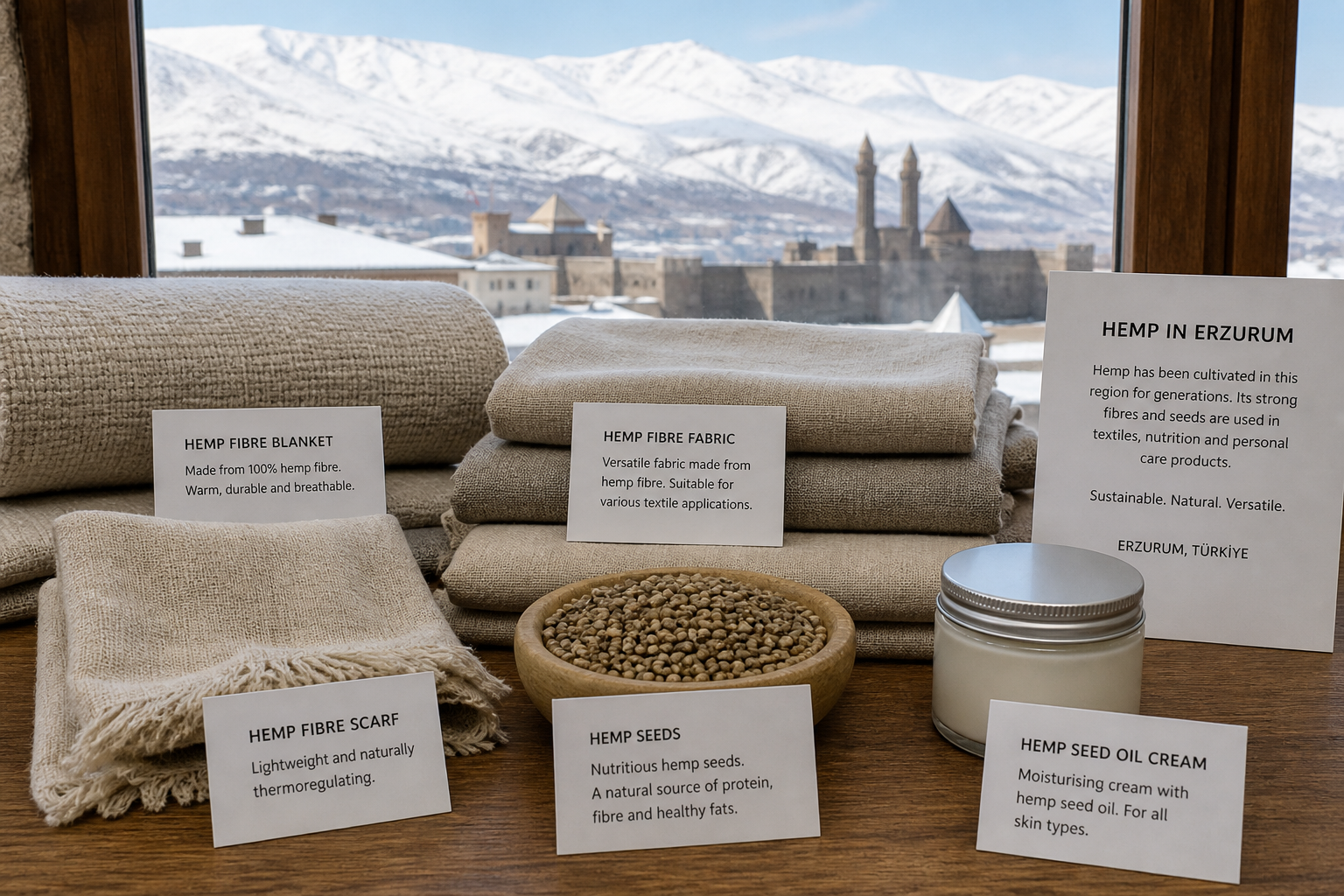
People searching for hemp products in Erzurum may be looking for hempseed foods, clothing, rope, personal-care items, supplements or products marketed with CBD. These categories are not legally interchangeable. In Turkey, the source plant, part of the plant, cannabinoid content, intended use and sales channel can all affect how a product is treated.
Erzurum’s cold, high-altitude climate and strong agricultural identity make natural fibres, food ingredients and locally sourced goods interesting subjects for shoppers. However, a product’s presence in a shop or online listing does not by itself prove that it is compliant. The safest approach is to distinguish ordinary hemp-derived goods from controlled cannabis products, check the label carefully and ask a qualified professional when a product is intended for consumption or medical use.
What counts as hemp in Erzurum?
“Hemp” usually refers to varieties of Cannabis sativa cultivated for fibre, seed or other industrial purposes, rather than cannabis sold for intoxication. The same broad plant family can produce very different commercial products. A hemp-fibre bag, a packet of hulled hemp seeds and an oil advertised as containing cannabinoids should not be evaluated in the same way.
For consumers researching hemp in Erzurum, the most useful first step is to identify the product category:
- Fibre products: fabric, cord, paper, insulation, woven goods and other non-ingestible materials.
- Seed and food products: hulled seeds, flour, protein ingredients or cold-pressed seed oil, subject to applicable food rules and labelling requirements.
- Cosmetics: soaps, creams or shampoos that may contain hemp seed oil as an ingredient.
- Extracts and supplements: oils, capsules, gummies or tinctures making CBD or cannabinoid claims. These require much greater caution.
Hemp seed oil is not the same as CBD oil. Seed oil is generally associated with nutrition and cosmetics, while CBD products are marketed around a cannabinoid extracted from plant material. A label that uses “hemp” prominently may still conceal important differences in ingredients, testing and legal status.
Hemp laws in Erzurum and the Turkish legal framework
There is no separate, city-wide hemp market law that makes Erzurum independent from Turkey’s national framework. Cultivation, processing, food sales, cosmetics, medicines and controlled substances are governed through national rules and the agencies responsible for each product category. Local enforcement and retail practice can still vary, so a current national rule should not be replaced by an assumption based on what a particular seller offers.
Industrial hemp cultivation is not the same as unrestricted cannabis cultivation. Cultivation, approved varieties, permits, planting locations, monitoring and the use of harvested material may be subject to official controls. Anyone considering commercial cultivation or processing should obtain current written guidance before planting, importing seed or purchasing equipment.
For the latest official information on agriculture and plant-production requirements, consult the Turkish Ministry of Agriculture and Forestry. General legislation should also be checked through the Official Turkish legislation database, rather than relying solely on an old social-media post, a foreign website or a seller’s interpretation.
Why product labels matter
Labels can indicate whether a product is a food, cosmetic, textile, supplement or medicinal product. They should also identify the manufacturer or importer, ingredients, batch information, instructions and any required warnings. Missing Turkish labelling, vague company details or dramatic promises are reasons to stop and investigate.
A declaration such as “THC-free” or “legal hemp” should not be accepted without context. Testing methods, detection limits and the exact product batch matter. The legality of an ingredient also does not automatically authorize every form of extraction, concentration, advertising or sale.
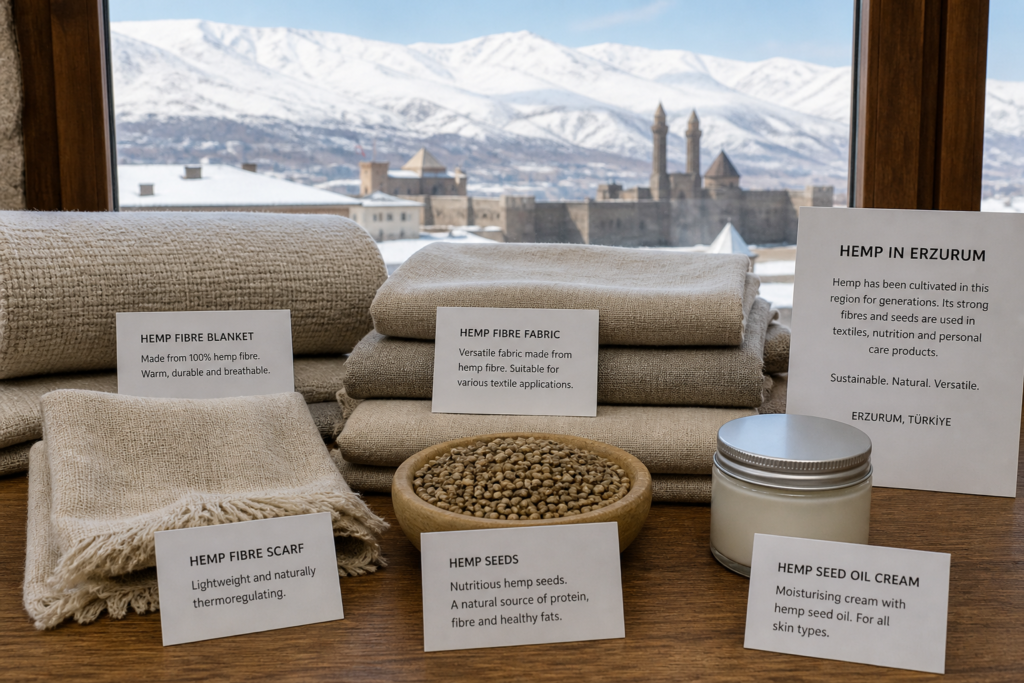
Common hemp products available to shoppers
Hemp seed foods
Hemp seeds may be sold as food ingredients or used in products such as flour and oil. They are valued for their protein, fats and nutty flavour, but they are not an intoxicating form of cannabis. Buyers should still check the ingredient panel, allergen information, storage instructions and the identity of the food business.
Nutrition claims deserve particular care. A product can be a food without being a treatment, and hemp seed products should not be presented as cures for anxiety, pain, cancer or other conditions. If a seller moves from ordinary nutrition language into disease-treatment promises, the product may be operating outside the expectations for a conventional food.
Fibre, clothing and household goods
Hemp fibre can be used in textiles, rope, paper and composite materials. These products generally raise fewer cannabinoid concerns because they are not intended to be eaten or inhaled. Nevertheless, shoppers may want to ask about fibre composition, dyes, finishes, country of origin and return policies.
For readers comparing regional information, the guide to hemp in Bursa and its practical uses provides a useful contrast between industrial applications and more sensitive cannabinoid categories.
Cosmetics and personal-care items
Hemp seed oil may appear in moisturisers, soaps, shampoos and balms. Cosmetic use does not make a product medicinal, and a cosmetic claim should not imply that it can diagnose or treat a disease. Check the full ingredient list and avoid products with no responsible importer, manufacturer or batch information.
CBD products in Erzurum: a separate risk category
CBD products in Erzurum require more scrutiny than ordinary hempseed foods or fibre goods. CBD is a cannabinoid, and products sold as oils, drops, capsules, vapes or gummies may have uncertain composition. They may also contain detectable THC, contaminants or a concentration different from what the package states.
Do not assume that a product is permitted because it is sold online, displayed in a shop or described as “natural.” A foreign label, European branding or laboratory report from another country does not automatically establish that the product can legally be imported or sold in Turkey. Importing a cannabinoid product personally can create additional customs and legal risks.
There are also practical health concerns. CBD may cause drowsiness, gastrointestinal symptoms or interactions with medicines. People who are pregnant, breastfeeding, taking prescription medicines, managing liver disease or preparing for surgery should speak with a doctor or pharmacist before considering a cannabinoid product. Do not replace prescribed treatment with an unverified oil.
For broader regional context, our guide to CBD products in Batman explains why product claims, labelling and national rules matter more than the marketing language on a bottle.
How to assess a seller in Erzurum
A careful purchasing process can reduce avoidable legal and health problems. Whether buying from a market, health shop, cosmetic retailer or online seller, consider the following checks:
- Identify the product precisely. Ask whether it is a seed food, fibre item, cosmetic, extract, supplement or medicine.
- Read the Turkish label. Look for ingredients, net quantity, responsible business information, batch details, expiry information and instructions.
- Check the claims. Avoid sellers promising intoxication, guaranteed medical results, detoxification or a cure for a serious condition.
- Request credible testing where relevant. For cannabinoid products, a vague certificate or an unrelated batch report is not enough.
- Keep purchase records. Save the receipt, packaging, seller details and any laboratory documentation.
- Do not consume an uncertain product. If the contents, origin or legal status cannot be established, returning it is safer than experimenting.
Buying hemp products while visiting Erzurum
Visitors should be especially cautious because travel adds transport, customs and accommodation issues. A product bought legally in another country may not be lawful to bring into Turkey. Airport security and customs officials may assess oils, capsules, plant material and labelled extracts differently from ordinary textiles or sealed foods.
Do not carry loose plant material, unlabelled oils or products described as cannabis, marijuana or THC. Even if a package is marketed as a souvenir or wellness product, its contents and documentation may be decisive. When in doubt, leave the item behind and seek advice from the relevant Turkish authority or a qualified legal professional before travelling.
Health and safety considerations
“Plant-based” does not mean risk-free. Hemp foods can be unsuitable for people with particular allergies or dietary restrictions, and oils may spoil if stored improperly. Cosmetics can irritate sensitive skin. Extracts can be mislabeled or contaminated, especially when sold through informal channels.
Never use a hemp or cannabinoid product as a reason to drive, operate machinery or combine unknown substances. Keep ingestible products away from children and pets. If someone experiences severe drowsiness, confusion, breathing problems, chest pain or an unexpected reaction after taking a product, seek urgent medical help and keep the packaging available for clinicians.
Hemp, cannabis and public terminology
Searches for cannabis laws in Erzurum can return information about recreational cannabis, medical cannabis, industrial hemp and CBD all at once. Those terms describe different issues. Industrial hemp is associated with regulated agricultural and manufacturing uses; cannabis containing controlled cannabinoids raises different legal and health questions; and a medical product must not be confused with a general wellness item.
Similarly, searches for “weed in Erzurum” may lead to informal listings or unsafe offers rather than reliable information. Avoid contacting illegal sellers, arranging delivery or asking strangers to verify a product. Online advertisements can expose buyers to fraud, surveillance, criminal liability and products with unknown contents.
What local businesses should know
Retailers, manufacturers and farmers should establish the product category before investing in stock or production. A business may need different approvals for food, cosmetics, agricultural activity, manufacturing, imports or medicinal products. Packaging and advertising should match the approved category and should not make unsupported health claims.
Businesses considering hemp cultivation or processing in or near Erzurum should obtain current guidance from the competent authorities, document seed origin and permissions, and maintain traceability from raw material to finished product. Legal advice is sensible where a product contains extracts, is intended for ingestion or will cross a border.
A practical checklist for safer choices
- Choose clearly labelled products from identifiable businesses.
- Prefer ordinary fibre, textile, cosmetic or hempseed products when the cannabinoid status is unclear.
- Be cautious with CBD, THC and “full-spectrum” claims.
- Do not rely on a foreign certificate or a seller’s statement that a product is automatically legal.
- Check current Turkish requirements before importing, cultivating, manufacturing or selling.
- Ask a pharmacist or doctor about possible medicine interactions.
- Report suspicious or misleading products through the appropriate official channels.
Conclusion
The safest way to understand hemp-based products in Erzurum is to separate industrial goods, hempseed foods, cosmetics and cannabinoid products instead of treating them as one market. Fibre and seed products may have legitimate everyday uses, but labels, food rules and product claims still matter. CBD and other extracts deserve a much higher level of caution because composition, imports, advertising and controlled-substance rules can create serious risks.
Before buying or selling, confirm the category, inspect the label, check current Turkish sources and avoid unsupported medical claims. When the product is intended for consumption or contains cannabinoids, professional advice is more reliable than a marketplace listing or an informal recommendation.