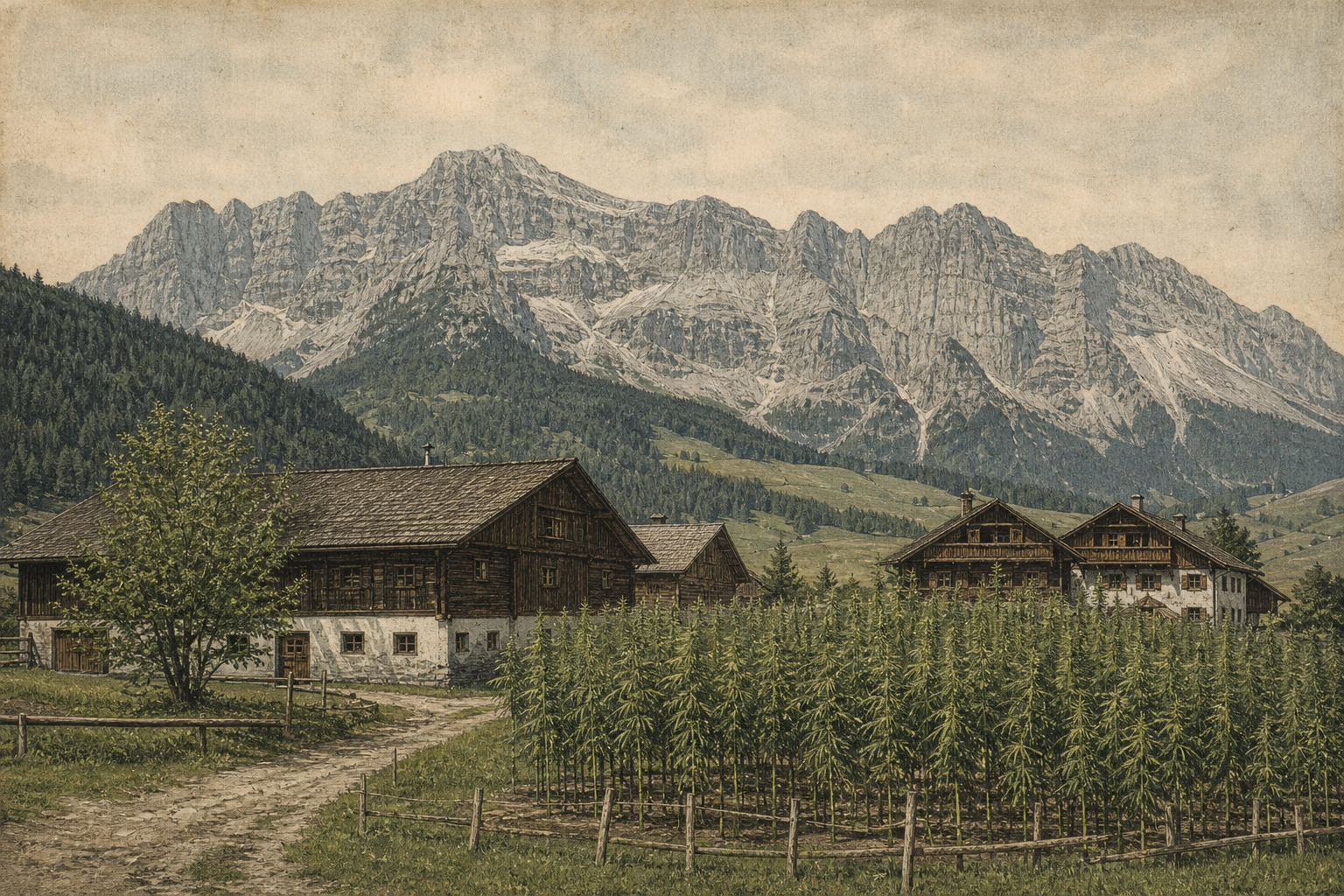
Marijuana history in Saalfelden am Steinernen Meer is best understood through the wider story of hemp, medicine, agriculture and Austrian drug policy. There is no well-established record of Saalfelden developing a distinct cannabis industry or a famous local marijuana tradition. Instead, the town’s story reflects broader changes across Salzburg and Austria: hemp was once valued as a practical crop, cannabis later became associated with international drug control, and modern discussion now includes medical treatment, CBD products, public health and harm reduction.
This distinction matters. A responsible local history should separate documented facts from assumptions. References to weed in Saalfelden am Steinernen Meer today generally concern national law and consumer questions, not a special municipal legal system. The same Austrian rules apply in Saalfelden, while local healthcare providers, retailers, police and courts operate within that national framework.
Early hemp history in the Salzburg region
Long before the modern word “marijuana” became common in Europe, hemp was used as a fibre crop. Across the Alpine region, hemp could provide material for rope, thread, coarse textiles, sacks and other durable goods. Seeds and oil also had practical value. These uses were agricultural and industrial rather than connected to the recreational cannabis culture associated with the word marijuana today.
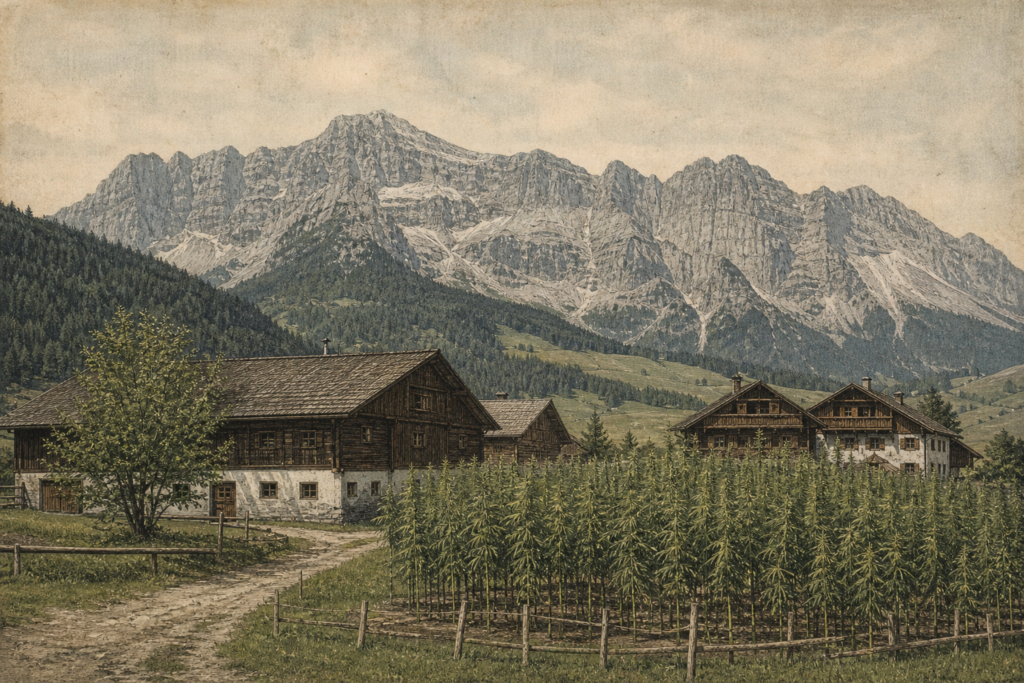
For communities in and around the Pinzgau, including Saalfelden, farming traditions were shaped by altitude, climate, available land and the demands of household production. Hemp cultivation was never equally important in every valley or village, and it would be inaccurate to claim that it dominated Saalfelden’s economy without specific local records. Still, the region belonged to a wider Central European culture in which useful plants were assessed mainly by their fibre, food or medicinal applications.
Why local evidence is limited
Historical sources from smaller Austrian communities often record land ownership, church affairs, taxation, livestock, forestry and trade more consistently than they record ordinary household crops. Hemp may therefore appear indirectly, through references to textiles, cordage or farm production, rather than under a modern cannabis-related label.
That limitation is important when researching Saalfelden cannabis history. A lack of surviving local references does not prove that hemp was never grown, but it also does not justify inventing a continuous marijuana tradition. The safest conclusion is that Saalfelden shared in the practical hemp culture of the broader region when local conditions and household needs made it useful.
From traditional hemp to controlled cannabis
During the nineteenth and twentieth centuries, cannabis was increasingly discussed through medical, colonial and international drug-policy frameworks. At the same time, industrial hemp declined in many places as competing fibres, changing agricultural systems and regulatory restrictions altered its economic role.
The modern distinction between hemp and marijuana can be confusing. Both terms refer to the cannabis plant, but “hemp” is commonly used for low-THC varieties cultivated for fibre, seed or other regulated products. “Marijuana” is generally used in public discussion for cannabis intended to produce intoxicating effects. Legally, however, the decisive questions are the product’s composition, intended use and treatment under Austrian law—not simply the label printed on packaging.
In Austria, cannabis became part of a broader controlled-substances system rather than a separate local policy debate. International agreements influenced national legislation, while Austrian authorities developed rules covering cultivation, possession, supply, trafficking, medicines and industrial hemp. This national development shaped what was possible in Saalfelden just as it did in Salzburg, Innsbruck or Vienna.
Marijuana history in Saalfelden am Steinernen Meer and Austrian law
The current legal context is central to understanding the history of cannabis in Saalfelden. Austria does not operate a general recreational cannabis market. Depending on the substance, quantity, conduct and circumstances, possession, acquisition, production or supply can create legal problems under the Austrian Narcotic Drugs Act and related rules.
The legal response is not always identical in every case. Austrian law provides mechanisms that can take health, personal circumstances and the nature of an offence into account, including possibilities related to treatment or the conditional suspension of proceedings in appropriate situations. These mechanisms should not be confused with legalisation. A person should obtain current advice from an Austrian lawyer or an official authority before relying on a general online summary.
The Austrian Legal Information System is the most reliable starting point for checking the wording of statutes and regulations. It is more dependable than social-media claims that describe Austria as having a fully legal cannabis market or suggest that municipal borders create different possession rules.
What this means locally
For residents and visitors, cannabis laws in Saalfelden am Steinernen Meer are therefore primarily Austrian laws applied in a local setting. Saalfelden does not have an independent cannabis licensing regime that permits recreational sales. Public consumption can also create practical concerns involving nuisance, safety, driving and contact with authorities, even where a person believes the amount involved is small.
Driving after using cannabis presents a separate risk. Intoxication, impairment and the presence of substances can have serious consequences under road-traffic rules. A cautious approach is simple: never drive, cycle on busy roads or operate equipment after using an intoxicating substance, and do not assume that waiting a short period automatically removes legal or safety concerns.
Medical cannabis in Saalfelden am Steinernen Meer
Medical cannabis in Saalfelden am Steinernen Meer should be discussed as a healthcare issue, not as a backdoor recreational market. Austrian patients need to work through qualified medical professionals and the applicable prescription and pharmacy system. Products, indications and reimbursement arrangements can differ, and not every cannabis-derived product is an approved medicine.
Some cannabinoid medicines may be prescribed for particular clinical circumstances, while other products marketed as CBD or “natural cannabis” may not have the same evidence, quality controls or therapeutic status. Patients should tell their doctor about all medicines and supplements they use because cannabis-related substances can interact with treatment and may affect alertness, mood, blood pressure or coordination.
The Austrian Federal Ministry of Social Affairs, Health, Care and Consumer Protection provides the appropriate institutional starting point for general health and medicine information through its official health and social affairs website. A local doctor or pharmacist can then explain what is actually available and appropriate for an individual patient.
CBD, industrial hemp and changing public language
Recent interest in CBD has brought hemp back into public conversation. CBD is not generally associated with the same intoxicating effect as THC, but that does not make every CBD product automatically legal, safe or medically effective. Product composition, labelling, novel-food rules, contamination, marketing claims and THC content can all matter.
Industrial hemp also has a different place in the law from cannabis cultivated for intoxicating use. Varieties and products may be permitted under defined conditions, but cultivation or processing outside those conditions can create legal exposure. Buyers in Saalfelden should be wary of products with unclear ingredients, exaggerated health promises or no traceable producer information.
The growth of interest in hemp products does not represent a return to an undocumented local marijuana tradition. It is better understood as part of a modern European market in which traditional plant uses, wellness branding, food regulation and controlled-substance law overlap.
Public attitudes and safer choices in Saalfelden
Attitudes toward cannabis have changed over time. Earlier discussions often focused on prohibition and criminal justice, while contemporary conversations increasingly include dependence, mental health, youth protection, driving, product potency and access to treatment. These themes are relevant to Saalfelden because a small Alpine town is not isolated from national media, tourism, online retail or wider European policy debates.
Anyone considering cannabis should weigh both legal and health factors. Risks can be greater for adolescents, people with a personal or family history of psychosis, those with cardiovascular concerns, and anyone taking medicines that affect the central nervous system. Edibles can be particularly difficult to judge because effects may take longer to appear and may last longer than expected.
- Do not drive or operate machinery after using intoxicating cannabis.
- Avoid mixing cannabis with alcohol or other sedating substances.
- Keep all cannabis products away from children and pets.
- Do not treat online product claims as a substitute for medical advice.
- Seek professional help if use becomes difficult to control or affects work, relationships or mental health.
Readers interested in the wider regional context can also compare this topic with the background on hemp in Salzburg and the practical discussion of cannabis shops and legal considerations in Hallein. Nearby examples can provide context, but they do not replace Austrian law or establish special rules for Saalfelden.
How to research Saalfelden’s cannabis past responsibly
A stronger local history would combine several types of evidence. Municipal archives, parish records, agricultural publications, historical newspapers and regional museums may reveal information about hemp cultivation, textile work or medicinal plant use. Researchers should check the date, terminology and original meaning of every reference, since historical sources may use “hemp” for fibre production without saying anything about intoxicating cannabis.
It is also useful to distinguish three separate questions: whether hemp was cultivated, whether cannabis was used as medicine, and whether intoxicating marijuana was used socially. Evidence for one does not prove the others. A careful article should identify what is documented, what is plausible in the regional context and what remains unknown.
Conclusion
The history of marijuana in Saalfelden is not a story of a uniquely local cannabis industry. It is a layered regional story: practical hemp traditions may have formed part of the wider Alpine agricultural landscape; twentieth-century regulation placed cannabis within Austria’s controlled-substances framework; and current debate focuses on medical access, CBD, public health and responsible policy.
Understanding cannabis in Saalfelden am Steinernen Meer means avoiding both romantic myths and exaggerated claims. The most useful account connects local history with national law, recognises the limits of surviving evidence and gives residents and visitors clear safety information. That approach keeps the subject historically credible while making it relevant to modern life in the Pinzgau.