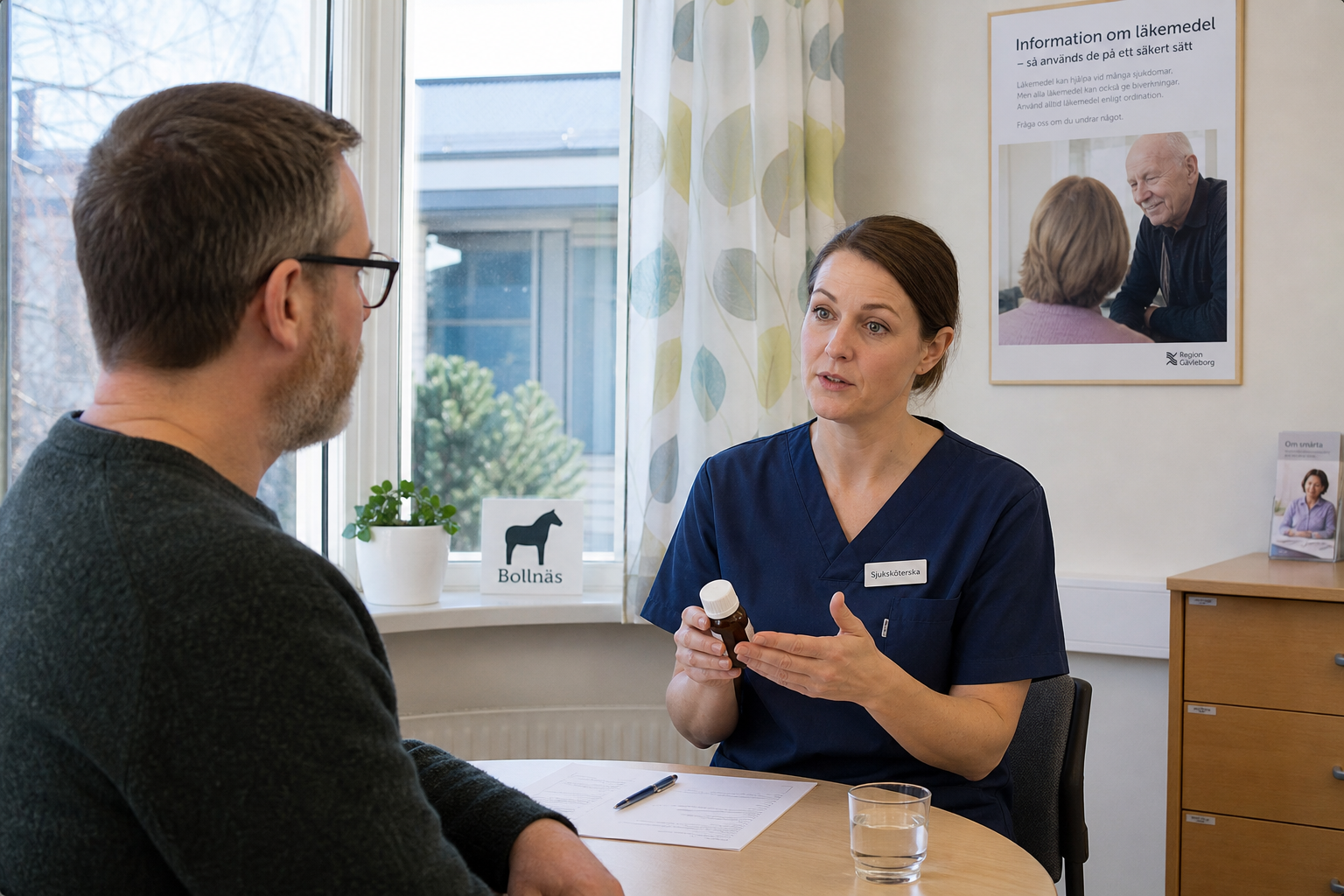
Interest in therapeutic cannabis in Bollnäs often begins with a health problem that has not responded well to standard treatment. Patients may wonder whether cannabis can be prescribed, where a legal medicine can be obtained, and whether products advertised online or discussed informally are lawful. In Sweden, the answer depends on the specific medicine, its ingredients, the prescriber’s assessment and the rules applying to possession, importation and driving.
Bollnäs does not have a separate cannabis system. The same national Swedish rules apply in Bollnäs as elsewhere in the country. This guide explains the practical route for patients, the distinction between prescribed medicines and unregulated products, and the questions worth raising with a healthcare professional. It is general information, not a diagnosis or a substitute for medical advice.
How medical cannabis in Bollnäs fits Swedish healthcare
In Sweden, cannabis-based treatment is handled through the ordinary healthcare and medicines system. A doctor must decide whether a cannabis-based medicine is medically appropriate for a particular patient. A prescription is not an entitlement simply because a person has pain, anxiety, insomnia or another condition that is sometimes discussed in connection with cannabis.
Doctors normally consider the diagnosis, previous treatments, current medicines, mental-health history, substance-use history, age, pregnancy status and risks such as dependence or impaired concentration. They may also consider whether there is reliable evidence for the proposed treatment and whether an authorised medicine or another established therapy is more suitable.
Some cannabis-based medicines are authorised for defined indications, while other prescribing situations may involve a doctor using professional clinical judgment outside the medicine’s main approved indication. That decision remains with the prescriber. A clinic, website or social-media seller cannot make a product medically suitable or legal merely by calling it therapeutic.
What a consultation may cover
- Your symptoms, diagnosis, treatment goals and how long the problem has lasted.
- Medicines and supplements you already use, including sedatives, opioid painkillers and antidepressants.
- Previous reactions to cannabis, alcohol or medicines that affect alertness.
- Personal or family history of psychosis, severe mood disorder, heart disease or substance dependence.
- How treatment would be monitored, including benefits, side effects and whether it should be stopped.
A patient can begin with their usual healthcare contact or another licensed healthcare provider. The provider may decide that a different treatment is safer, request records, arrange tests or refer the patient to a relevant specialist. Availability of a particular product can vary, so a prescription does not always mean that every pharmacy has it immediately in stock.
Cannabis laws in Bollnäs: prescription medicines versus illegal products
Swedish drug law applies in Bollnäs, including the rules on possession, purchase, sale, cultivation, production and transfer. Cannabis bought from an informal source remains illegal even when the buyer intends to use it for pain or another health problem. A seller’s claim that a product is “medical grade” is not proof that it is an authorised medicine.
A lawful prescription should be for a specific medicine supplied through the regulated medicines chain. It does not generally authorise a person to grow cannabis at home, make oils or extracts, share medicine with another patient, or order any cannabis product from an overseas website. Those actions can create separate legal, health and customs risks.
For an official overview of medicines regulation and patient information, consult the Swedish Medical Products Agency. Rules can change, and questions involving a particular product, prescription or border crossing should be checked with the relevant authority or a pharmacist before action is taken.
Why local availability can be confusing
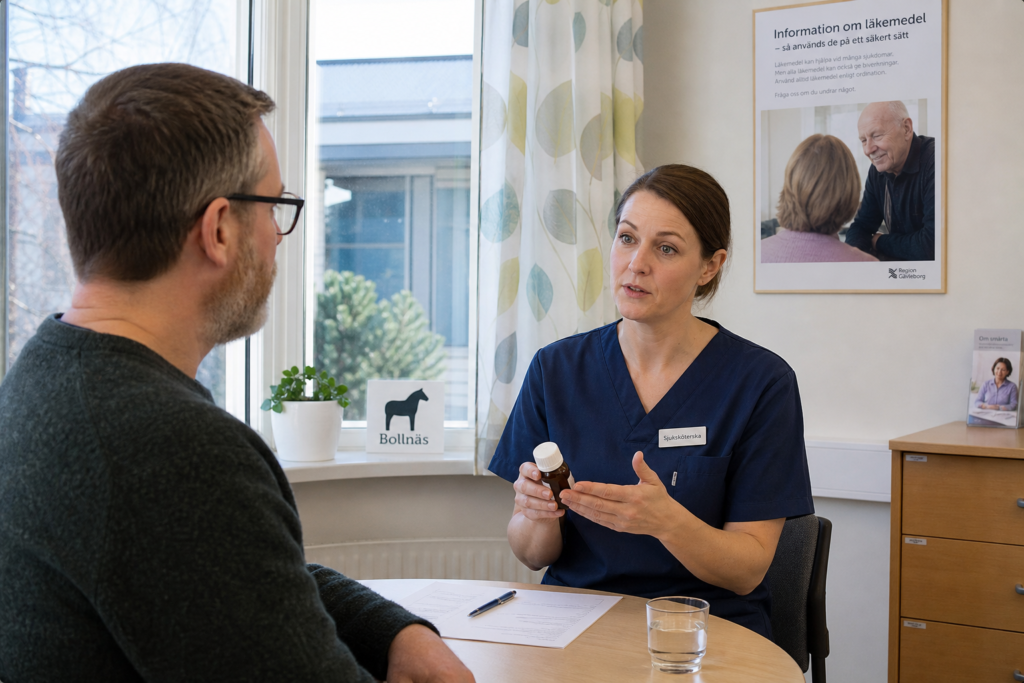
Searches for cannabis in Bollnäs may return dispensaries, CBD shops, private advertisements or overseas retailers. These are not equivalent to a Swedish pharmacy. A product may contain THC, CBD, contaminants or a different concentration from the label. Even a product described as hemp-derived may be subject to medicines, food, cosmetics, consumer-protection or drug rules depending on its composition and claims.
Patients should not use a local advertisement as evidence that a product is approved, tested or appropriate for their condition. Ask a pharmacy to confirm whether the exact product can be dispensed legally against a Swedish prescription. Keep the original packaging and prescription information, and never pass the medicine to someone else.
What treatment access may look like in practice
The practical process usually starts with a healthcare assessment rather than a search for weed in Bollnäs. During the appointment, explain what has been tried, what helped or caused harm, and what outcome you hope to achieve. Bring a current medication list and, where possible, relevant medical records. A symptom diary can help show patterns in pain, sleep, spasms or side effects without overstating the case.
If a doctor considers treatment, ask which product is being discussed, why it is suitable, how it will be taken, and how success will be measured. Clarify the intended dose, titration plan, treatment duration and follow-up appointment. Ask what to do if the medicine is unavailable or causes dizziness, anxiety, excessive sedation, palpitations or other concerning symptoms.
General information about the legal and clinical context can also be compared with our guides to medical cannabis access in Oxie and medicinal marijuana rules in Höör. The localities differ, but the national Swedish framework is the key point for patients in Bollnäs.
Pharmacy, imports and travel
A prescribed medicine should be obtained through an appropriate pharmacy or another authorised supply route. If the medicine is not available locally, a pharmacist may be able to explain ordering options or identify a lawful alternative. Do not assume that a product available in another European country can be imported freely into Sweden.
Travelling with a cannabis-based medicine requires particular care. Keep the medicine in its original labelled packaging, carry supporting prescription documentation, and check the rules of every country on the route. International border rules can be stricter than domestic rules. When in doubt, ask the relevant embassy, customs authority or Swedish medicines authority before travelling.
Safety considerations for therapeutic cannabis
Cannabis-based medicines can cause side effects and may interact with other substances. Common concerns include sleepiness, dizziness, slower reactions, dry mouth, changes in concentration and problems with balance. THC-containing treatment can also cause anxiety, confusion or unpleasant changes in perception, particularly after a dose increase or when combined with alcohol.
Do not change the dose, route of administration or treatment schedule without speaking to the prescriber. Edible or oral products may take longer to produce an effect than inhaled products, which increases the risk of taking too much too soon. Smoking unregulated cannabis also introduces uncertainty about dose and exposes the lungs to smoke; it is not interchangeable with a prescribed pharmaceutical product.
Extra caution is appropriate for people with a history of psychosis or serious mental illness, cardiovascular disease, pregnancy or breastfeeding, and for anyone taking medicines that cause sedation. Older adults may be more vulnerable to falls and confusion. A clinician should weigh individual risks rather than relying on general claims made by sellers or online forums.
When to seek urgent help
Seek urgent medical help for chest pain, severe breathing difficulty, loss of consciousness, a seizure, extreme agitation, severe confusion or thoughts of self-harm. If a child or another person has accidentally taken a cannabis product, contact emergency services or a poison-information service promptly and keep the packaging available.
For general healthcare guidance in Sweden, the public service 1177 Vårdguiden provides information and routes patients to appropriate care. It should not replace emergency services when symptoms are immediately dangerous.
Driving, work and everyday responsibilities
One of the most important discussions before starting treatment concerns driving and safety-sensitive work. THC and other cannabinoids may affect reaction time, attention, coordination and judgment. The fact that a medicine was prescribed does not automatically mean that a person is fit to drive at every time or dose.
Ask the prescriber specifically about driving, operating machinery, working at height and caring for children. Follow the product information and professional advice, and do not drive while impaired. Swedish traffic and drug rules can be complex, particularly when a medicine contains THC, so a patient should not assume that a prescription resolves every legal question.
Alcohol and other sedatives can increase impairment. Combining substances without medical advice can make side effects more severe and make it harder to identify which treatment is causing a problem. Patients should also store medicines securely, keep them in their original packaging and dispose of unused products through a pharmacy rather than selling or sharing them.
Questions to ask before starting treatment
- What diagnosis or symptom is this medicine intended to treat?
- Why is it preferable to the treatments I have already tried?
- Does the product contain THC, CBD or both, and what strength is intended?
- How should I start, increase or reduce the dose?
- Which side effects require a call to the clinic or urgent care?
- Can I drive, work, drink alcohol or take my other medicines?
- How will we assess whether it is helping, and when is the follow-up?
- What are the rules for collecting, storing and travelling with the medicine?
A cautious path for patients in Bollnäs
The safest approach to therapeutic cannabis in Bollnäs is to treat it as a regulated medical decision, not as a local retail product. Start with a licensed healthcare professional, provide a complete medical history, use only a lawful supply route and ask for a clear monitoring plan. Avoid informal cannabis, unverified CBD or THC products, and online promises of guaranteed relief.
Swedish rules apply nationally, but individual treatment decisions are personal. A careful consultation can help determine whether a cannabis-based medicine has a reasonable place in your care, what alternatives exist and how to reduce avoidable legal and health risks.
Conclusion
Therapeutic cannabis in Bollnäs is possible only within Sweden’s medical and legal framework. Patients need an appropriate clinical assessment, a lawful prescription where indicated, pharmacy-based supply and ongoing attention to side effects, interactions, driving and travel. The terms medical cannabis in Bollnäs and cannabis laws in Bollnäs may be useful starting points for research, but neither replaces advice about an individual medicine. Speak with a healthcare professional or pharmacist before beginning, changing or importing any cannabis-based treatment.