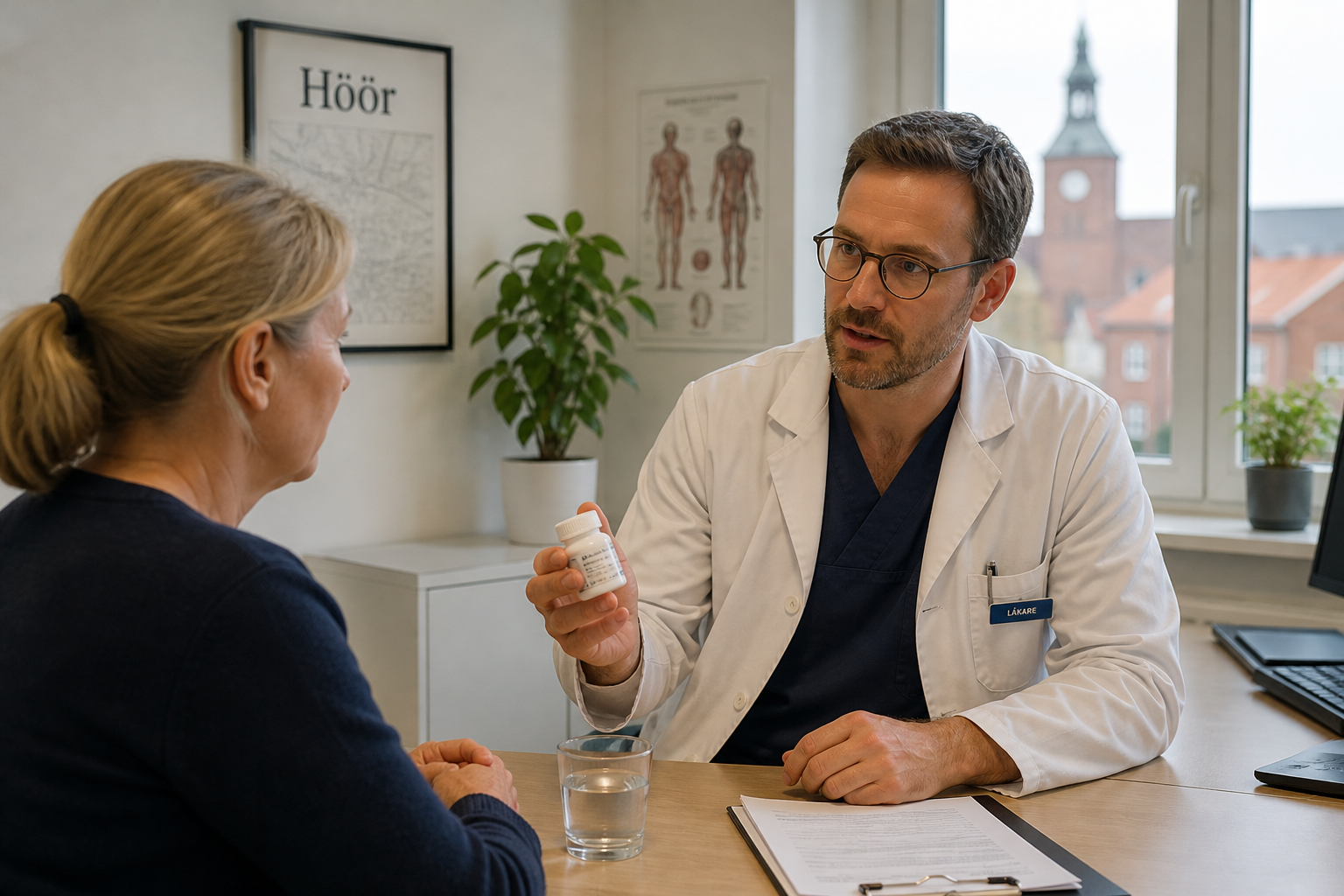
People searching for medicinal marijuana in Höör are usually trying to understand whether cannabis can help with a health condition, how a prescription works, and what is legal in Sweden. The most important point is that Swedish rules are national. Höör does not have a separate local medical-cannabis system, and a person cannot legally buy cannabis from an informal seller simply because it is intended for treatment.
Some cannabis-based medicines may be prescribed in specific clinical circumstances, but access depends on the medicine, diagnosis, evidence, medical assessment and regulatory requirements. This guide explains the practical starting points for patients in Höör without treating unregulated marijuana as a safe or legal substitute for healthcare.
What medicinal marijuana means in Sweden
“Medicinal marijuana” is a broad everyday phrase. In healthcare, the relevant question is normally whether a specific authorised or specially approved medicine containing cannabis-derived substances is suitable for a particular patient. Doctors assess a product, dose, route of administration and indication rather than approving a general right to use plant material.
Some cannabinoid medicines contain tetrahydrocannabinol, cannabidiol or both. They may have different legal classifications, approved uses and side-effect profiles. A cannabis flower product obtained outside the healthcare system is not automatically equivalent to a prescription medicine. Its concentration, contaminants, dose and interaction risks may be unknown.
For an overview of official medicine regulation, consult the Swedish Medical Products Agency. It is the appropriate source for current information about medicines, licensing and regulatory decisions.
Medical cannabis in Höör: how access generally works
For someone seeking medical cannabis in Höör, the usual first step is a consultation with a licensed healthcare professional. Start with a vårdcentral, or contact the relevant specialist service if you already receive care for the condition in question. The clinician can review your symptoms, existing diagnosis, previous treatments and whether a cannabinoid medicine is medically reasonable.
What a clinician may evaluate
- The diagnosis and severity of the condition.
- Which standard treatments have been tried, including their benefits and adverse effects.
- Current medicines, allergies and relevant medical history.
- Previous or current substance-use concerns.
- Mental-health history, including psychosis, severe anxiety or mood instability.
- Pregnancy, breastfeeding and other factors that may change risk.
- Whether a specific cannabis-based medicine has an appropriate indication or requires a special regulatory route.
A patient should not assume that asking about cannabis will end the consultation or guarantee a prescription. The clinician may recommend another treatment, request records, refer to a specialist or explain that the potential harms outweigh the likely benefit.
Prescriptions and dispensing
If a doctor decides that a cannabinoid medicine is appropriate, the prescription and dispensing process must follow Swedish rules. The medicine should be obtained through a legitimate pharmacy or another authorised route specified by the prescriber. Availability can vary between pharmacies, and a pharmacy may need to order a product.
Do not confuse a prescription for a regulated medicine with permission to possess recreational marijuana. A prescription applies to the specific medicine and instructions provided. It does not make illicit cannabis, another person’s medicine or a product bought online lawful.
Cannabis laws in Höör and the rest of Sweden
The phrase cannabis laws in Höör can be misleading because the key rules come from Swedish national law. Cannabis is generally treated as a controlled narcotic substance. Possession, purchase, sale, production and transfer outside an authorised medical or scientific framework can lead to legal consequences.
There is no broad recreational market in Höör, and there is no general local exception for personal cultivation or self-medication. A person who grows plants, shares cannabis with another person or carries cannabis across a border may face separate legal and practical risks. Police, customs and courts—not a local shop or social club—determine how the rules are applied in particular cases.
Even a small quantity can create problems. Possible consequences depend on the circumstances, the substance, the conduct and the person’s history. They may include investigation, seizure, fines or more serious penalties. A medical reason does not by itself legalise an unprescribed product.
For related context, read this guide to cannabis for medical use in Oxie. The local setting differs, but the national Swedish legal framework is the relevant foundation.
What to expect at a healthcare appointment
A productive appointment is based on accurate information rather than a demand for a particular product. Write down when symptoms began, how they affect daily life and which treatments you have tried. Include prescription medicines, over-the-counter products, supplements and any cannabis or CBD use.
Be honest about frequency, amount and effects if you have already used cannabis. This information helps a clinician assess interactions, dependence risk, withdrawal concerns and whether symptoms may be caused or worsened by cannabis. It is better to describe what happened than to rely on informal product labels such as “strong,” “organic” or “medical grade.”
Useful questions to ask
- What diagnosis is being treated, and what evidence supports the proposed medicine?
- Which authorised or regulated product is being considered?
- What benefits should be assessed, and after how long?
- What are the common and serious side effects?
- Could it affect driving, work, concentration or childcare?
- How will the dose be adjusted or stopped?
- What should you do if the medicine is unavailable at a pharmacy?
- Are there interactions with alcohol, sedatives, antidepressants or other medicines?
Safety concerns with cannabis-based medicines
Cannabis-derived medicines can cause drowsiness, dizziness, impaired attention, dry mouth, nausea and changes in mood or perception. Tetrahydrocannabinol-containing products may also affect reaction time and coordination. These effects can be especially important for older adults and people taking other medicines that cause sedation.
Some people may experience anxiety, panic, confusion or paranoia. A personal or family history of psychotic illness may be particularly relevant. Cannabis can also become difficult to stop for some users, especially when it is used frequently or at high doses.
Never change a prescribed dose without speaking to the prescriber. Avoid combining cannabis-based medicines with alcohol or unapproved sedatives unless a healthcare professional has specifically addressed the combination. Do not drive, cycle in traffic or operate machinery when impaired. Swedish driving rules can create serious consequences even when cannabis use was intended to be medical, so ask the prescriber how the medicine may affect driving and follow current official guidance.
For additional general information about reducing harm, see this practical overview of cannabis safety in Sweden. It is not a substitute for advice about your own prescription.
Buying cannabis, CBD and online products
Searching for weed in Höör may lead to sellers offering cannabis, oils, vapes or edibles as “treatment.” A seller’s claim is not proof that a product is legal, accurately labelled or clinically appropriate. Unregulated products may contain more or less active substance than stated, and some may contain contaminants or unexpected cannabinoids.
CBD products also require caution. “CBD” does not automatically mean risk-free, non-intoxicating in every formulation or legal in every situation. Product composition, THC content, intended use and marketing claims matter. A product sold online may also create import, customs and medicine-law issues when shipped to Sweden.
Use a pharmacy and a licensed healthcare route for treatment. If a product causes severe drowsiness, chest symptoms, intense anxiety, hallucinations, repeated vomiting or other alarming effects, seek urgent medical help. In an emergency, call 112 in Sweden.
Travel, driving and carrying prescribed medicine
Residents of Höör may travel within Sweden with prescribed medicine, but it should remain in its original packaging and match the prescription. Carrying cannabis-based medicine across an international border is more complicated. Countries differ in how they classify cannabis, THC and CBD, and transit countries may apply their own rules.
Before travelling, check the current requirements with the relevant embassy, customs authority and Swedish healthcare or medicines authority. Ask whether you need a doctor’s letter, a certificate or advance permission. Do not assume that a Swedish prescription is automatically recognised abroad.
Keep medication secure and do not give it to another person. Sharing a prescribed medicine can be unsafe and may be unlawful even if the recipient reports similar symptoms.
Finding reliable help in Höör
A local healthcare centre is the most practical starting point for assessment. If you already have a specialist, ask whether that service should coordinate the discussion. A pharmacist can explain dispensing questions, while a prescriber must address diagnosis, suitability, dosing and monitoring.
Sweden’s public healthcare information service, 1177 Vårdguiden, can help patients find healthcare contacts and general health guidance. Use official healthcare channels instead of anonymous sellers, social-media recommendations or websites promising guaranteed approval.
If cost, distance or appointment availability is a concern, raise it directly with the healthcare provider. Practical barriers may have legitimate solutions, such as a different clinic, a referral or advice about available treatment options. They do not make unregulated cannabis a lawful replacement for care.
Key points for residents and visitors
- Medical cannabis access is governed mainly by Swedish national law, not by a special Höör policy.
- A prescription applies to a specific regulated medicine, not to cannabis obtained from an informal source.
- Start with a licensed healthcare professional and provide a complete, accurate medical history.
- Do not drive or mix cannabis-based medicines with alcohol or sedatives without professional advice.
- Check border rules before travelling with any cannabis-related medicine.
- Use official healthcare and medicines authorities for current information because products and rules can change.
Conclusion
For people researching cannabis in Höör, the safest route is to treat the issue as a medical and legal question rather than a retail search. A healthcare professional can determine whether a regulated cannabinoid medicine is appropriate, explain alternatives and arrange monitoring where relevant. Unprescribed marijuana, informal “medical” products and online imports do not provide the same safeguards.
The practical rule is simple: seek an assessment through Swedish healthcare, obtain only the medicine that has been prescribed or authorised for you, follow dosing and driving advice, and confirm travel requirements before crossing a border. That approach protects both your health and your legal position.