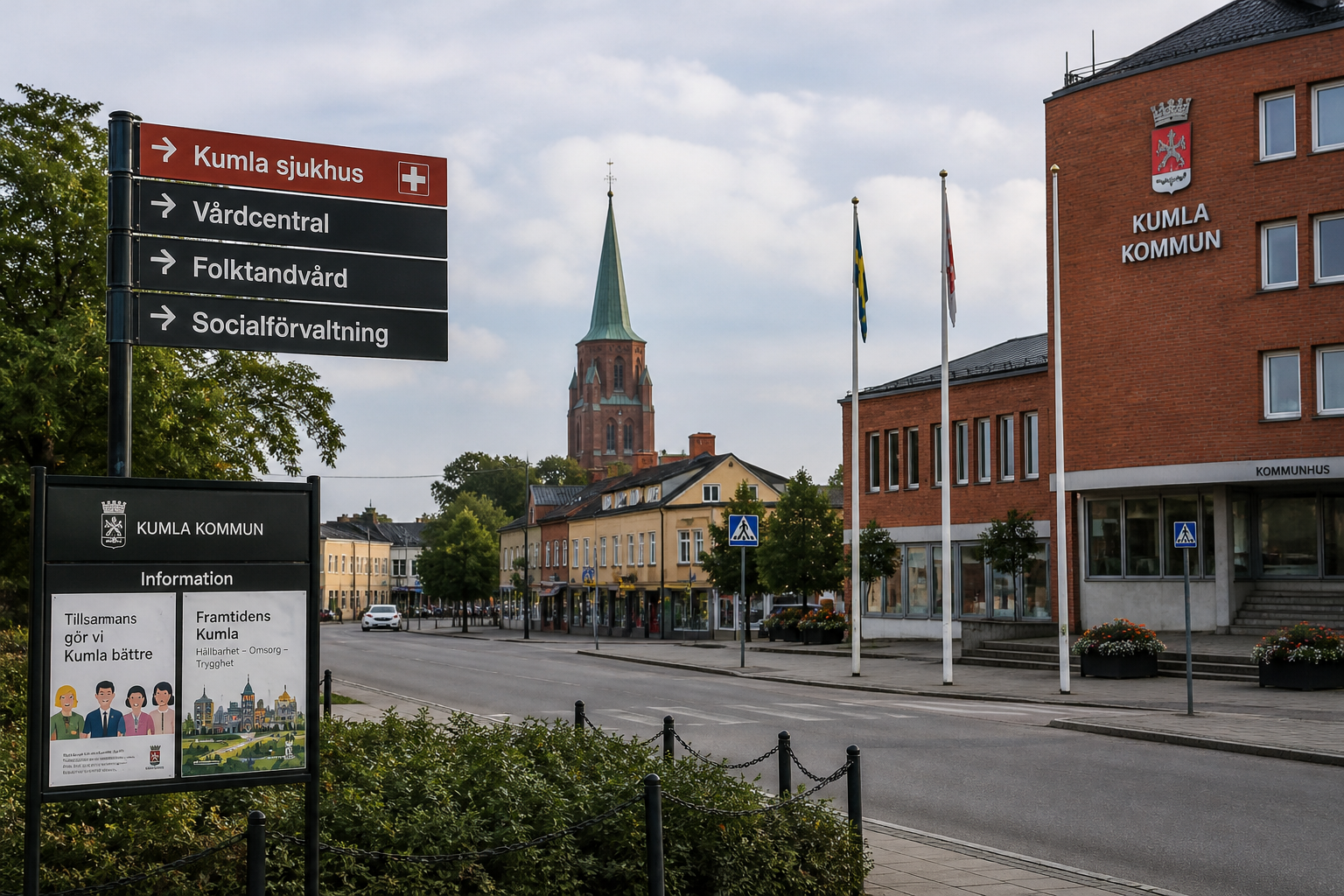
Marijuana legalization in Kumla, Sweden is not a local policy issue in the same way it might be in a country with municipal cannabis markets. Kumla follows Sweden’s national criminal, medical and public-health rules. Recreational cannabis is not legal to buy, sell, possess or use, and the municipality cannot create a legal retail system independently.
This guide explains what that means for residents, visitors and policymakers. It distinguishes current law from political debate, outlines the limited medical framework, and highlights practical risks involving possession, public use, driving and travel. Laws and enforcement practices can change, so anyone facing a specific legal problem should obtain advice from a qualified Swedish lawyer or an appropriate official authority.
Is marijuana legal in Kumla?
No. Cannabis remains controlled under Swedish national law, including in Kumla and Örebro County. The prohibition applies to recreational possession, use, production, sale, transfer and import. A person cannot avoid the national rules by purchasing or consuming cannabis in a private home, renting a property in Kumla or claiming that the amount is for personal use.
The legal position is therefore different from legalization models in some other countries. Sweden has not established a regulated recreational market for cannabis, licensed cannabis shops or a general right for adults to grow plants for personal use.
For a broader comparison of local questions that are actually governed by national rules, see this overview of Swedish cannabis laws and practical risks. The same general legal framework applies in Kumla unless national legislation changes.
What Sweden’s national cannabis law means in Kumla
Swedish municipalities administer many local services, but criminal drug law is set at the national level. Kumla kommun cannot legalize recreational cannabis, issue commercial marijuana licences or authorize a local possession limit that overrides Swedish legislation.
Possession and use
Possessing cannabis can constitute a narcotics offence. Swedish law also treats unlawful use as a criminal matter, meaning that consuming cannabis is not made lawful simply because it was obtained elsewhere or because no sale took place. The seriousness of a case can depend on factors such as the substance, quantity, conduct and evidence available to authorities.
Searches, questioning, seizure and prosecution are matters for the relevant authorities, not the municipality. A minor case may be handled differently from conduct involving supply, repeated offending or larger quantities, but there is no safe assumption that a small amount produces no legal consequences.
Sale, sharing and cultivation
Sale and distribution are particularly serious risks. Sharing cannabis with another person may also create legal exposure even when no money changes hands. Importing cannabis into Sweden, ordering it online or asking someone to bring it across a border can create additional offences.
Growing cannabis plants is not a lawful personal-use option in Kumla. Cultivation can be treated as production, and equipment, scale and intent may affect how authorities assess the conduct. This is one reason advice about growing cannabis under another country’s rules should not be applied to Sweden without checking Swedish law.
Cannabis laws in Kumla and local enforcement
The phrase cannabis laws in Kumla can suggest that the municipality has a separate cannabis code. In practice, the key rules are national. Local police, prosecutors, courts, healthcare providers and social services may each have different roles, but none of those roles creates a recreational exemption.
Local circumstances can still affect how people experience enforcement. Police priorities, reports of suspected drug activity, public-order concerns and cooperation with health or social services may vary over time. That does not change the underlying offence rules. It is also important not to interpret the absence of visible enforcement as permission.
Public consumption can create additional problems. Using cannabis in streets, parks, transport areas, workplaces, schools or other public settings may draw attention and may overlap with public-order, safety or workplace rules. Smoke or odour can also affect other people, but a private setting does not make an otherwise prohibited drug lawful.
Medical cannabis in Kumla
Medical cannabis in Kumla is possible only within Sweden’s regulated healthcare and pharmaceutical system. It is not a broad medical-marijuana programme in which a patient can obtain cannabis from a local dispensary or grow a personal supply.
Some cannabis-based medicines may be prescribed in limited circumstances when a qualified healthcare professional considers them medically appropriate. Treatment decisions depend on the patient’s condition, previous treatment, clinical evidence and the medicine available through the Swedish system. A doctor is not required to prescribe cannabis merely because a patient requests it.
Patients should use prescribed medicines exactly as directed and obtain them through legitimate pharmacy channels. Bringing cannabis or cannabis products into Sweden from another country can create customs and narcotics-law problems, even if the product was legally prescribed or purchased abroad. A foreign prescription should not be assumed to provide an automatic exemption.
The Public Health Agency of Sweden provides official public-health information and is a useful starting point for understanding Sweden’s approach to drugs, prevention and health risks. For an additional discussion of regulated medical access, read this guide to medical cannabis access in Sweden.
What visitors should know about weed in Kumla
Visitors sometimes assume that rules from a home country or a nearby European destination apply in Kumla. They do not. Weed in Kumla is subject to Swedish law from the moment it is brought into the country, acquired, possessed or used.
- Do not bring cannabis, edibles, oils, concentrates or cannabis-containing products across the Swedish border without checking the applicable rules.
- Do not rely on online sellers, informal contacts or claims that a product is legal because it is labelled as hemp or CBD.
- Do not carry cannabis for another person; possession and import risks can still apply.
- Do not drive, cycle or operate machinery after using an intoxicating substance.
- Keep prescribed medicines in their original packaging and verify travel requirements before entering Sweden.
CBD products require particular care. Product composition, THC content, classification and the way a product is marketed can matter. A label or retailer description is not a guarantee that the item is lawful under Swedish rules.
Driving, work and personal consequences
Drug-impaired driving is a serious safety and legal issue. Cannabis can affect reaction time, attention, coordination and judgement. Its effects and detectability can vary, so waiting until a person no longer feels high is not a reliable legal test for fitness to drive.
People who use cannabis may also face consequences outside a criminal case. An incident can affect employment, professional licensing, education, insurance, immigration matters or family circumstances, depending on the facts. Safety-sensitive employers may have their own testing and conduct policies, and workplace rules can be stricter than a person expects.
If police contact you about suspected drug activity, avoid making assumptions based on internet anecdotes from another country. You can ask what is happening, provide accurate identification when required and seek legal advice. Do not obstruct an investigation or dispose of suspected substances in a way that creates further concerns.
Could Kumla legalize marijuana in the future?
Any meaningful legalization of recreational marijuana in Kumla would normally require a change to Swedish national legislation or to the national policy framework. A municipal council could debate harm reduction, prevention, treatment, youth services and public-health priorities, but it could not independently authorize a commercial cannabis market.
Swedish cannabis reform debates may include several different proposals, and these should not be treated as interchangeable:
- Decriminalization: removing or reducing criminal penalties for some conduct without creating a legal commercial market.
- Medical access reform: expanding the availability of cannabis-based medicines through healthcare.
- Regulated legalization: permitting production and sale under a licensing and control system.
- Harm-reduction policy: focusing on prevention, treatment and reduced health or social harms, whether or not possession remains prohibited.
A political proposal, committee review or public discussion does not change the current law. Anyone following reform news should look for enacted legislation and official guidance rather than relying on headlines or social-media claims.
The Swedish Parliament’s official website is the most reliable place to follow parliamentary work and legislative developments. A bill, vote or government inquiry may indicate debate, but it does not itself create a right to possess or use cannabis.
Practical guidance for residents and visitors
The safest legal approach in Kumla is straightforward: do not possess, use, buy, sell, cultivate or import recreational cannabis. If you are concerned about substance use, healthcare and social-support services can provide confidential information and treatment pathways. Seeking health advice is different from seeking permission to use an illegal drug.
- Check official Swedish sources before travelling with any cannabis-related medicine or product.
- Speak with a qualified healthcare professional about symptoms, treatment options and prescribed medicines.
- Do not drive or work in safety-sensitive settings after using an intoxicating substance.
- If contacted by police, remain calm and seek independent legal advice for case-specific questions.
- Do not assume that a product sold legally abroad is legal to possess in Sweden.
Conclusion
Marijuana legalization in Kumla, Sweden has not taken place. Recreational cannabis remains prohibited under national Swedish law, and Kumla cannot create a separate local market or personal-use exemption. Possession, use, supply, cultivation and import may all carry legal consequences, while medical access is limited and regulated through healthcare and pharmaceutical channels.
For residents and visitors, the most useful distinction is between current law and future reform discussion. Until Swedish legislation changes, the practical rule in Kumla is to avoid recreational cannabis and verify any medical or travel-related question with an official authority or qualified professional.