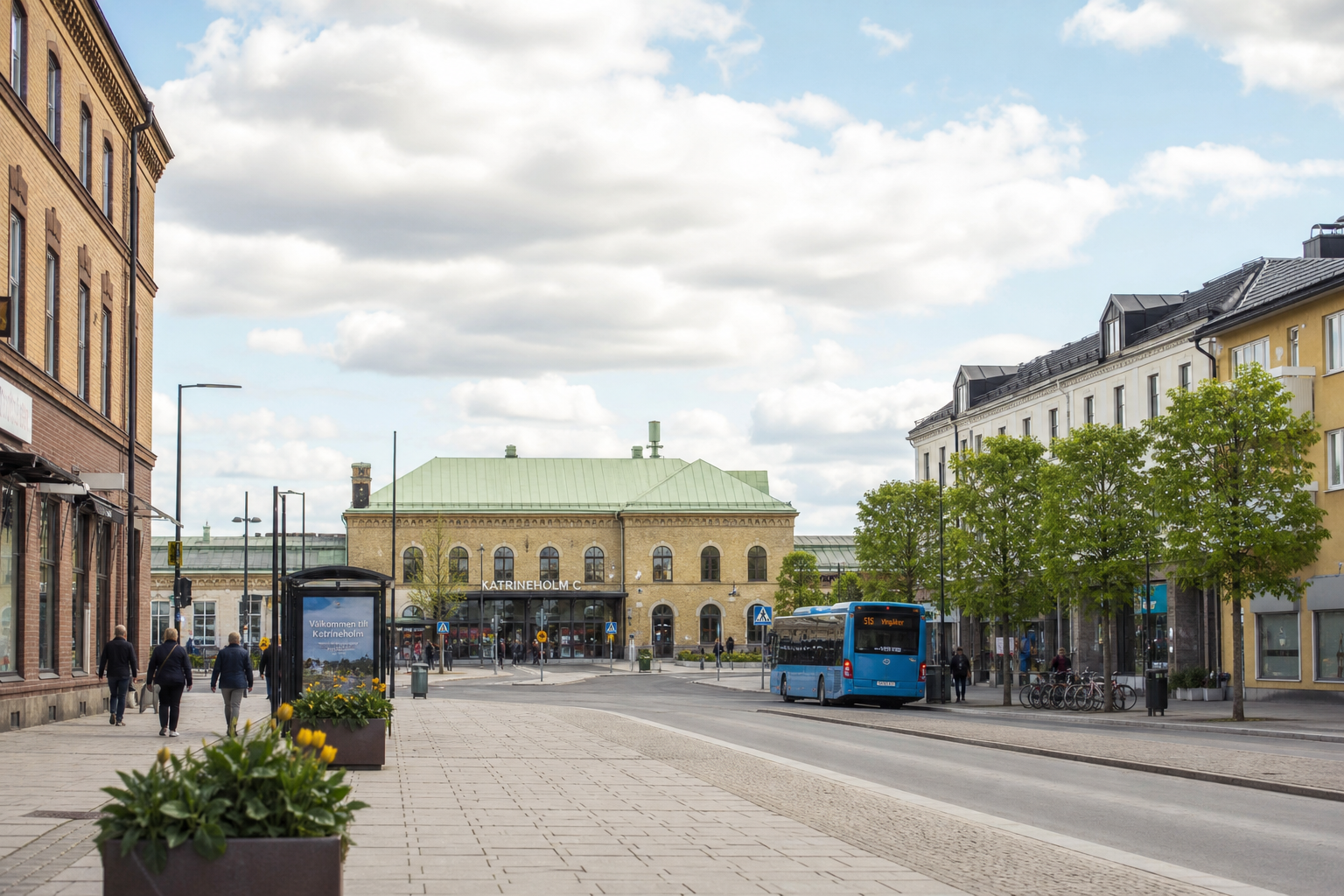
Understanding Cannabis smoking regulations in Katrineholm starts with one important point: Katrineholm follows Sweden’s national drug laws. The municipality does not have a separate cannabis market or a local rule that makes recreational cannabis smoking lawful. Possessing, using, buying, selling or transferring cannabis can create legal consequences, while smoking in a public place can also lead to practical problems involving police, public order and other safety rules.
This guide explains how the rules generally work in Katrineholm, what to know about public spaces, driving, medical treatment and travel, and where to seek help. It is general information rather than personal legal advice. Swedish legislation and official guidance should be checked for the latest position in a specific case.
How cannabis laws in Katrineholm work
Sweden regulates cannabis under national legislation, including the Narcotic Drugs Punishments Act. The law applies in Katrineholm just as it does in Stockholm, Malmö or any other Swedish municipality. Local authorities can manage public spaces and support prevention, but they cannot legalise recreational cannabis possession or smoking.
Swedish law treats cannabis as a narcotic. Recreational use is not a lawful activity, and the legal issue is not limited to selling or carrying large quantities. Possession and personal consumption may also be investigated and prosecuted. The seriousness of a case depends on factors such as the substance, amount, circumstances and any evidence of distribution.
The official text of the Swedish Narcotic Drugs Punishments Act is the best starting point for checking the underlying criminal law. Because legal wording and enforcement practice can change, anyone facing an investigation should obtain advice from a qualified Swedish lawyer rather than relying only on a general article.
What can count as a cannabis offence?
- Possession: Having cannabis with you, at home or in another location may be treated as a narcotics offence.
- Use: Personal consumption is prohibited and may be investigated even when no cannabis remains in a person’s possession.
- Acquisition: Buying or otherwise obtaining cannabis can create a separate legal risk.
- Transfer and supply: Sharing, selling or arranging distribution is generally treated more seriously than a minor personal-use case.
- Import: Bringing cannabis into Sweden can involve customs and narcotics offences.
The label “for personal use” does not make cannabis legal. A small amount may be handled differently from a larger amount or suspected supply, but it is still important not to assume that a small quantity means there are no consequences.
Smoking cannabis in public places in Katrineholm
There is no lawful recreational cannabis-smoking zone in Katrineholm. Smoking near a street, park, railway station, square, restaurant, school or housing area does not avoid the national prohibition. A private setting also does not automatically make possession or use legal.
Public consumption can attract attention because of smell, visible smoke, impaired behaviour or complaints from residents. Police may investigate suspected drug offences, and an individual can also face separate consequences if the conduct creates a disturbance, threatens safety or involves other offences. Local public-order arrangements may regulate behaviour in particular places, but they operate alongside, not instead of, Swedish narcotics law.
It is also important to distinguish cannabis from ordinary tobacco-smoking rules. Sweden has smoke-free requirements covering various public environments, entrances and outdoor areas connected to certain premises. Those rules are not permission to smoke cannabis elsewhere. A cannabis cigarette can raise both drug-law and smoke-free-environment issues.
Residents, visitors and accommodation
Visitors searching for weed in Katrineholm should not assume that informal offers are safe or legal. Purchasing from an unknown person creates risks of prosecution, fraud, contamination, intimidation and exposure to a supply investigation. Sharing cannabis with a friend can also have legal consequences; it is not made lawful by the absence of payment.
Hotels, hostels, rented flats and private homes may have additional contractual or house rules. A landlord or accommodation provider can respond to smoke, damage, nuisance or suspected unlawful conduct under the applicable agreement. A private room is therefore not a reliable way to avoid legal or practical consequences.
Possession, police contact and possible penalties
Potential consequences depend on the facts of the case. Swedish law distinguishes between offences of different seriousness, and courts consider circumstances rather than applying one universal outcome to every incident. A minor offence may be treated differently from conduct involving substantial quantities, repeated offending, organised supply or other aggravating factors.
Possible consequences can include a fine, prosecution, a criminal record and, in more serious cases, imprisonment. For people who are not Swedish citizens, a criminal conviction can also create immigration or future travel complications. These outcomes are not automatic, but they are real risks that should not be minimised.
If police contact you about suspected cannabis use or possession, remain calm and avoid obstructing officers. Do not sign documents you do not understand. Ask whether you are suspected of an offence and request legal assistance if the situation develops into a formal investigation. A lawyer can explain rights, evidence and procedure in the relevant circumstances.
Readers comparing local topics may also find our guide to cannabis possession regulations in Mölnlycke useful for understanding how the same national framework applies in another Swedish municipality.
Driving after cannabis use
Driving after using cannabis presents serious legal and safety risks. Swedish traffic law is strict about driving under the influence of drugs, and the presence of an impairing substance can matter even when a driver does not feel obviously intoxicated. Cannabis can affect attention, reaction time, judgement and coordination, especially when combined with alcohol or other medicines.
Do not drive, cycle in dangerous traffic or operate machinery after using cannabis. The safest approach is to arrange a sober driver or use public transport, a taxi or another suitable option. A person who is prescribed a cannabis-based medicine should follow the prescriber’s instructions and obtain specific advice about driving; a prescription does not automatically remove every traffic-law concern.
An accident can add consequences beyond a drug-driving investigation. Injury, property damage, insurance disputes and allegations of careless or dangerous conduct may all become relevant. Anyone involved in a collision should prioritise immediate safety and follow emergency and reporting requirements.
Medical cannabis in Katrineholm
Medical cannabis in Katrineholm is not the same as recreational cannabis. Some cannabis-based medicines may be prescribed in Sweden for particular medical situations, but access is controlled through the healthcare and medicines system. A person should not treat a product bought online, from an informal seller or abroad as an approved Swedish medicine.
Patients should discuss symptoms and treatment options with a licensed healthcare professional. A clinician can determine whether a cannabis-based medicine is appropriate, explain expected benefits and risks, and advise on interactions with other medicines. Do not stop an existing treatment or change a dose without medical guidance.
Prescription status also matters when travelling. Bringing medicines across borders can involve documentation, quantity limits and destination-country rules. Before travelling, check current information from official authorities and carry medicines in their original packaging with the relevant prescription or medical documentation.
For broader health context, our article on medical cannabis in Lerum explains why a medical indication and lawful prescription are different from recreational possession.
Health and safety considerations
Legal risk is only one reason to avoid smoking cannabis. Smoke can irritate the lungs, and cannabis may cause anxiety, panic, drowsiness, impaired memory or poor coordination. Effects vary with potency, dose, personal tolerance, mental health, age and whether alcohol or other substances are involved.
- Do not mix cannabis with alcohol, sedatives or other drugs.
- Do not drive, swim, climb, use tools or supervise children while impaired.
- Seek urgent help for severe confusion, chest pain, difficulty breathing, loss of consciousness or a serious reaction.
- Keep any prescribed medicine away from children and use it only as directed.
- If use is becoming difficult to control, contact healthcare services rather than relying on an unregulated supplier.
People experiencing repeated anxiety, low mood, sleep problems or dependence should speak with healthcare services. Sweden’s national health-information service, 1177 Vårdguiden, provides healthcare information and routes people toward appropriate care. In an emergency, call 112.
Travel and cannabis in Katrineholm
Katrineholm is connected by rail and road, so visitors may be tempted to carry cannabis to or from the town. That creates additional risk. Moving cannabis across a border can trigger customs action, and carrying it on public transport can still amount to possession even when the journey is entirely within Sweden.
Never assume that a product is legal because it is sold online, described as CBD or labelled as hemp. Products can differ in THC content, classification and documentation. Rules for medicines, food supplements and hemp products are not interchangeable with rules for recreational cannabis. When in doubt, do not carry the product until its legal status has been confirmed through a reliable official source.
Practical takeaways for Katrineholm
- Recreational cannabis smoking is not legal in Katrineholm or elsewhere in Sweden.
- Do not possess, buy, share, sell or transport cannabis on the assumption that a small amount is risk-free.
- Public smoking can create additional complaints, public-order issues and smoke-free-environment concerns.
- Never drive or operate machinery after using cannabis.
- Use medical cannabis only through lawful medical channels and follow professional advice.
- Seek a Swedish lawyer if police have opened an investigation or you have received legal documents.
- Contact healthcare services for concerns about dependence, mental health or adverse effects.
Conclusion
The main rule is straightforward: recreational cannabis smoking is prohibited in Katrineholm because Swedish national law prohibits cannabis use and possession. A park, private rental, hotel room or car does not create a general exception. Public consumption may bring added practical problems, while driving after use and carrying cannabis across borders can significantly increase the risks.
For reliable decisions, separate recreational use from prescribed medical treatment, avoid unregulated products and check current official guidance when circumstances are unusual. If you are already involved in a police or court matter, prompt advice from a qualified Swedish lawyer is more appropriate than relying on general online information.