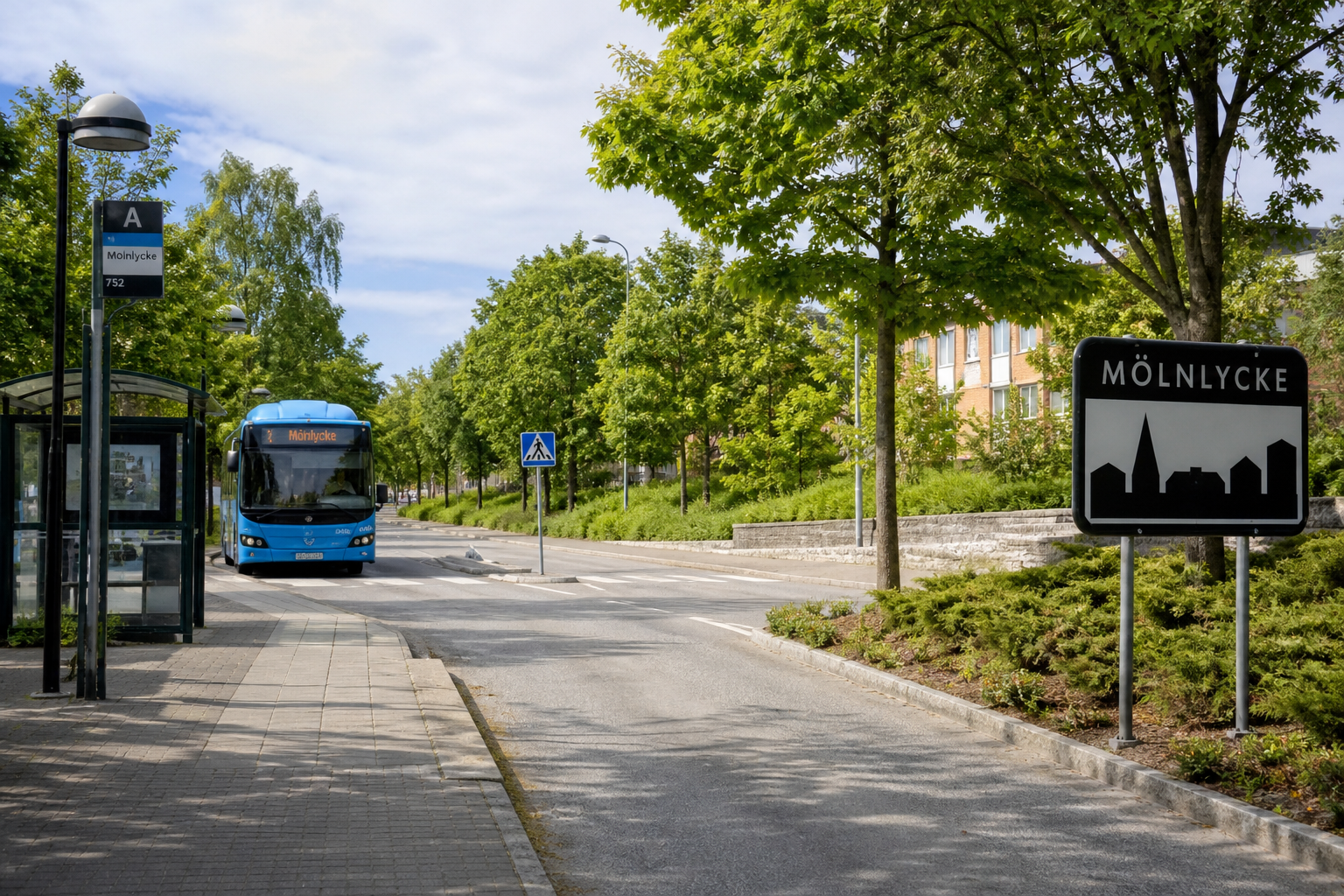
Understanding cannabis possession regulations in Mölnlycke starts with an important point: Mölnlycke does not have a separate local cannabis code. As part of Härryda Municipality in Västra Götaland County, it is governed by Sweden’s national criminal and public-health framework. Possessing cannabis without a lawful medical basis can therefore lead to a police investigation, seizure of the substance, a fine or more serious criminal consequences.
This guide explains the general rules, how authorities may assess a case, what medical access does and does not permit, and what to do if you are stopped or contacted by police. It is general information rather than individual legal advice. The applicable law and case facts always take priority.
Cannabis laws in Mölnlycke: the national rule
Swedish law classifies cannabis and cannabis preparations as narcotic substances. The Swedish Narcotic Drugs Punishments Act makes several activities criminal, including unlawful possession, acquisition, transfer, production and use. The rule applies in Mölnlycke just as it does elsewhere in Sweden.
Possession generally means having a narcotic substance under your control. That can include cannabis kept in a pocket, bag, vehicle, home or another place where you exercise control over it. A person does not necessarily avoid responsibility because the cannabis belongs to someone else. The circumstances may still lead authorities to examine whether the person knew about it and had control over it.
Swedish law also treats personal use as a criminal matter. As a result, a person may face consequences even if the amount is small and there is no evidence of selling or supplying cannabis. Local terminology such as “weed in Mölnlycke” does not change its legal classification.
How possession cases are assessed
The legal outcome depends on the evidence and the overall circumstances, not simply on where the cannabis was found. Investigators and prosecutors may consider the type and quantity of substance, its packaging, messages or other evidence, whether there are indications of distribution, and whether the person admits or denies possession.
Minor possession cases
A case involving a limited quantity and circumstances suggesting personal use may be treated as a minor narcotics offence. A minor offence can still result in a criminal record and other practical consequences. Swedish penalties for a minor narcotics offence can include day-fines and, under the statute, imprisonment for up to six months.
A day-fine is not the same as a fixed parking or administrative charge. The number of day-fines and the amount of each day-fine are determined under the circumstances and the person’s financial situation. The final result may also depend on whether the matter is resolved through a summary procedure or proceeds further.
More serious possession allegations
Possession connected to supply, repeated offending, larger quantities or other aggravating circumstances can be treated more seriously. The potential penalties are substantially higher where prosecutors allege transfer, dealing or a serious narcotics offence. It is unsafe to assume that a quantity-based rule gives a guaranteed result: Swedish courts assess the complete case.
For this reason, online discussions about a fixed “safe amount” are unreliable. A small amount does not make cannabis lawful, and a larger or commercially packaged amount may raise questions beyond simple personal possession. Anyone facing questioning, a search or a charge should obtain advice from a Swedish criminal defence lawyer.
What may happen after police find cannabis in Mölnlycke?
Police may seize suspected cannabis and document where and how it was found. The substance may be submitted for forensic analysis, while officers collect statements and other evidence. Depending on the circumstances, a person may be questioned at the scene or later at a police station.
Police may also investigate suspected use. Sweden’s drug laws cover use as well as possession, so a suspected possession case can develop into questions about consumption. Testing and investigative measures must be handled under applicable Swedish procedure, and the precise steps depend on the facts and the authority’s assessment.
If you are questioned, remain calm and avoid guessing, speculating or signing something you do not understand. You can ask what the investigation concerns and request legal assistance. Do not obstruct officers or attempt to hide, destroy or transfer anything. A lawyer can explain your procedural position and help you respond appropriately.
- Ask whether you are being treated as a suspect and what offence is being investigated.
- Request an interpreter if you do not understand Swedish well enough for legal proceedings.
- Ask to contact a defence lawyer, especially if police suspect more than a minor personal-possession offence.
- Keep documents relating to any lawful prescription or treatment available, but do not assume they automatically resolve a possession issue.
- Do not drive after using cannabis or agree to carry cannabis for another person.
Medical cannabis in Mölnlycke
Medical access is limited and does not create a general right to possess recreational cannabis. A lawful prescription or treatment arrangement must be genuine, current and connected to the product in the person’s possession. The exact medicine, formulation, dosage and prescribing arrangements matter.
Patients should obtain cannabis-based medicines through the Swedish healthcare and pharmacy system and follow the prescription precisely. Cannabis obtained from an unregulated seller is not made lawful by saying it is for pain, sleep, anxiety or another health concern. Nor does a general recommendation from a foreign website substitute for a Swedish prescription or other legally valid authorization.
People researching medical cannabis in Mölnlycke should begin with a licensed healthcare provider. Discuss symptoms, current medicines, previous treatments and possible risks honestly. A clinician can determine whether a cannabis-based medicine is medically appropriate and explain alternatives. Do not share prescribed medicine or give it to another person.
Travellers should take extra care. A prescription from another country may not automatically authorize bringing a controlled medicine into Sweden. Travelling with medication can involve documentation, quantity limits and border rules, so check current official guidance before departure rather than relying on a social-media post.
For broader context on treatment pathways, see our guide to medical cannabis access in nearby Lerum. The legal principles remain national, although healthcare arrangements and individual clinical decisions are personal to each patient.
Public places, cars and shared accommodation
There is no special possession exemption for a park, street, railway area, festival, workplace or private party in Mölnlycke. Having cannabis in a public place can make the situation more visible and may create additional concerns if there is suspected use, disorder, driving or supply. Public consumption can also affect other legal assessments even though the core possession offence remains national.
Keeping cannabis in a vehicle is especially risky. Driving under the influence of drugs can lead to a separate traffic offence, and police may investigate impairment or the presence of a controlled substance. Never drive after using cannabis. If a person is a passenger, the substance may still raise questions about ownership and control, so carrying cannabis for someone else is not a safe workaround.
Shared housing can create difficult factual questions. Cannabis found in a communal room does not automatically prove that every resident possessed it, but police may examine access, ownership, messages and statements. Do not move suspected drugs to another room or dispose of them in an attempt to distance yourself from them.
For a related explanation of public-use issues elsewhere in the region, read our overview of public cannabis consumption rules in Kungälv. It should not be read as a local exception to Sweden’s national narcotics law.
Possible consequences beyond a fine
A cannabis possession case can affect more than the immediate penalty. A criminal record may create difficulties with some jobs, security-sensitive roles, licences, immigration matters or travel. The practical effect depends on the offence, the decision reached and the rules of the country or organization involved.
Young people may encounter additional welfare and safeguarding responses. Authorities can involve social services where there are concerns about substance use, health or a minor’s circumstances. That is not the same as a local Mölnlycke legalization or decriminalization policy; it reflects the wider Swedish system for handling health and welfare concerns.
Penalties may become more severe if cannabis is linked to sale, delivery, importation, organized activity or repeated offending. A person who is asked to store, transport or sell cannabis for another person should understand that participation can expose them to allegations more serious than simple possession.
How to reduce legal and health risks
The safest legal choice is not to possess or use non-prescribed cannabis. If you are already involved in a police matter, avoid discussing the details publicly or with people connected to the investigation. Preserve relevant documents and communications, do not contact potential witnesses to coordinate stories, and seek independent legal advice.
From a health perspective, unregulated cannabis has uncertain strength and may be contaminated or inaccurately labelled. Cannabis can impair attention, reaction time and judgment. It may also interact with medicines or worsen mental-health symptoms for some people. If you feel unwell after using a substance, seek urgent medical help; in an emergency, call 112 in Sweden.
If you are looking for cannabis in Mölnlycke because of pain, sleep problems or another condition, speak with healthcare services rather than an illicit seller. If the concern is dependence or difficulty stopping, ask for confidential support from healthcare or addiction services. Seeking help does not turn possession into a lawful activity, but early support can reduce health and social harms.
Frequently misunderstood points
- “It is only a small amount.” A small amount may affect how a case is classified, but it does not make possession legal.
- “It was not mine.” Ownership is not the only issue. Authorities may examine knowledge, access and control.
- “It is legal in another country.” Foreign rules do not override Swedish law while you are in Mölnlycke.
- “CBD is always legal.” Products marketed as CBD can raise separate questions about THC content, classification, medicines and food or consumer rules. Check the specific product and current official guidance.
- “A prescription allows any cannabis product.” Medical authorization applies to the prescribed medicine and its lawful use, not automatically to cannabis bought elsewhere.
Conclusion
Cannabis possession regulations in Mölnlycke are national Swedish rules, not municipal rules. Unlawful possession and use can lead to investigation, seizure, day-fines or more serious penalties, while alleged supply or aggravated circumstances carry greater risks. A medical prescription may support lawful access only when it applies to the specific medicine and circumstances.
Whether you call it weed in Mölnlycke or cannabis, the practical advice is the same: do not assume a small amount is permitted, do not drive after use, do not carry substances for someone else and seek qualified legal or healthcare support when needed. For an additional comparison of possession issues in Sweden, see our guide to marijuana possession laws in Märsta.
For official updates, consult the current wording of Swedish legislation and information from Swedish authorities. Legal outcomes depend on evidence, procedure and individual facts.