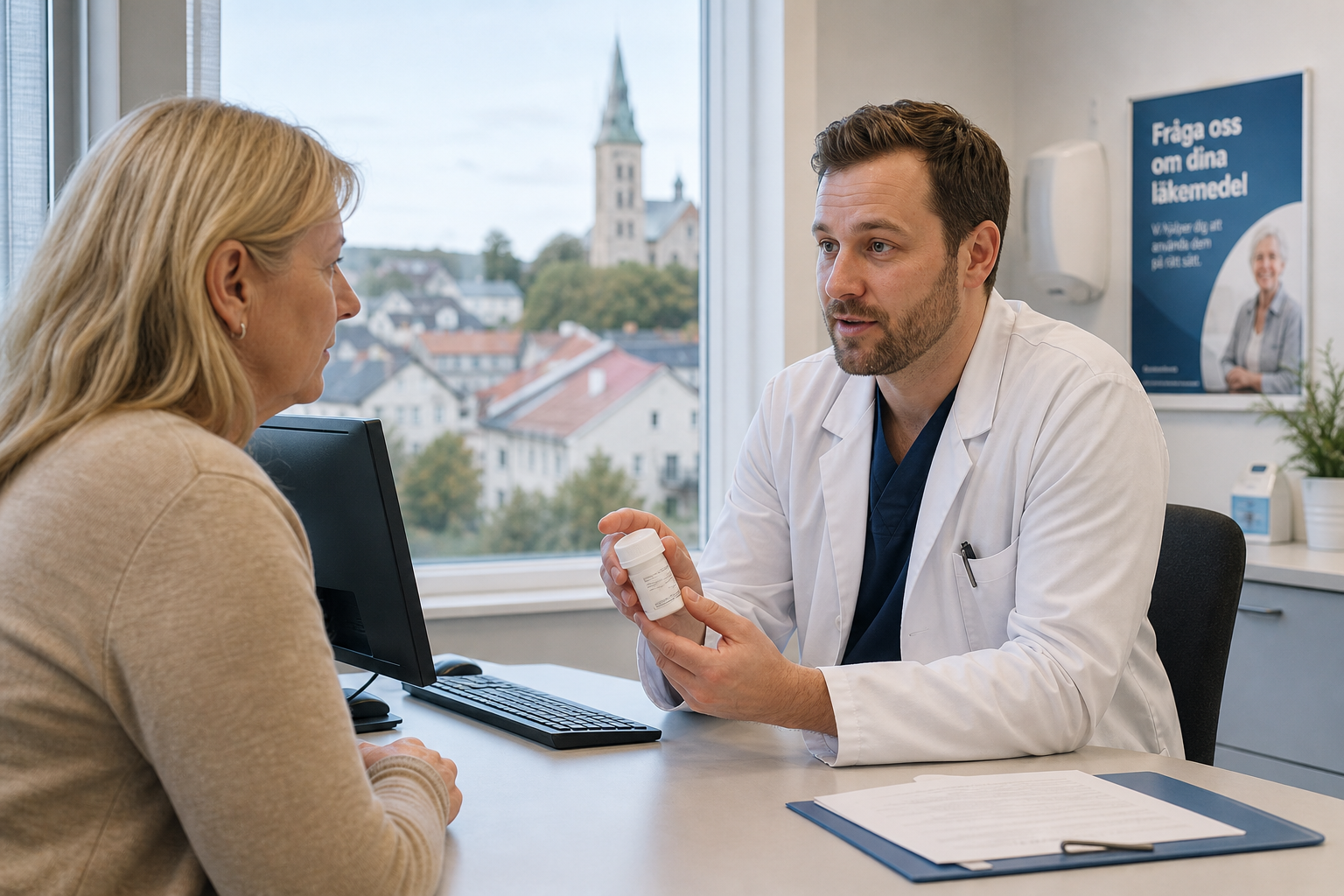
Questions about Medical marijuana in Alingsås are governed primarily by Swedish national law, not by separate municipal rules. For a patient in Alingsås, the practical route is through a licensed healthcare provider who can assess symptoms, previous treatments, possible risks and whether an approved cannabis-based medicine is medically appropriate. Sweden does not operate a general medical-marijuana card system or a legal dispensary model.
This guide explains what patients should know about medical cannabis in Alingsås, how prescriptions differ from unregulated products, and why consultation with healthcare professionals matters. It is general information rather than a diagnosis or a substitute for advice from a doctor or pharmacist.
What medical cannabis means in Alingsås
In everyday conversation, people may use “medical marijuana” to describe dried cannabis, oils, capsules or pharmaceutical medicines. These products are not interchangeable. A cannabis-based medicine is manufactured and supplied under pharmaceutical rules, while an unregulated product purchased online or from an informal seller may have uncertain strength, contents, contamination risks and legal status.
In Alingsås, a patient normally begins with ordinary healthcare: a primary-care clinic, a specialist service or another appropriate provider. The clinician considers the diagnosed condition, treatments already tried, expected benefits, side effects and the patient’s wider medical history. A referral may be appropriate when specialist assessment is needed.
The fact that a product contains cannabidiol (CBD), tetrahydrocannabinol (THC) or another cannabis compound does not automatically make it legal, effective or suitable for self-treatment. Product classification can depend on its ingredients, concentration, presentation and intended use.
How access to prescription cannabis works in Sweden
Assessment comes before prescribing
Swedish clinicians do not prescribe cannabis simply because a patient requests it. A doctor must make an individual medical assessment and follow applicable prescribing, safety and professional requirements. The discussion may include pain, muscle spasticity, epilepsy, nausea, sleep, mental health, cardiovascular history, current medicines and any history of substance-use problems.
Patients should bring a clear record of symptoms and previous treatments. Useful information includes diagnoses, current prescriptions, over-the-counter medicines, earlier therapies, side effects and how symptoms affect daily activities. Accurate information helps the clinician distinguish a possible treatment option from a product that could create avoidable harm.
Approved medicines and other prescribing situations
Some cannabis-based medicines are authorised for specific indications. Sativex, for example, is a prescription medicine used in particular circumstances for adults with moderate to severe spasticity related to multiple sclerosis when other treatments have not provided sufficient benefit. Other cannabinoid medicines may be authorised for specific forms of epilepsy or other narrowly defined uses. Availability and prescribing criteria can change, so patients should confirm current information with a prescriber or pharmacist.
A doctor may also consider a medicine outside its standard indication where professional rules allow and the clinical reasoning supports it. That does not create an automatic entitlement to treatment, and a pharmacy may need to handle additional requirements. The prescriber should explain the proposed medicine, expected benefit, uncertainties, monitoring and alternatives.
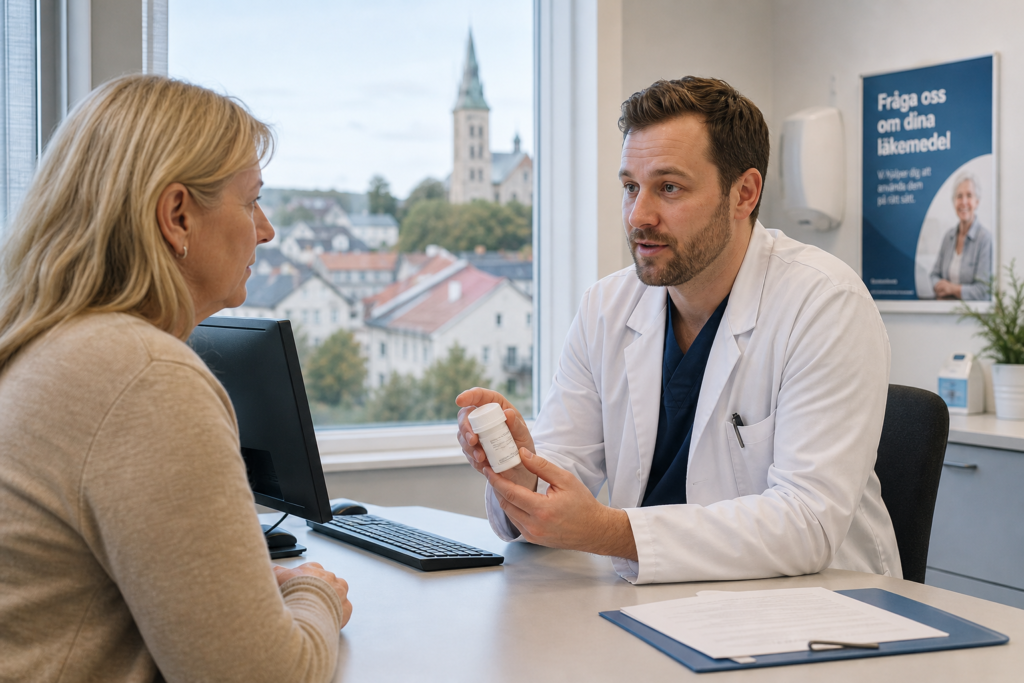
The Swedish Medical Products Agency provides regulatory information about medicines and pharmaceutical safety. Patients can consult the official Swedish Medical Products Agency website and ask a healthcare professional to clarify how current rules apply to a particular prescription.
Cannabis laws in Alingsås: what patients need to understand
The same Swedish rules apply in Alingsås as elsewhere in the country. Cannabis containing controlled substances is not lawful to possess, buy, sell, grow or share merely because someone believes it helps with a medical condition. A prescription for a particular pharmaceutical product does not provide general permission to obtain other cannabis products.
That distinction is important when people search online for “cannabis in Alingsås” or “weed in Alingsås.” Informal sellers, social-media contacts and websites promising quick delivery are not substitutes for medical assessment. Purchasing from such sources can expose a person to criminal, health and financial risks. Packaging may be misleading, and the contents may differ from the advertised product.
For broader context on how Swedish cannabis rules affect individuals, see this related guide to medical cannabis access in nearby Lerum. The legal framework is national, although healthcare pathways and appointment availability may differ between local services.
What a medical consultation may cover
A responsible consultation is more than a conversation about obtaining cannabis. The clinician may ask:
- What condition or symptoms need treatment?
- Which medicines and non-drug treatments have already been tried?
- Have any treatments caused serious side effects or failed to help?
- Could THC worsen anxiety, psychosis risk, concentration or memory?
- Are there heart, liver, pregnancy, breastfeeding or interaction concerns?
- How will effectiveness and adverse effects be monitored?
- Could the medicine affect driving, work or other safety-sensitive activities?
Patients should be open about alcohol, recreational drugs and all supplements. This is not about judgement; it helps the clinician assess interactions and safety. A cannabis medicine may cause sleepiness, dizziness, impaired attention, changes in mood or other adverse effects. THC-containing products can be particularly unsuitable for some people.
Buying and using cannabis medicine safely
If a clinician prescribes a cannabis-based medicine, obtain it through a legitimate pharmacy and use it exactly as directed. Do not change the dose, combine it with alcohol or share it with another person. Keep the medicine in its original packaging and store it as instructed, particularly if children or other household members could access it.
Do not assume that a higher dose will produce better relief. Some effects, including sedation or impaired coordination, can appear before any meaningful improvement in symptoms. A prescriber may recommend gradual dose changes and a follow-up appointment so that benefits and side effects can be reviewed.
Be cautious with CBD products marketed as wellness goods. A product sold as CBD may contain measurable THC or may not meet the quality standards expected of a prescription medicine. “Natural” does not mean risk-free, and CBD can interact with medicines. Ask a pharmacist before combining it with prescribed treatment.
Driving, employment and daily activities
Patients should not drive, cycle in traffic or operate machinery if a medicine makes them drowsy, dizzy, slowed or less alert. The fact that a product was prescribed does not remove the need to follow Swedish traffic and workplace-safety rules. A person can feel accustomed to a medicine and still have reduced reaction time or concentration.
Ask the prescriber or pharmacist when treatment may affect driving and what documentation should be kept. Employers may also have separate safety policies, especially for jobs involving vehicles, machinery, heights or responsibility for other people. Never use someone else’s medicine before driving or working.
Travelling with prescribed cannabis medicine
Travel requires extra planning because a prescription valid in Sweden does not guarantee that a medicine may be carried into another country. Rules can depend on whether the medicine contains a controlled substance, the destination, the amount, the travel period and the documents required. Some journeys may require a certificate or advance approval.
Before travelling from Alingsås, contact the prescribing clinic, pharmacy and the relevant authorities for the destination country. Carry medicine in its original labelled packaging and bring only the amount reasonably required for the journey. Do not place unlabelled oils, loose capsules or dried material in luggage. Crossing a border without the correct documentation can create serious legal problems even when the medicine was prescribed in Sweden.
Costs, follow-up and practical questions
Costs depend on the medicine, prescription circumstances, reimbursement status and whether specialist care is involved. A pharmacist can explain the price and how the Swedish reimbursement system applies to the specific prescription. Patients should not assume that every cannabis-based medicine is subsidised in the same way.
Follow-up is important because treatment should be continued only when the expected benefit justifies the risks. Keep a simple symptom diary covering dose timing, relief, sleep, alertness and side effects. This gives the prescriber useful information and can help identify whether a medicine is helping, doing little or causing problems.
Seek urgent medical help for severe confusion, chest pain, breathing difficulty, fainting, a severe allergic reaction or other alarming symptoms. For less urgent concerns, contact the prescriber or pharmacist rather than stopping or changing treatment without advice. General healthcare guidance is also available through Sweden’s official 1177 healthcare information service.
Questions to ask a doctor or pharmacist
- What exact medicine is being considered, and what is its approved or intended use?
- What benefit is realistic, and how will it be measured?
- What are the most important side effects and interactions?
- Will the medicine affect driving, work or childcare?
- How should the dose be started, adjusted and reviewed?
- What should be done if the medicine does not help?
- What documentation is needed for travel?
- How should the medicine be stored and disposed of?
Conclusion
Medical marijuana in Alingsås is not obtained through a local dispensary system. Access depends on Swedish national rules, an individual medical assessment and the lawful supply of an appropriate pharmaceutical product. Patients should distinguish prescription medicines from unregulated cannabis and CBD products, use treatment only as directed, and seek advice about driving, interactions, costs and international travel.
The safest next step is to discuss symptoms and previous treatments with a licensed healthcare professional. A careful assessment can identify evidence-based options, explain uncertainty and support follow-up if a cannabis-based medicine is considered appropriate.