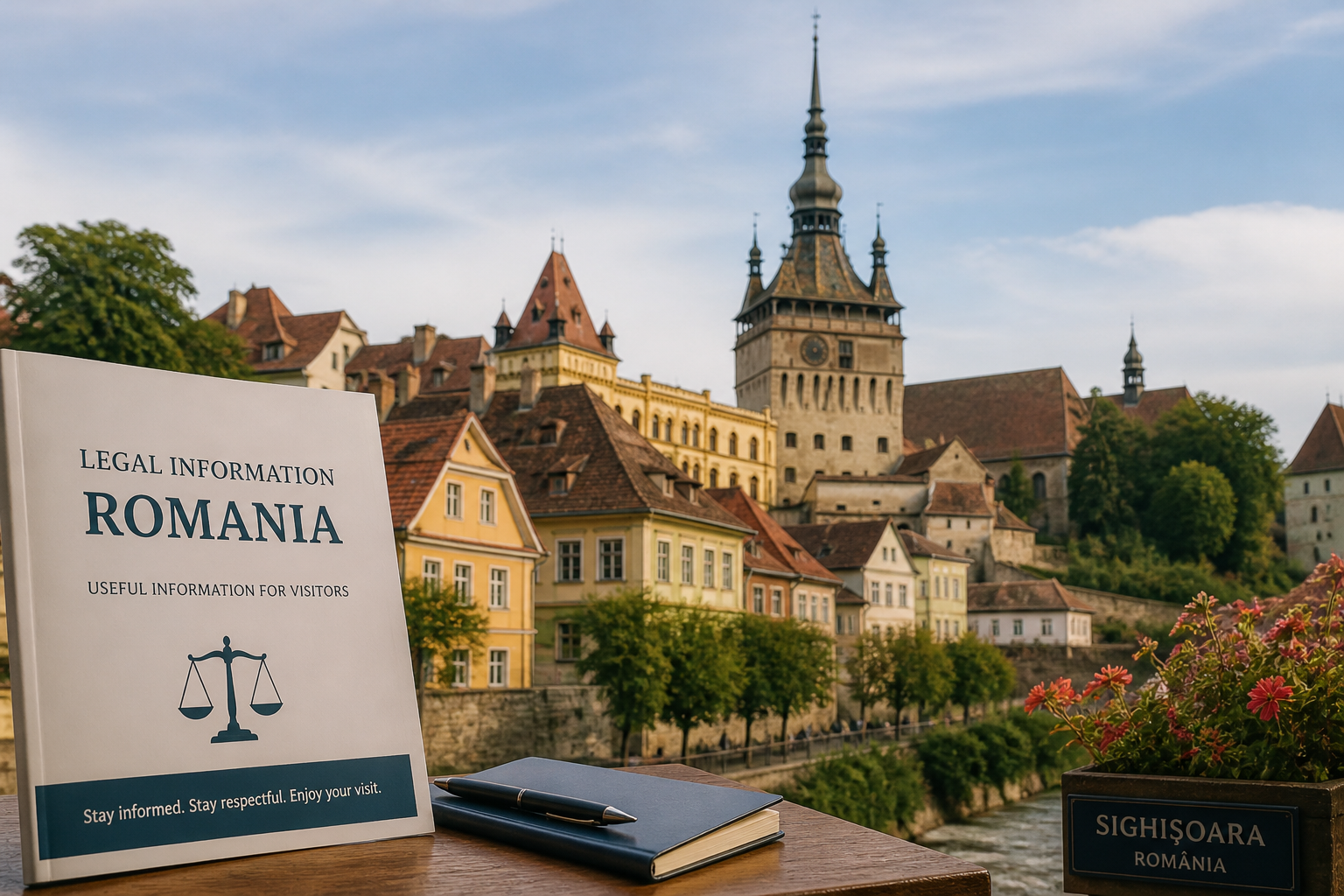
Questions about Cannabis decriminalization in Sighișoara often arise because the city is a popular destination for international visitors and because cannabis laws differ widely across Europe. Sighișoara does not have a separate municipal cannabis policy, however. The same Romanian national rules apply in the city, in nearby villages, on public transport and throughout Mureș County.
The central point is straightforward: Romania has not introduced broad recreational cannabis decriminalization. Cannabis possession, supply, cultivation and trafficking can create criminal-law consequences, even when the amount appears small. A person should not assume that a warning, a fine or an informal local practice replaces the national law.
This guide explains the legal position in practical terms. It is general information, not a substitute for advice from a Romanian criminal lawyer. Laws and enforcement practices can change, so anyone facing a police investigation should obtain professional legal assistance promptly.
Cannabis decriminalization in Sighișoara: the current legal picture
Sighișoara is administered under Romanian national law rather than a city-level legalization or decriminalization scheme. Romanian drug legislation distinguishes between different categories of controlled substances and different types of conduct, but cannabis remains a controlled drug for legal purposes.
In practical terms, recreational cannabis is not legally available for purchase, possession or use in Sighișoara. There is no licensed recreational dispensary system comparable to those operating in some other countries. A local shop, social-media seller or private individual cannot make an otherwise unlawful transaction legal.
The most important distinction is between decriminalization and legalization. Decriminalization generally means that certain conduct may no longer be treated as a criminal offense, although other penalties or restrictions can remain. Legalization creates a regulated legal market. Neither concept should be assumed to apply to recreational cannabis in Sighișoara.
For the wording of Romanian statutes and amendments, readers should consult the official Romanian legislation portal. A legal professional can also explain how the current consolidated provisions apply to a particular set of facts.
What Romanian law means for cannabis in Sighișoara
Possession for personal use
Possession of cannabis for personal use can result in criminal proceedings under Romanian law. The potential legal outcome depends on factors such as the substance, quantity, circumstances, prior history and evidence available to authorities. A small amount is not automatically lawful and does not guarantee that a case will be treated as minor.
Authorities may examine whether the substance was intended for personal use or connected with distribution. Packaging, communications, cash, scales and statements may all become relevant in an investigation. Attempting to hide, transfer or dispose of cannabis after contact with police can create additional complications.
For that reason, searches, questioning or seizure of suspected cannabis should be treated seriously. A person should remain calm, avoid making speculative statements and ask for a lawyer and, where necessary, an interpreter.
Supply, sharing and trafficking
Giving cannabis to another person is not made harmless by the absence of payment. Sharing, selling, transporting for another person or arranging a transaction may be viewed more seriously than simple personal possession. Trafficking-related allegations can bring substantially greater consequences than a personal-use case.
Visitors should be especially careful with requests to carry a package, bag or vehicle across town or across a border. Claiming not to know what was inside may not prevent an investigation. International travel can also introduce customs, border-control and jurisdictional issues.
Cultivation and cannabis products
Growing cannabis plants is not a safe legal alternative to buying cannabis. Cultivation may be investigated even when plants are grown privately and even when the person claims that the crop is for personal use. Seeds, plants, dried material and equipment can be assessed as part of the evidence.
Edibles, oils, resins, concentrates and vaping products should not be assumed to fall outside Romanian drug rules. The legal status may depend on the product’s ingredients, concentration, intended use and documentation. A label that is legal in another country does not automatically establish legality in Romania.
Does a small amount lead only to a fine?
This is one of the most common misconceptions about cannabis laws in Sighișoara. Romanian law does not create a simple rule saying that a small quantity is always ignored or dealt with only through a civil penalty. The possible response depends on the facts and on decisions made by police, prosecutors and courts.
Drug cases can involve seizure, questioning, testing, a criminal investigation and court proceedings. The eventual result may vary, but uncertainty is not the same as decriminalization. A person should not rely on online anecdotes about an amount that supposedly “does not count.”
- Do not carry cannabis in public places, vehicles or accommodation.
- Do not buy cannabis from informal sellers or arrange delivery through social media.
- Do not share cannabis with friends, even without payment.
- Do not transport an unknown package for someone else.
- Do not cross a national border with cannabis or cannabis products.
- Ask for qualified legal advice if police contact becomes formal or investigative.
Public use, driving and tourist concerns
Using cannabis in a park, on a street, near Sighișoara’s historic centre or at a festival can create several separate risks. Public-order rules may apply in addition to drug legislation, and complaints from residents or venue staff may prompt police attention. Smoking in accommodation can also breach hotel, guesthouse or rental rules.
Driving after using cannabis is particularly risky. Romanian road-safety rules prohibit driving under the influence of psychoactive substances, and roadside testing or later evidentiary testing may become relevant. A person may feel capable of driving while still being impaired or while testing positive. The safest choice is not to drive after consuming cannabis or any product that may contain THC.
Tourists should also remember that a foreign prescription or legal purchase receipt may not protect them from Romanian enforcement. The rules of the country where a product was bought do not automatically travel with the product into Romania. This is especially important for oils, gummies, vape cartridges and other products whose contents may be difficult to verify.
For broader travel planning, the article on cannabis regulations for tourists in Romania provides related context, but travelers should still verify current requirements before departure.
Is medical cannabis available in Sighișoara?
Medical cannabis in Sighișoara should not be confused with recreational access. Romania has a restrictive and evolving framework for cannabis-related medical products. The availability, composition and prescribing rules may differ by product, and not every product described as “medical cannabis” in another country can be legally imported, possessed or used in Romania.
Patients should speak with a Romanian-licensed doctor and pharmacist about an approved treatment route. They should keep prescriptions, medical records and product documentation, but documentation alone should not be treated as permission to import a controlled substance. Before traveling, patients should obtain country-specific guidance from Romanian authorities, their carrier and a qualified medical or legal professional.
The European Union Drugs Agency provides independent information on drug policy, health and legal developments across Europe through its official drug information resources. It is useful for regional context, although it does not replace Romanian legal advice or a doctor’s assessment.
Anyone considering cannabis for pain, sleep, anxiety or another condition should discuss evidence-based options with a healthcare professional. Self-medicating with an unverified product can create problems involving dose, contamination, interactions and impairment.
What to do if police find cannabis
A person who is stopped or searched should remain respectful and avoid confrontation. Do not attempt to swallow, hide, destroy or pass the substance to another person. Such actions may increase safety risks and complicate the factual situation.
- Ask whether you are free to leave or whether you are being formally questioned.
- Request a lawyer if the matter involves suspected possession, supply or another offense.
- Ask for an interpreter if you do not understand Romanian well enough for legal questioning.
- Provide accurate identification details, but avoid guessing or volunteering an elaborate explanation.
- Do not sign a document you do not understand.
- Keep copies of notices, records and contact details supplied by authorities.
Visitors should contact their embassy or consulate for consular information if they are detained. Consular staff generally cannot cancel Romanian proceedings or act as a lawyer, but they may explain available support and help a person contact family or legal services.
How Sighișoara compares with other Romanian cities
Searching for weed in Sighișoara or cannabis in Sighișoara can produce misleading comparisons with cities in countries that have adopted regulated markets. Romanian cities do not independently set recreational cannabis rules, so a change in local attitudes or tourism patterns does not create a local right to possess cannabis.
The same principle applies across Transylvania. Readers comparing local information may find useful background in this guide to medical cannabis in Mediaș, but Mediaș and Sighișoara remain subject to the same national framework. Local enforcement resources and individual case facts can differ; the underlying legal rules do not become municipal legalization.
Practical harm-reduction advice
The safest legal choice is not to possess or use recreational cannabis in Sighișoara. If someone has already consumed a cannabis product, they should avoid driving, cycling in traffic, swimming, climbing, operating machinery or mixing the substance with alcohol or sedating medicines.
Seek urgent medical help for severe confusion, chest pain, breathing difficulty, loss of consciousness, seizures or extreme agitation. Tell medical staff what was consumed if it is safe to do so; accurate information can help them provide appropriate care. Do not rely on an online dosage claim when the product’s strength or ingredients are uncertain.
Accommodation providers, tour operators and event venues may impose stricter rules than the national minimum. Respect no-smoking policies, keep substances away from children and avoid creating risks for other guests. These precautions do not legalize possession, but they can reduce immediate safety and public-order problems.
What could change in the future?
Drug policy can evolve through parliamentary amendments, court decisions, regulatory guidance and European developments. Future proposals may address possession, medical products or public-health responses, but a proposal or media report is not the same as a law in force.
Before relying on a claim that cannabis has been decriminalized, check the date, the exact conduct covered and whether the change applies nationally. Confirm whether it concerns possession, consumption, medical treatment, cultivation or another issue. A headline using the word “decriminalized” may omit important limits and conditions.
Conclusion
Cannabis decriminalization in Sighișoara is not a current blanket exemption for recreational cannabis. Sighișoara follows Romanian national law, under which possession, supply, cultivation and trafficking can lead to serious consequences. A small amount, a foreign prescription, a CBD-style label or a private setting does not automatically make cannabis lawful.
Residents and visitors should avoid buying, carrying, sharing or transporting cannabis, never drive after using a potentially psychoactive product, and seek Romanian legal or medical advice when a specific situation arises. Checking official information before traveling is safer than relying on informal claims about what is supposedly tolerated in the city.