Marijuana history in Vaslui, Romania is best understood through the wider history of hemp, Romanian agriculture and changing drug policy. The surviving public record does not provide a complete, city-by-city timeline of cannabis use in Vaslui. However, national agricultural history, regional geography and Romanian legislation help explain how hemp became familiar as a useful crop while marijuana became associated with criminal law and public-health concerns.
This distinction matters. Hemp and marijuana both belong to the Cannabis sativa plant family, but they are not interchangeable in historical or legal discussions. Traditional hemp was valued for its fiber and seed, while marijuana generally refers to cannabis cultivated or used for its intoxicating cannabinoids. Looking at Vaslui through that distinction produces a more accurate account than treating every reference to cannabis as evidence of modern recreational use.
Why Vaslui’s cannabis history is difficult to document
Vaslui County lies in eastern Romania, in the historical region of Moldavia. Its communities developed around agriculture, household production and connections between rural settlements and market towns. Older records often discuss crops, textiles, household goods or agricultural taxation without identifying plant varieties in the way modern readers expect.
As a result, a historical reference to hemp may describe a practical farm crop rather than marijuana consumption. Local documents may also be dispersed among county archives, parish collections, agricultural records and family histories. Without a systematic archive study, it would be misleading to claim that a particular village or neighborhood had a distinctive marijuana tradition.
Research into cannabis in Vaslui should therefore separate three subjects: historical hemp cultivation, illicit cannabis activity recorded by authorities, and contemporary public discussion about cannabis policy. These subjects overlap, but each requires different evidence.
Traditional hemp and rural life in Moldavia
Hemp as a practical crop
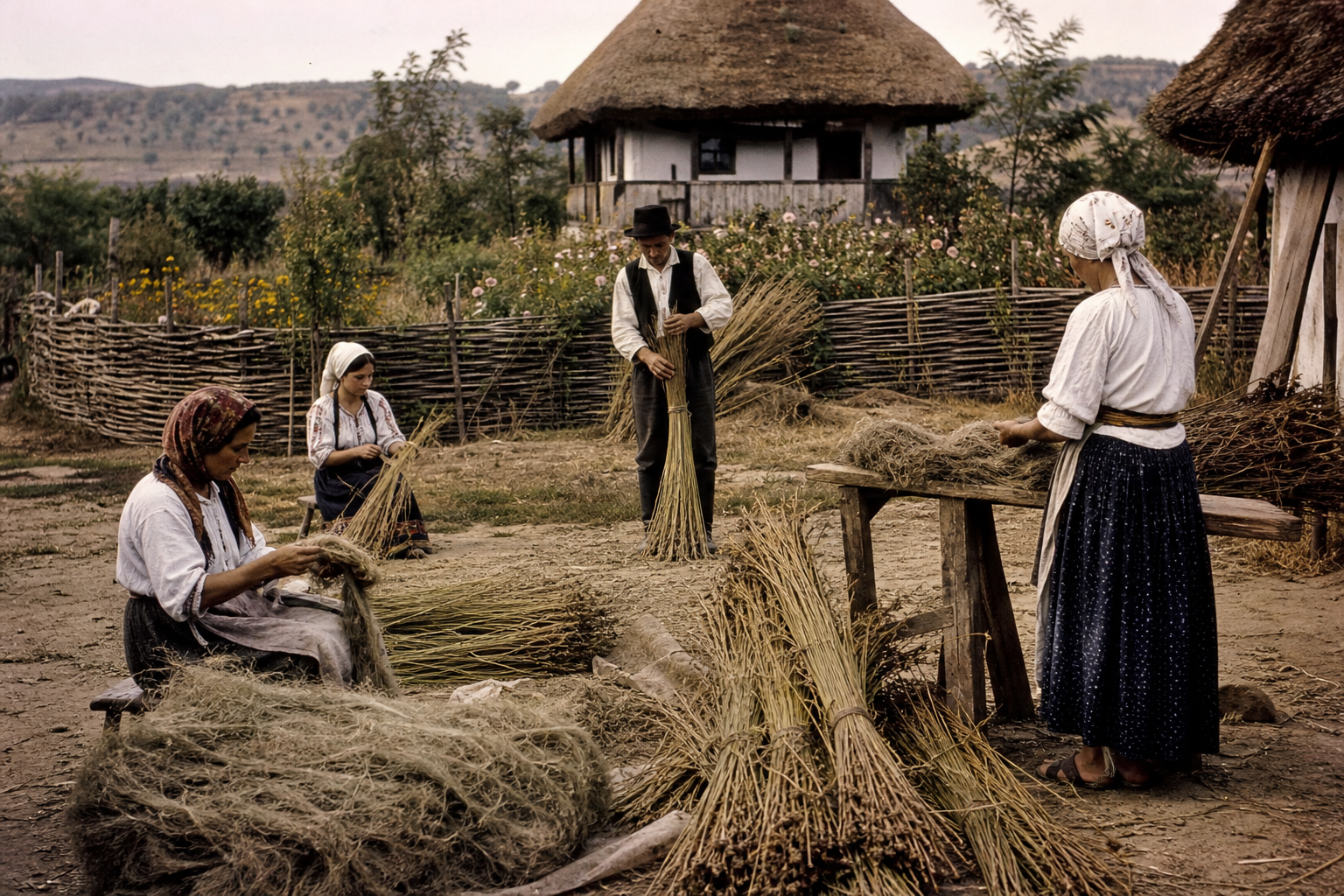
For centuries, hemp was one of several plants used in parts of Eastern Europe for household and agricultural purposes. Its strong fibers could be processed into thread, rope, sacks and rough cloth. Hemp seed was also used in food traditions and oil production. These uses were connected to self-sufficiency and household labor rather than intoxication.
In rural Moldavia, including areas that now form Vaslui County, families historically relied on locally available materials. Flax, wool and hemp each had different uses, and the importance of any one crop varied with soil, weather, markets and household resources. Hemp could be useful where families needed durable fiber, but that does not mean it was grown for psychoactive purposes.
From household production to commercial agriculture
Romanian agriculture changed substantially during the nineteenth and twentieth centuries. Improved transport, state agricultural policy and changing textile markets gradually connected rural producers with larger commercial systems. Hemp production became part of wider debates about agricultural efficiency, processing and industrial supply.
For Vaslui, this broader pattern is more reliable than an unsupported claim about a uniquely local cannabis economy. The county’s agricultural identity has included cereals, livestock and other field crops, while small-scale household production remained important in many communities. Hemp may appear in the region’s material history, but its visibility in records depends on the source and period being studied.
Marijuana history in Vaslui, Romania, during the twentieth century
The twentieth century brought major political and economic changes to Romania. Land reforms, wartime disruption, collectivization and later agricultural restructuring affected how crops were planted, recorded and marketed. These changes also altered the relationship between households, farms and the state.
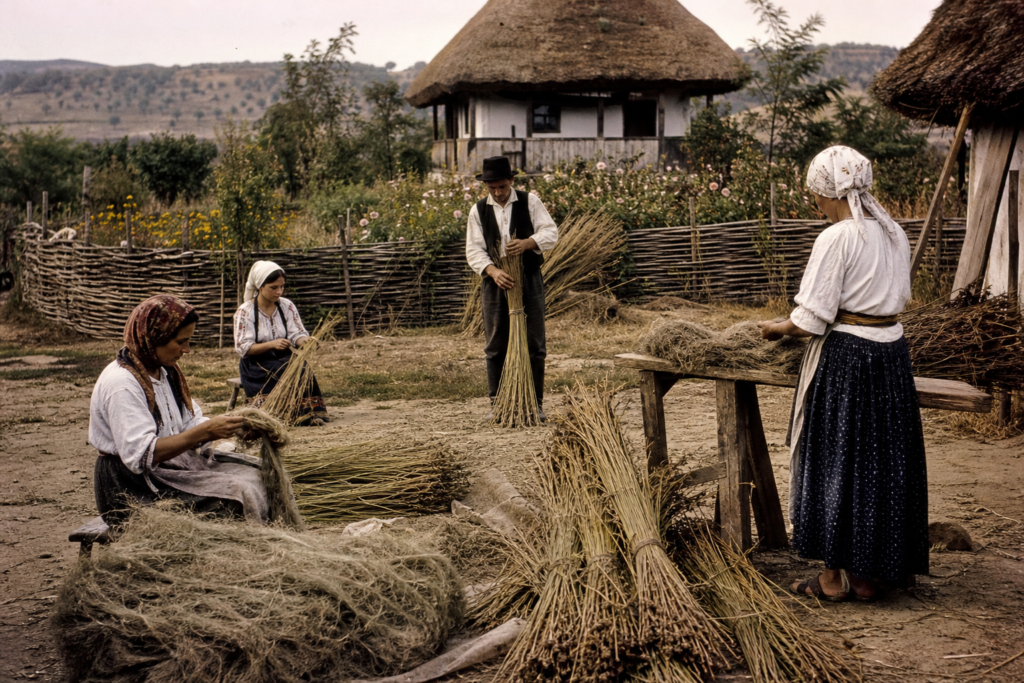
During the communist period, agriculture was increasingly organized through state and collective structures. Crop decisions were influenced by central planning rather than only by household needs. Industrial fibers, including hemp, could be treated as agricultural commodities subject to planning and processing requirements. At the same time, popular understanding of cannabis was increasingly shaped by international drug-control language, which distinguished industrial hemp from intoxicating cannabis.
It is important not to turn this national history into an invented local narrative. Publicly available material does not establish a continuous record of marijuana production or consumption in Vaslui during the communist era. A careful local history would need newspapers, police files, agricultural registers, oral histories and archival material examined together.
From hemp to drug-control policy
Modern cannabis law in Romania developed within international drug-control systems and national criminal legislation. The legal framework focuses on unauthorized cultivation, possession, distribution and trafficking, while industrial hemp is subject to separate controls and administrative requirements. The legal status of a product can depend on its composition, intended use, documentation and compliance with applicable rules.
Romania’s principal drug-control statute is the official Romanian legislation portal, where readers can consult current legal texts and amendments. Because laws and interpretations can change, anyone researching cannabis laws in Vaslui should check current legislation rather than rely on old summaries or informal advice.
The important historical shift is that hemp stopped being understood only as a useful fiber crop. In the twentieth century, “cannabis” increasingly appeared in legal and medical discussions connected with psychoactive substances. That change in language influenced policing, public education and public attitudes, even though industrial hemp and marijuana remained technically different categories.
Cannabis laws in Vaslui today
There is no separate municipal cannabis regime for Vaslui that replaces Romanian national law. The same national rules apply in Vaslui County as elsewhere in the country. The phrase cannabis laws in Vaslui is therefore best understood as a local way of discussing Romanian law, enforcement, health services and community information.
Unauthorized possession, cultivation, supply and trafficking can create serious legal consequences. The precise outcome depends on factors such as the substance involved, quantity, conduct, evidence and the person’s circumstances. Visitors and residents should not assume that small quantities, private use or informal sharing are automatically treated as harmless or legal.
Industrial hemp products require particular care. A label stating “hemp” or “CBD” does not, by itself, prove that a product complies with Romanian requirements. Consumers should look for traceable sellers, clear ingredient information and documentation appropriate to the product. Food, cosmetics, supplements, plant material and medicines may be governed by different rules.
Weed in Vaslui: separating history from present-day claims
Online searches for weed in Vaslui may return informal advertisements, social-media discussions or general national information. These sources should not be treated as evidence of local history, product safety or legal permission. An online claim about availability does not establish that a product is authentic, lawful or safe.
Historically, the strongest local connection is likely to be the agricultural use of hemp rather than a documented tradition of recreational marijuana. In the present, the more useful questions concern law, health risks, product verification and access to qualified advice. This approach avoids romanticizing a crop history or overstating what is known about local consumption.
For comparison, readers can see how a neighboring Moldavian-area city is discussed in this overview of cannabis policy in Bacău. A separate perspective on regional CBD questions appears in the guide to CBD in Iași. These comparisons are useful because they show how national rules are interpreted in local contexts without implying that every city has the same history.
Health, medicine and public understanding
Medical cannabis in Vaslui
Searches for medical cannabis in Vaslui often reflect interest in pain, epilepsy, cancer symptoms or other difficult health conditions. Patients should discuss these concerns with a licensed doctor, pharmacist or specialist rather than buying unverified products online or replacing prescribed treatment without supervision.
Medical evidence for cannabis-based treatments is specific to particular medicines, conditions and formulations. A product sold as hemp oil, CBD oil or cannabis extract is not automatically equivalent to an approved medicine. The route of administration, cannabinoid content, interactions and possible side effects all matter.
Romanian residents can also consult information from the European Union Drugs Agency for broader evidence on cannabis, drug use and public-health responses. General information cannot replace an individual medical assessment, but it can help readers distinguish research findings from promotional claims.
Risk-aware communication
Public discussion is more useful when it acknowledges both uncertainty and risk. Cannabis can affect attention, memory, coordination and judgment. Risks may be greater for adolescents, people with a personal or family history of psychosis, people who drive or operate machinery, and those who combine cannabis with alcohol or other drugs.
- Do not drive after using cannabis or combine it with alcohol.
- Keep cannabis products away from children and pets.
- Do not assume that natural, imported or “CBD” labeling guarantees safety.
- Seek medical advice about possible interactions with prescription medicines.
- Contact emergency services if someone experiences severe confusion, chest pain, loss of consciousness or a dangerous reaction.
How to research Vaslui’s cannabis and hemp past
A more complete local history could be developed through a structured research project. Useful sources would include county agricultural reports, local newspapers, school or cooperative records, museum collections, oral-history interviews and national legislation. Researchers should record dates, locations, terminology and the original meaning of each source.
Several questions could guide future work:
- Which villages or farms were associated with hemp cultivation?
- Was hemp grown for household fiber, seed, commercial processing or more than one purpose?
- How did land reforms and collectivization affect hemp production?
- When did local newspapers begin using modern drug-control terminology?
- How have residents, health professionals and officials discussed cannabis since 1990?
Researchers should also avoid assuming that oral testimony proves a widespread pattern. Personal memories are valuable, but they should be compared with documents and placed in their social and historical context.
What the history tells us
The history of cannabis in Vaslui is not a simple story of a hidden marijuana culture. It is a layered history involving a useful agricultural plant, rural skills, twentieth-century state organization, international drug control and contemporary health concerns. The evidence supports a cautious distinction between hemp’s material role and the much more recent public debate about marijuana.
That distinction is especially important for responsible writing. It prevents hemp farming from being presented as proof of recreational cannabis use, and it prevents modern legal questions from being projected backward onto earlier rural communities. It also gives residents a practical framework for evaluating claims about products, medicine and local availability.
Conclusion
Marijuana history in Vaslui, Romania is best described as part of a wider Romanian history rather than as a fully documented city-specific narrative. Hemp belonged to the agricultural and household economy of the region, while modern marijuana policy emerged through national legislation and international drug-control standards. Today, Vaslui follows Romanian law, and questions about cannabis should be approached through verified legal information, qualified medical advice and reliable historical sources.