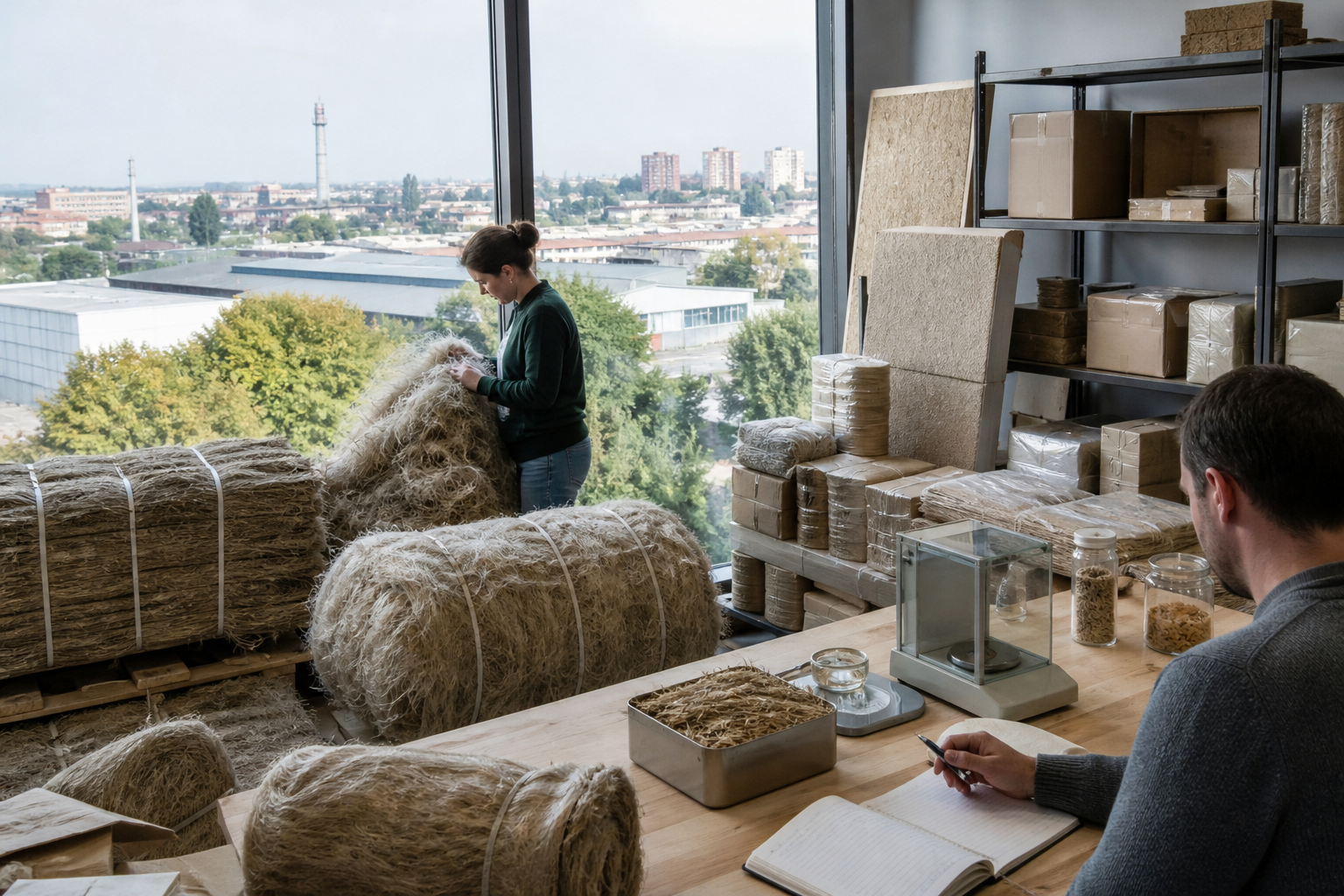
The hemp industry in Brugherio sits within a wider Lombardy network of agriculture, manufacturing, logistics, research and specialist retail. Brugherio, in the Metropolitan City of Milan, is not usually described as a traditional hemp-growing district. Its urban setting and proximity to major transport routes make it more relevant to processing, distribution, product development and professional services than to large-scale cultivation.
That distinction matters. Industrial hemp is not the same as recreational cannabis, and a business working with fibres, seeds, food ingredients or construction materials faces different questions from a company handling controlled cannabis preparations. Anyone researching industrial hemp in Brugherio should therefore assess the complete supply chain: what is grown, where it comes from, how it is processed, what claims are made and which rules apply to the finished product.
What the local hemp industry can include
In Brugherio, the most realistic opportunities may be connected to the movement and transformation of hemp rather than extensive cultivation inside the municipality. Local businesses could participate in several parts of the value chain:
- Distribution and logistics: warehousing, order fulfilment and transport for compliant hemp goods across Lombardy and Italy.
- Food and ingredient supply: hemp seeds, seed oil, flour and protein ingredients, subject to applicable food and labelling requirements.
- Textiles and materials: fibre, yarn, non-woven materials, paper and composite products.
- Construction applications: hemp-lime systems, insulation and other building products supplied through qualified contractors.
- Cosmetics: seed oil and other permitted ingredients used in products that comply with cosmetic regulations.
- Consulting and testing: traceability, laboratory analysis, packaging, regulatory review and quality assurance.
This business mix suits a densely connected area near Milan. A Brugherio company may source certified raw materials from another Italian region, use a specialist processor elsewhere in Lombardy and sell through national or international channels. The local economic contribution can therefore come from value-added services even when cultivation takes place outside the town.
Industrial hemp in Brugherio: agriculture or supply-chain business?
Brugherio has an urban and industrial character, so prospective growers should begin with land availability, planning rules, water access and neighbouring land uses rather than assuming that hemp is suitable for every open plot. Hemp cultivation near Brugherio may be more practical in selected agricultural areas around the wider Brianza and Milan hinterland, but each site requires its own agronomic and regulatory assessment.
What growers need to evaluate
A cultivation project normally depends on seed choice, soil conditions, irrigation, crop rotation, harvesting equipment and a buyer able to accept the resulting biomass or seed. Certified seed and documented provenance are central to risk management. Farmers should also retain purchase records, field information and laboratory or supplier documentation where appropriate.
Hemp is not automatically a low-input or universally sustainable crop. Its environmental performance depends on irrigation, fertilisation, machinery, transport, processing energy and what happens to the harvested material. A credible project should compare hemp with locally suitable alternatives instead of relying on broad claims about carbon savings or soil improvement.
Italian rules and cannabis laws in Brugherio
Businesses in Brugherio operate under Italian national rules as well as ordinary municipal, regional and European requirements. Italy has a specific framework for industrial hemp cultivation, but compliance does not end with planting an approved variety. The crop, harvested parts, extraction method, product category, intended use, packaging and marketing language can all affect the legal analysis.
The primary reference for industrial hemp cultivation is Italy’s Law 242/2016 on hemp cultivation and the supply chain. Companies should read the current legislation and obtain professional advice before investing, particularly because interpretations and enforcement priorities can change. A grower or manufacturer should never treat a general online summary as a substitute for checking the rules that apply to its specific product.
Important compliance questions
- Is the seed variety eligible under the relevant European and Italian framework?
- Does the planned activity involve cultivation, processing, extraction, food production, cosmetics, textiles or another regulated category?
- Are the product’s cannabinoid levels and testing procedures documented?
- Does the packaging avoid unauthorised health, therapeutic or misleading claims?
- Are premises, machinery, waste handling and workplace procedures compliant?
- Can every batch be traced from supplier to final customer?
Questions surrounding hemp flowers and cannabinoid-rich extracts require particular caution. Products that appear similar to consumers may be treated differently under food, cosmetic, medicinal, narcotics or other rules. Retailers and manufacturers should obtain a product-specific assessment rather than assuming that a low-THC label makes every use lawful.
Products and commercial opportunities
The strongest opportunity for hemp businesses in Brugherio may be in products with a clear specification and a verifiable route to market. Food ingredients are one example, but they require attention to permitted ingredients, allergens, nutrition information, hygiene and packaging. Seed oil may be marketed for food use when it meets the relevant requirements, while a cosmetic product must follow the rules for cosmetic formulation, safety assessment and presentation.
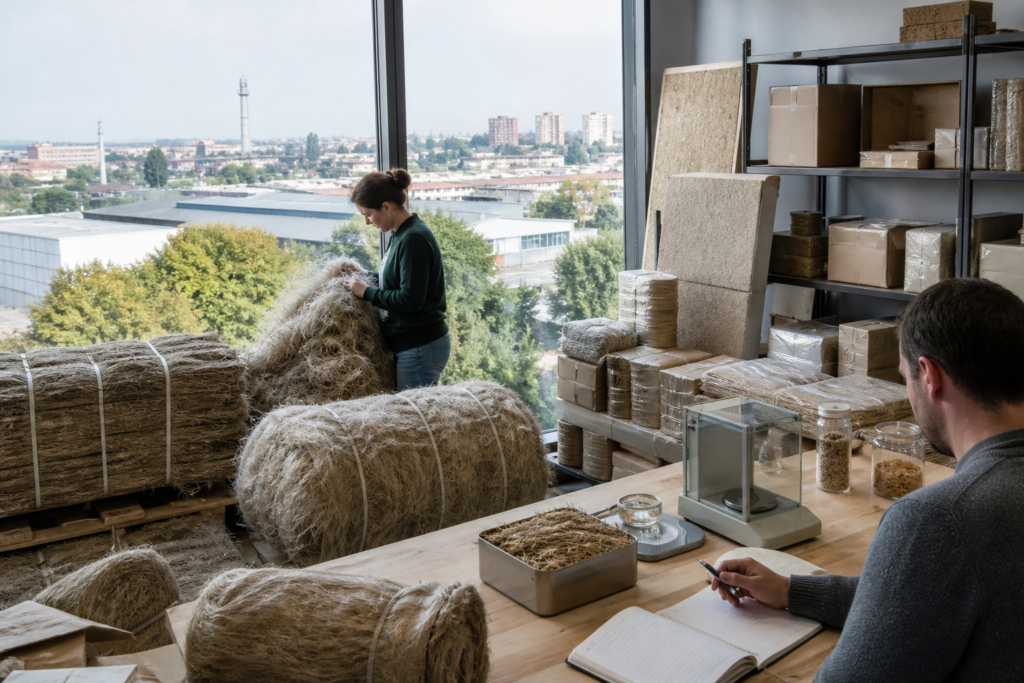
Industrial materials offer another route. Hemp fibre can support textile, paper and composite applications, while hurd can be used in selected construction systems. These markets are less dependent on consumer novelty but require consistent fibre quality, technical documentation and reliable processing. A building product also needs to fit professional construction practices, performance expectations and applicable building requirements.
Local companies can add value without manufacturing the raw material themselves. Examples include:
- Developing transparent private-label products for regional retailers.
- Providing compliant packaging and fulfilment for specialist producers.
- Connecting Italian growers with textile, food or construction processors.
- Offering laboratory coordination and batch documentation.
- Creating educational materials for buyers, architects, farmers and retailers.
Businesses comparing regional models may also find it useful to review this overview of hemp products and buying considerations in Mantova. The commercial lesson is broader than any one city: product quality, lawful positioning and dependable sourcing are more durable advantages than vague wellness promises.
Building a responsible hemp supply chain
A trustworthy supply chain begins with supplier verification. A Brugherio buyer should ask where the crop was grown, which seed was used, how it was harvested, which tests were performed and whether the documentation matches the exact batch. Photographs and marketing language are not enough to establish compliance.
Practical controls for businesses
- Use written specifications for raw materials and finished goods.
- Keep invoices, batch numbers, certificates and test reports together.
- Define acceptance limits before receiving a shipment.
- Use laboratories with suitable methods and documented competence.
- Review labels and advertising before publication.
- Train staff not to make medical or intoxicating-use claims.
- Maintain a recall and customer-complaint procedure.
Traceability is especially important when a company buys material from several regions or imports goods. A clear chain of custody helps distinguish industrial hemp products from unlawful or incorrectly labelled goods and allows a business to respond quickly if a supplier, batch or interpretation changes.
Sustainability and the Brugherio context
Brugherio’s location makes transport efficiency a practical sustainability issue. A local distributor can reduce unnecessary journeys by consolidating deliveries, choosing suitable storage locations and working with processors close to the final market. However, proximity alone does not prove that a product has a lower environmental impact.
Companies should measure the parts of the operation they can control: packaging volume, delivery frequency, energy use, waste, rejected batches and the percentage of material that becomes a useful product. Claims about regenerative agriculture, carbon reduction or soil benefits should be supported by evidence specific to the crop and production system.
There is also a social dimension. Clear information helps prevent confusion between industrial hemp and controlled cannabis. Employers, retailers and educators can explain that a hemp-based food, textile or construction product is not automatically intended for intoxication. For broader regional context, readers can compare this discussion with the analysis of marijuana industry regulation and business questions in Dalmine, while keeping the legal distinction between industrial hemp and other cannabis products in view.
How to assess a hemp business idea in Brugherio
A realistic feasibility study should identify the customer before the crop or product. A business selling to textile manufacturers needs different equipment and certifications from one supplying food retailers. It should also test whether customers will pay for documented quality rather than simply respond to the word hemp.
A useful evaluation can follow these steps:
- Define the product: identify the plant material, processing stage, intended customer and final use.
- Check the legal category: confirm the rules with qualified advisers and the appropriate authorities.
- Map suppliers: compare origin, documentation, testing, minimum orders and delivery reliability.
- Calculate the full cost: include storage, analysis, packaging, waste, insurance and compliance work.
- Test demand: speak with professional buyers and secure evidence of repeat purchasing potential.
- Plan controls: create procedures for quality checks, complaints, recalls and regulatory updates.
The Italian Ministry of Agriculture, Food Sovereignty and Forestry is a useful starting point for official agricultural information. Depending on the product, a company may also need to consult health, food-safety, customs, environmental and municipal authorities.
Future prospects for hemp in Brugherio
The local outlook is most credible when it focuses on practical industrial functions: logistics, testing, processing, design, packaging, construction materials and professional services. Brugherio’s connection to the Milan metropolitan economy can help businesses reach customers, technical partners and specialist labour, but it does not remove the need for sound economics or regulatory discipline.
Innovation may emerge through better fibre processing, lower-waste manufacturing, traceable food ingredients and building systems suited to Italian conditions. Partnerships between growers, processors, designers, laboratories and universities could help the sector move beyond small novelty products. The companies most likely to endure will be those that can demonstrate consistency, safety and a clear use case.
Conclusion
The hemp industry in Brugherio is best understood as part of a connected Lombardy ecosystem rather than as a large local farming sector. Opportunities exist in distribution, processing, food, textiles, construction, cosmetics, testing and compliance services. Success depends on separating industrial hemp from other cannabis categories, checking current Italian requirements and building a traceable supply chain.
For entrepreneurs and consumers alike, the responsible approach is straightforward: define the product precisely, verify its origin, avoid unsupported claims and seek professional advice whenever the legal category is uncertain. That foundation can help Brugherio participate in hemp’s development without confusing commercial potential with automatic legality or guaranteed sustainability.