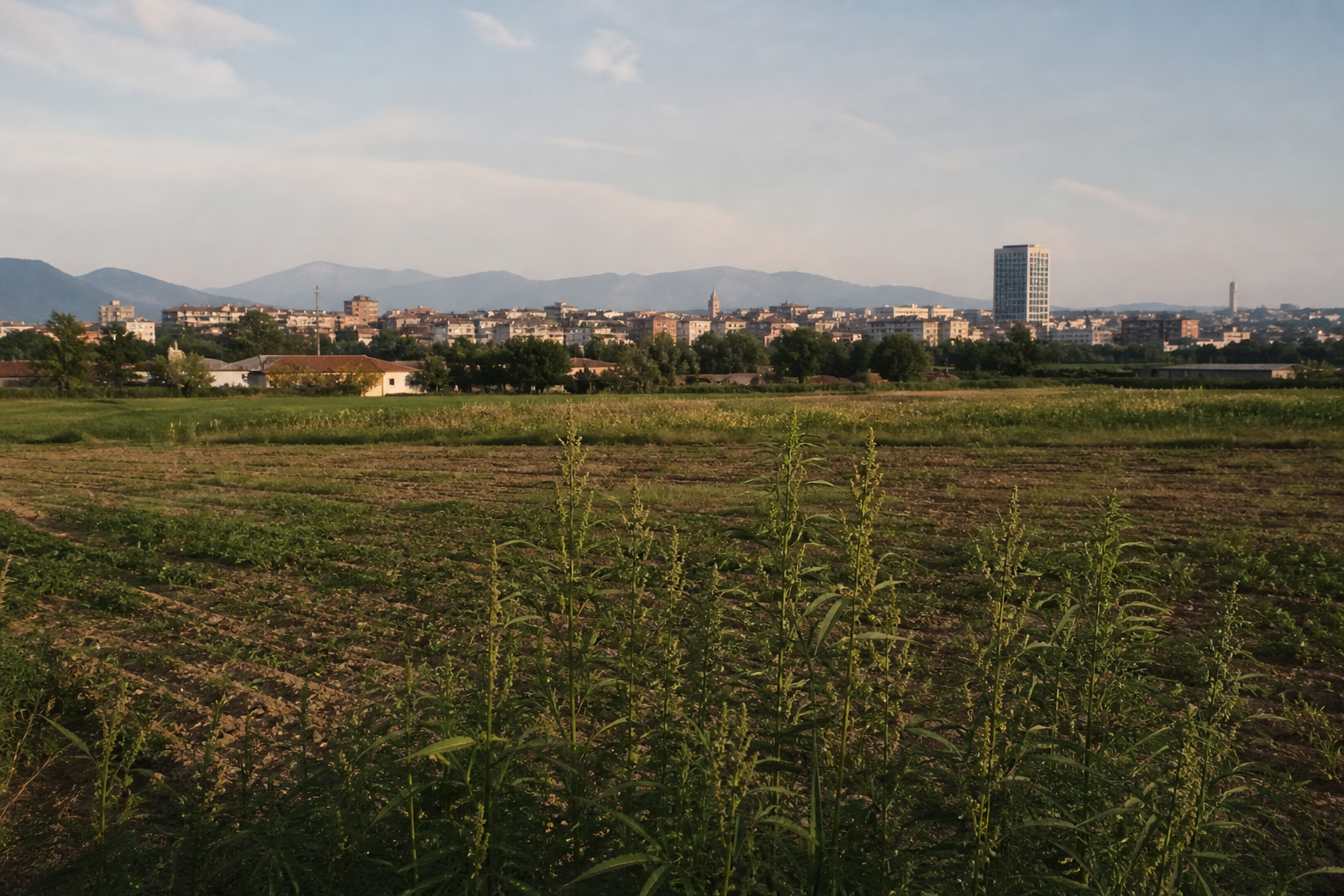
Cannabis history in Seriate, Italy is best understood through the wider agricultural, industrial and legal story of Lombardy. Seriate, a municipality just east of Bergamo, has not developed a separate cannabis tradition documented in the way that major hemp-producing districts have. Its story is instead connected to northern Italy’s former cultivation of hemp, the changing status of cannabis under Italian law, and contemporary discussions about medical treatment, CBD products and public health.
This distinction matters. Searching for cannabis in Seriate can suggest that the town has a unique local market or long-established subculture, but reliable evidence is stronger at the national and regional level. A responsible local history therefore separates documented facts from assumptions about private behavior, while still explaining how national changes have affected residents, businesses and public debate in Seriate.
Seriate and the agricultural setting of Lombardy
Seriate sits in the Bergamo area, where urban development, manufacturing and transport corridors have gradually transformed a landscape that was once more strongly agricultural. Historically, hemp was cultivated in several parts of Italy for fiber, rope, textiles and other practical materials. In Lombardy, its importance was tied to rural production and household or commercial processing rather than to the modern idea of cannabis as a recreational drug.
There is no sound basis for claiming that Seriate was a major national hemp center. However, its position within the Po Valley economic zone placed it near agricultural networks where hemp was known as a useful crop. Hemp varieties grown for fiber generally contained very little intoxicating tetrahydrocannabinol, or THC. Treating those historical crops as equivalent to modern high-THC cannabis would blur an important botanical and legal distinction.
Hemp was primarily an industrial material
Traditional hemp had practical uses. Farmers could grow it for stalk fiber, while seeds and other parts of the plant had additional agricultural or household applications. Processing required labor and local knowledge, and hemp belonged to the broader history of Italian rural production alongside flax, cereals and other useful crops.
As mechanized textiles expanded and alternative fibers became more competitive, traditional hemp cultivation declined. The change was not caused by a single event in Seriate. It reflected wider economic shifts, changing agricultural priorities and the growing regulation of psychoactive substances. The disappearance of routine hemp cultivation from everyday rural life helped separate the plant’s older industrial identity from the drug-policy debates that followed.
Cannabis history in Seriate, Italy, and the rise of prohibition
The twentieth century brought a more restrictive approach to cannabis in Italy and across much of Europe. International drug-control agreements, national legislation and changing public-health concerns gradually placed cannabis within a controlled-substance framework. The legal focus moved away from fiber production and toward the psychoactive potential of marijuana and hashish.
For Seriate, this meant that cannabis was primarily encountered through national law rather than through a locally distinct regulatory system. Municipal authorities, police and health services applied national and regional rules. Local conditions could influence enforcement, prevention campaigns or access to services, but the basic legal categories were not created by the town itself.
The history of weed in Seriate therefore cannot be reduced to anecdotes about availability. A useful account must consider how Italian policy distinguished possession, supply, cultivation, medical access and industrial hemp. It should also recognize that laws and administrative interpretations have changed over time, making old descriptions unreliable guides to current rights or risks.
From social taboo to public-health discussion
During the late twentieth century, cannabis became more visible in youth culture and political debate. Public discussion often divided between two simplified positions: treating cannabis as harmless or treating every form of cannabis as equivalent to more dangerous drugs. Neither approach provides a complete history.
Over time, Italian institutions increasingly combined enforcement with prevention, treatment and harm-reduction perspectives. In a town such as Seriate, these changes could be felt through schools, family doctors, social services and regional health programs rather than through a single cannabis-specific local institution. The resulting history is one of gradual normalization of discussion, not a straightforward legalization story.
How national law shaped cannabis in Seriate
The modern legal position remains the essential context for understanding cannabis laws in Seriate. Recreational production and sale are not generally lawful in Italy, and possession can have administrative or criminal consequences depending on the circumstances, quantity, purpose and evidence involved. Supplying another person is treated far more seriously than a private possession situation.
Italian law also distinguishes cannabis intended for industrial use from cannabis containing levels of THC associated with intoxication. That distinction is technical and product-specific. A label, shop description or reference to “light” cannabis does not by itself prove that a product is lawful or safe. Consumers need to consider the applicable rules, testing, labeling and the possibility of contamination or misleading claims.
For current legal information, readers should consult official institutions rather than rely on old blog posts or informal advice. The Italian Ministry of Health provides the appropriate institutional starting point for information about public health, medicines and regulated medical products. Local enforcement questions may also require advice from a qualified Italian lawyer or a competent public office.
Why local government still matters
Although cannabis law is mainly national, municipal life affects how the subject is experienced. Seriate can address public-order concerns, youth prevention, health promotion and the use of public spaces within its legal powers. Schools and health services can provide education and referral, while police activity may focus on trafficking, impaired behavior or risks around minors.
These functions should not be confused with the power to legalize recreational cannabis. A town can support informed prevention and community health without creating a separate local cannabis market. This is why a search for cannabis use in Seriate should lead to both legal information and practical health guidance.
Medical cannabis in Seriate: access through the health system
Medical cannabis in Seriate belongs to Italy’s regulated healthcare system, not to ordinary retail sales. In appropriate circumstances, a physician may consider cannabis-based medicines or preparations when clinically justified and consistent with applicable rules. The route can involve a prescription, a pharmacy and regional procedures, depending on the product and treatment situation.
Patients should not assume that a diagnosis automatically guarantees access, reimbursement or a specific preparation. Availability can vary, and treatment decisions must be made with a doctor who can assess possible benefits, interactions, contraindications and follow-up needs. Cannabis may cause adverse effects, including impairment, dizziness, anxiety or cognitive effects, and it can interact with other medicines.
People considering treatment should keep several questions separate:
- Is the product a regulated medicine or a non-medical consumer product?
- Does a qualified clinician consider it appropriate for the condition?
- What prescription, pharmacy and regional requirements apply?
- Could it affect driving, work safety, pregnancy or other medicines?
Reliable medical information is more useful than personal testimonials. For broader European context on drug policy, health evidence and monitoring, readers can consult the European Union Drugs Agency.
CBD, industrial hemp and modern commercial interest
In recent years, interest in CBD and hemp-derived goods has introduced a new chapter to the story of cannabis near Bergamo. Shops and online sellers may offer cosmetics, foods, supplements or other products described as hemp-based or CBD-related. These products are not interchangeable with medical cannabis, and the presence of CBD does not mean that every product is automatically permitted, effective or risk-free.
Italian and European rules can differ according to the product category. Food, cosmetics, medicines, smoking products and industrial materials may be subject to different requirements. Consumers in Seriate should look for a complete label, responsible seller information, batch details where relevant and clear warnings. They should be especially cautious of products making medical claims without evidence or regulatory authorization.
The revival of industrial hemp also reconnects with an older part of Italian agricultural history. Modern hemp may be discussed in relation to textiles, construction materials, seed products and sustainable agriculture. Those applications should not be confused with intoxicating cannabis, even when both come from the same plant species.
Separating history from local myths
Because direct archives about cannabis in a small municipality may be limited, historical writing needs restraint. It is not responsible to invent a famous Seriate hemp district, attribute anonymous consumption stories to local residents or present unverified claims about particular shops and organizations. A credible history acknowledges what is known: Seriate shares Lombardy’s agricultural and industrial background, while its current cannabis framework is shaped largely by Italian and European law.
For readers comparing nearby communities, regional context can be useful. The discussion of the marijuana industry in Dalmine offers a neighboring Bergamo-area comparison, while the cannabis industry in Treviglio illustrates how another Lombardy municipality can be examined through law, markets and local context. These comparisons should supplement, not replace, official sources.
What the future may bring
The next phase of cannabis history in Seriate will likely be shaped by national court decisions, legislative changes, medical research, industrial hemp rules and public-health priorities. Local debates may focus on youth education, impaired driving, consumer protection, treatment access and the distinction between commercial hemp and intoxicating products.
Whatever changes occur, the most useful local conversation will be evidence-based. Residents need clear explanations of what is legal, what requires medical supervision and what carries health or legal risks. Businesses need transparent product standards. Health professionals need practical ways to discuss cannabis without exaggeration or stigma.
Conclusion
The history of cannabis in Seriate is not a story of a uniquely local cannabis industry. It is a layered regional history: traditional hemp’s practical role in Italian agriculture, the decline of older cultivation systems, the rise of prohibition, the gradual development of public-health responses and the carefully regulated return of medical and industrial applications.
Understanding that timeline helps explain why modern cannabis questions in Seriate cannot be answered by looking only at local rumors or commercial advertising. The safest approach is to distinguish hemp from high-THC cannabis, medical products from consumer goods, and historical context from current law. For residents and visitors, that combination of local awareness, official information and cautious decision-making remains the most reliable guide.