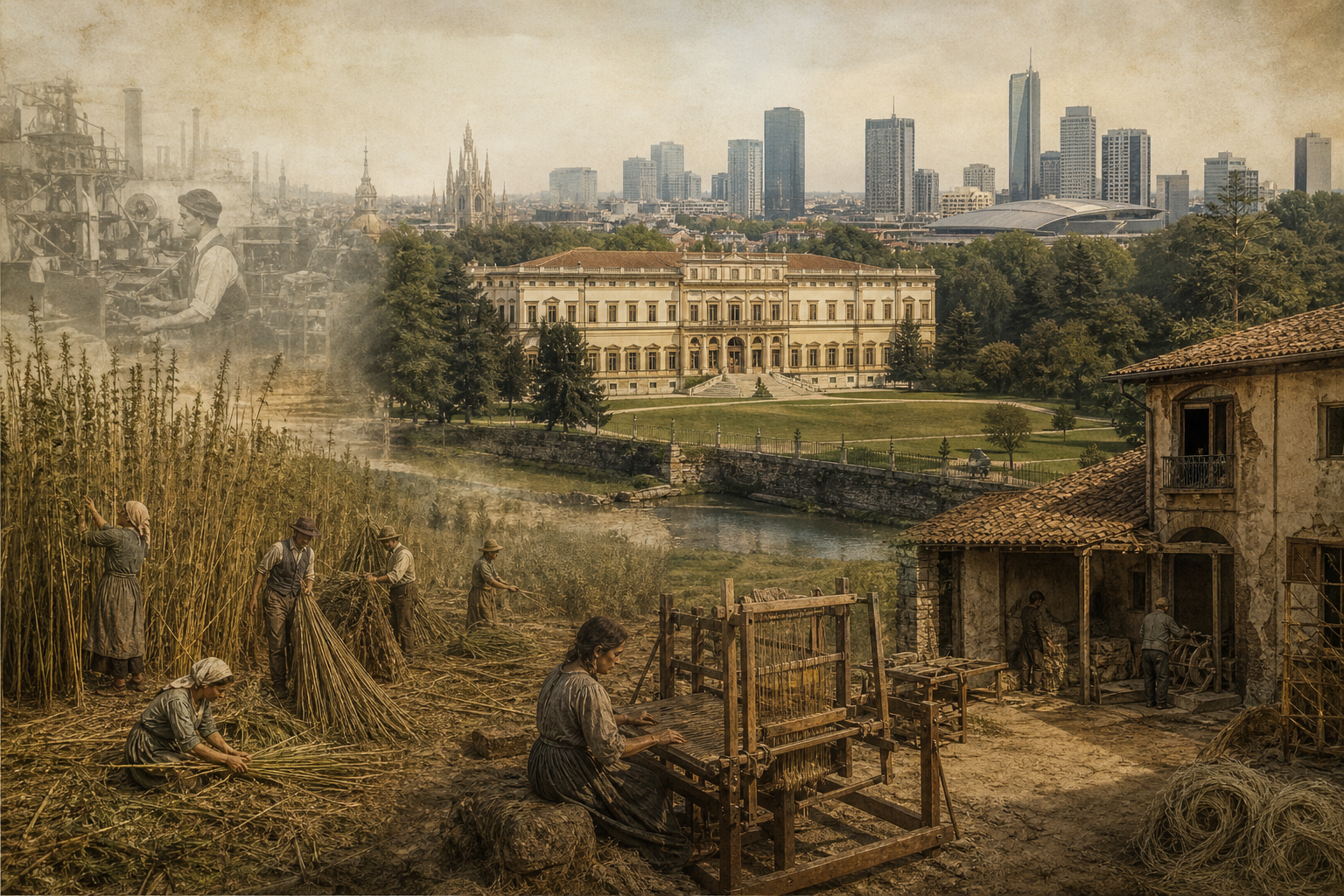
Cannabis history in Monza is best understood as part of a wider story involving Lombardy, northern Italian agriculture, textile production, medicine and changing drug policy. There is no well-documented, separate cannabis tradition unique to Monza comparable to the city’s better-known histories of the royal villa, motorsport or manufacturing. However, Monza’s position within the Brianza area and the broader Milanese economy helps explain how hemp, cannabis and public attitudes have appeared in local life over time.
This history is also a reminder that the word “cannabis” covers different subjects. Hemp grown for fibre is not the same as cannabis cultivated for intoxicating resin, while medical cannabis is governed by a distinct legal and clinical framework. Following those distinctions makes it easier to understand weed in Monza without confusing historical agriculture, contemporary products and illegal possession.
Early hemp traditions in Lombardy
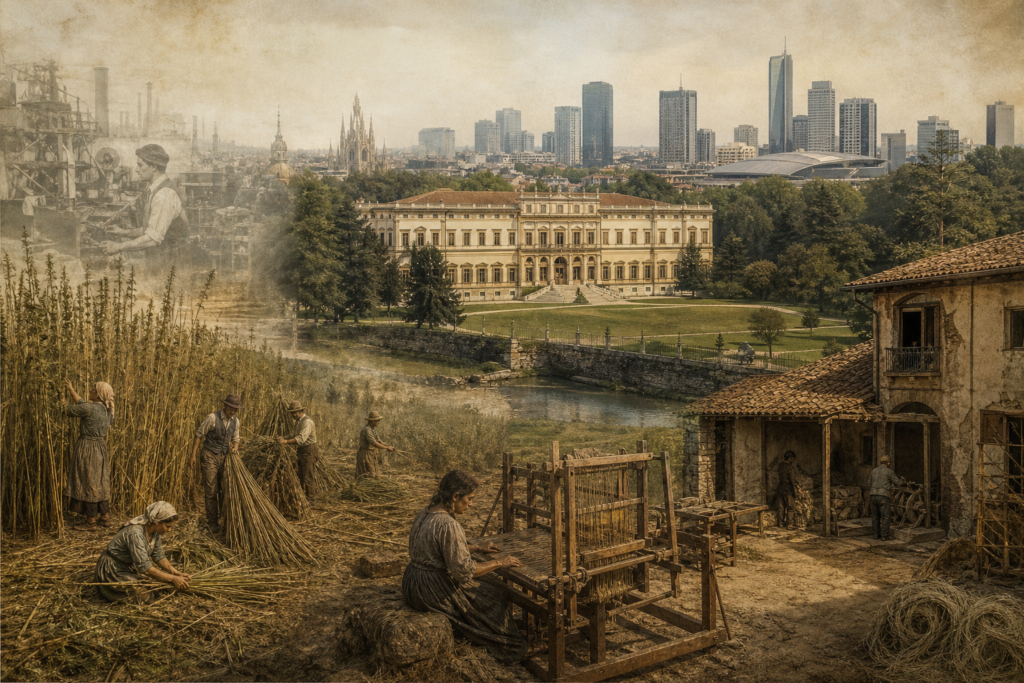
For centuries, hemp was cultivated in parts of Italy as a practical agricultural crop. Its strong fibres could be processed into rope, coarse cloth, sacks and other useful materials. Northern Italy’s rivers, canals and productive plains supported a range of fibre crops and textile activities, although cultivation varied by locality and period.
Monza sits in the Brianza territory north of Milan, an area historically associated with craft production, workshops and later industrial development. The local economy was not defined solely by hemp, but regional trade connected communities such as Monza with farms, textile centres and commercial networks across Lombardy. Hemp materials could therefore enter local markets even when the crop itself was grown elsewhere.
Hemp was a material before it was a political symbol
In its older agricultural context, hemp was primarily valued for durability. Farmers and manufacturers viewed it as a source of fibre and seed rather than as a recreational substance. This distinction matters because modern discussions often project current drug terminology onto earlier periods when cannabis plants were more commonly discussed through their agricultural uses.
Seeds and fibre had different uses from flowering material containing higher concentrations of intoxicating cannabinoids. Historical references to hemp in northern Italy should therefore not automatically be interpreted as evidence of a local recreational cannabis culture.
Monza, textiles and industrial change
The nineteenth and twentieth centuries transformed Monza and Brianza. Industrialisation, mechanised production and the growth of furniture, textile and engineering businesses changed how land, labour and raw materials were used. Imported fibres and industrial alternatives also affected the economic importance of traditional crops such as hemp.
In this setting, hemp became less visible as an everyday local material even though it remained part of Italy’s wider agricultural and manufacturing history. Cotton, synthetic fibres and changing production methods reduced the prominence of traditional bast fibres in many markets. Monza’s urban growth and its close relationship with Milan further shifted attention away from small-scale agricultural processing.
This period is important to the history of cannabis in Monza because it helps explain why local references are often indirect. The city’s connection to cannabis is more likely to appear through regional commerce, national regulation, public health and nearby metropolitan culture than through a continuous, documented hemp industry inside the municipal boundary.
From regulated crop to controlled substance
During the twentieth century, international drug-control policies and national legislation increasingly separated industrial hemp from cannabis intended for intoxicating use. Public debate also became more focused on psychoactive preparations, dependence, trafficking and the health effects associated with frequent or heavy use.
Italy’s legal framework developed through several stages and should not be reduced to a simple story of prohibition. The country regulates narcotic and psychotropic substances through a national system, with rules covering cultivation, possession, supply, treatment and medical access. The current framework is primarily associated with Italy’s consolidated drug law, Decree of the President of the Republic 309/1990, as amended over time.
For residents of Monza, this means that national law—not a separate city-level cannabis regime—determines the central legal boundaries. Municipal authorities may address public order, consumption in public spaces and local enforcement priorities, but they do not create a general local licence for recreational cannabis.
Cannabis history in Monza and the modern public debate
From the late twentieth century onward, cannabis became more visible in Italian media, youth culture, music and political discussion. Milan’s proximity also influenced the wider cultural environment around Monza. Yet visibility should not be mistaken for legality or for a uniform local attitude. People in Monza, like people elsewhere, have held a range of views about personal use, decriminalisation, medical treatment and public health.
The language used in everyday conversation has also changed. Some people say “marijuana” or “weed,” while legal and medical institutions generally use more precise terms such as cannabis preparations, cannabinoids or controlled substances. Searching for cannabis in Monza may therefore produce information about very different topics, including history, CBD products, medical treatment, police enforcement and informal claims that are not supported by official sources.
Why local history needs careful evidence
Local cannabis histories can easily become exaggerated. A reference to hemp farming in Lombardy does not prove that a particular Monza neighbourhood cultivated drug-type cannabis. A historical mention of cannabis in medicine does not establish widespread recreational use. Likewise, the existence of a shop selling a legal hemp-derived product does not mean that all cannabis products are legal.
A reliable account should distinguish between documented local facts and broader context. In Monza, the strongest historical connections are regional: Lombardy’s agricultural and textile traditions, Brianza’s economic development, Milan’s cultural influence and Italy’s national legal system.
Medical cannabis in Monza today
Medical cannabis is one of the most important developments in the modern history of cannabis in Italy. Certain cannabis-based preparations may be prescribed within the Italian health system for defined clinical circumstances, subject to medical judgment, approved procedures and pharmacy supply. Access is not the same as recreational retail availability.
Patients considering medical cannabis in Monza should begin with a qualified doctor who can assess the condition, existing treatments, possible interactions and whether a regulated cannabis preparation is appropriate. Pharmacies and regional health services may have specific procedures, and availability can vary. The Italian Ministry of Health provides national information through its official health portal.
Medical use also requires realistic expectations. Cannabis-based medicines can produce adverse effects, interact with other substances and affect attention or the ability to drive. A prescription does not remove the need to follow dosage instructions, keep the product in its original packaging and check rules before travelling across borders.
Hemp, CBD and the meaning of “legal cannabis”
Contemporary discussions often combine industrial hemp, CBD and recreational cannabis under the broad label “legal cannabis.” That description can be misleading. Products may differ in plant variety, cannabinoid content, intended use, testing, packaging and regulatory status.
Industrial hemp has legitimate agricultural and manufacturing applications, including fibre, seed and food-related products where permitted by applicable rules. CBD products raise separate questions about formulation, labelling and whether a product is authorised for its specific use. A product displayed in a shop is not automatically suitable for consumption, and a low-THC label is not a substitute for checking current Italian requirements.
For anyone researching cannabis laws in Monza, the safest approach is to verify the product category and current national guidance rather than relying on advertising or social media. The same principle applies to visitors looking for weed in Monza: informal sellers cannot provide the legal protections, quality controls or medical oversight associated with regulated channels.
Monza in the wider Italian cannabis landscape
Monza’s story connects naturally with cannabis developments in nearby northern cities. Milan has been a major centre for medical, commercial and political discussion, while Turin and other industrial cities share histories involving manufacturing, urbanisation and changing public health debates. For a comparative perspective, readers can review this guide to marijuana in Milan and its legal and medical context or explore the historical and practical background of hemp in Turin.
These comparisons should not be treated as proof that every city has the same experience. Local institutions, healthcare access, policing practices and commercial activity can differ. The useful lesson is that Italian cannabis history is shaped by national legislation and regional economies, while local culture determines how those rules are discussed and experienced.
What the history means for residents and visitors
Understanding the past does not require romanticising cannabis or ignoring its risks. Cannabis can affect memory, reaction time, concentration and mental health, with risks influenced by age, potency, frequency of use and individual vulnerability. Driving after using cannabis is particularly unsafe and may have serious legal consequences.
- Separate industrial hemp, medical cannabis, CBD products and illicit cannabis when researching the subject.
- Check current Italian rules rather than relying on old articles or advice from informal sellers.
- Use a doctor or pharmacist for medical questions and disclose other medicines or health conditions.
- Do not assume that a product legal in another country can be imported into Italy.
- Avoid driving, cycling in traffic or operating machinery after using intoxicating cannabis.
These practical points place the changing cannabis debate in Monza in a realistic context. History explains how the subject arrived at its present position, but current decisions should be based on official information, health advice and the law in force today.
Conclusion
The history of cannabis in Monza is not a story of one uninterrupted local tradition. It is a layered regional history: hemp once served practical agricultural and textile purposes; industrialisation reduced the visibility of those traditions; twentieth-century drug controls reframed cannabis as a public-health and legal issue; and modern Italy has created limited, regulated pathways for medical use and industrial hemp.
Monza’s proximity to Milan, its place in Brianza and its connection to Lombardy’s economic networks make it part of that broader story. The most accurate way to understand cannabis culture in Monza is therefore to combine local history with national law, medical guidance and careful distinctions between products. That approach is more useful—and more reliable—than treating every reference to cannabis as evidence of the same activity or legal status.