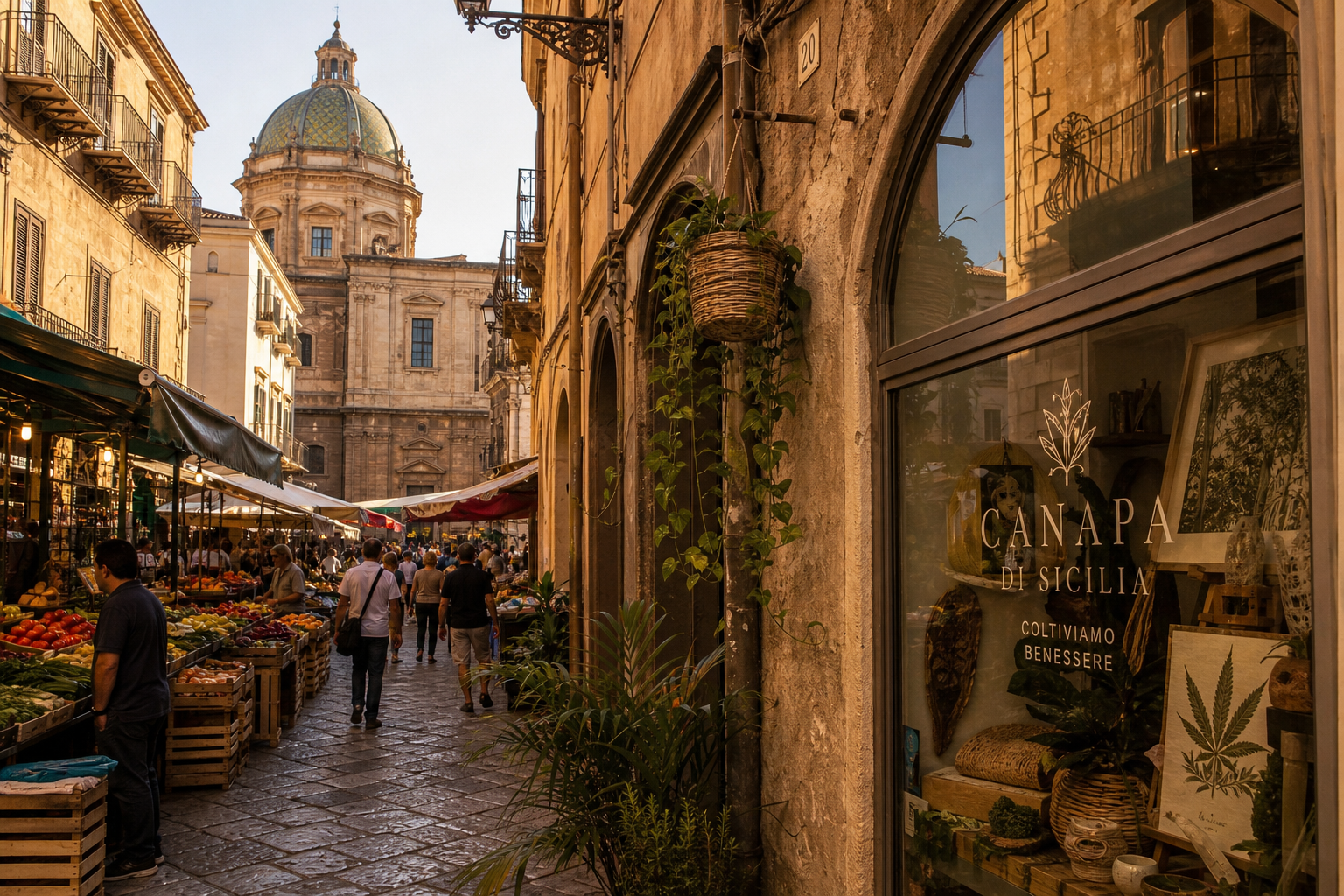
Cannabis culture in Palermo is best understood through the city’s wider social landscape: Sicily’s agricultural traditions, Mediterranean trade routes, student life, music, nightlife and Italy’s changing conversation about drug policy. Palermo does not operate under a separate cannabis regime from the rest of Italy, but local attitudes and everyday experiences can still differ from those of northern Italian cities.
For residents and visitors, the important distinction is between cultural visibility and legal permission. Cannabis may appear in discussions about harm reduction, counterculture, wellness, medicine or industrial hemp, yet recreational possession, sale and consumption remain subject to Italian law. This guide explains the context without romanticising illegal activity or suggesting that tourists can safely purchase or carry cannabis in Palermo.
How cannabis culture in Palermo fits Sicily’s history
Palermo has long been shaped by movement across the Mediterranean. Arab, Norman, Spanish and Italian influences have all left marks on the city’s food, language, architecture and commercial life. That history makes Palermo receptive to conversations about plants, traditional remedies and agricultural products, but it should not be confused with proof of a continuous local cannabis tradition.
Modern cannabis culture is more visible as a set of social and political ideas than as a single Palermo institution. Different groups may approach the subject through personal freedom, medical access, youth education, criminal justice reform, hemp farming or consumer safety. These perspectives often overlap, but they do not all support recreational use.
Hemp and cannabis are related but not interchangeable
Industrial hemp is a cannabis plant cultivated for regulated uses such as fibre, seed and other lawful products. Cannabis varieties grown for intoxicating effects raise different legal and health questions. Confusing the two can lead to poor assumptions about products sold as hemp, CBD or “light cannabis.” A product’s label, intended use and cannabinoid content do not automatically determine whether carrying or using it is lawful.
Sicily’s agricultural identity also contributes to interest in hemp as a crop and material. That interest is separate from an open recreational market. Anyone researching Palermo hemp culture should check the current rules that apply to cultivation, processing, retail products and transport rather than relying on branding or informal advice.
Cannabis laws in Palermo: the essential legal framework
Cannabis laws in Palermo are primarily national laws, not municipal rules. Italy distinguishes between different conduct and purposes, including personal possession, supply, cultivation, medical use and industrial production. The consequences can depend on the substance, quantity, circumstances and evidence of intent, so a simple online summary cannot replace professional legal advice.
Personal possession can trigger administrative consequences, while conduct connected with supply or trafficking can become a criminal matter. Public consumption may create additional issues involving nuisance, public order or the protection of minors. Selling, sharing or giving cannabis to another person is not made lawful merely because no money changes hands.
The safest approach for visitors is straightforward: do not buy cannabis from street sellers, do not carry it through airports or ports, and do not assume that a small amount is risk-free. Palermo’s historic centre, beaches, parks, festivals and nightlife areas are not exempt from national law.
For primary legal references, readers can consult Italy’s official Normattiva legal database. Because rules and interpretations can change, check the current text and seek advice from a qualified Italian lawyer when a personal situation is involved.
Why “cannabis light” can be misleading
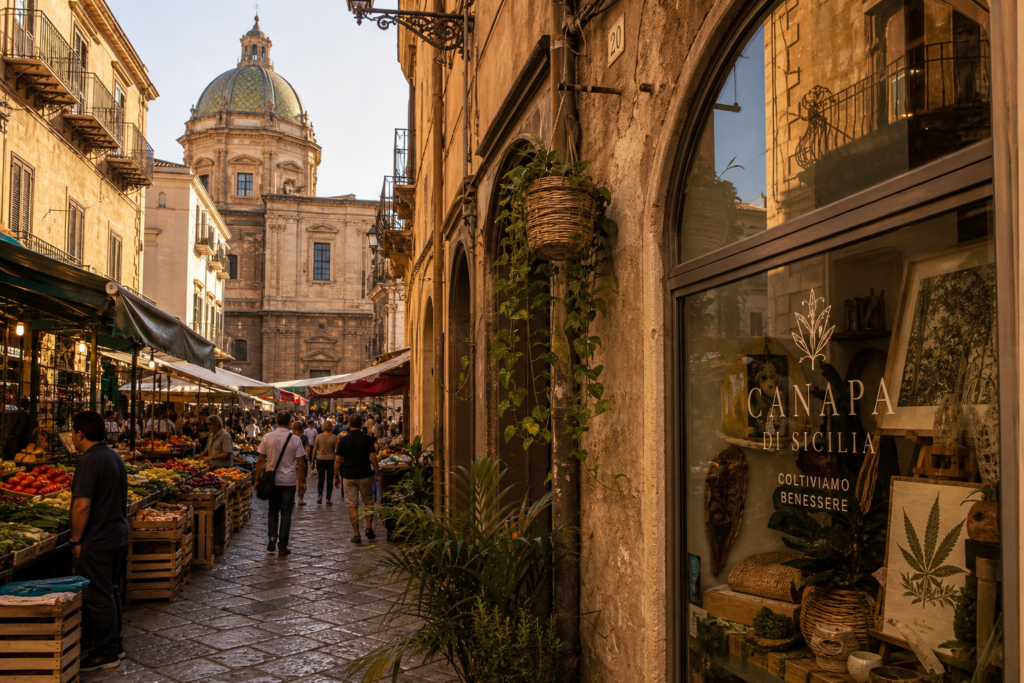
“Cannabis light” is a marketing and popular-media expression, not a guarantee of unrestricted legality. Italian rules concerning hemp-derived flowers and low-THC products have been politically and legally contested, and the practical position may depend on the specific product and the law in force at the time.
Labels can also be incomplete or inaccurate. A shop’s claim that an item is legal does not protect a customer if the product is prohibited or improperly documented. Treat edible products, oils, flowers and vapes differently from one another, and be particularly cautious with products whose ingredients, cannabinoid levels or provenance are unclear.
Medical cannabis in Palermo
Medical cannabis in Palermo is available within Italy’s regulated healthcare system for certain clinical situations and under medical supervision. It is not the same as purchasing recreational cannabis, and a patient generally needs an appropriate prescription or treatment pathway. Access can involve a doctor, a pharmacy and the availability of a suitable preparation.
Patients should discuss potential benefits, side effects, interactions and alternatives with a qualified healthcare professional. Cannabis-based treatment may cause drowsiness, impaired concentration or other unwanted effects, and it can interact with medicines or be unsuitable for some people. Do not replace prescribed care with products bought informally.
Visitors who use medical cannabis abroad should plan before travelling. A foreign prescription may not automatically authorise possession in Italy, and rules for bringing controlled medicines across borders can be specific. Keep medicines in original packaging, carry relevant documentation and confirm requirements with Italian authorities, a consulate or a healthcare professional before departure.
The Italian Ministry of Health website is a useful starting point for official information about medicines, public health and national healthcare guidance. If you are travelling with a prescribed product, verify the current requirements rather than relying on a forum or social-media post.
Where Palermo’s cannabis conversation appears
There is no single place that represents cannabis culture in Palermo. The subject may arise in university discussions, public-health campaigns, political meetings, music communities, creative spaces, agricultural projects and online groups. Some conversations focus on regulation and reducing harm; others discuss medical research, hemp products or the impact of criminalisation.
Palermo’s cultural scene is diverse, but visitors should avoid assuming that a concert, club, market or private gathering is a cannabis event. An artistic venue may host a discussion without selling cannabis, while a shop selling hemp-themed goods may not sell intoxicating products at all. Event descriptions and branding are not substitutes for checking legal status.
Social attitudes are varied
Attitudes can differ by age, neighbourhood, family background and personal experience. Some people view cannabis as a relatively ordinary part of youth culture, while others are concerned about dependency, impaired driving, mental health or exposure among minors. Both cultural visibility and health concerns are part of the local conversation.
Visitors should also remember that Palermo is a working city, not a themed destination for cannabis tourism. Being discreet does not make illegal behaviour legal, and public intoxication can put the user and other people at risk. Respect for residents, children, religious sites, historic spaces and shared transport should guide behaviour regardless of personal views.
Comparing Palermo with other Italian cities
National law applies across Italy, but the way cannabis is discussed may vary between cities. Readers researching the wider country can compare this topic with our guides to cannabis in Rome and marijuana in Milan. These comparisons are useful for cultural context, but they do not establish different legal permissions for Palermo.
Local enforcement priorities, policing practices and access to health services can change over time. That is one reason broad claims such as “Italy allows small amounts” or “every city has legal dispensaries” are unreliable. A city guide should explain the national framework while acknowledging that individual cases are fact-specific.
Practical safety advice for residents and travellers
Understanding cannabis culture in Palermo also means understanding the risks around unregulated products and impaired decisions. The following principles are useful whether someone is researching the subject academically, managing a prescription or trying to avoid legal trouble.
- Do not purchase cannabis from strangers, street sellers or social-media accounts. Product strength, contamination and legal status may be unknown.
- Never drive, cycle, swim or operate equipment while impaired. Alcohol and cannabis together can increase impairment.
- Keep all cannabis products away from children and pets, particularly edibles, which may be mistaken for ordinary food.
- Do not carry cannabis across national borders, even when travelling between countries where rules appear more permissive.
- Do not assume that CBD products, hemp flowers or vapes are automatically legal. Check the product category and current Italian rules.
- Seek medical help for severe anxiety, chest pain, confusion, loss of consciousness or other urgent symptoms after consuming a cannabis product.
People who use cannabis frequently and find it difficult to reduce should consider speaking with a doctor or addiction-support service. Seeking help is a health decision, not a moral failure. A clinician can discuss sleep, anxiety, pain, substance use and safer treatment options without relying on informal diagnosis.
Responsible cannabis tourism in Palermo
Palermo rewards visitors who focus on its food, architecture, markets, coastline, museums and living communities rather than treating the city as a place to obtain drugs. Responsible tourism means learning the law before arrival, avoiding pressure from sellers and refusing products whose source or contents are uncertain.
It also means being careful with photography and public behaviour. Do not encourage local people to participate in staged cannabis-related content, and do not film consumption in public spaces. A social-media image can expose other people to unwanted attention and create a misleading impression of what is permitted.
For travellers with legitimate medical needs, preparation is more useful than improvisation. Bring documentation, research transport rules, identify appropriate healthcare contacts and ask official authorities about medicines before travelling. These steps reduce the chance of an avoidable problem at the airport, ferry terminal or accommodation.
The future of Palermo’s cannabis culture
Palermo’s cannabis conversation is likely to remain connected to national debates about public health, medical access, hemp businesses, policing and regulation. Changes in Italian or European rules may affect products, prescriptions and enforcement, but headlines do not always translate into immediate practical permission.
The most constructive local discussion will distinguish evidence from anecdote. It can acknowledge potential medical applications while addressing dependency and mental-health risks. It can support regulated hemp production without presenting hemp as a loophole. It can also ask whether current policies protect vulnerable people effectively, without encouraging visitors to disregard the law.
Conclusion
Cannabis culture in Palermo is not a single scene or legal marketplace. It is a changing mix of Sicilian agricultural interest, Italian political debate, medical needs, youth culture, creative expression and public-health concerns. Palermo follows Italy’s national cannabis framework, so visitors should not expect city-specific permission to buy, possess, consume or transport recreational cannabis.
The practical message is simple: distinguish hemp from intoxicating cannabis, treat CBD claims cautiously, use medical products only through proper healthcare channels and avoid unregulated sellers. By approaching the subject with legal awareness, respect for residents and attention to health, readers can understand Palermo’s cannabis conversation without turning cultural curiosity into unnecessary risk.