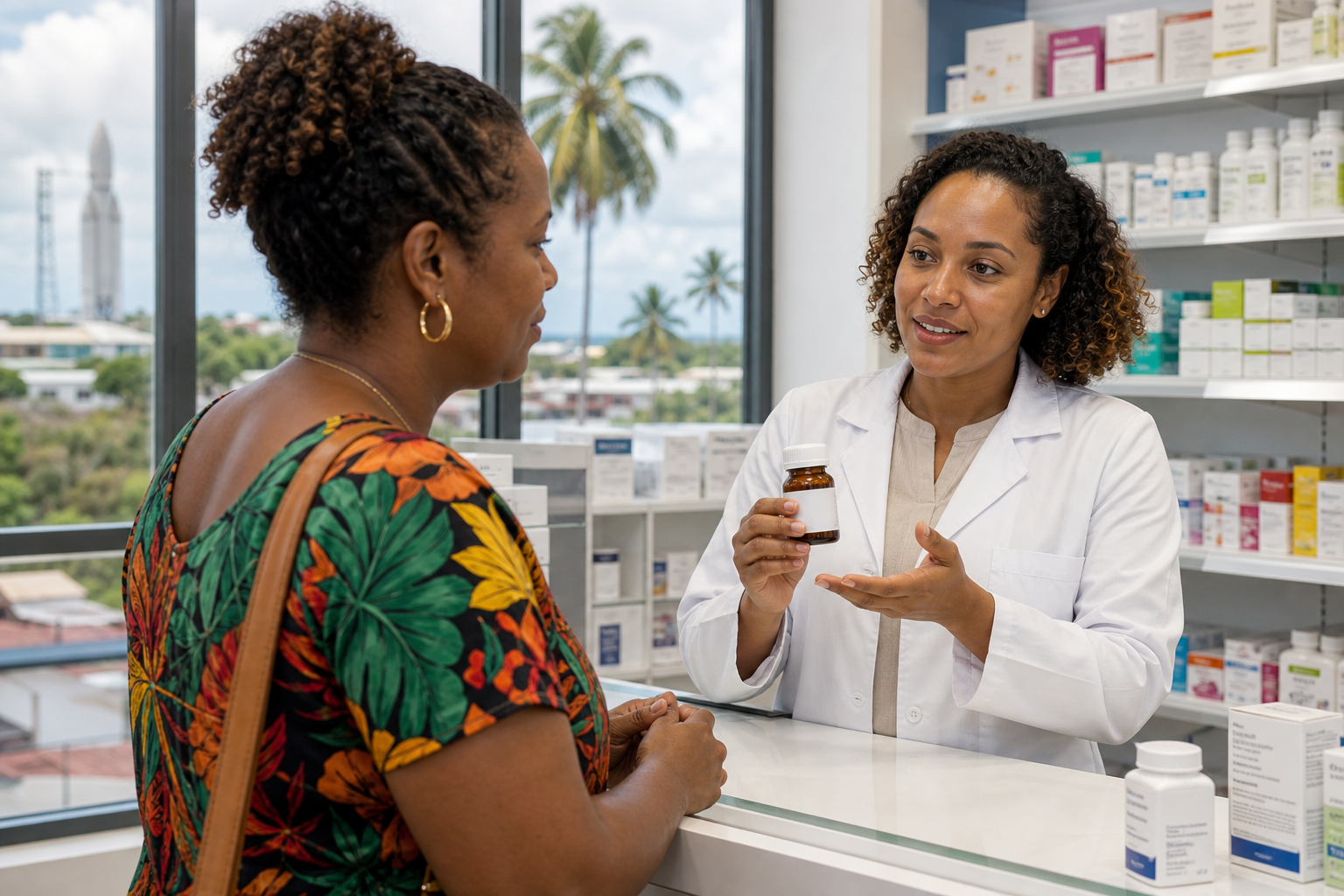
Cannabis for medical use in Kourou, France is governed by French national law, not by a separate municipal policy. For residents and visitors in Kourou, the important questions are whether a treatment is legally authorized, who can prescribe it, how it can be dispensed, and what to do if a patient arrives with cannabis-based medicine from elsewhere. France has developed a tightly controlled medical-cannabis framework, but this does not mean that ordinary cannabis products can be bought or used as medicine.
The legal position has also changed as France moved from a limited medical-cannabis experiment toward a longer-term framework. Because rules, transitional arrangements, and product availability can change, patients should confirm the latest position with a French doctor, pharmacist, or official health authority before making travel or treatment decisions.
What medical cannabis means in Kourou
In Kourou, “medical cannabis” refers to cannabis-based medicines or preparations used under medical supervision for specific conditions. It does not generally refer to dried cannabis purchased informally, cannabis bought for recreational use, or a wellness product selected without professional advice.
French regulation distinguishes between approved medicines, controlled cannabis-based products, and non-medical products such as some cannabidiol, or CBD, preparations. These categories can have different rules for composition, prescription, possession, importation, and driving. A product advertised online as therapeutic is not automatically legal, approved, or appropriate for a patient in French Guiana.
The city’s location in French Guiana does not create a separate medical-cannabis market. Pharmacies, prescribers, hospitals, and patients in Kourou operate within the French healthcare and controlled-substances system. Availability may nevertheless be more limited than in metropolitan France, so a patient should not assume that a particular product will be stocked locally.
Medical cannabis in Kourou: current legal framework
France has historically permitted cannabis-based treatment only in narrowly defined circumstances. A national experiment provided access for selected patients with serious conditions when other treatments were inadequate or poorly tolerated. The experiment was not a general legalization of cannabis, and participation required medical assessment and monitoring.
As the experimental period ended, France began putting a permanent framework in place while maintaining transitional arrangements for some existing patients. The precise timing and conditions of those arrangements can depend on the patient’s status, the product, and current implementing rules. Anyone relying on treatment should check the latest information from the French National Agency for the Safety of Medicines and Health Products (ANSM) rather than relying on social-media posts or old articles.
Several practical principles remain important:
- A diagnosis alone does not guarantee access to cannabis-based treatment.
- Medical use requires an authorized clinical pathway and a prescription or other legally required medical documentation.
- Recreational cannabis remains prohibited, including possession, purchase, and use outside the applicable legal framework.
- A foreign prescription may not automatically authorize dispensing or possession in France.
- Products obtained from an unregulated seller may have uncertain strength, contaminants, or an inaccurate label.
For broader background on national rules affecting visitors and residents, see this guide to cannabis laws for foreigners in Saint-Laurent-du-Maroni. The legal principles are national, although the local healthcare options differ.
Who may qualify for treatment?
Eligibility is determined clinically rather than by location. A doctor must consider the patient’s diagnosis, previous treatments, symptoms, interactions, mental-health history, age, pregnancy status, and risk of misuse. Cannabis-based treatment is generally considered only for defined situations where standard options have not provided sufficient benefit or have caused unacceptable problems.
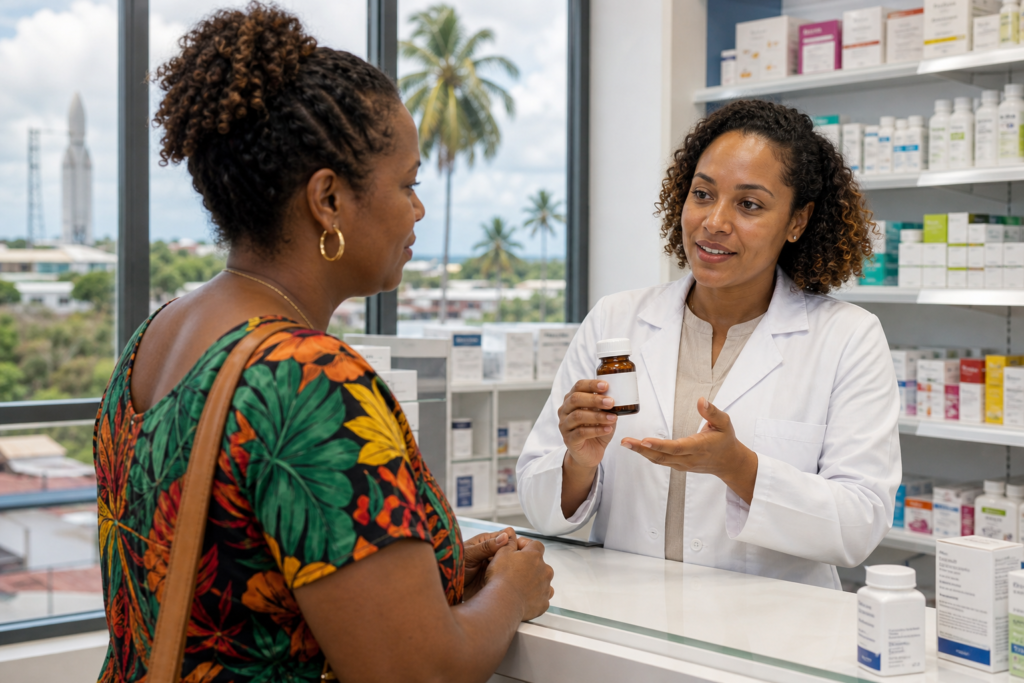
Conditions discussed in French medical policy have included severe chronic pain, painful spasticity associated with certain neurological disorders, difficult epilepsy, cancer-related symptoms, and palliative-care situations. This does not mean that every person with one of these conditions qualifies. The treating team must apply the rules that are in force and determine whether the potential benefit outweighs the risks.
Patients should bring an accurate medical history to an appointment, including medication names, doses, allergies, previous adverse effects, and relevant specialist reports. Do not stop an existing treatment or replace it with cannabis without medical advice.
How a patient in Kourou can seek lawful care
1. Start with a French healthcare professional
A patient should begin with a médecin traitant, specialist, hospital service, or another qualified healthcare professional familiar with the current French pathway. In Kourou, this may involve contacting local primary care, a hospital service, or a pharmacy for information about referral options. A pharmacist can help identify whether a prescription is valid and whether a product can be dispensed, but pharmacists do not replace the prescriber’s assessment.
2. Ask about the current access route
Because the legal framework has been evolving, ask specifically whether the requested treatment is covered by the current national system, a transitional arrangement, or an approved medicine pathway. Ask which prescriber is permitted to initiate treatment, whether specialist confirmation is required, and whether a participating pharmacy or hospital must dispense it.
3. Review the treatment plan
A legitimate consultation should cover the intended product, route of administration, starting dose, dose adjustments, expected benefits, side effects, interactions, follow-up appointments, and what to do if symptoms worsen. Treatment should be monitored rather than treated as a one-time purchase.
4. Confirm supply before travelling
Patients should contact the dispensing pharmacy before travelling to collect medicine. Stock, ordering times, identification requirements, and documentation can vary. This is especially important for a patient travelling between mainland France, French Guiana, and another country.
Travelling to or from Kourou with cannabis-based medicine
Travel creates additional legal and practical risks. A medicine that is lawful where it was prescribed may still require documentation, original packaging, or advance confirmation when carried across borders. Air carriers and customs authorities may apply their own procedures in addition to French health rules.
Keep medication in its original pharmacy packaging and carry the prescription, medical certificate, and any other official paperwork supplied by the healthcare team. Do not place loose capsules, oils, or plant material in an unlabelled container. Do not mail cannabis products to Kourou or ask another person to carry them without first confirming the applicable rules.
Before international travel, contact the relevant embassy, customs authority, airline, and French healthcare authority. The French public-service information portal is a useful starting point for checking general administrative guidance, but controlled medicines may require more specific confirmation.
Visitors searching online for “weed in Kourou” may find informal offers or misleading claims about medical use. An online seller’s statement that a product is “legal” or “prescription grade” is not proof that it may be imported, possessed, or used in France.
Safety issues and side effects
Cannabis-based medicines can cause drowsiness, dizziness, impaired attention, dry mouth, nausea, changes in appetite, anxiety, or other mental and physical effects. Some people may experience confusion, mood changes, or worsening of psychiatric symptoms. The risk can be greater when treatment is started quickly, the dose is increased without advice, or the medicine is combined with alcohol or sedating drugs.
Patients should tell their clinician about opioids, sleeping tablets, anti-anxiety medicines, antidepressants, seizure medicines, anticoagulants, and other prescription or non-prescription products. The interaction risk depends on the specific cannabis constituents, dose, route, and other medicines.
Do not drive, cycle in traffic, operate machinery, work at height, or perform safety-sensitive tasks until a clinician has explained the risks and the patient knows how the medicine affects them. French driving rules can be strict for drugs detected in the body, including medicines. A patient should ask the prescribing team for individualized advice rather than assuming that a prescription makes driving lawful.
Seek urgent medical help for severe confusion, loss of consciousness, chest pain, breathing difficulty, severe agitation, suicidal thoughts, or a suspected overdose. Keep all medicines away from children and never share a prescribed product with another person.
CBD is not the same as medical cannabis
CBD products are often sold as oils, capsules, cosmetics, or other consumer goods. Their availability does not establish that they are medical cannabis, nor does it mean that a product has been tested for a specific disease or manufactured to pharmaceutical standards.
Labels can be incomplete, and products may contain varying amounts of CBD, other cannabinoids, or traces of tetrahydrocannabinol. A patient taking a drug test, operating a vehicle, or using several medicines should discuss CBD with a healthcare professional before use. For a separate explanation of how French law treats CBD products, consult this practical guide to CBD legality in France.
What local patients should avoid
- Buying cannabis from an informal seller and describing it as a prescription treatment.
- Using another patient’s medicine or changing the dose without clinical advice.
- Assuming that a foreign prescription automatically works in a French pharmacy.
- Travelling with loose cannabis, homemade oils, or unlabelled containers.
- Combining cannabis-based products with alcohol or sedatives without medical guidance.
- Relying on an old article when a current official source is available.
These precautions apply whether someone is looking for cannabis in Kourou for chronic pain, sleep problems, anxiety, or another condition. A request for treatment should be handled through a healthcare assessment, not through informal supply channels.
Questions to ask a doctor or pharmacist
- Is my condition covered by the current French medical-cannabis rules?
- What treatment options have been tried, and why might a cannabis-based medicine be considered?
- Which product, dose, and route are intended?
- How will treatment be monitored and when is the next review?
- Could this medicine interact with my other prescriptions?
- Can I drive or travel with it, and which documents should I carry?
- Can the medicine be obtained in Kourou, or must it be ordered through another approved pharmacy or hospital?
Understanding cannabis laws in Kourou
The phrase “cannabis laws in Kourou” can be misleading if it suggests a city-specific medical exception. Kourou follows French national law. Local healthcare professionals can explain available services, but they cannot turn recreational cannabis into a lawful medicine or authorize an unapproved product.
The safest approach is to verify three things before use: the legal status of the exact product, the authority of the person prescribing or supplying it, and the documentation needed for possession and travel. When any of those points is unclear, pause and seek advice from a qualified French healthcare professional or the relevant official authority.
Conclusion
Access to medical cannabis in Kourou is possible only within the French legal and healthcare framework. It is not the same as buying ordinary cannabis, and a diagnosis or foreign prescription does not automatically provide access. Patients should use a qualified prescriber, confirm the current national pathway, arrange supply through an authorized pharmacy or hospital, and keep complete documentation for travel.
Because regulation and transitional arrangements may change, current official guidance matters more than informal websites or old summaries. For anyone considering cannabis treatment in French Guiana, a careful medical assessment and verified legal advice are the best starting points.