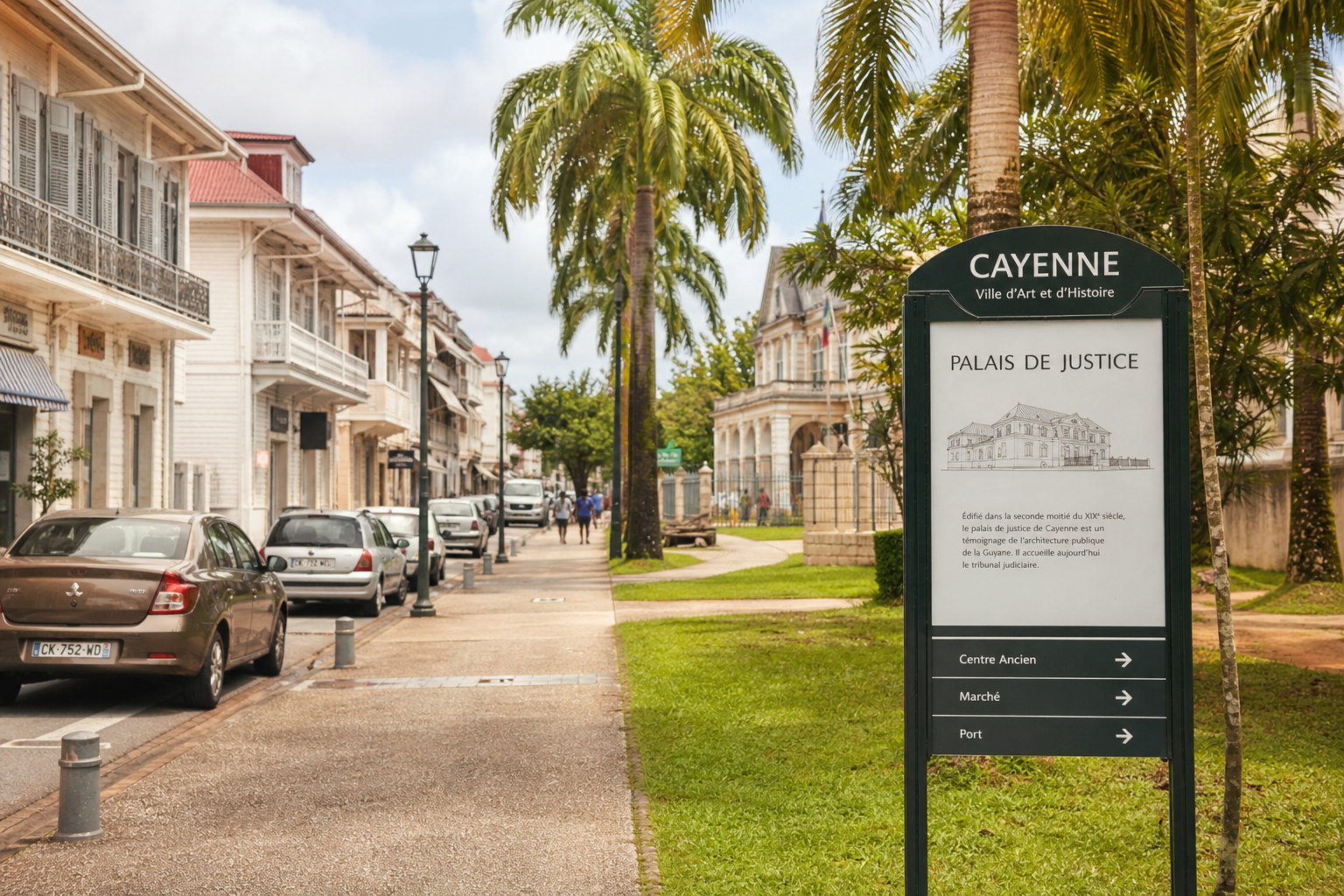
People searching for cannabis social clubs in Cayenne may expect to find private member associations similar to those operating in parts of Spain or other jurisdictions with regulated club models. Cayenne, however, follows French national law. French Guiana does not have a legal recreational cannabis-club system, and there is no lawful local venue where adults can join a club to buy or consume high-THC cannabis.
This distinction matters for residents, visitors and anyone researching weed in Cayenne. A social club may sound private or informal, but a private setting does not automatically make possession, supply or consumption legal. The practical approach is to understand the rules before travelling, avoid unverified sellers and treat health and transport issues seriously.
Are cannabis social clubs in Cayenne legal?
No. France does not currently recognise cannabis social clubs as a lawful recreational supply model. A group that grows cannabis, stores it for members, sells it or distributes it can face criminal consequences, even if membership is limited and the activity takes place away from the public.
Cayenne has no separate cannabis framework that creates an exception. As the capital of French Guiana, it remains subject to French national drug legislation. Local police and courts may assess the facts of an incident, including the quantity involved, the person’s conduct and whether there is evidence of supply, but a club’s name or membership rules do not provide legal protection.
For a broader explanation of how French rules can differ from assumptions about decriminalisation, readers can also review this practical guide to cannabis laws and regulations in Le Tampon. The location is different, but the national legal context is relevant.
Why the “private club” idea can be misleading
In some countries, cannabis clubs operate under a specific legal framework with licensing, cultivation limits, testing requirements or membership controls. France has not adopted that model for recreational cannabis. A private association formed in Cayenne would not automatically gain permission to supply its members.
Advertising a club, collecting membership fees or arranging delivery can create additional legal risks. Visitors should also be cautious about social-media accounts that describe themselves as clubs but request payment in advance, identity documents or a meeting at an unfamiliar location. These offers may involve scams, theft or police attention as well as possible drug offences.
Cannabis laws in Cayenne: possession, use and supply
The rules governing cannabis in Cayenne are broadly the same as elsewhere in France. Recreational use, possession, purchase, production and supply are prohibited. The response to a case depends on its circumstances, so a small personal-use case should not be treated as equivalent to organised trafficking. Nevertheless, there is no guaranteed amount that makes cannabis legal.
France may use a fixed criminal fine for certain straightforward cases involving drug use or possession. The availability and amount of that fine depend on the legal and factual circumstances. It does not turn cannabis into a legal product, and a case can be handled more seriously where there are aggravating factors, larger quantities, repeat conduct or indications of resale.
Supply and trafficking allegations are considerably more serious than simple personal possession. Growing plants, importing cannabis into French Guiana, arranging sales or holding cannabis for others can expose a person to more severe investigation and prosecution. Anyone contacted by police should avoid guessing about the law and should seek qualified legal advice.
Public consumption and driving
Consuming cannabis in a street, park, beach area, vehicle or other public setting can create additional problems, including confrontation with police and complaints from residents. Smoking near children, schools, public buildings or busy areas is especially inappropriate from a safety and nuisance perspective.
Driving after cannabis use is a separate and serious concern. French road rules prohibit driving after using narcotics, and enforcement can rely on drug testing rather than a person’s impression that they feel able to drive. Do not drive, ride a scooter or operate machinery after using cannabis. Arrange a sober driver or use a lawful transport option instead.
What “weed in Cayenne” searches often overlook
Online searches for weed in Cayenne can return informal delivery accounts, coded advertisements and claims about “members-only” access. These listings are not evidence of a regulated market. They may be inaccurate, disappear quickly or expose buyers to unknown potency and contamination.
- No quality guarantee: Unregulated cannabis may have an unknown THC level or contain unwanted substances.
- No reliable age control: Informal sellers may not verify age or protect vulnerable customers.
- Scam risk: A seller may demand digital payment and never provide anything.
- Personal safety risk: Meeting an unknown person with cash can create risks of robbery or intimidation.
- Legal risk: Buying, possessing or transporting the product remains unlawful.
These concerns apply to residents and tourists alike. A short visit does not create an exemption from French law, and carrying cannabis to or from Cayenne’s airport, ports or international travel routes can create particularly serious consequences.
CBD in Cayenne is not the same as recreational cannabis
CBD products are often discussed alongside cannabis, but they are not interchangeable. Some CBD products may be sold legally in France when they comply with applicable rules, including limits on THC and requirements affecting the product and its marketing. A product labelled “CBD” should not be assumed to be risk-free or automatically lawful in every situation.
Before buying CBD in Cayenne, check the ingredient information, the seller’s legitimacy and whether the product is intended for ingestion, inhalation or topical use. Avoid products with vague labelling or dramatic medical claims. CBD products can also create practical issues for people subject to drug testing, because contamination or trace THC may be possible.
Never attempt to bring cannabis flower, oils, edibles or other products across borders simply because they were purchased legally somewhere else. Laws can differ between countries and territories, and a product’s packaging does not override import restrictions.
Medical cannabis in Cayenne: what patients should know
Medical cannabis in Cayenne should not be confused with recreational access or a cannabis club. Medical use is controlled through the French healthcare system, and access depends on the applicable national framework, authorised products, prescribing rules and a patient’s clinical situation.
A person who uses cannabis for pain, sleep, anxiety or another condition should speak with a doctor or pharmacist rather than relying on an informal club. A healthcare professional can discuss approved treatments, possible interactions and safer alternatives. Patients should not stop prescribed medication or replace it with an unregulated cannabis product without medical advice.
Official information about drugs, prevention and the French public-health approach is available from France’s official drugs information service. For information about legal procedures and public services, consult the French government’s page on drug use and penalties.
Travelling with prescribed medicines
Travellers carrying prescribed medicines should keep them in original packaging and carry appropriate documentation. Controlled medicines can be subject to additional requirements, particularly when crossing borders. Ask the prescribing clinician, pharmacist or relevant official authority what documents are needed before departure.
A prescription for one medicine does not automatically authorise possession of another cannabis product. Do not assume that a medical card from another country, a dispensary receipt or a club membership card will be accepted in French Guiana.
Safer choices for visitors and residents
The safest way to avoid legal and health problems is not to purchase or use illegal cannabis in Cayenne. If someone chooses to use despite the risks, practical harm-reduction steps can reduce—but not eliminate—potential harm.
- Do not drive, swim, climb, use machinery or make important decisions after using cannabis.
- Do not mix cannabis with alcohol, sedatives or other drugs.
- Avoid unknown edibles and concentrated products because their strength can be difficult to judge.
- Do not use alone, and make sure a trusted person knows where you are.
- Keep all cannabis products away from children and pets.
- Seek urgent medical help for chest pain, severe confusion, seizures, loss of consciousness, extreme agitation or breathing problems.
These measures do not make possession legal. They are practical precautions for reducing immediate harm while recognising that the product, dose and legal consequences may be uncertain.
How to assess online cannabis-club claims
If a website or social-media account claims to operate a Cayenne club, look for warning signs rather than assuming the claim is genuine. Requests for cryptocurrency, passport photographs, a secret meeting location or a large “membership fee” should be treated as red flags. Claims that police “tolerate” a club are not a substitute for legislation or legal advice.
- Check whether the organisation identifies a real legal entity and a transparent purpose.
- Be wary of claims that French law allows personal cultivation or member distribution without conditions.
- Do not send identity documents or financial details to an unverified account.
- Do not carry a package for another person, even if it is described as a club delivery.
- If you face a legal allegation, contact a qualified lawyer rather than relying on online comments.
What to remember about cannabis clubs in Cayenne
The key point is simple: cannabis social clubs in Cayenne are not a legal recreational access route. French Guiana follows French national drug law, and private membership does not legalise cultivation, possession, supply or consumption. CBD may fall under a different set of rules, but it should not be treated as a substitute for legal recreational cannabis or as a guarantee against drug-test issues.
Visitors should avoid informal sellers, transport cannabis across borders and drive after use. People seeking treatment should use the healthcare system and confirm the current rules for any prescribed medicine. Checking official information before travelling is safer than trusting club advertisements, anonymous delivery accounts or outdated claims about decriminalisation.
Conclusion
There is no established legal cannabis social-club model in Cayenne. Searches for cannabis clubs in Cayenne may lead to informal offers, but those offers do not change the law and may involve health, fraud and personal-safety risks. Understanding the national rules, avoiding unregulated supply and seeking professional medical or legal advice where necessary are the most responsible ways to approach cannabis-related questions in French Guiana.