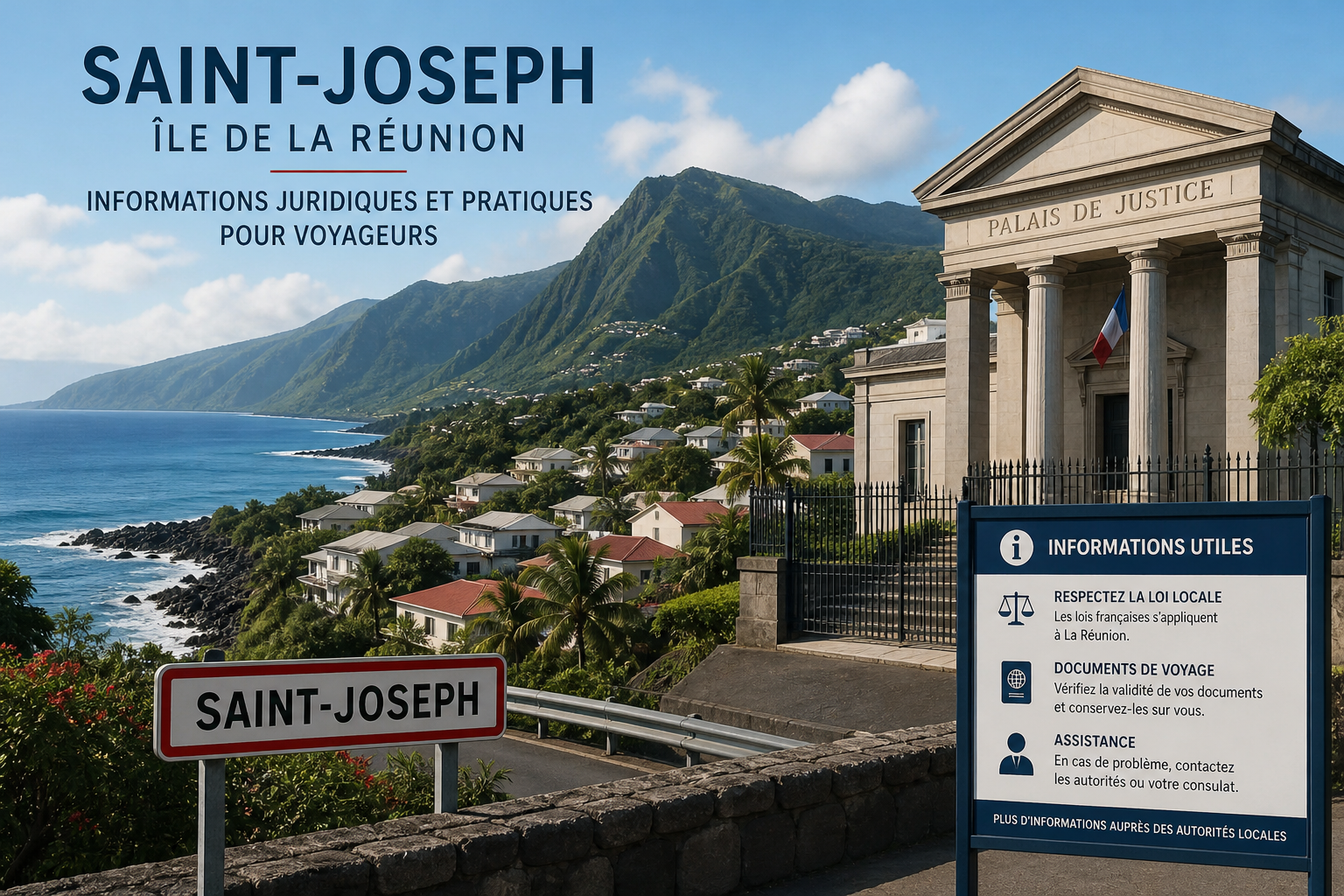
Questions about Cannabis legalization in Saint-Joseph (Réunion), France are governed primarily by French national law, not by a separate local cannabis regime. Saint-Joseph is a commune on Réunion, an overseas department and region of France, so the same basic rules on recreational cannabis, possession, public use, CBD and controlled medical access apply there as in mainland France.
That means cannabis is not legally available for ordinary recreational sale or use in Saint-Joseph. A local business, private gathering or informal market cannot create an exception to national law. This guide explains what residents and visitors should know, how the rules apply in everyday situations, and where to find safer, more reliable information.
Cannabis legalization in Saint-Joseph (Réunion), France: the current position
France has not legalized recreational cannabis. Cannabis containing prohibited levels of THC remains a controlled drug, and its production, sale, supply, transport and possession can lead to criminal or administrative consequences. The fact that cannabis may be legal or decriminalized in another country does not change the position when entering Réunion.
In practical terms, there is no licensed recreational cannabis retail system in Saint-Joseph. Residents cannot lawfully buy ordinary cannabis from a dispensary, and visitors should not assume that a shop, website or social-media seller offering cannabis is operating legally. Purchasing from an unregulated source also creates risks involving unknown potency, contamination, fraud and police action.
The national framework can change through legislation, court decisions or government policy. For the most current general explanation of drug-use penalties, consult the French government information on drug use and penalties. Local police and courts apply the law in the circumstances of each case.
How cannabis laws in Saint-Joseph apply to possession and use
Possessing cannabis for personal use is not automatically lawful because the quantity is small. French authorities may respond to simple drug use or possession with a fixed criminal fine in eligible cases, while other situations can result in investigation, prosecution or additional penalties. The response may depend on the facts, the person’s history, the quantity, indications of supply and any associated conduct.
Smoking or consuming cannabis in a public place can create separate practical problems even when no sale is alleged. Beaches, roads, markets, parks, accommodation areas and other public locations are not safe places to assume that use will be tolerated. Public use can attract police attention and may affect other offences or local public-order concerns.
A fine is not the same as legalization. It is one possible enforcement mechanism for certain cases; it does not give someone a right to possess, consume or purchase cannabis. Failing to pay a fine, challenging it unsuccessfully or being linked to supply may lead to more serious consequences.
Possession, supply and cultivation are different issues
- Personal possession: a small amount may still be unlawful and may result in a fine or criminal proceedings.
- Supply or sale: sharing, selling or transporting cannabis for another person can be treated more seriously than simple personal use.
- Cultivation: growing cannabis plants without the required legal basis can expose a person to criminal liability, even if the crop is intended for personal use.
- Importation: bringing cannabis to Réunion by air, sea or post creates customs and drug-law risks. A product legally bought elsewhere may still be prohibited on arrival.
For comparison, readers can review this explanation of cannabis possession rules in Agen. The location differs, but the underlying national framework is relevant to Saint-Joseph as well.
Weed in Saint-Joseph: public places, driving and accommodation
Searching for “weed in Saint-Joseph” often leads to informal offers or outdated claims that do not reflect French law. The safest assumption is that recreational cannabis is prohibited unless a clearly defined medical or other legal exception applies. Do not rely on a seller’s statement that a product is “approved,” “natural” or “legal” without checking its composition and legal status.
Driving after using cannabis is particularly serious. French road rules prohibit driving under the influence of drugs, and a positive test can create consequences even when the driver does not feel impaired. Combining cannabis with alcohol increases safety risks and can complicate the legal situation. Anyone who has used a psychoactive product should arrange another way to travel rather than drive, ride a scooter or operate machinery.
Hotels, guesthouses and holiday rentals may also prohibit smoking or vaping on the premises. A property owner’s permission cannot override national drug law, and smoke can create fire, nuisance or property-damage issues. Visitors should avoid carrying cannabis through airports, ports or security-controlled areas, including when travelling between Réunion and another jurisdiction.
CBD in Saint-Joseph: why product labels need caution
CBD products are not automatically equivalent to recreational cannabis. Some CBD products may be sold legally when they meet applicable French and European requirements, including rules concerning the source plant, THC content, presentation and marketing. However, legality can depend on the specific product rather than the word “CBD” alone.
Consumers should be careful with flowers, oils, vapes, edibles and imported products. Labels may be incomplete, laboratory testing may be unclear, and products marketed online may not comply with French rules. Even products described as non-intoxicating can create a risk of an unexpected test result if they contain trace THC. CBD products can also interact with medicines or cause unwanted effects.
Buying CBD in Saint-Joseph does not provide a defence for possessing a separate high-THC cannabis product. Keep packaging and receipts where appropriate, but understand that documentation from a seller does not guarantee that a product complies with French law.
Medical cannabis in Saint-Joseph: access is not recreational legalization
Medical cannabis in Saint-Joseph should be understood as a tightly controlled health-care issue, not as a general permission to buy or use cannabis. Patients should speak with a qualified doctor or pharmacist about approved treatments, eligibility, potential interactions and the rules that apply to any prescription or treatment pathway available at the time.
A medical condition alone does not make ordinary cannabis legal. A patient should not substitute products from an informal seller for prescribed medicine, and a prescription or medical letter from another country may not automatically authorize possession, importation or use in France. Travellers carrying controlled medicines should verify documentation and transport requirements before departure.
People seeking care can start with their treating doctor, a local pharmacy or an appropriate public-health service. Do not stop an existing treatment or begin cannabis-based self-medication without professional advice. Cannabis can affect attention, coordination and drug metabolism, and risks may be greater for adolescents, pregnant people and those with certain psychiatric or cardiovascular conditions.
What residents and visitors should do
- Check the source of legal information. Use French government or health authorities rather than social-media posts, travel forums or seller claims.
- Do not carry cannabis across borders. This includes airport luggage, parcels, vehicles and products bought legally in another country.
- Never drive after cannabis use. Arrange a sober driver or another form of transport.
- Separate CBD from high-THC cannabis. Check the actual product and its compliance rather than relying on branding.
- Ask a health professional about medical use. Do not treat an informal product as a prescription medicine.
- If contacted by police, remain calm. Do not obstruct an inspection, and seek qualified legal advice if the matter is more than a routine information request.
For broader context, the French national drug information portal, Drogues-info-service and public drug information resources, provides health and prevention guidance. It is useful for understanding risks, support options and the difference between prevention information and legal authorization.
Why local context still matters in Saint-Joseph
National law sets the legal boundaries, but daily circumstances in Saint-Joseph can affect how a situation develops. Police attention may be more likely in public spaces, around events, near transport points or where complaints involve nuisance, unsafe driving or suspected dealing. A quiet residential setting does not make possession legal, and a tourist setting does not provide special protection.
Réunion also has its own travel geography. Moving between communes, travelling to the coast or airport, and using roads or maritime connections can turn possession into a transport or border issue. Visitors should plan around the law before travelling rather than trying to assess legality after arriving.
Claims about “legal cannabis shops” should be examined carefully. A business might sell compliant hemp-derived products, accessories or unrelated goods; that does not mean it sells recreational cannabis. A product’s appearance is not a reliable guide to its THC content or legal classification.
Frequently asked questions about cannabis in Saint-Joseph
Can adults legally buy recreational cannabis in Saint-Joseph?
No. France does not currently provide a legal recreational cannabis market in Saint-Joseph or elsewhere in the country. Adults remain subject to national restrictions on possession, use, supply and cultivation.
Is cannabis decriminalized in Réunion?
Some cases of use or possession may be handled through a fixed fine rather than immediate prosecution, but this does not make cannabis legal. More serious or disputed cases can still lead to criminal proceedings.
Can I bring cannabis from another country to Réunion?
You should not. Importing or transporting cannabis can create customs and criminal-law consequences, regardless of whether it was purchased legally where you started your journey.
Is CBD always safe and legal?
No. Some compliant CBD products may be available, but legality depends on the product’s ingredients, THC level, source and presentation. CBD can also affect health or drug testing.
Conclusion
Saint-Joseph does not have a separate recreational cannabis legalization system. French national law applies: ordinary THC cannabis remains prohibited outside narrow, controlled exceptions, and possession, public use, supply, cultivation and importation can all create legal risks. CBD products require product-specific caution, while medical access must be handled through legitimate health-care channels.
For residents and visitors, the most practical approach is simple: do not buy or carry recreational cannabis, never drive after using drugs, treat imported products with suspicion and check current guidance before travelling. Reliable official information is more useful than local rumors or marketing claims, particularly because enforcement and health rules can change.