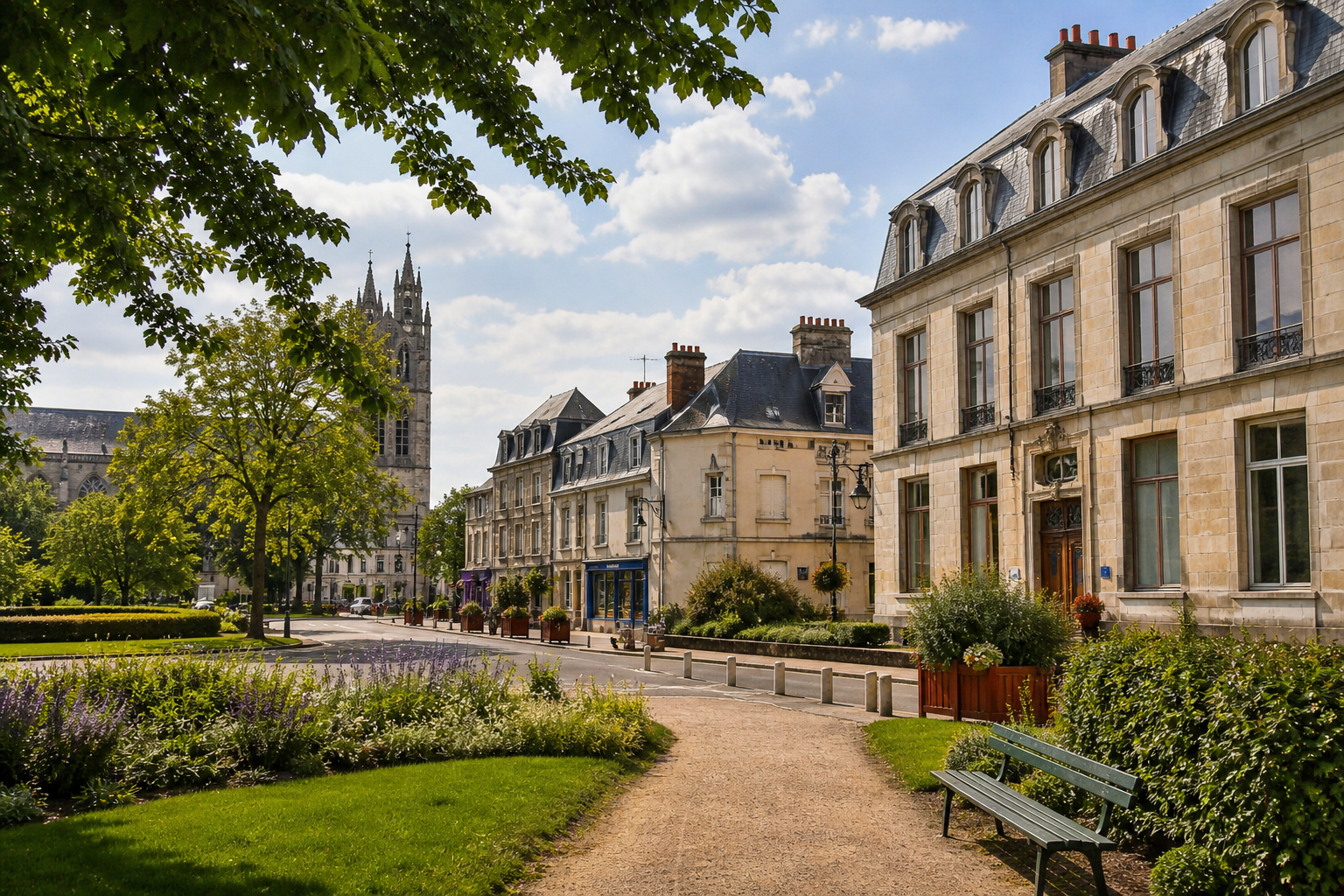
Welcome to this Cannabis guide for tourists in Compiègne. Compiègne is known for its imperial history, forest, museums and easy rail connections, but visitors should not assume that French cannabis rules work like those in countries with legal recreational markets. Cannabis remains prohibited for recreational possession, purchase, supply and use in France, including in Compiègne.
This guide explains the practical issues tourists are most likely to face: possession, public consumption, CBD, prescribed medicines, driving, accommodation and crossing borders. The rules are national, so there is no separate tourist cannabis system or local dispensary framework in Compiègne. When in doubt, the safest approach is not to carry or use cannabis during your trip.
Cannabis guide for tourists in Compiègne: the legal position
French law prohibits the unauthorised use, possession, acquisition, transport and supply of cannabis. This applies to residents and visitors alike. A short stay, foreign passport or cannabis prescription from another country does not automatically create an exemption under French law.
Police and gendarmerie may respond to suspected drug use or possession. Depending on the circumstances, an adult found with a small quantity for personal use may be offered a fixed penalty procedure, but this is not the same as legalisation. A case can still be treated more seriously where the quantity, conduct or surrounding evidence suggests supply, repeated offending or another offence.
For current official information on drug use, penalties and procedure, consult the French public-service guidance on drug use and penalties in France. Rules and enforcement procedures can change, so tourists should check official information close to their travel date.
Does Compiègne have different rules?
No. Compiègne is in the Oise department of Hauts-de-France, but national French law governs cannabis. Municipal rules may affect conduct in particular public places, and police can enforce public-order or nuisance provisions, yet a town cannot create a recreational cannabis market for visitors.
Searches for cannabis laws in Compiègne should therefore be understood as searches for French law as it applies locally. A hotel, campsite, museum, transport operator or event venue may also impose its own no-smoking and no-drug policies.
Possession, purchase and sharing
Buying cannabis from an informal seller is illegal and creates risks beyond the drug offence. Visitors cannot reliably verify what a product contains, how strong it is or whether it has been contaminated. An apparent offer near a station, nightlife area or tourist site may also be a scam or an attempt to involve a visitor in theft or another crime.
Do not carry cannabis for another person, accept a package, or agree to store products in luggage or accommodation. Sharing cannabis is not a harmless social gesture under French law; it can raise questions about supply or distribution. Avoid photographing, advertising or arranging cannabis transactions in public spaces.
- Do not buy or possess recreational cannabis in Compiègne.
- Do not transport it between towns, airports, hotels or railway stations.
- Do not share, sell or accept cannabis from another traveller.
- Do not assume that a small amount is automatically permitted.
Visitors researching weed in Compiègne should be particularly cautious with online listings and social-media messages. A website, private chat or delivery claim is not evidence that a transaction is legal or safe.
Public consumption and private accommodation
Using cannabis in a street, park, forest, station, vehicle, festival area or outside a café can attract police attention and may expose other people to smoke. Compiègne’s forest and public green spaces are places to enjoy responsibly, not locations for cannabis consumption. Smoking near children, pedestrians or building entrances can also create separate nuisance or safety issues.
Private accommodation does not legalise cannabis. Hotels, hostels, holiday rentals and campsites commonly prohibit smoking indoors, and many prohibit drugs altogether. A violation can lead to cleaning charges, removal from the property, loss of a deposit or contact with authorities. Read the accommodation rules and never use a balcony or room in a way that affects neighbours or triggers a fire alarm.
There is no reliable legal workaround based on consuming cannabis inside a rented room. “Private” describes the setting, not an exemption from French drug law.
CBD in Compiègne: why product labels matter
CBD products are not interchangeable with marijuana or hashish. Some CBD products may be sold legally when they comply with French and European requirements, including limits concerning THC and the type of product. However, legality depends on the product, its composition, presentation and applicable rules; a label saying “CBD” is not a guarantee.
CBD flowers and other products can look and smell like illegal cannabis. Travellers should not assume that a product purchased in another country can be carried into France, and they should be especially careful with oils, vapes, edibles and products containing measurable THC. Product rules can be complex, while border authorities may focus on the substance rather than a seller’s marketing description.
If you choose to investigate CBD in Compiègne, use only reputable, compliant retail channels and ask for clear product information. Never carry an uncertain product across an international border. CBD can also cause a positive drug test where trace THC is present, which matters to drivers and some workers.
Medical cannabis and prescription medicines
Medical cannabis is not a simple tourist-access option in France. France has developed tightly controlled medical cannabis arrangements and trials, but visitors should not interpret this as a general right to obtain cannabis from a pharmacy. Access, prescribing, dispensing and product categories depend on French rules and an authorised medical pathway.
A foreign medical cannabis prescription does not automatically permit possession or use in France. If you take a prescribed cannabis-based medicine, contact the French embassy or consulate, your prescribing clinician and the relevant French health authorities before travelling. Keep the medicine in original packaging, carry a copy of the prescription and bring documentation explaining the treatment, but understand that documents do not guarantee entry or possession rights.
For medical cannabis in Compiègne, the practical first step is to speak with a licensed healthcare professional rather than a seller or online forum. Do not stop essential treatment without medical advice. If you need urgent medical help while visiting, call French emergency services or ask your accommodation to help you contact an appropriate healthcare provider.
Trains, cars and the Compiègne area
Compiègne is easy to reach by train and road, but transport creates additional risks. Carrying cannabis on a train, in a taxi, in a hired car or across departmental boundaries remains possession and transport. Do not place cannabis in checked luggage, hand luggage or a vehicle when travelling to or from Compiègne.
Driving after using cannabis is illegal and dangerous. French road law treats drug-impaired driving seriously, and testing can create consequences even when a traveller believes the effects have ended. Never drive, cycle or operate a vehicle after using cannabis. Do not rely on coffee, sleep or a subjective feeling of sobriety to remove legal or safety risks.
Visitors planning a wider trip can also compare this advice with our practical guide to cannabis regulations for tourists in Évreux. The central principle is the same: travel within France does not create a legal cannabis exception.
What to do if police speak to you
Stay calm, be polite and follow lawful instructions. Do not argue about French policy in the street, run away or attempt to hide an item. If you do not understand what is being said, ask whether an interpreter is available and request clarification before signing documents you cannot read.
Visitors who are detained, questioned as suspects or issued with a penalty should contact their embassy or consulate and seek qualified legal advice. Consular officials may explain local procedures and help contact family, but they cannot cancel a French investigation or guarantee release.
Never attempt to dispose of cannabis in public toilets, parks, drains or bins in a way that creates another problem. If you are concerned about an item in your luggage, ask for legal advice rather than making a rushed decision.
A safer itinerary for cannabis-free travel
The simplest risk-management plan is to leave cannabis at home and avoid informal offers during the trip. Compiègne offers plenty to do without adding legal uncertainty: explore the historic centre, visit cultural attractions, enjoy the forest in accordance with local guidance and use public transport responsibly.
- Check French rules before departure, not after arrival.
- Keep passports, medicines and important documents secure.
- Follow no-smoking rules in accommodation and public places.
- Use a designated driver or public transport rather than driving after any intoxicating substance.
- Ask a pharmacist or doctor about legitimate health concerns.
- Do not take cannabis, uncertain CBD products or cannabis-infused foods across borders.
For broader context on visitor-focused rules elsewhere in France, our guide to cannabis laws for travellers in Albi offers a useful comparison, while remembering that the underlying national framework applies in Compiègne too.
Conclusion
Cannabis in Compiègne is governed by French national law, not by a tourist-friendly local market. Recreational possession, purchase, sharing and use remain unlawful, and CBD or medical products require careful attention to composition, documentation and border rules. Public consumption, driving after use and carrying products between destinations can add further legal and safety consequences.
The most dependable advice for visitors is straightforward: do not buy or carry recreational cannabis, do not accept unverified products, and obtain professional advice before travelling with any cannabis-based medicine. Checking official French guidance before departure will help you enjoy Compiègne with fewer surprises.