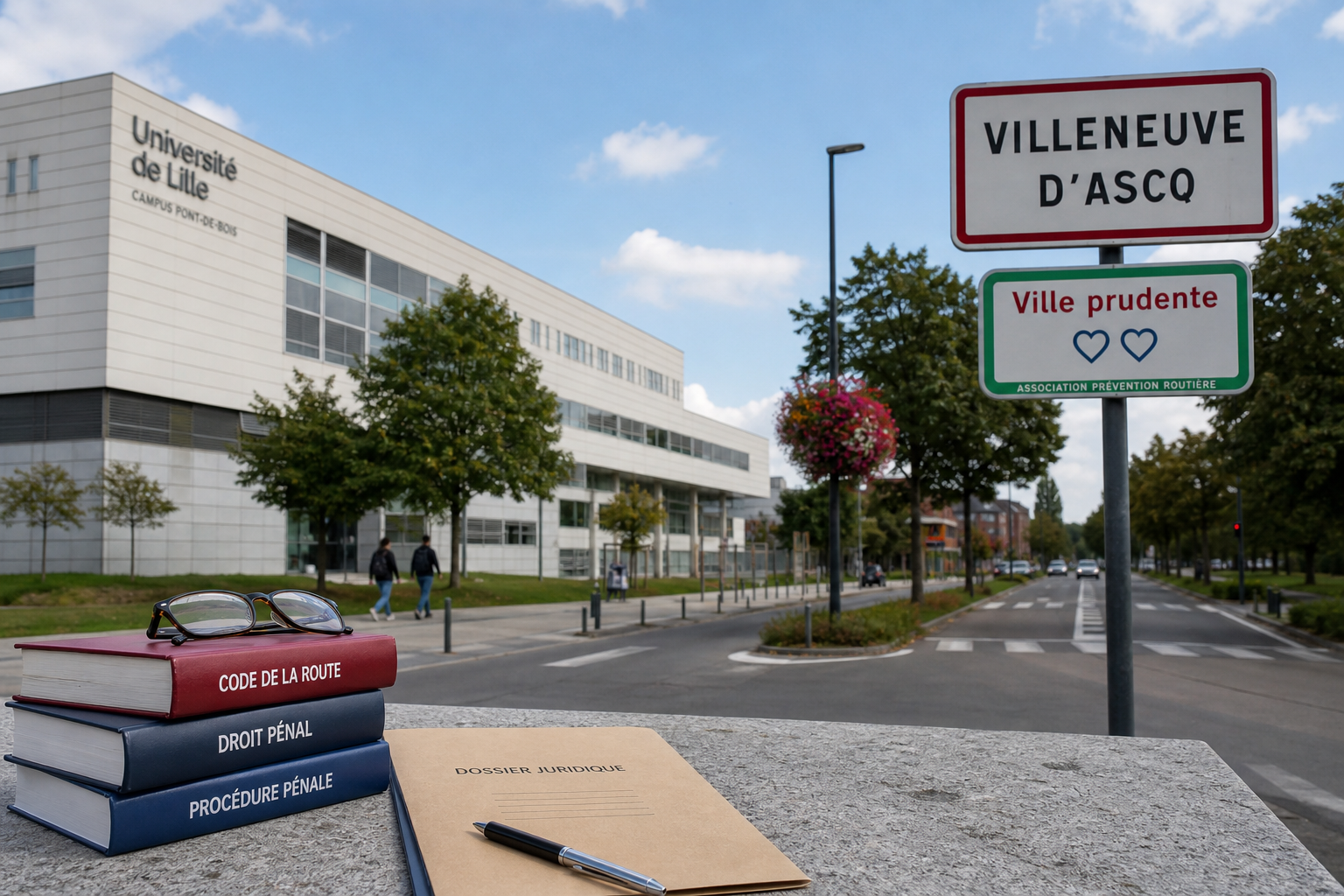
Understanding cannabis laws in Villeneuve-d’Ascq means starting with French national law. Villeneuve-d’Ascq does not have a separate legal cannabis market or a local rule that permits recreational marijuana. As in the rest of metropolitan France, cannabis containing prohibited levels of THC is treated as an illicit narcotic, whether it is possessed, used, shared, transported or sold.
This guide explains the rules most relevant to residents, students, visitors and commuters in the Lille metropolitan area. It covers possession, public consumption, driving, CBD, medical access and what to do if you encounter a legal problem. Laws and administrative procedures can change, so this article is general information rather than legal advice.
Cannabis laws in Villeneuve-d’Ascq: the national framework
French law prohibits the unauthorized use, possession, acquisition, production, transport and supply of narcotic drugs. Cannabis is included in that framework. The location does not change the basic rule: buying or carrying cannabis in Villeneuve-d’Ascq is not legal simply because it occurs in a private home, near a university campus or elsewhere in the Lille area.
French authorities may respond differently depending on the circumstances. A small quantity intended for personal use may lead to a fixed criminal fine, while a case involving larger quantities, repeated conduct, suspected resale, cultivation or distribution can be treated more seriously. The type of evidence, the person’s history and the surrounding facts can all matter.
For a plain-language overview of the French rules on narcotic drug use, consult the official Service-Public information on drug use. It is a useful starting point, but it does not replace advice from a qualified French lawyer.
Is recreational cannabis legal?
No. France has not legalized recreational cannabis. There are no licensed adult-use dispensaries in Villeneuve-d’Ascq, and an informal seller, social-media contact or private delivery service does not become lawful because the transaction is discreet.
Visitors should also avoid assuming that rules from another country apply in France. Cannabis legally purchased abroad may still be illegal to possess, bring into France or use here. Crossing a border with cannabis can create separate customs and criminal-law issues.
Possession, use and the fixed fine
French authorities can issue a fixed penalty for certain straightforward cases of drug use. The commonly stated amount for cannabis use is €200, with a reduced amount when paid promptly and an increased amount when payment is late. The exact procedure, deadline and consequences should be checked on the notice received, because failure to pay can move the matter into a court process.
A fixed fine is not the same as legalization or a civil penalty. It is a criminal-law response, and the case may have wider consequences depending on the circumstances. Police or prosecutors may use a different procedure where there are aggravating facts, disputed allegations, a substantial quantity or suspected dealing.
Possession can be relevant even when the person says the cannabis was for personal use. Sharing cannabis with another person, arranging a sale, carrying it for someone else or storing it for a group can create additional risk. Do not assume that separating cannabis into small bags, keeping it in a vehicle or using a private messaging service makes the conduct safe.
For comparison, readers can review our practical guide to cannabis possession regulations in nearby Dunkerque. The legal principles are national, although the practical setting and enforcement encounter may differ.
Public consumption and local places to avoid
Smoking or consuming cannabis in a public place is unlawful under the national prohibition on drug use. That includes streets, parks, transport areas, shopping districts, sports facilities and other places open to the public. Villeneuve-d’Ascq’s university environment, including areas around campuses and student housing, does not create an exception.
Using cannabis in a shared building or semi-public area can also lead to complaints, intervention by security staff or conflict with housing rules. A landlord, residence operator, university or employer may impose additional contractual or disciplinary rules even where a criminal prosecution does not follow.
Public-order measures can also affect smoking generally. Local signs, building policies and temporary restrictions may prohibit smoking or vaping in particular areas. These rules do not make cannabis lawful elsewhere; they are additional restrictions on where conduct may occur.
Private use is not a blanket exception
Private use should not be confused with a legal recreational-use right. Entering a private apartment may reduce the likelihood of being observed in public, but it does not legalize possession or consumption of prohibited cannabis. Odour, complaints, fire risk, visitors, shared accommodation and landlord rules can still create practical problems.
Driving after using cannabis in Villeneuve-d’Ascq
Driving after cannabis use is a serious risk. French road law prohibits driving after using narcotics, and enforcement is not based only on whether a driver feels impaired. A positive test can lead to criminal and driving-licence consequences.
This matters around Villeneuve-d’Ascq because residents and visitors may drive between neighbourhoods, Lille, the university area, shopping centres and nearby towns. Do not drive, cycle in traffic or operate machinery after using cannabis. Waiting until you feel normal is not a reliable legal test, because detectable substances may remain after noticeable effects have faded.
Potential consequences can include roadside testing, licence suspension or cancellation, fines and prosecution. The risk becomes more severe when drug use is combined with alcohol, dangerous driving, an accident or injury.
CBD and low-THC products
CBD products are not automatically equivalent to illegal cannabis, but legality depends on the product and how it is marketed and used. French and European rules place conditions on hemp varieties, THC content, product categories, labelling and distribution. A product advertised as “CBD” can still raise questions if it contains prohibited THC levels or fails to comply with applicable requirements.
When buying CBD in Villeneuve-d’Ascq, check the product label, batch information, declared THC content and the identity of the seller. Avoid loose flowers, oils or edible products with unclear provenance. Do not treat a shop’s claim that a product is legal as a substitute for compliance with French rules.
CBD may also affect driving and drug testing. Some products can contain trace THC, and contamination or inaccurate labelling may create a practical risk. People subject to workplace testing, professional driving rules or safety-sensitive duties should be particularly cautious.
CBD is not a guaranteed treatment for pain, anxiety, insomnia or another medical condition. A pharmacist or doctor can help assess interactions and safer alternatives. Do not stop prescribed treatment because a CBD product is marketed as natural.
Medical cannabis in Villeneuve-d’Ascq
Medical cannabis in Villeneuve-d’Ascq is not the same as buying recreational cannabis from a shop. Access to cannabis-based medicines in France has been tightly controlled and linked to medical supervision. The former national medical-cannabis experiment was not a general authorization for patients to grow, buy or possess ordinary cannabis.
France has been developing a more permanent framework for cannabis-based medicines, but implementation, eligible conditions, products, prescribing rules and reimbursement arrangements must be checked against current official information. Patients should ask a French doctor or pharmacist about lawful options rather than importing products or self-medicating.
The French National Agency for the Safety of Medicines and Health Products (ANSM) is an authoritative source for current information about medicines, safety and regulatory developments. A healthcare professional can also explain whether an authorized treatment is appropriate and how it may affect driving or other medicines.
Prescriptions from another country
A foreign prescription does not automatically authorize possession or importation of cannabis in France. Rules may depend on the product, country of issue, quantity, documentation and border requirements. Before travelling, contact the relevant French authorities and carry only medicines that are lawfully prescribed, packaged and documented.
Buying, selling and cultivating cannabis
Buying cannabis from an informal source is unlawful and carries practical risks beyond prosecution. Products may be mislabelled, contaminated or much stronger than expected. Online sellers may also collect personal information, demand payment in advance or use delivery arrangements that expose the buyer to further legal problems.
Selling, supplying or transporting cannabis for another person is more serious than simple personal possession. Payment is not required for authorities to investigate suspected supply: repeated transfers, messages, packaging, cash and the quantity involved may all be relevant.
Growing cannabis at home is also not a legal personal-use option. Seeds, plants and equipment can form part of an investigation, while cultivation in an apartment may create fire, electrical, odour or tenancy issues. Do not assume that a balcony, garden or locked room provides a lawful exception.
What to do after a police encounter
If police stop you or issue a fixed-penalty notice, remain calm and provide accurate identification. Read the paperwork carefully, note the payment or challenge deadline and keep copies of every document. Do not ignore a notice simply because the quantity was small or because you believe the cannabis was for personal use.
- Do not sign or state facts you do not understand.
- Ask for an interpreter if you are not comfortable in French.
- Contact a French lawyer promptly if you are detained, questioned about supply, searched or involved in a driving case.
- Seek urgent medical help if someone has severe confusion, chest pain, breathing difficulty or loss of consciousness after consuming a product.
Visitors may also find our guide to cannabis regulations for tourists in France useful for general travel planning. The same national prohibition applies to tourists and residents, although immigration, employment or travel consequences can vary by situation.
Practical legal checklist for residents and visitors
- Assume recreational cannabis is illegal in Villeneuve-d’Ascq unless an official rule clearly says otherwise.
- Do not carry, share, sell, grow or transport cannabis for another person.
- Never drive or operate machinery after using cannabis.
- Check CBD labels and avoid products with unclear THC content or origin.
- Keep medical documentation for lawful medicines and verify import rules before travelling.
- Follow police paperwork deadlines and obtain legal advice when the facts are disputed or serious.
Conclusion
The key point about cannabis in Villeneuve-d’Ascq is that local geography does not create a separate recreational market. French national law prohibits unauthorized cannabis use and related activities, while fixed fines may apply in some personal-use cases. Public consumption, driving after use, informal sales, home cultivation and careless cross-border travel can create substantially greater risks.
CBD and medical products require separate analysis because their legality depends on product standards, authorization and medical supervision. When in doubt, use current French government information and speak with a qualified pharmacist or lawyer. That approach is safer than relying on a seller, social-media advice or assumptions based on cannabis rules in another country.