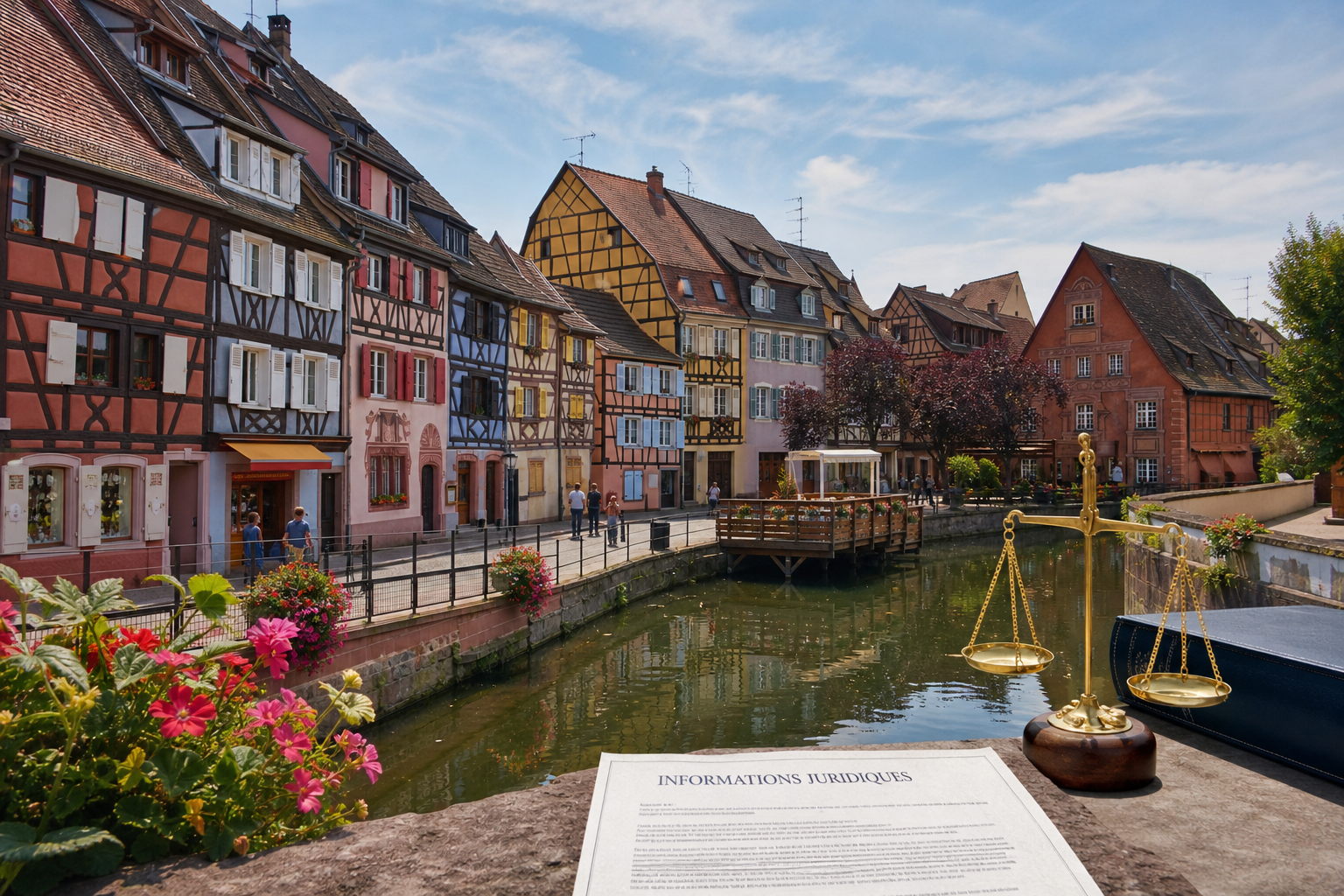
Understanding Cannabis possession limits in Colmar requires one important clarification: French law does not establish a simple legal quantity that adults may carry for recreational use. Cannabis remains an illegal narcotic in France, and possession can lead to a fine, seizure, or criminal proceedings depending on the circumstances.
Colmar does not have a separate municipal cannabis limit. The same national rules apply in Colmar as in the rest of metropolitan France. That matters for residents, tourists, students, and people travelling through Alsace, particularly because Colmar is close to the German and Swiss borders. Cannabis that may have been obtained legally elsewhere cannot automatically be possessed, used, or transported under French law.
This guide explains how the rules generally work, what the fixed fine means, why quantity is not a safe threshold, and what to consider before travelling with cannabis, CBD products, or prescribed medicines.
Is there a legal possession limit for cannabis in Colmar?
No. France does not provide a recreational possession allowance measured in grams. A person should not assume that a small amount is lawful simply because it is intended for personal use. Possession, acquisition, transport, and use of cannabis can all create legal problems.
In practice, police and prosecutors may consider the amount, packaging, statements, location, previous conduct, and other evidence when deciding how to respond. A small quantity associated with personal use may be dealt with through the fixed penalty procedure, but that is an enforcement option rather than a legal exemption.
Someone carrying several bags, a large quantity, scales, cash, customer messages, or other indications of supply may face a much more serious investigation. The distinction is not based only on weight. There is no reliable “under this number of grams” rule that makes possession safe in Colmar.
Cannabis possession limits in Colmar and the French fixed fine
For some straightforward cases involving personal use of narcotics, French authorities may issue an amende forfaitaire délictuelle, commonly described as a fixed criminal fine. The standard amount is generally €200. It may be reduced to €150 if paid promptly and increased to €450 if it is not paid within the applicable period.
The fixed fine does not legalise cannabis and does not guarantee that every possession case will be handled this way. It is a simplified procedure for eligible cases. The substance may still be seized, and the event can have consequences beyond the immediate payment, including issues involving repeat conduct, immigration, employment screening, or other legal proceedings.
For the official explanation of the fixed fine and drug-use offences, consult the French government information on the fixed fine for narcotics use. Rules and administrative procedures can change, so current official guidance is preferable to informal claims about a supposed possession limit.
When a case may go beyond a fixed fine
A case may require further investigation or prosecution when the facts suggest supply, organised activity, repeated offending, a substantial quantity, or another aggravating circumstance. Possession connected with importation or movement across a border can also receive closer scrutiny.
Serious narcotics offences can carry severe penalties under the French Criminal Code. The possible outcome depends on the alleged offence and evidence, so a person questioned about more than simple personal use should obtain advice from a qualified French criminal lawyer rather than relying on online summaries.
Weed in Colmar: where use is prohibited
Searching for weed in Colmar does not change the legal position. Recreational cannabis use is prohibited whether it occurs in a private residence, on a street, in a park, near a railway station, or at a short-term rental. A private setting may reduce the chance of being noticed, but it does not turn an illegal substance into a lawful one.
Public use can attract immediate police attention and may create additional practical problems. Smoking near children, schools, transport facilities, nightlife venues, or crowded public spaces is particularly likely to trigger complaints or intervention. Colmar’s historic centre, parks, markets, and tourist areas should not be treated as places where cannabis consumption is tolerated as a legal activity.
Do not drive, cycle, or operate machinery after using cannabis. French road law can impose serious consequences where a driver tests positive for prohibited drugs, even if the person does not feel impaired at the time of testing. A safe decision is to avoid driving entirely after cannabis use.
Cannabis in Colmar for tourists and border travellers
Visitors sometimes assume that a product purchased in another country can be carried into France for personal use. That assumption is risky. Importing or transporting cannabis across an international border can be treated more seriously than possessing a small amount for personal use within France.
Colmar’s location makes this especially relevant. A day trip to Germany or Switzerland does not provide a legal route for bringing cannabis back into France. Likewise, a French visitor should check the destination country’s rules before carrying any cannabis across the border. Different national laws may apply at each side of the journey.
- Do not carry cannabis across the French border, even in a sealed package.
- Do not place cannabis in checked luggage, hand luggage, a vehicle, or a hotel bag when travelling internationally.
- Do not assume that a prescription, receipt, or legal purchase in another country automatically authorises possession in France.
- Keep medicines in their original packaging and carry appropriate documentation when travelling with lawful prescribed medication.
For broader regional context, our guide to cannabis restrictions in Mulhouse covers the same national framework in another Alsace city.
Cannabis laws in Colmar and the difference between cannabis and CBD
The phrase cannabis laws in Colmar can refer to both prohibited cannabis and lawful hemp-derived products, but these categories should not be confused. Recreational cannabis containing prohibited levels of THC remains illegal. A product labelled “CBD” is not automatically lawful merely because it is sold online or in a shop.
CBD products must meet the applicable French and European requirements, including rules concerning THC content, product composition, labelling, and the type of product being sold. Products can also be mislabelled or contaminated. A consumer who carries CBD flowers, oils, or vapes should verify the current rules and retain reliable product information, especially before travelling.
Police testing and laboratory analysis may matter more than the wording on packaging. If a product contains prohibited THC levels or another controlled substance, a retailer’s claim that it is legal may not protect the purchaser. Border travel creates another layer of risk because the destination country may apply different standards.
Medical cannabis in Colmar
Medical cannabis in Colmar should not be understood as a general recreational exception. France has developed a restricted medical-cannabis framework and has used controlled access arrangements, but not every cannabis product is an authorised medicine and not every patient can legally possess ordinary cannabis for self-medication.
A person should not buy recreational cannabis and describe it as medical treatment if questioned by police. Patients using an authorised cannabis-based medicine should follow the prescription, dispensing, storage, and travel requirements that apply to that medicine. Before entering France with a cannabis-based prescription from another country, contact the relevant French authorities or a French healthcare professional in advance.
Do not stop or change prescribed treatment without speaking with the prescriber. For information about drug policy, prevention, and official public-health resources, the French government drug information portal is a more dependable starting point than social media or anonymous travel forums.
What to do if police find cannabis in Colmar
Remain calm and avoid making assumptions about the likely outcome. Do not obstruct officers, conceal evidence, or give a false identity. If you do not understand French well enough to follow the procedure, ask for an interpreter and make sure you understand any document before signing it.
- Ask what offence or procedure is being considered.
- Keep identification and relevant medical documents available, but do not present altered or misleading paperwork.
- Do not discuss supply to protect another person or speculate about facts you do not know.
- Request legal assistance if the matter involves questioning, a search, a larger quantity, alleged supply, or a border offence.
- Pay attention to the deadline on any fixed-fine notice if you choose to accept and pay it.
Visitors should also remember that paying a fixed fine is not the same as receiving permission to keep or use cannabis. The substance may be confiscated, and further steps may follow if authorities believe the case is not suitable for the simplified procedure.
Practical guidance for residents and visitors
The safest way to comply with French law in Colmar is not to possess or use recreational cannabis. Do not rely on quantity, a friend’s advice, a foreign purchase, or a shop’s marketing as proof that possession is permitted.
If you are considering a CBD product, check its ingredients, THC status, labelling, and travel implications before buying it. If you use a cannabis-based medicine, confirm the documentation and cross-border requirements before travelling. If police have already contacted you, seek advice from a French lawyer familiar with drug offences and avoid publishing details of the case online.
For comparison, readers may also find our explanation of cannabis possession regulations in Dunkerque useful. The local setting differs, but the main possession rules come from French national law rather than a special Colmar ordinance.
Conclusion
There is no lawful recreational cannabis possession limit in Colmar expressed as a permitted number of grams. Small personal-use cases may sometimes result in a fixed fine, but that procedure is not an allowance and does not eliminate the possibility of seizure or prosecution. Larger quantities, evidence of supply, and cross-border transport can lead to substantially more serious consequences.
Residents and visitors should treat cannabis possession, public use, driving after use, and international travel as separate risks. When medical treatment or CBD is involved, verify the exact product and current French requirements. Because enforcement procedures and policy details can change, consult official French sources or a qualified lawyer for advice about a specific situation.